

P2146 on 2010-2014 Cadillac CTS: Fuel Injector Circuit Causes and Fixes
Code P2146 on a 2010-2014 Cadillac CTS most often points to a damaged fuel injector wiring harness that has rubbed through against the engine. This is a well-documented issue in GM Technical Service Bulletin (TSB) #PIP4924D. Inspecting and repairing the harness, particularly where it contacts the valve cover or intake plenum, is the most common fix and should be the first step before replacing any components.
- P2146 on a 2010-2014 CTS indicates a power supply problem for the passenger side (Bank 1) fuel injectors.
- The most probable cause is a chafed wiring harness, as documented in GM TSB #PIP4924D.
- Thoroughly inspect the harness for damage, especially where it contacts the engine, before replacing any parts.
- A 'pull test' on the wires and a continuity test with a multimeter are key diagnostic steps.
- This issue is shared with many other GM vehicles using the same 3.0L and 3.6L V6 engines, such as the Chevrolet Camaro and GMC Acadia.
What's Unique About the 2010-2014 Cadillac CTS
The second-generation Cadillac CTS, along with a wide range of other GM vehicles using the 3.0L and 3.6L V6 engines, is specifically called out in Technical Service Bulletin #PIP4924D for issues with the fuel injector wiring harness. The bulletin explicitly states the harness is known to rub against parts of the engine, such as the intake plenum, valve cover bolts, fuel lines, and the side of the cylinder head, causing wires to chafe and break internally. This makes a wiring fault a much higher probability on this platform compared to a random fuel injector failure.
Diagnostic Flowchart
Tap your situation to follow the diagnostic path that matches what you're seeing on this vehicle.
Symptoms You May Notice
- Check Engine Light is on
- Engine runs very rough or misfires constantly
- Engine may be hard to start or stall immediately after starting
- Significant loss of engine power and acceleration
- Poor fuel economy
- Engine may produce excessive smoke from the exhaust
- Replacing one or more fuel injectors without first thoroughly inspecting the wiring harness. Since TSB #PIP4924D points directly to a harness issue, starting with injector replacement can be a costly and ineffective first step.
- Replacing only one injector when the code indicates a group fault. The issue is almost always in the shared power supply circuit, not an individual injector.
Most Likely Causes
- Chafed or Damaged Fuel Injector Wiring Harness 🔴 High Probability → Shop Engine Wiring Harness As documented in GM Technical Service Bulletin #PIP4924D, the injector wiring harness is prone to rubbing through. Specific chafe points to inspect are against the intake plenum, at valve cover bolts, against fuel lines, and on the side of the cylinder head under the plenum.
How to confirm: Perform a close visual inspection of the Bank 1 (passenger side) fuel injector wiring harness, focusing on the contact points mentioned in the TSB. Gently pull on individual wires at the connectors and along the harness path; a wire may be broken internally even if the insulation looks intact (this is known as a 'pull test'). Use a multimeter to perform a continuity test from the ECM connector to each injector connector in Group A to find the open circuit.
Typical fix: Repair the damaged section of the harness using solder and heat-shrink tubing or replace the entire injector harness pigtail if the damage is extensive or near a connector.
Est. part cost: $20-$150 - Failed Fuel Injector 🟡 Medium Probability → Shop Fuel Injector
How to confirm: After confirming the wiring is good, test the resistance of each injector in Group A (Bank 1) with a multimeter. Compare the readings to the manufacturer's specification, which varies by engine (see Model-Year Variations). A reading that is significantly different (e.g., open loop or very high resistance) indicates a failed injector.
Typical fix: Replace the faulty fuel injector. It is often recommended to replace them as a set for the affected bank to ensure balanced performance, especially on higher mileage vehicles.
Est. part cost: $60-$180 per injector - Loose or Corroded Electrical Connector ⚪ Low Probability Engine vibrations and exposure to heat and moisture can degrade connections over time.
How to confirm: Inspect the main harness connector at the ECM and the individual connectors at each fuel injector on Bank 1. Look for bent pins, corrosion (green or white crust), or wires backing out of the connector. Oil or water contamination in the connector housing is a common culprit.
Typical fix: Clean the connectors with electrical contact cleaner and ensure they seat firmly with an audible click. Replace the connector pigtail if it is physically damaged.
Est. part cost: $10-$50
Rare But Worth Checking
- Faulty Engine Control Module (ECM): → Shop Engine Control Module (ECM) This is the least likely cause. The internal driver circuit for the injector bank can fail, but all other possibilities, especially wiring, should be exhaustively ruled out before condemning the ECM. An ECM failure might also be accompanied by other unrelated codes.
Diagnosis Steps
- Scan the ECM for all stored trouble codes. Note any misfire (P030x) or individual injector circuit (P020x) codes alongside P2146, as they confirm the affected bank.
- Perform a detailed visual inspection of the Bank 1 (passenger side) fuel injector wiring harness. As per TSB #PIP4924D, pay close attention to where the harness may rub against the intake plenum, valve cover bolts, fuel lines, or the side of the cylinder head.
- Wiggle and gently pull on the wires in the suspected areas to check for internal breaks that aren't visible. This is a crucial step.
- Disconnect the harness and use a multimeter to check for battery voltage on the supply wire for Group A injectors with the key on, engine off.
- Use a 'noid light' on each injector connector in Group A to verify if the ECM is sending a pulse signal while cranking the engine. No pulse on all injectors in the group strongly points to a common wiring or ECM driver issue.
- If wiring and signal appear correct, turn the vehicle off and measure the resistance (ohms) of each fuel injector in Group A. Compare the readings to each other and to manufacturer specs (typically around 11-14 ohms for 2010-2011 engines, or 1.2-1.8 ohms for 2012-2014 LFX engines). An open or shorted injector needs replacement.
- If all injectors and wiring test good, inspect the ECM connectors for corrosion or damage. If all else fails, the final and least likely possibility is a failed injector driver circuit within the ECM.
Parts You'll Likely Need
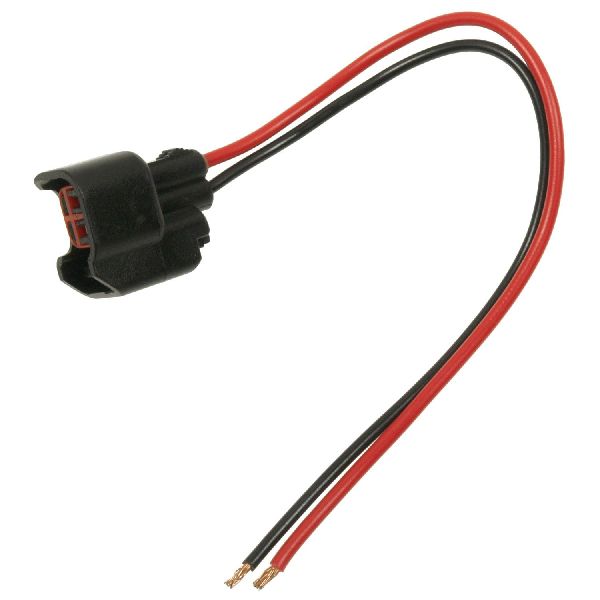
- Fuel Injector Wiring Harness Pigtail
(OEM #PT2183)— This is needed to repair damaged connectors or sections of the harness, which is the most common cause of P2146 due to chafing.
Trusted brands: ACDelco
OEM price range: $40-$70
Aftermarket price range: $15-$40 - Fuel Injector
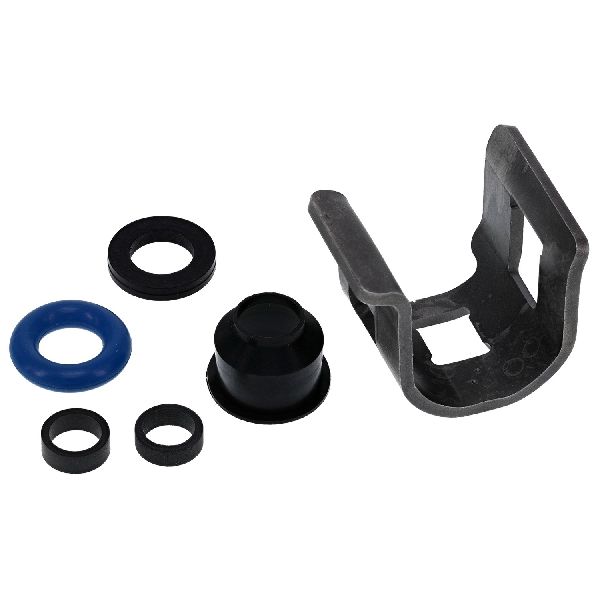
(OEM #12638530 (for 3.6L LLT engine, often supersedes 12634126, 12611545))— If the wiring is intact, an internally shorted or open fuel injector can cause this code. This part number is for the 3.6L V6 engine used from 2008-2011. Always verify the part number with your vehicle's VIN.
Trusted brands: ACDelco, Bosch, Standard Motor Products
OEM price range: $80-$150
Aftermarket price range: $50-$100 - Bank 1 (Passenger Side) Injector Harness
(OEM #12707877 (Verify with VIN))— If the harness is damaged in multiple places, replacing the entire Bank 1 sub-harness may be easier than multiple wire repairs. This part number is for the right (passenger) side. 🎬 Watch: How to replace the fuel injector wiring harness.
Trusted brands: GM Genuine
OEM price range: $45-$65
Aftermarket price range: N/A
Related Codes That Often Appear With This One
- P0300 — A random/multiple cylinder misfire is detected because an entire bank of injectors is not firing correctly.
- P0301, P0303, P0305 — These are misfire codes for the specific cylinders in Bank 1 (passenger side), which corresponds to Injector Group A.
- P0201, P0203, P0205 — These codes indicate a circuit malfunction for individual injectors within Group A, and may accompany the group fault code P2146.
- P2149 — This is the corresponding code for Injector Group 'B' (Bank 2, driver's side). Seeing both P2146 and P2149 simultaneously could point to a more widespread wiring issue, a problem with the main ECM connector, or a failing ECM.
Technical Service Bulletins (TSBs) & Recalls
- PIP4924D: This is the primary document for this issue. It lists P2146 and other injector codes as being caused by the fuel injector wiring harness rubbing through or having internal wire opens. 🎬 Watch: How to diagnose and fix the P2146 error code. It instructs technicians to carefully inspect the harness against the intake plenum, valve cover bolts, fuel lines, and the side of the head.
Platform-Specific Known Issues
- A known issue documented in TSB #PIP4924D involves the fuel injector wiring harness rubbing through or developing internal wire opens. The most common chafe points are where the harness routes over the valve cover, against sharp edges of the intake plenum, and near fuel line brackets. Technicians report finding broken wires inside the loom even when the exterior looks undamaged.
- A user on TDRClub forums, while working on a different vehicle with the same code, detailed a long diagnostic process that ultimately pointed to the injector wiring harness after ruling out the ECM and injectors themselves, highlighting how elusive this wiring fault can be.
Mechanic-Grade Diagnostic Values
- Fuel Injector Resistance (2010-2011 3.0L LF1 / 3.6L LLT) — expected: 11 - 14 Ohms. Failure: A reading significantly outside this range, OL (open circuit), or near 0 Ohms (short circuit). These are high-impedance injectors.
- Fuel Injector Resistance (2012-2014 3.6L LFX) — expected: 1.2 - 1.8 Ohms. Failure: A reading outside this narrow range. These are low-impedance injectors and must not be confused with the earlier type.
- Injector Pulse Width (at warm idle) — expected: 2 - 4 milliseconds (ms). Failure: A value of 0 ms on the affected bank indicates the ECM is not commanding the injectors.
- Voltage Drop Test (Injector Power Supply Circuit) — expected: Less than 0.5 Volts. Failure: A voltage drop greater than 0.5V indicates high resistance in the wiring between the power source and the injector.
Scan Tool Commands That Help
- GM GDS2 (or equivalent professional scan tool): Fuel Injector Balance Test — After verifying the electrical circuit integrity (wiring, connectors), this test can be used to command each injector to fire and compare the resulting RPM drop across all cylinders. A cylinder that shows little or no RPM drop indicates a mechanically failed (stuck) injector.
Wiring & Ground Locations
- G104 — On the 3.6L LFX, this ground is at the front of the engine.. This is a primary engine ground. A poor connection here can cause a host of intermittent electrical issues and unpredictable sensor readings, potentially affecting the ECM's ability to control the injectors.
- G112 — On the 3.6L LFX, this ground is located at the left rear of the engine, sometimes near the battery.. This is a key ground point for the engine control module and various engine components. A loose or corroded G112 can directly impact the ECM's reference voltage, leading to false codes like P2146.
- ECM Connector X1 — One of the main connectors on the Engine Control Module (ECM). On the LFX, it is typically a black connector with a blue Terminal Position Assurance (TPA) lock.. This is the connector where the injector control and supply voltage circuits originate. Probing for voltage and continuity at this connector is the definitive way to determine if a fault is in the vehicle wiring or internal to the ECM itself.
Real Owner Repair Stories
- YouTube user, diagnosing an Audi with the same universal code (Audi A7) — Engine misfiring, check engine light with codes P2146 (Group A fault) and an open circuit code for cylinder 1.
❌ Tried (didn't work) Previous shops suspected an ECM failure but did not perform component-level testing.
✅ What actually fixed it The technician performed a resistance test from each injector pin to ground. On the faulty injector, one pin showed a resistance reading to ground (a short), while the same pin on healthy injectors showed an open circuit (OL), as expected. This proved injector #1 was internally shorted to ground, which was bringing down the entire circuit and triggering the P2146 group fault. Replacing the single shorted injector resolved the issue. - YouTube user, repairing a mangled harness (Audi (specific model not critical, issue is harness damage)) — Rough running, misfires, and injector codes P0271 & P2146 after performing other engine work.
❌ Tried (didn't work) Initial visual inspection did not reveal the problem.
✅ What actually fixed it The technician had to remove the intake manifold to gain access to the fuel injector harness, which was tucked underneath. Upon close inspection, he found a section of the harness was crushed and wires were damaged. Repairing the damaged wires in the harness fixed the problem. This highlights how difficult it can be to access and inspect the harness as called for in the TSB for the Cadillac CTS.
OEM Part Supersession History
12623128, 12656013, 12658040, 12689504→12707877— Standard part evolution, design improvements, or consolidation of part numbers.
Heads up: This part, 12707877, is the current GM Genuine replacement for the passenger side (Bank 1 / Group A) fuel injector wiring harness for applicable models.
Model Year Variations Within This Range
- 2010-2011: These model years primarily used the 3.0L LF1 and 3.6L LLT V6 engines. These engines use high-impedance fuel injectors with a resistance of approximately 11-14 Ohms and a Bosch ECM. The injector part number is often 12638530.
- 2012-2014: The 2012 model year marked the switch to the 3.6L LFX V6 engine. This engine uses low-impedance fuel injectors with a much lower resistance of 1.2-1.8 Ohms and a Delphi ECM. Using the wrong injector type will cause immediate running problems and can damage the ECM injector driver. The LFX also features a composite intake manifold and integrated exhaust manifolds.
- 2012: The 2012 model year was the first year for the LFX engine and it carried over the timing chain design from the problematic LLT engine. The timing chain was redesigned and improved for the 2013 model year, making 2013+ models less susceptible to premature timing chain failure.
Helpful Videos
We Have This Part in Stock


The information in this article is provided for general reference and educational purposes only. Vehicle specifications, procedures, and part compatibility can vary by production date, trim level, and region. Always consult your vehicle's factory service manual and verify part numbers before purchasing or performing repairs. Safety-critical components such as airbags, seat belts, and braking systems should be installed by a qualified professional.
- Cadillac CTS:
- 🧭 Diagnostic Flowchart
- 🎬 Helpful Videos
- 🛍️ Shop This Part
- What's Unique About the 2010-2014 Cadillac CTS
- Symptoms You May Notice
- Most Likely Causes
- Rare But Worth Checking
- Diagnosis Steps
- Parts You'll Likely Need
- Related Codes That Often Appear With This One
- Technical Service Bulletins (TSBs) & Recalls
- Platform-Specific Known Issues
- Mechanic-Grade Diagnostic Values
- Scan Tool Commands That Help
- Wiring & Ground Locations
- Real Owner Repair Stories
- OEM Part Supersession History
- Model Year Variations Within This Range
- 🎟️ Get 5% Off