

P2146 on 2012-2014 Chevrolet Impala: Fuel Injector Circuit Causes and Fixes
On a 2012-2014 Impala, P2146 is almost always caused by a damaged fuel injector wiring harness, a known issue documented in GM TSB #PIP4924D. The harness chafes against engine components, breaking a wire. The fix is often a simple wire repair, costing under $50 in materials, but can be labor-intensive due to the harness location under the intake manifold.
- P2146 on a 2012-2014 Impala indicates a critical fault that will cause severe running issues; do not drive the vehicle.
- The cause is almost certainly a damaged fuel injector wiring harness, as documented in GM TSB #PIP4924D.
- Always inspect the wiring harness thoroughly for chafing or breaks before replacing any parts like fuel injectors or the ECM.
- Common chafe points are where the harness touches the intake manifold, valve cover bolts, or fuel lines.
- A simple wire repair is often all that is needed, but accessing the harness requires removing the intake manifold, making it a moderately difficult DIY job.
What's Unique About the 2012-2014 Chevrolet IMPALA
The 2012-2014 Impala, equipped with the 3.6L LFX V6, is specifically named in General Motors Technical Service Bulletin #PIP4924D for this exact problem. The fuel injector wiring harness is routed in such a way that engine vibration causes it to rub against sharp edges on the engine, causing the wires to chafe and break. This makes a wiring fault the most probable cause, far more likely than failing injectors or a bad ECM, which might be more common on other vehicles without this specific design flaw.
Diagnostic Flowchart
Tap your situation to follow the diagnostic path that matches what you're seeing on this vehicle.
Generation note: The 2012-2013 models are all ninth-generation Impalas. For the 2014 model year, Chevrolet produced both the ninth-generation 'Impala Limited' (primarily for fleets) and the all-new tenth-generation Impala. Both used the 3.6L LFX engine and are covered by the same TSB for this issue, but part numbers for harnesses may differ due to chassis changes.
Symptoms You May Notice
- Severe engine misfire or rough running
- Flashing Check Engine Light
- Engine is hard to start or will not stay running
- Significant loss of engine power
- Vehicle may enter a reduced power or 'limp mode'
- Engine may stall unexpectedly
- Replacing one or more fuel injectors without first thoroughly inspecting the wiring harness. The harness is the most common point of failure for this code on this specific vehicle, and replacing parts will not fix the wiring issue.
Most Likely Causes
- Chafed or Damaged Fuel Injector Wiring Harness 🔴 High Probability → Shop Engine Wiring Harness As documented in GM TSB #PIP4924D, the harness is known to rub against engine components, causing wires to break or short out. Common chafe points are against the intake plenum, the corner of the cylinder head, valve cover bolts, and fuel line brackets. Engine vibration and movement over time wears through the protective loom and wire insulation.
How to confirm: After removing the engine cover and the upper intake manifold, perform a close visual and tactile inspection of the entire Bank 1 fuel injector harness. Pay special attention to the areas listed in the TSB. Look for rub marks, exposed copper wire, or breaks. A 'wiggle test' (gently moving the harness with the engine running, if possible) that causes the misfire to change or disappear can confirm a wiring fault.
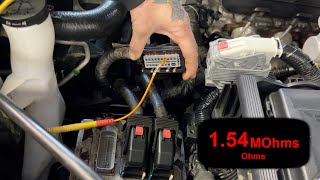
Typical fix: If a single wire is broken, it can be repaired using a quality butt connector or by soldering and protecting it with heat-shrink tubing. If the harness has multiple damage points or is oil-saturated, replacement is the better option. After repair, add protective conduit 🎬 Watch: How to find and fix a mangled injector harness and re-route the harness to prevent future contact.
Est. part cost: $10-$250 - Failed Fuel Injector ⚪ Low Probability → Shop Fuel Injector
How to confirm: If the wiring harness is confirmed to be intact, test the resistance of the injectors in Group 'A' (Bank 1) with a multimeter. A healthy LFX injector should have a resistance between 1.2 and 1.8 ohms. A reading of infinite resistance (open) or a dead short (near 0 ohms) indicates a failed injector.
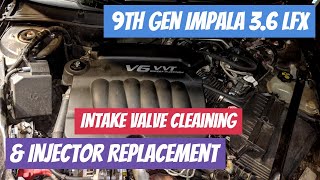
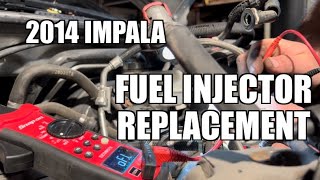
Typical fix: Replace the faulty fuel injector. 🎬 See this step-by-step fuel injector replacement walkthrough It is often recommended to replace all injectors on the same bank at the same time, along with their seals.
Est. part cost: $50-$150 per injector - Faulty Engine Control Module (ECM) ⚪ Low Probability → Shop Engine Control Module (ECM)
How to confirm: This should only be considered after the wiring harness and all injectors have been tested and confirmed to be good. Diagnosis requires advanced tools to verify that the injector driver circuit inside the ECM has failed. A professional may need to perform a load test on the circuit.
Typical fix: Replace and program the Engine Control Module.
Est. part cost: $300-$800
Rare But Worth Checking
- Loose or Corroded Connector: Check the main harness connector at the ECM and the connectors at each fuel injector for corrosion, moisture, or bent pins before performing more complex diagnostics.
- Poor Engine Ground: A corroded or loose main engine ground strap can cause a host of intermittent electrical problems. Inspect the heavy braided cable connecting the engine block to the chassis for integrity.
Diagnosis Steps
- Scan the ECM for all stored trouble codes. Note if P2146 is accompanied by any specific injector codes (P0201, P0203, P0205) or the code for the other bank (P2149).
- Review the freeze frame data to see the engine conditions when the code was set.
- Carefully read TSB #PIP4924D to understand the known failure points.
- Remove the plastic engine cover. Perform a thorough visual inspection of the fuel injector wiring harness. If the engine can idle, gently wiggle the harness in various spots to see if the misfire changes, which would pinpoint the location of the break.
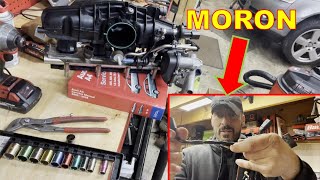
- For a full inspection, the upper intake manifold must be removed. 🎬 Watch: How to remove the intake and access the injectors Once access is gained, meticulously inspect the harness, focusing on the chafe points mentioned in the TSB: against the intake plenum, valve cover bolts, fuel lines, and the sharp edge of the cylinder head.
- If damage is found, repair the broken wire(s) or replace the harness section. Ensure the repaired harness is routed with additional protection (like convoluted tubing) and secured away from sharp edges.
- If no visible damage is found, disconnect the harness from the Bank 1 injectors.
- Using a multimeter, check the resistance of each injector in Bank 1. It should be between 1.2-1.8 ohms. If any injector is open or shorted, it needs to be replaced.
- If injectors are good, check for continuity on the power and control wires from the ECM connector to the injector connectors to rule out an internal wire break not visible from the outside.
- Inspect engine ground connections, particularly G110 (lower left side of engine block) and G112 (rear of intake manifold), for corrosion or looseness.
- If all wiring and injectors test good, the fault likely lies within the ECM's injector driver circuit, and the ECM may need replacement.
Parts You'll Likely Need
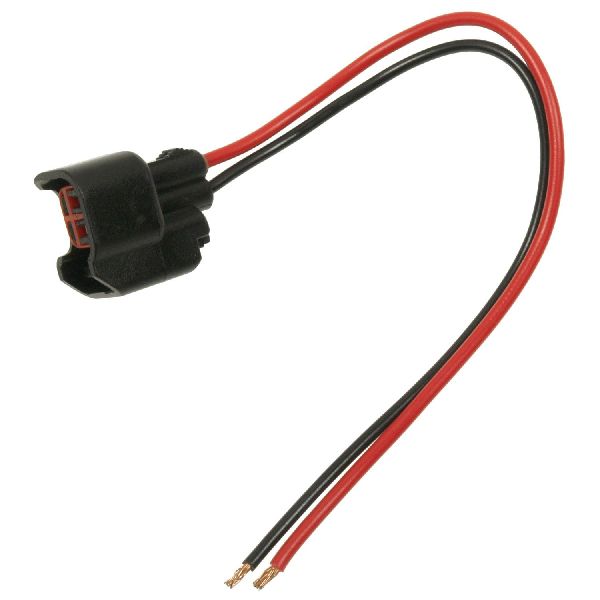
- Fuel Injector Wiring Harness Repair Supplies — The most common fix is repairing a single broken wire in the existing harness, which is a known weak point per TSB #PIP4924D. This requires basic wiring supplies.
Trusted brands: 3M, Dorman
OEM price range: $10-$25
Aftermarket price range: $5-$15 - Fuel Injector Wiring Harness (Bank 1)
(OEM #12690532)— If the harness is too damaged for a reliable repair (multiple breaks, oil saturation), replacement is necessary. Bank 1 (Group A) is the passenger side. This part number may supersede older ones; always verify with VIN.
Trusted brands: ACDelco, GM Genuine
OEM price range: $100-$160
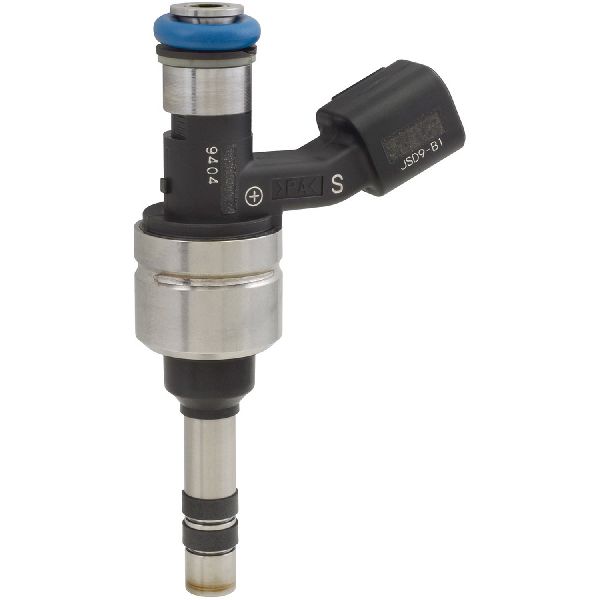
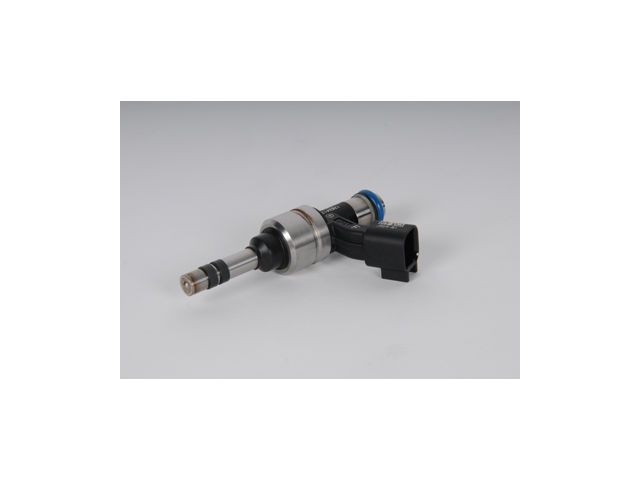
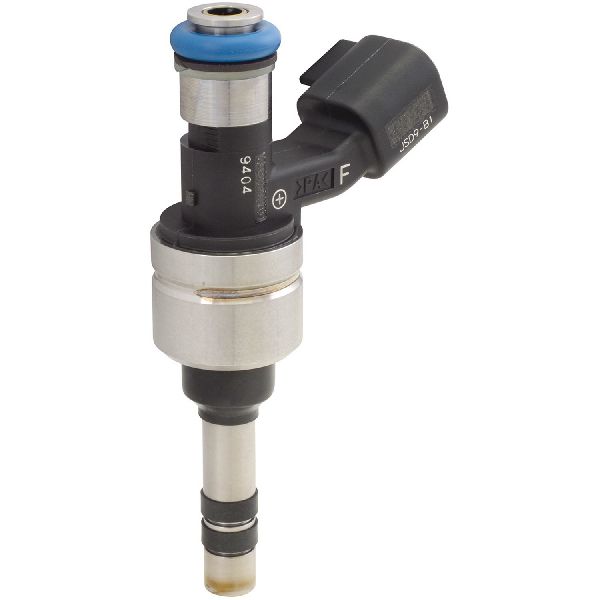
Aftermarket price range: $75-$150 - Fuel Injector
(OEM #12669384)— If a wiring fault is ruled out, an injector with an open or shorted coil can cause this code. This part number is for the 3.6L LFX engine.
Trusted brands: ACDelco, Bosch, Standard Motor Products
OEM price range: $90-$140
Aftermarket price range: $50-$100
Related Codes That Often Appear With This One
- P0201, P0203, P0205 — These codes indicate a circuit fault for a specific injector in Bank 1. They often appear with P2146 because the underlying harness issue can affect both the main group power supply and individual injector control circuits.
- P2149 — This is the code for the other injector bank, 'Group B' (cylinders 2, 4, 6). If the wiring harness is severely damaged, it's possible for both injector banks to lose power and register faults simultaneously.
- P0300, P0301, P0303, P0305 — These are codes for random or specific cylinder misfires. They are a direct symptom of the injectors on one bank being shut down by the P2146 fault.
Technical Service Bulletins (TSBs) & Recalls
- PIP4924D: SES Light And Misfire With Injector Codes. This TSB is the primary source for diagnosing P2146 on this vehicle, pointing directly to a chafed fuel injector wiring harness as the likely cause. It applies to a wide range of GM vehicles with 3.0L and 3.6L engines from this era.
Platform-Specific Known Issues
- GM Technical Service Bulletin #PIP4924D directly addresses P2146 on the 2012-2014 Impala. It instructs technicians to inspect the fuel injector wiring harness for rubbing through or internal wire opens at common spots like the intake plenum, valve cover bolts, and fuel lines.
Mechanic-Grade Diagnostic Values
- Fuel Injector Coil Resistance (3.6L LFX V6) — expected: 1.2 - 1.8 Ohms. Failure: A reading of 0 ohms (short), infinite/OL (open), or significantly outside the expected range indicates a failed injector.
- Fuel Injector Circuit Voltage (Key On, Engine Off) — expected: ~12 Volts (Battery Voltage). Failure: Low or no voltage on the power supply wire at the injector connector points to an open circuit in the wiring harness or a fuse/relay issue upstream.
Scan Tool Commands That Help
- GDS2 / Tech2 (or equivalent high-end bidirectional scanner): Injector Test / Cylinder Power Balance — After confirming code P2146, this test helps verify if the ECM can control the injectors. The tool commands individual injectors on and off, and the resulting change (or lack thereof) in engine performance or fuel rail pressure helps isolate whether the fault is with a specific injector, the wiring, or the entire bank circuit. It can quickly confirm that the entire 'Group A' is unresponsive.
Wiring & Ground Locations
- ECM Connector X1 — The larger of the two main connectors at the Engine Control Module.. This connector contains the control wires for the fuel injectors. For example, on some 3.6L applications, the high-side driver for injector #1 is on pin 75. Testing for continuity and shorts from this connector to the injector connectors is a definitive way to test the harness integrity.
- G110 / G112 — G110 is on the lower left side of the engine block; G112 is reportedly at the rear of the intake manifold.. These are critical engine and ECM ground points. A loose or corroded ground at these locations can cause a floating voltage reference for the ECM, leading to numerous unpredictable electrical faults, including injector driver circuit codes like P2146.
Real Owner Repair Stories
- YouTube video from BeerWrench Garage (2010-2014 Chevrolet Equinox (sister platform with similar wiring)) — Check Engine Light with code P2146.
❌ Tried (didn't work) The owner was performing an unrelated repair that required removing the intake manifold.
✅ What actually fixed it Upon reassembly, the owner had inadvertently pinched the fuel injector wiring harness under the intake manifold. Freeing the harness and routing it correctly cleared the code and resolved the issue. - YouTube video (GM vehicle with 3.6L engine) — Check Engine Light with codes P0271 & P2146, rough running.
✅ What actually fixed it The owner discovered the fuel injector harness had been severely damaged ('mangled') near the throttle body, under the intake. The fix was to cut out the damaged sections of wire and splice in new wires and connectors from a spare harness, which resulted in a smooth-running engine with no codes.
OEM Part Supersession History
12629930, 12646868, 12690535→12690532— Part consolidation and potential minor revisions by the manufacturer.
Heads up: 12690532 is the current correct service part for the Bank 1 fuel injector harness. Using old stock or a used part with a previous number is not recommended.12611545, 12632255, 12638530→12669384— Part consolidation and potential updates to internal components or materials.
Heads up: 12669384 is the current correct service part for the fuel injector for the 3.6L LFX engine. Always verify by VIN, but this is the most common replacement.
Model Year Variations Within This Range
- 2014: For the 2014 model year, both the 9th gen 'Impala Limited' and the new 10th gen Impala were sold. Both used the 3.6L LFX V6 and are susceptible to the P2146 wiring harness issue per TSB #PIP4924D. While the root cause is the same, technicians should be aware that some non-engine-related parts and wiring may differ between the two distinct chassis.
Helpful Videos
We Have This Part in Stock


The information in this article is provided for general reference and educational purposes only. Vehicle specifications, procedures, and part compatibility can vary by production date, trim level, and region. Always consult your vehicle's factory service manual and verify part numbers before purchasing or performing repairs. Safety-critical components such as airbags, seat belts, and braking systems should be installed by a qualified professional.
- Chevrolet IMPALA:
- 🧭 Diagnostic Flowchart
- 🎬 Helpful Videos
- 🛍️ Shop This Part
- What's Unique About the 2012-2014 Chevrolet IMPALA
- Symptoms You May Notice
- Most Likely Causes
- Rare But Worth Checking
- Diagnosis Steps
- Parts You'll Likely Need
- Related Codes That Often Appear With This One
- Technical Service Bulletins (TSBs) & Recalls
- Platform-Specific Known Issues
- Mechanic-Grade Diagnostic Values
- Scan Tool Commands That Help
- Wiring & Ground Locations
- Real Owner Repair Stories
- OEM Part Supersession History
- Model Year Variations Within This Range
- 🎟️ Get 5% Off