

P2146 on 2009-2014 GMC Acadia: Fuel Injector Circuit Causes and Fixes
On a 2009-2014 GMC Acadia, code P2146 almost always points to a damaged fuel injector wiring harness for Bank 1 (the rear cylinder bank, closer to the firewall). A visual inspection for chafed or broken wires, as noted in GM Technical Service Bulletin #PIP4924D, is the first and most critical step before replacing any parts. The harness is known to rub against the intake plenum, valve cover bolts, or the side of the cylinder head.
- P2146 on a 2009-2014 Acadia means there is an electrical fault in the power supply circuit for the rear bank of fuel injectors (Bank 1).
- The most likely cause is a damaged wiring harness, a known issue documented in GM Technical Service Bulletin #PIP4924D. Check for chafing against the intake, valve cover, and cylinder head.
- Always inspect the wiring harness thoroughly for chafing or breaks before spending money on new fuel injectors.
- Driving with this code will cause severe performance issues and should be avoided until the vehicle can be repaired.
What's Unique About the 2009-2014 Gmc ACADIA
The first-generation Acadia and its platform mates (Buick Enclave, Chevrolet Traverse, and Saturn Outlook) with the 3.6L V6 are known for a specific wiring harness vulnerability. The fuel injector harness is routed in a way that makes it prone to rubbing against engine components, leading to chafed or broken wires. This issue is so common that General Motors issued Technical Service Bulletin PIP4924D to guide technicians to inspect this specific area when P2146 or related injector codes appear. Common chafe points are against the intake plenum, valve cover bolts, fuel lines, and the side of the cylinder head under the plenum.
🎬 Watch: How to find and repair a mangled injector harness.Diagnostic Flowchart
Tap your situation to follow the diagnostic path that matches what you're seeing on this vehicle.
Symptoms You May Notice
- Check Engine Light is on
- Engine runs very rough or vibrates excessively
- Noticeable loss of power and acceleration
- Engine may stall, especially at idle
- Difficulty starting the engine or no-start condition
- Poor fuel economy
- Stabilitrak/Traction Control warning lights may illuminate
- Replacing one or all of the fuel injectors on Bank 1 without first thoroughly inspecting the wiring harness. The problem often returns because the root cause (the damaged wire) was not addressed.
Most Likely Causes
- Damaged Fuel Injector Wiring Harness 🔴 High Probability → Shop Engine Wiring Harness As documented in TSB #PIP4924D, the wiring harness routing makes it susceptible to rubbing against other components, causing wires to chafe, break, or short out. Specific problem areas are where the harness contacts the intake plenum, valve cover bolts, and the side of the cylinder head.
How to confirm: Visually inspect the entire length of the Bank 1 (rear bank) fuel injector harness. Pay close attention to where the harness bends or makes contact with the valve cover, intake manifold, or brackets. Perform a continuity test on the power supply wire from the ECM to the injectors if no visual damage is found. Wiggling the harness while the engine is running may induce the fault and confirm a wiring issue.
Typical fix: Repair the broken or chafed section of wire using solder and heat shrink tubing. In cases of severe damage or multiple breaks, the entire harness section (pigtail) should be replaced.
Est. part cost: $10-$150 - Failed Fuel Injector 🟡 Medium Probability → Shop Fuel Injector
How to confirm: If the wiring is confirmed to be good, test the resistance of each injector in Bank 1. A reading that is significantly different from the others, or is open/shorted, indicates a failed injector. A 'noid' light can also be used to check for the electrical pulse at the injector connector.
Typical fix: Replace the faulty fuel injector. It is often recommended to replace all injectors on the same bank, especially on higher mileage vehicles, to ensure balanced performance.
Est. part cost: $40-$120 per injector
Rare But Worth Checking
- Faulty Engine Control Module (ECM): → Shop Engine Control Module (ECM) This should only be considered after all wiring and fuel injector tests have been completed and passed. ECM failure is rare but possible if the internal driver circuit for the injector bank has failed. This is the most expensive and least likely cause.
Diagnosis Steps
- Check for other stored DTCs to see if they point to specific injector or misfire codes.
- Perform a thorough visual inspection of the Bank 1 (rear) fuel injector wiring harness, as recommended by TSB #PIP4924D. Specifically check for rubbing against the intake plenum, valve cover bolts, fuel lines, and the side of the cylinder head.
- Gently wiggle the harness while the engine is running (if it runs) to see if it causes a change in engine behavior, indicating an intermittent connection.
- If no visual damage is found, use a multimeter to check for battery voltage at the power supply wire on one of the Bank 1 injector connectors with the key on.
- Perform a continuity test on the power supply wire between the injector connector and the ECM connector to rule out a break in the wire.
- If wiring is confirmed good, test the resistance of each fuel injector on Bank 1. Compare the readings to the manufacturer's specification.
- If all wiring and injectors test good, the final step is to suspect a faulty injector driver circuit within the ECM.
Parts You'll Likely Need
- Fuel Injector Wiring Harness (Bank 1)
(OEM #12621096)— This is the most common failure point due to chafing and damage, as documented in a GM TSB. This part number is for the harness that serves the right side (Bank 1/rear) of the engine.
Trusted brands: ACDelco, GM Genuine
OEM price range: $100-$150
Aftermarket price range: $70-$120 - Fuel Injector
(OEM #12638530)— If the wiring is intact, an injector may have failed electrically, causing the circuit fault.
Trusted brands: ACDelco, Bosch, Standard Motor Products
OEM price range: $90-$140
Aftermarket price range: $40-$80
Related Codes That Often Appear With This One
- P0201, P0203, P0205 — These are specific circuit codes for injectors 1, 3, and 5. They may appear alongside P2146 since it indicates a fault with the entire group.
- P0300, P0301, P0303, P0305 — These are random and specific cylinder misfire codes. Since P2146 disables injectors 1, 3, and 5, the ECM will detect misfires on those cylinders.
- P2149 — This is the equivalent code for Injector Group 'B' (Bank 2, front bank). The TSB #PIP4924D lists both codes, suggesting the wiring for both banks can be problematic.
Technical Service Bulletins (TSBs) & Recalls
- PIP4924D: Addresses multiple engine and fuel system diagnostic trouble codes, including P2146, and directs technicians to inspect the fuel injector wiring harness for damage. It specifically mentions checking for rubbing against the intake plenum, valve cover bolts, fuel lines, and the side of the head.
Platform-Specific Known Issues
- TSB #PIP4924D specifically calls out inspecting the fuel injector wiring harness for rubbing or internal opens when P2146 is present. This indicates a known design or manufacturing issue with harness routing on this platform.
- On the transverse-mounted 3.6L V6, Bank 1 (cylinders 1, 3, 5) is located at the rear of the engine bay, near the firewall. This makes visual inspection and access more difficult than for Bank 2, which is at the front.
Mechanic-Grade Diagnostic Values
- Fuel Injector Coil Resistance (2012-2014 LFX Engine) — expected: 1.2 - 2.5 Ohms. Failure: A reading of 0 Ohms (short), infinity/OL (open), or a value significantly outside the expected range.
- Fuel Injector Coil Resistance (2009-2011 LLT Engine) — expected: 11.8 - 12.6 Ohms. Failure: A reading of 0 Ohms (short), infinity/OL (open), or a value significantly outside the expected range.
- Injector Driver Voltage (at the injector) — expected: A boosted voltage pulse up to 65V, supplied by a capacitor in the ECM.. Failure: Absence of this pulse, or a steady voltage, indicates a problem with the ECM driver or the wiring.
- Wiring Harness Continuity Test — expected: Less than 10 Ohms. Failure: Resistance greater than 10 Ohms indicates an open or high resistance in the circuit.
Scan Tool Commands That Help
- GM GDS2 / High-End Aftermarket: Fuel Injector Balance Test — After verifying wiring integrity, this test can identify a mechanically or electrically failing injector. The tool commands each injector to fire for a set duration and measures the corresponding fuel pressure drop. An injector with a significantly different pressure drop is faulty.
- GM GDS2 / High-End Aftermarket: Injector Kill / Disable — To isolate a misfiring cylinder and confirm if the P2146 fault is actively affecting all injectors in Bank 1. Disabling injectors on the good bank (Bank 2) should cause the engine to stall or run even worse, confirming they were working.
Wiring & Ground Locations
- ECM (Engine Control Module) — In the engine compartment, located on the front of the engine.. The ECM contains the injector driver circuits that supply the boosted 65V to fire the injectors. All diagnostic wiring tests ultimately lead back to the ECM connectors.
- G105 / G112 — Primary engine ground points located on the rear of the engine block.. The ECM and its injector driver circuits require a stable and clean ground reference. A loose or corroded connection at these points can cause erratic behavior and phantom circuit codes.
- Connector X160 / X161 — Multi-way harness connectors located at the rear of the intake manifold.. These are intermediate connectors between the main engine harness and the injector harness. They are a key point for circuit testing to isolate a fault between the ECM and the injectors.
- ECM Connector X1 — The 73-pin main connector at the Engine Control Module.. This is the termination point for the injector control and supply wires. Probing specific pins here is the definitive way to test the entire circuit from the control module to the injector. For example, on a similar GM V6, the injector control circuits are twisted pairs leading to this connector.
Real Owner Repair Stories
- Acadia/Enclave/Traverse Online Forums (Aggregate) (2009-2014 GMC Acadia and platform mates) — Sudden rough running, flashing check engine light, Stabilitrak message, severe loss of power.
❌ Tried (didn't work) Replacing the spark plugs and ignition coils., Replacing one or all three fuel injectors on Bank 1 without checking wiring., Replacing the ECM without confirming it was the point of failure.
✅ What actually fixed it In the vast majority of documented cases, the final fix was locating a chafed or broken wire in the Bank 1 fuel injector harness. The most common location was where the harness rubs against the corner of the cylinder head or an intake manifold bracket, as specified in TSB #PIP4924D. The repair involved splicing the broken wire(s) or replacing the harness pigtail.
Model Year Variations Within This Range
- 2009-2012 vs 2013-2014: The engine was updated from the LLT V6 to the LFX V6 around the 2012-2013 model year. The LFX features integrated exhaust manifolds and, most critically for this code, uses different fuel injectors. LLT injectors (2009-2011/12) are high-impedance (~12 Ohms), while LFX injectors (2012/13-2014) are low-impedance (~1.5 Ohms). Installing the wrong type of injector will cause immediate circuit faults or damage to the ECM driver.
Helpful Videos
We Have This Part in Stock


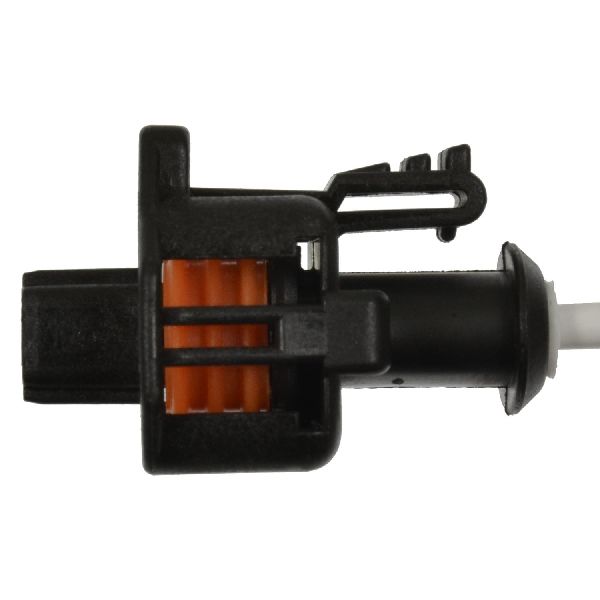

The information in this article is provided for general reference and educational purposes only. Vehicle specifications, procedures, and part compatibility can vary by production date, trim level, and region. Always consult your vehicle's factory service manual and verify part numbers before purchasing or performing repairs. Safety-critical components such as airbags, seat belts, and braking systems should be installed by a qualified professional.
- Gmc ACADIA:
- 🧭 Diagnostic Flowchart
- 🎬 Helpful Videos
- 🛍️ Shop This Part
- What's Unique About the 2009-2014 Gmc ACADIA
- Symptoms You May Notice
- Most Likely Causes
- Rare But Worth Checking
- Diagnosis Steps
- Parts You'll Likely Need
- Related Codes That Often Appear With This One
- Technical Service Bulletins (TSBs) & Recalls
- Platform-Specific Known Issues
- Mechanic-Grade Diagnostic Values
- Scan Tool Commands That Help
- Wiring & Ground Locations
- Real Owner Repair Stories
- Model Year Variations Within This Range
- 🎟️ Get 5% Off