

P2149 on 2009-2011 Cadillac STS: Fuel Injector Group 'B' Circuit Failure Causes and Fixes
On a 2009-2011 Cadillac STS with the 3.6L LLT V6 engine, code P2149 almost always indicates a problem with the fuel injector wiring harness. It often rubs through against an engine bracket or the intake manifold, causing an open circuit in the Group 'B' injector bank (cylinders 2, 4, 6). The fix is usually repairing the damaged section of the harness, which is a moderately difficult DIY job. This is a well-documented issue covered by GM TSB PIP4924D.
- P2149 on a 2009-2011 Cadillac STS is a serious code indicating a power supply failure to one bank of fuel injectors.
- The most likely cause, supported by a manufacturer TSB, is a damaged fuel injector wiring harness that has rubbed through.
- Always inspect the wiring harness thoroughly for chafing or breaks before considering replacing any fuel injectors or the ECM.
- Driving the vehicle with this code is not recommended due to severe engine misfires and lack of power.
- Repairing the damaged wire is a cost-effective fix, but it requires careful work to ensure a durable and safe repair.
What's Unique About the 2009-2011 Cadillac STS
For this generation of Cadillac STS, as well as other GM vehicles from the era using the 3.6L LLT V6 engine, the fuel injector wiring harness is a known weak point. A General Motors Technical Service Bulletin (TSB PIP4924D) specifically mentions that the harness is prone to rubbing through or developing internal wire breaks. Forum discussions and mechanic reports confirm the harness often chafes against engine components like the intake manifold or nearby brackets. This makes a wiring fault the most probable cause for P2149, far more so than individual injector failure or an ECM problem.
Diagnostic Flowchart
Tap your situation to follow the diagnostic path that matches what you're seeing on this vehicle.
Symptoms You May Notice
- Severe engine misfiring and shaking.
- Rough, unstable idle.
- Significant loss of engine power.
- Engine may stall or be difficult to start.
- Check Engine Light is illuminated.
- Reduced fuel economy.
- "Reduced Engine Power" message may a 🎬 Watch this video to see a rough-running STS fix in action.ppear on the driver information center.
- Replacing a fuel injector without first thoroughly inspecting the wiring harness. Since TSB PIP4924D points directly to wiring issues, this is the most likely culprit and should be checked first to avoid unnecessary expense and labor.
Most Likely Causes
- Fuel Injector Wiring Harness Chafed or Broken 🔴 High Probability → Shop Engine Wiring Harness A manufacturer TSB (PIP4924D) specifically identifies this as a common issue. The engine's movement and vibrations cause the harness to rub against sharp edges on engine brackets or the intake manifold, eventually wearing through the insulation and breaking the wires for Group B injectors.
How to confirm: Visually inspect the entire fuel injector wiring harness, paying close attention to where it bends or comes into contact with other parts, especially under and around the intake manifold. Look for visible signs of wear, exposed copper wire, or breaks. Use a multimeter to check for continuity between the ECM connector and the injector connectors for Group B (cylinders 2, 4, 6). An infinite resistance reading indicates an open circuit. 🎬 See how to diagnose the Group B injector circuit wiring.
Typical fix: Repair the damaged section of the wire. This involves cutting out the bad section, splicing in a new piece of automotive-grade wire using butt connectors or solder, and protecting the repair with heat-shrink tubing. It is critical to re-route or secure the harness with zip ties to create clearance and prevent future chafing.
Est. part cost: $5-$25 - Failed Fuel Injector ⚪ Low Probability → Shop Fuel Injector While less common than the wiring issue for this specific code, the direct injection injectors on the LLT engine can fail. An internal coil can break, creating an open circuit.
How to confirm: If the wiring checks out, test the resistance of each injector in Group B with a multimeter. A typical good reading for these injectors is around 1.5-1.6 ohms. A reading of infinite resistance (OL) indicates a failed injector. You can also swap a suspect injector with one from Group A (cylinders 1, 3, 5) and see if the trouble code changes to P2146.
Typical fix: Replace the faulty fuel injector. It is often recommended to replace all injectors in the affected bank or all six at the same time, especially on higher mileage vehicles.
Est. part cost: $50-$150 per injector - Faulty Engine Control Module (ECM) ⚪ Low Probability → Shop Engine Control Module (ECM)
How to confirm: This should be the last resort after confirming the wiring and all injectors in Group B are good. An ECM failure can occur in the internal injector driver circuit. This requires professional diagnosis with advanced scan tools to monitor the driver command signal and rule out all other possibilities.
Typical fix: Replace and reprogram the Engine Control Module. This must be done by a qualified shop or dealership with the correct programming tools.
Est. part cost: $400-$1000+
Rare But Worth Checking
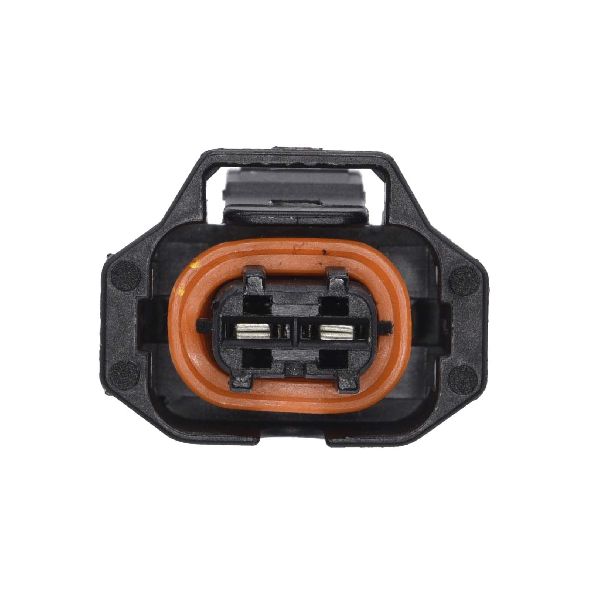
- Corroded or Loose Connector Pins: Corrosion or a backed-out pin at the main ECM harness connector or at an individual injector connector can cause an intermittent open circuit. On some GM models, this is common enough that a fix known as the "ice pick trick" is used to tighten the female pins in the connector.
Diagnosis Steps
- Scan the vehicle for all stored trouble codes. Note any other codes that are present alongside P2149, such as specific injector codes (P020x) or misfire codes (P030x).
- Perform a thorough visual inspection of the fuel injector wiring harness. Focus on areas where it routes near engine brackets, the intake manifold, and the cylinder heads. Look for any signs of chafing, melting, or broken wires.
- If no visible damage is found, disconnect the harness from the Group B fuel injectors (cylinders 2, 4, 6) and the ECM.
- Using a digital multimeter set to Ohms, check for continuity on the supply voltage wire for each injector in Group B, from the ECM connector pin to the corresponding injector connector pin. An infinite resistance reading (OL) indicates an open circuit (broken wire).
- Check for a short to ground by testing for continuity between the supply voltage wire and a known good ground (like the engine block). There should be no continuity (OL).
- If wiring is confirmed to be good, test the internal resistance of each fuel injector in Group B. A good injector should read approximately 1.5-1.6 Ohms. An open or shorted reading indicates a bad injector.
- As a final check, inspect the pins at both the ECM connector and the injector connectors for any signs of corrosion, looseness, or damage.
- If both the wiring and the injectors test good, the fault likely lies within the ECM's injector driver circuit, which requires professional diagnosis.
Parts You'll Likely Need
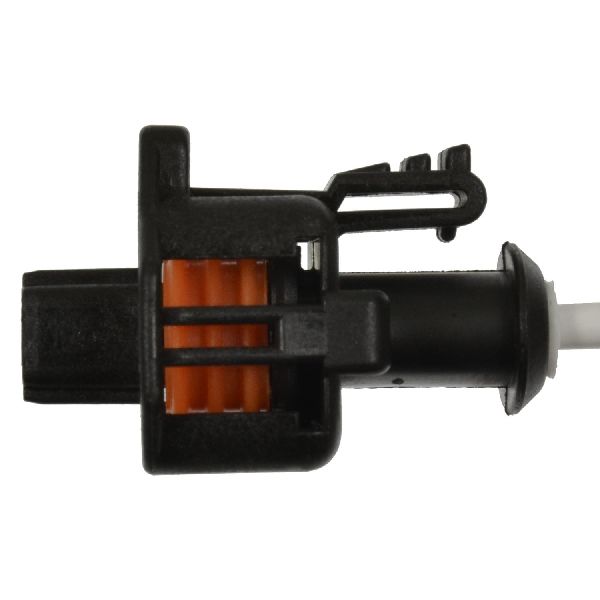
- Fuel Injector Wiring Harness Repair Kit/Pigtail — This is the most common fix, needed to repair the chafed or broken wires identified in TSB PIP4924D. Often a simple wire repair is sufficient.
Trusted brands: ACDelco, Dorman
OEM price range: $30-$60
Aftermarket price range: $15-$40 - Fuel Injector
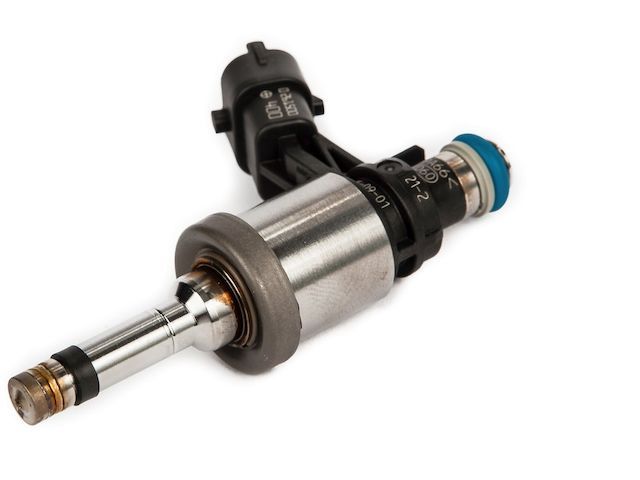
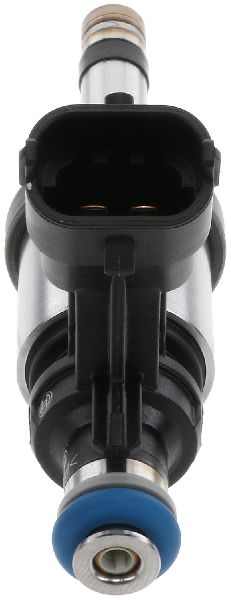
(OEM #12638530 (or superseding part numbers like 12669384))— If the wiring is intact, an injector with an internal open circuit could be the cause. The 3.6L LLT V6 uses this specific type of direct injector.
Trusted brands: ACDelco (GM OE), Bosch
OEM price range: $100-$180
Aftermarket price range: $50-$120
Related Codes That Often Appear With This One
- P2146 — This code is for 'Fuel Injector Group 'A' Supply Voltage Circuit/Open'. It can appear alongside P2149 if the wiring harness damage is extensive and affects the circuits for both injector banks.
- P0202, P0204, P0206 — These codes indicate a circuit malfunction for a specific injector (Cylinder 2, 4, or 6). You might see one of these along with P2149 if a single injector or its specific connector is the root cause, though the group code P2149 is more common for a shared wiring supply issue.
- P0300 — This is a code for 'Random/Multiple Cylinder Misfire Detected'. It's a direct and expected symptom of an entire bank of injectors being shut down, causing misfires on cylinders 2, 4, and 6.
Technical Service Bulletins (TSBs) & Recalls
- PIP4924D: Addresses multiple diagnostic trouble codes, including P2149, P2146, and various P020x codes. It directs technicians to inspect the fuel injector wiring harness for rub through or internal wire opens as the primary diagnostic step.
Platform-Specific Known Issues
- Technical Service Bulletin PIP4924D explicitly calls out the fuel injector wiring harness for potential rub-through conditions or internal wire opens, making it the primary suspect for code P2149 on this vehicle. Technicians are directed to inspect the harness thoroughly before replacing any components.
- Real-World Repair Experience: A user on the Camaro5 forum (which uses the same LLT engine) experienced a P2149 code after replacing injectors. The troubleshooting process involved swapping injectors between cylinders, which caused the specific cylinder fault code to move, confirming a bad new injector was the cause, not the wiring in that instance. This highlights the importance of systematic diagnosis.
Mechanic-Grade Diagnostic Values
- Fuel Injector Coil Resistance — expected: 1.5 - 1.6 ohms. Failure: A reading of infinite resistance (OL) indicates an open coil, while a reading near zero indicates a shorted coil. Any significant deviation from the expected value suggests a faulty injector.
- Injector Group 'B' High Side Signal Current — expected: Between 2.60 A and 14.90 A. Failure: The ECM will set code P2149 if the measured current is less than 2.60 A or greater than 14.90 A, indicating an open or a short in the circuit.
Scan Tool Commands That Help
- GM GDS2 / Tech2 or equivalent professional scan tool: Fuel Injector Balance Test / Automated Injector Balance — This bidirectional command is used after verifying the wiring is intact. The tool disables each injector sequentially and measures the drop in fuel rail pressure. It is highly effective for identifying an injector that is electrically sound but mechanically faulty (clogged or leaking). A pressure drop that deviates more than 20% from the average of the other cylinders indicates a problem injector.
- GM Active Fuel Injector Tester (AFIT): → Shop Fuel Injector CH-47976 AFIT Tool with SIDI Adapter Kit — This is a specialized GM tool called for in service procedures for definitive injector diagnosis. It performs a more advanced balance test to measure injector flow rates and can pinpoint faulty injectors when a scan tool balance test is inconclusive.
Wiring & Ground Locations
- Injector Harness Chafe Points — TSB PIP4924D specifies inspecting where the harness rubs against the intake plenum, at valve cover bolts, against the fuel line, and on the side of the cylinder head under the plenum.. These are the most common failure locations for the wiring that controls the injector banks, directly causing the open circuit condition for P2149.
- X116 and X117 — These are the multi-way harness connectors located at the rear of the intake manifold.. These connectors are the junction between the main engine harness and the injector-specific harness. Testing at these connectors helps isolate whether the fault is in the main harness or the injector sub-harness.
- ECM Connector X1, Pin 36 (and others) — This is one of the main connectors at the Engine Control Module (ECM).. Testing for voltage and continuity directly at the ECM pins is the final step to confirm if the wiring is good all the way to the module, or if the module's driver circuit is at fault. For example, on a related vehicle, the fuel rail pressure sensor signal wire is on Pin 36 of the X1 connector. Injector circuits for bank B (2, 4, 6) would have their own specific pins at the ECM connectors.
- G100 / G106 — On the rear side of the right cylinder head (for a 2006 STS).. These are primary engine ground points. A loose or corroded engine ground can cause a host of electrical issues, including intermittent and hard-to-diagnose voltage problems in sensor and actuator circuits controlled by the ECM.
Real Owner Repair Stories
- Camaro5 Forum user (2011 Chevrolet Camaro V6 (3.6L LLT engine)) — After replacing all injectors, the car threw codes P0261, P2149, and P0305, indicating a fault with cylinder 5 / bank B.
❌ Tried (didn't work) Cleaning all electrical connectors and applying dielectric grease.
✅ What actually fixed it The owner systematically moved the fuel injectors to different cylinders (e.g., moved injector from cylinder 5 to 3, 3 to 1, etc.). After reassembly, the codes changed to P0261, P2149, and P0301, indicating the fault had moved to cylinder 1. This proved that one of the newly installed injectors was defective out of the box. Replacing the faulty injector on cylinder 1 resolved all codes.
OEM Part Supersession History
12638530→12669384— Standard part revision and improvement by the manufacturer.
Heads up: These part numbers are generally interchangeable for the specified applications. Other identifiers for the same part include 12611545 and 12632255.
Model Year Variations Within This Range
- 2009-2011: No significant variations related to the cause or diagnosis of code P2149 have been documented for the Cadillac STS within this model year range. The primary cause related to the wiring harness chafe (TSB PIP4924D) applies to all years.
Helpful Videos
![What is P2149 Engine Code [Quick Guide]](https://img.youtube.com/vi/kvzMtVwbJUg/mqdefault.jpg)
We Have This Part in Stock


The information in this article is provided for general reference and educational purposes only. Vehicle specifications, procedures, and part compatibility can vary by production date, trim level, and region. Always consult your vehicle's factory service manual and verify part numbers before purchasing or performing repairs. Safety-critical components such as airbags, seat belts, and braking systems should be installed by a qualified professional.
- Cadillac STS:
- 🧭 Diagnostic Flowchart
- 🎬 Helpful Videos
- 🛍️ Shop This Part
- What's Unique About the 2009-2011 Cadillac STS
- Symptoms You May Notice
- Most Likely Causes
- Rare But Worth Checking
- Diagnosis Steps
- Parts You'll Likely Need
- Related Codes That Often Appear With This One
- Technical Service Bulletins (TSBs) & Recalls
- Platform-Specific Known Issues
- Mechanic-Grade Diagnostic Values
- Scan Tool Commands That Help
- Wiring & Ground Locations
- Real Owner Repair Stories
- OEM Part Supersession History
- Model Year Variations Within This Range
- 🎟️ Get 5% Off