

P2149 on 2011-2014 Chevrolet Camaro: Fuel Injector Group B Circuit Fixes
This code indicates a voltage problem in the fuel injector 'Group B' circuit. For the 2011-2014 Camaro, the most common cause is a chafed or damaged fuel injector wiring harness, a known issue highlighted in GM Technical Service Bulletin #PIP4924D. Inspecting and repairing the harness, particularly where it may contact engine brackets or covers, is the most likely fix before replacing any parts.
- P2149 on a 2011-2014 Camaro means there's an electrical fault in the 'Group B' fuel injector circuit.
- Before buying any parts, thoroughly inspect the fuel injector wiring harness for damage, as this is the most common cause documented in a GM service bulletin.
- If the wiring is good, test the resistance of the fuel injectors in the affected group to find a potential open or shorted injector.
What's Unique About the 2011-2014 Chevrolet CAMARO
On this generation of Chevrolet Camaro, the P2149 code is strongly associated with a specific wiring harness problem. General Motors issued a Technical Service Bulletin (TSB #PIP4924D) that points technicians directly toward inspecting the fuel injector wiring harness for damage, such as rubbing through the insulation or internal wire breaks. Specific chafe points can occur where the harness contacts the Fuel Injection Control Module (FICM) bracket, the front corner of the left-hand cylinder head, or other engine components. This makes a wiring fault a much higher probability on this car than on other vehicles where the code might point to a failed injector or ECM first.
Diagnostic Flowchart
Tap your situation to follow the diagnostic path that matches what you're seeing on this vehicle.
Symptoms You May Notice
- Check Engine Light is on
- Engine runs rough or shakes, especially at idle
- Significant loss of engine power and poor acceleration
- Engine may be hard to start or may stall
- Noticeable fuel smell from the exhaust
- Vehicle enters 'limp mode' with reduced power.
- Replacing fuel injectors without first thoroughly inspecting the wiring harness. Given the known TSB, the harness is the primary suspect and should be checked first to avoid unnecessary expense.
- Replacing the ECM without confirming that all wiring and components in the circuit are functioning correctly.
Most Likely Causes
- Chafed or Damaged Fuel Injector Wiring Harness 🔴 High Probability → Shop Engine Wiring Harness As documented in GM TSB #PIP4924D, the fuel injector harness is susceptible to rubbing against engine components, leading to shorts or open circuits. Common chafe points include the FICM wiring harness retaining bracket, the corner of the cylinder head, and where the harness may touch the generator.
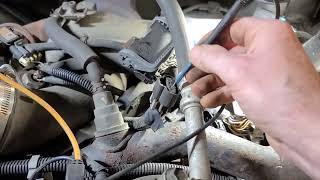
How to confirm: Visually inspect the entire fuel injector wiring harness, paying close attention to any areas where it contacts the engine block, cylinder heads, or brackets. It may be necessary to remove loom and tape to find small abrasion spots. A 'wiggle test' on the harness with the engine running can sometimes trigger the fault. 🎬 Watch: Diagnosing P2149 and low power on a GM engine.
Typical fix: Repair the damaged section of the wire(s) using solder and heat-shrink tubing. Protect the repaired area with high-temperature wire loom or conduit to prevent future chafing. In severe cases, the entire harness section or a pigtail connector may need to be replaced.
Est. part cost: $5-$50 for repair materials, $150-$400 for a new harness section. - Faulty Fuel Injector(s) 🟡 Medium Probability → Shop Fuel Injector
How to confirm: Using a multimeter, measure the resistance of each fuel injector in Group B. 🎬 See how these injector group codes appear during a scan. Compare the readings to the manufacturer's specification (typically 11-14 ohms for high-impedance injectors). An injector with resistance that is too high (open) or too low (shorted) is faulty. This test should be performed when the engine is warm, as heat can expose intermittent faults.
Typical fix: Replace the failed fuel injector. It is often recommended to replace injectors as a set for consistent performance. One owner on a Camaro forum reported a dealer cost of over $500 to replace a single injector.
Est. part cost: $50-$150 per injector. - Poor Electrical Connection ⚪ Low Probability Connectors can become worn or contaminated over time, leading to intermittent contact. GM has noted that injector connectors for cylinders 2 and 7 can be particularly problematic on some platforms.
How to confirm: Inspect the connectors at the fuel injectors and the ECM. Look for corrosion, bent pins, or loose-fitting terminals. Check for proper terminal tension using a tool like the J-35616-35. Perform a 'wiggle test' on the connectors while the engine is running to see if it affects the idle.
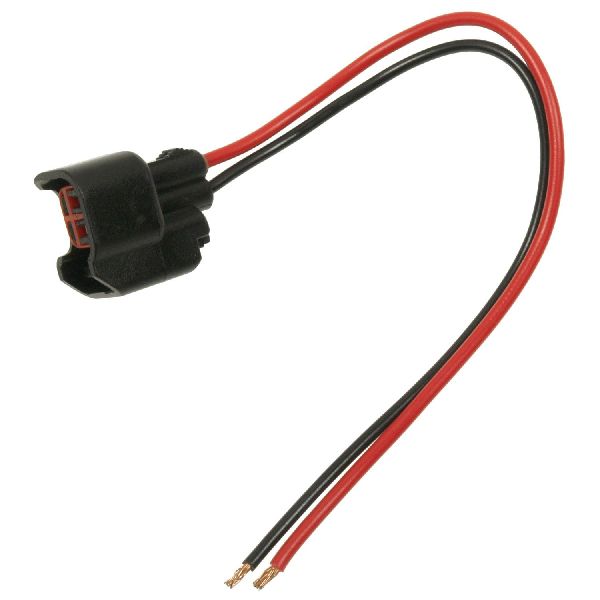
Typical fix: Clean the connectors with electrical contact cleaner. If pins are damaged or the connector housing is worn, the connector pigtail may need to be replaced. GM offers replacement pigtails like P/N 88988963 for some applications.
Est. part cost: $10-$40 for a new pigtail connector.
Rare But Worth Checking
- Faulty Engine Control Module (ECM): → Shop Engine Control Module (ECM) This is the least likely cause. A failed injector driver circuit within the ECM can trigger P2149. All other possibilities, especially wiring and injectors, should be exhaustively ruled out before condemning the ECM.
Diagnosis Steps
- Retrieve all stored DTCs with an OBD-II scanner. Note any specific injector codes (P020x) that accompany P2149, as this will help pinpoint the initial fault.
- Carefully perform a visual inspection of the fuel injector wiring harness as recommended by TSB #PIP4924D. Check for any signs of chafing, melting, or damage, especially near the FICM bracket and where the harness passes the cylinder heads.
- If the harness appears intact, disconnect the connectors for the injectors in Group B. For GM V8s (LS3/L99), Group B is cylinders 2, 3, 5, and 8. For V6s (LFX), it's typically 2, 4, and 6. Always verify for your specific engine.
- Measure the resistance of each injector with a multimeter. Compare the values to the factory specification (typically 11-14 ohms). Replace any injector that is out of spec. Perform this test both cold and after the engine is at operating temperature.
- If injectors are good, check for battery voltage at the power supply wire of one of the Group B injector connectors with the key on.
- If voltage is present, check the continuity of the control wire from the injector connector back to the ECM connector. Repair any open or shorted wire.
- Inspect injector connector terminal tension. A loose connection can cause an intermittent open circuit.
- If all wiring and injectors test good, the fault may lie within the ECM's internal driver circuit. This should be the final diagnostic step.
Parts You'll Likely Need
- Fuel Injector Wiring Harness Repair Kit — This is the most probable failure point according to GM's own service bulletin. Repairing the specific damaged wire is the most common fix.
Trusted brands: ACDelco, Dorman
OEM price range: $20-$50
Aftermarket price range: $10-$30 - Fuel Injector
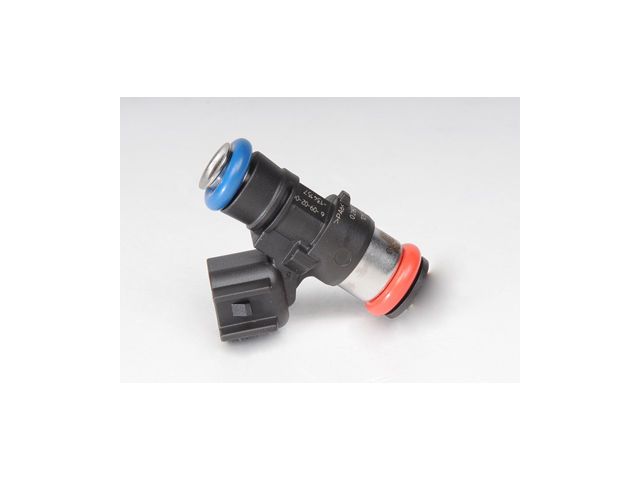
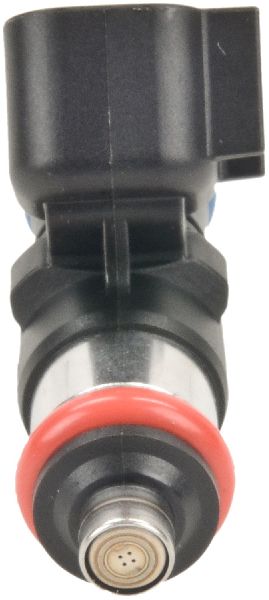
(OEM #ACDelco 12634126 (for 3.6L V6 LFX), ACDelco 12571159 (for 6.2L V8 LS3/L99))— If the wiring is intact, an internal failure (open or short) in one of the Group B injectors can cause this code.
Trusted brands: ACDelco, Bosch, Delphi
OEM price range: $90-$180
Aftermarket price range: $50-$120
Related Codes That Often Appear With This One
- P0201-P0208 — These codes specify a circuit malfunction for an individual injector (e.g., P0202 for cylinder 2). If P2149 is present, you will likely see a specific P020x code indicating which injector in Group B triggered the fault.
- P2146 — This code is for 'Fuel Injector Group 'A' Supply Voltage Circuit/Open'. Seeing both P2146 and P2149 together could point to a more significant wiring issue or a problem with the ECM that affects both injector banks.
Technical Service Bulletins (TSBs) & Recalls
- PIP4924D: Addresses multiple diagnostic trouble codes, including P2149, and directs technicians to inspect the fuel injector wiring harness for rub-through or internal wire opens. This TSB applies to a wide range of GM vehicles, including the Camaro.
Platform-Specific Known Issues
- A known issue documented in TSB #PIP4924D involves the fuel injector wiring harness rubbing through or developing internal opens, causing P2149 and related injector codes.
- Forum discussions among technicians and owners frequently point to the harness chafing on an aluminum bracket near the Fuel Injection Control Module (FICM) as a primary location to inspect.
Mechanic-Grade Diagnostic Values
- Fuel Injector Coil Resistance (LS3/L99 V8) — expected: Approximately 12.0 Ohms.. Failure: A reading significantly higher (open) or lower (short) than 12 Ohms indicates a faulty injector. All injectors should have similar resistance values.
- Fuel Injector Coil Resistance (LFX V6) — expected: 11.8—12.6 Ohms.. Failure: A reading outside this range, or one that differs significantly from the other injectors, points to a faulty injector.
- Injector Power Supply Voltage (Key On, Engine Off) — expected: Battery voltage (approx. 11.5 - 12.5 Volts) on the power supply wire at the injector connector.. Failure: A reading near 0 Volts indicates an open in the power supply circuit from the fuse/relay.
- Injector Control Wire Voltage (Backprobed, Engine Running) — expected: A pulsing waveform when viewed on an oscilloscope, or a test light connected between the two injector pins should flash rapidly.. Failure: No pulse or a steady light indicates a problem with the ECM driver or the wiring to the ECM.
- Wiring Harness Continuity Check — expected: Less than 10 Ohms for driver circuits, and greater than 100k Ohms between different driver circuits.. Failure: Resistance greater than 10 Ohms indicates an open or high resistance in the wire. Resistance less than 100k Ohms between circuits indicates a short.
Scan Tool Commands That Help
- GM GDS2/Tech 2: Injector Test / Balance Test — This bidirectional command allows a technician to individually fire each injector to confirm its operation without the engine running. It can help isolate a single faulty injector within Group B after the P2149 code has been set.
- GM GDS2/Tech 2: Wiggle Test — While monitoring live data or using the Injector Test function, wiggling the wiring harness can help induce the fault. If the injector status changes or the code resets during the wiggle test, it confirms an intermittent wiring issue, which is highly common for this code.
Wiring & Ground Locations
- Injector Power Wire — At each fuel injector connector. For V8 models, this is typically a Pink (PNK) wire common to all injectors.. This wire supplies the 12V+ to the injector bank. A test here confirms if the power supply side of the circuit is intact. P2149 specifically relates to a fault in this supply voltage circuit.
- Injector Control Wire — A unique color wire for each injector, running from the injector connector back to a specific pin on the Engine Control Module (ECM).. The ECM grounds this wire to fire the injector. A continuity check from the injector connector to the ECM pin is crucial to rule out an open or shorted control wire.
- ECM/PCM Grounds — On LS engines, primary PCM grounds are often found on a stud on the rear of the driver's side cylinder head and on the side of the engine block.. A poor or loose main ground for the ECM can cause a wide range of erratic electrical issues, including injector driver faults. While not a direct cause of P2149 alone, ensuring these are clean and tight is a fundamental diagnostic step.
- ECM Connector (e.g., X1/X2) — The main connectors at the Engine Control Module.. Knowing the pinout for the Group B injector control and power circuits at the ECM connector allows for definitive testing of the entire harness continuity from the module itself, isolating the fault to the harness, connector, or the ECM.
Real Owner Repair Stories
- DuramaxDiesels.com forum user (2004-2005 GM Truck w/ LLY Engine (Diagnosis is transferable to Camaro)) — Running rough, won't rev over 2000 RPM, codes P2149, P0202, P0203, P0205, P0208.
❌ Tried (didn't work) Load testing wires from FICM to injectors., Swapping with 3 different FICMs., Swapping with another ECM.
✅ What actually fixed it The user was advised to re-inspect the wiring harness near the FICM bracket for very small, pin-tip-sized chafe marks that are easy to miss, as this is a known issue documented in a GM bulletin. The implication is that a tiny, overlooked wiring chafe was the root cause after multiple modules were replaced unnecessarily.
Model Year Variations Within This Range
- 2010-2015: While the P2149 fault is consistent, the physical fuel injectors themselves changed. Early V8s (like LS3) used a taller injector style, while later models and other GM engines moved to a shorter EV6/USCAR style injector. When replacing injectors, it's critical to ensure the physical length and O-ring sizes match the specific intake manifold and fuel rail for that year.
Helpful Videos
We Have This Part in Stock


The information in this article is provided for general reference and educational purposes only. Vehicle specifications, procedures, and part compatibility can vary by production date, trim level, and region. Always consult your vehicle's factory service manual and verify part numbers before purchasing or performing repairs. Safety-critical components such as airbags, seat belts, and braking systems should be installed by a qualified professional.
- Chevrolet CAMARO:
- 🧭 Diagnostic Flowchart
- 🎬 Helpful Videos
- 🛍️ Shop This Part
- What's Unique About the 2011-2014 Chevrolet CAMARO
- Symptoms You May Notice
- Most Likely Causes
- Rare But Worth Checking
- Diagnosis Steps
- Parts You'll Likely Need
- Related Codes That Often Appear With This One
- Technical Service Bulletins (TSBs) & Recalls
- Platform-Specific Known Issues
- Mechanic-Grade Diagnostic Values
- Scan Tool Commands That Help
- Wiring & Ground Locations
- Real Owner Repair Stories
- Model Year Variations Within This Range
- 🎟️ Get 5% Off