

P2149 on 2009-2010 Saturn VUE: Fuel Injector Group B Circuit Fault Causes and Fixes
On a 2009-2010 Saturn VUE, code P2149 is almost always caused by a chafed or broken wire in the fuel injector wiring harness. This is a known issue documented in GM TSB #PIP4924D. The fix is typically a simple wire repair, costing very little in parts if you do it yourself. The most common chafe points are where the harness rubs against the intake plenum, valve cover bolts, or the side of the cylinder head.
- P2149 on a 2009-2010 Saturn VUE means an entire group of fuel injectors has been shut off by the computer.
- Do not immediately buy new fuel injectors. The problem is almost certainly a broken or chafed wire in the engine wiring harness.
- Carefully inspect the wiring harness where it touches the engine, especially near the intake manifold and valve covers, as per GM TSB #PIP4924D.
- The fix is often as simple as repairing the damaged wire and protecting it from future damage.
- Driving the vehicle with this code is unsafe and can cause further damage.
What's Unique About the 2009-2010 Saturn VUE
The 2009-2010 Saturn VUE, like many other GM vehicles from this era, is highly susceptible to this specific code due to a known wiring harness vulnerability. General Motors released Technical Service Bulletin #PIP4924D which directly addresses P2149 and points to the fuel injector wiring harness rubbing through its insulation against various engine components. Specific, documented chafe points include contact against the intake plenum, valve cover bolts, fuel lines, the side of the cylinder head, and various brackets. This makes a wiring fault a significantly higher probability than failed injectors or a bad computer.
Diagnostic Flowchart
Tap your situation to follow the diagnostic path that matches what you're seeing on this vehicle.
Symptoms You May Notice
- Severe engine misfire or shaking
- Rough, unstable idle
- Significant loss of engine power
- Engine may stall or be difficult to start
- Check Engine Light is on and may be flashing
- Hesitation on acceleration.
- Replacing one or more fuel injectors without first inspecting the wiring harness. The problem will persist if the root cause is a wiring fault.
- Replacing the ECM without confirming the wiring and injectors are good. This is an expensive and usually unnecessary repair for this code.
Most Likely Causes
- Chafed or Broken Fuel Injector Wiring Harness 🔴 High Probability → Shop Engine Wiring Harness As documented in TSB #PIP4924D, the harness routing makes it prone to rubbing against sharp edges. Common chafe points are: against the intake plenum, valve cover bolts, fuel lines, the side of the cylinder head under the plenum, and near the oil fill tube.
How to confirm: Perform a meticulous visual inspection of the entire fuel injector wiring harness, especially in the known chafe areas. A common and effective diagnostic is the 'wiggle test': with the engine idling roughly, carefully wiggle and manipulate the harness in suspected areas. If the engine sound changes or smooths out, you have likely found the location of the internal wire break. 🎬 See how to fix a bank injector fault without buying parts.
Typical fix: Repair the broken or shorted wire(s) using solder and heat shrink tubing. In cases of a damaged connector, a pigtail like the Standard Motor Products S-1024 can be spliced in. 🎬 Watch: Step-by-step guide to replacing a damaged fuel injector connector. Protect the repaired area with new convoluted loom or high-quality electrical tape and secure it away from the sharp edge or hot surface that caused the damage.
Est. part cost: $5-$30
Rare But Worth Checking
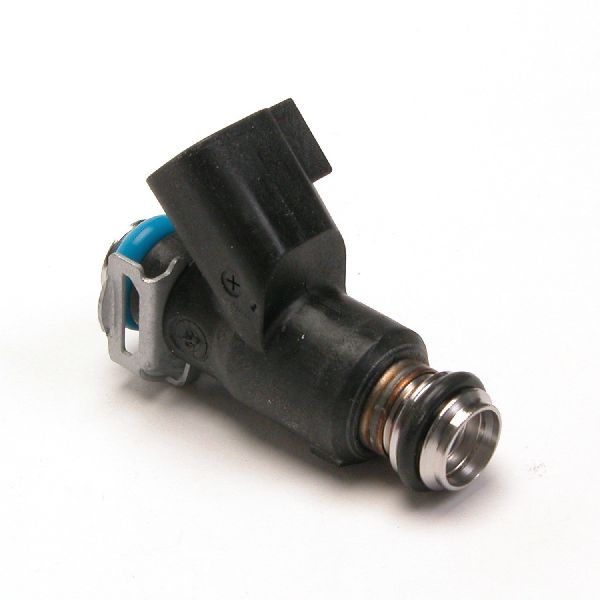
- Failed Fuel Injector: → Shop Fuel Injector While less common than the wiring issue for this specific code, an injector with an internally shorted or open coil within Group B can trigger the fault. This should be considered after the wiring harness has been thoroughly inspected and found to be intact. A multimeter test on the injector's pins should show resistance; an open circuit (infinite resistance) or a reading far from spec indicates failure.
- Faulty Engine Control Module (ECM/PCM): → Shop Engine Control Module (ECM) A failed injector driver circuit inside the ECM is a rare possibility. This is the last resort after definitively ruling out all wiring and component issues, as it is the most expensive part to replace. Forum users often caution against replacing the ECM unless all other possibilities have been exhausted.
Diagnosis Steps
- Read all stored fault codes with an OBD-II scanner. Note all codes, especially any misfire (P030x) or specific injector circuit (P020x) codes.
- Identify which cylinders are in 'Group B'. For the 3.5L/3.6L V6 engines, this is the front bank of cylinders (2, 4, 6) 🎬 Watch: Real-world diagnosis and repair of the P2149 circuit fault., closest to the radiator. For the 2.4L I4 engine, it is cylinders 2 and 3.
- Crucial Step: Following the guidance of TSB #PIP4924D, perform a thorough visual inspection of the fuel injector wiring harness. Check for chafing, melting, or breaks where the harness passes over or near the intake plenum, valve cover bolts, fuel lines, and the side of the cylinder head.
- Perform a 'Wiggle Test'. With the engine running (if it will stay running), carefully manipulate sections of the injector harness. If the engine's idle speed or smoothness changes, it strongly indicates the location of an internal wire break.
- If visible damage is found, repair the wire. This is the most likely fix.
- If no damage is visible, use a multimeter to check for continuity on the power supply wire between the affected injector connectors and the ECM. High resistance (over 0.5 ohms) indicates a break in the wire.
- If wiring is confirmed to be good, test the resistance of the fuel injectors in Group B. Compare the readings to a known-good injector. A reading that is significantly different, or shows an open circuit, indicates a failed injector.
- If both the wiring and the injectors test good, the final and least likely possibility is a fault within the Engine Control Module (ECM).
Parts You'll Likely Need
- Fuel Injector Wiring Harness Repair Supplies — The most common cause is a damaged wire, which can be repaired with basic supplies rather than replacing the whole harness.
OEM price range: $5-$20
Aftermarket price range: $5-$20 - Fuel Injector Connector Pigtail — If the plastic connector itself is damaged or the break is right at the connector, a pigtail is needed for repair.
Trusted brands: Standard Motor Products (e.g., S-1024), Dorman, ACDelco
OEM price range: $25-$50
Aftermarket price range: $15-$35 - Fuel Injector (3.6L V6)
(OEM #12608632)— If the wiring is intact, a failed injector is the next most likely cause.
Trusted brands: ACDelco, Bosch, Standard Motor Products
OEM price range: $65-$115
Aftermarket price range: $40-$70 - Fuel Injector (2.4L I4)
(OEM #12602480)— If the wiring is intact, a failed injector is the next most likely cause for the 4-cylinder engine.
Trusted brands: ACDelco, Denso, Standard Motor Products
OEM price range: $80-$120
Aftermarket price range: $40-$75 - Fuel Injector Wiring Harness (V6)
(OEM #12689346 (supersedes 12627091))— In cases of severe or widespread damage, replacing the entire harness may be easier than multiple repairs.
Trusted brands: ACDelco (GM Genuine)
OEM price range: $150-$250
Related Codes That Often Appear With This One
- P0300 — Indicates a random or multiple cylinder misfire. This is expected since P2149 causes an entire bank of injectors to shut down.
- P0302, P0304, P0306 — These are cylinder-specific misfire codes for the front bank on V6 engines. Their presence helps confirm which cylinders are in the disabled 'Group B'.
- P0202, P0203, P0204, P0206 — These codes indicate a circuit fault for a specific injector (e.g., P0202 for cylinder 2). They often accompany P2149 and help pinpoint the location of the wiring issue.
- P2146 — This is the equivalent code for 'Fuel Injector Group A'. Seeing both codes together is rare but could indicate widespread harness damage or a major ECM failure.
Technical Service Bulletins (TSBs) & Recalls
- PIP4924D: Addresses a long list of fuel injector codes, including P2149, and instructs technicians to inspect the fuel injector wiring harness for rubbing or internal opens. It lists common chafe points as being against the intake plenum, valve cover bolts, the fuel line, and the side of the head under the plenum.
Platform-Specific Known Issues
- GM Technical Service Bulletin #PIP4924D explicitly identifies this code and points to a chafed fuel injector wiring harness as the cause. Technicians are directed to inspect the harness for rub-through or internal wire opens before replacing any components.
- Real-World Repair Story (Platform Mate): An owner of a 2011 Chevrolet Equinox with the 3.0L V6 (a direct platform mate) reported a sudden rough run condition with codes P2149 and P0300. Following the advice of TSB PIP4924D, a detailed inspection revealed the fuel injector wiring harness was chafed completely through where it was rubbing against a metal bracket near the front valve cover. The owner repaired the broken wires, which resolved all codes and symptoms.
Mechanic-Grade Diagnostic Values
- Fuel Injector Coil Resistance (3.6L V6 & 2.4L I4) — expected: Approximately 12 to 16 Ohms. All injectors should be within 0.5 Ohms of each other.. Failure: A reading of 0 Ohms (short circuit), infinite resistance (open circuit), or a value significantly different from the other injectors on the engine.
- Injector Connector Voltage (Key On, Engine Off) — expected: Approximately 12 Volts (battery voltage) on the power supply wire.. Failure: Low or no voltage indicates a problem in the power supply circuit, likely a broken wire or blown fuse as suggested by TSB PIP4924D.
- Wiring Harness Continuity — expected: Less than 0.5 Ohms of resistance from the ECM connector pin to the corresponding injector connector pin.. Failure: Resistance greater than 0.5 Ohms indicates a partial break or corrosion in the wire, which is the primary suspect for this code.
Scan Tool Commands That Help
- GM Tech2 / GDS2 or equivalent professional scan tool: Injector Balance Test / Active Fuel Injector Test (AFIT) — This function allows the technician to command each injector to fire individually while monitoring the fuel pressure drop. For P2149, a bidirectional tool can be used to attempt to activate the injectors in Group B. If they do not respond (no click, no pressure drop), it confirms a circuit or component failure within that group. This helps isolate the problem after a visual inspection is inconclusive.
Wiring & Ground Locations
- G107 — At the rear of the engine block.. This is a primary engine ground. While not directly for the injectors (which are ground-controlled by the ECM), a poor engine ground can cause a host of electrical issues and reference voltage problems for the ECM, potentially leading to misdiagnosis.
- ECM Ground — The ECM itself is grounded to the chassis. On similar GM platforms, key PCM grounds are located on a coil mounting stud or a ground lug on the engine block, often near the starter.. The ECM controls the injectors by providing a path to ground. A faulty ECM ground can cause erratic behavior of the injector driver circuits, although it would typically affect more than just one injector bank.
- Fuel Injector Harness Connector — Connects the main engine harness to the fuel injector sub-harness, typically located near the intake manifold.. This connector is a potential point of failure. Corrosion or a loose pin in this connector can affect the entire bank of injectors, mimicking the symptoms of a chafed wire.
Real Owner Repair Stories
- Reddit user, r/Saturn_Cars (2008 Saturn Vue 3.6L V6) — Misfires on the entire rear bank of cylinders (1, 3, 5) which is Group 'A', not 'B', but the root cause is highly relevant.
❌ Tried (didn't work) Checking fusible links.
✅ What actually fixed it The ground wire for the bank 1 ignition coils had become brittle and broke near the power steering pump reservoir during a valve cover gasket replacement. Repairing the broken ground wire resolved all misfires. This highlights how fragile wiring in this area can be and how a ground issue can disable an entire bank.
OEM Part Supersession History
12627091→12689346— Updated part design, likely for improved durability or material changes.
Heads up: While listed for the V6, some databases incorrectly associate this part with 2.0L Turbo engines from other GM models. It is critical to verify the correct harness part number for the specific VUE engine (2.4L, 3.5L, or 3.6L) via a VIN lookup.
Model Year Variations Within This Range
- 2009-2010: The 2009-2010 VUE was offered with three distinct engines: a 2.4L I4, a 3.5L V6 (pushrod), and a 3.6L V6 (DOHC). The wiring harness routing, chafe points, and specific part numbers for injectors and harnesses are different for each engine. The TSB #PIP4924D applies broadly, but the physical location of the fault will vary. For example, on the 3.6L, the harness is often chafed by the intake plenum, while on the 2.4L, it may be closer to the cylinder head.
Helpful Videos
We Have This Part in Stock



The information in this article is provided for general reference and educational purposes only. Vehicle specifications, procedures, and part compatibility can vary by production date, trim level, and region. Always consult your vehicle's factory service manual and verify part numbers before purchasing or performing repairs. Safety-critical components such as airbags, seat belts, and braking systems should be installed by a qualified professional.
- Saturn VUE:
- 🧭 Diagnostic Flowchart
- 🎬 Helpful Videos
- 🛍️ Shop This Part
- What's Unique About the 2009-2010 Saturn VUE
- Symptoms You May Notice
- Most Likely Causes
- Rare But Worth Checking
- Diagnosis Steps
- Parts You'll Likely Need
- Related Codes That Often Appear With This One
- Technical Service Bulletins (TSBs) & Recalls
- Platform-Specific Known Issues
- Mechanic-Grade Diagnostic Values
- Scan Tool Commands That Help
- Wiring & Ground Locations
- Real Owner Repair Stories
- OEM Part Supersession History
- Model Year Variations Within This Range
- 🎟️ Get 5% Off