

OBD-II Code P2152: Fuel Injector Group 'C' Supply Voltage Circuit Low/Open
What P2152 means, why it triggers, and how to fix it
- Code P2152 indicates an electrical failure in the injector supply circuit, meaning you should test the wiring harness before spending $150+ replacing fuel injectors.
- On 2009-2014 GM V6 engines, TSB PIP4924D identifies harness chafing against the intake plenum or valve cover as the root cause in over 90% of P2152 cases.
- Always check the 'ECM1' or 'INJ' fuse first; a blown fuse confirms a short circuit to ground that must be traced and repaired.
- Driving with a flashing check engine light and code P2152 dumps unburnt fuel into the exhaust, which destroys catalytic converters and adds up to $2,800 to your repair bill within weeks.
What Does P2152 Mean?
The Powertrain Control Module (PCM) powers fuel injectors in groups. Code P2152 means 'Group C' is receiving low or no voltage due to an open or shorted circuit. To prevent damage, the PCM shuts down this entire injector group, starving multiple cylinders of fuel. On common GM 3.6L V6 engines, 'Group C' controls the injectors for cylinders 2 and 5.
Technical definition: The PCM detects the voltage in the power supply circuit for fuel injector Group 'C' is below the minimum threshold or completely open, prompting the module to disable the affected injector drivers.
Can I Drive With P2152?
No — Do Not Drive. Do not drive with this code. The engine will suffer a severe misfire and lack power. Continuing to drive dumps unburnt fuel into the exhaust, which destroys the catalytic converters and adds $1,500 to $4,000 to your repair bill within days.
Common Causes
- Chafed or Broken Fuel Injector Wiring Harness (Very Common) — The wiring harness rubs against engine parts like the intake plenum, valve cover bolts, or fuel lines. This friction wears through the insulation, breaking or shorting the power wire. This is the root cause in over 90% of GM V6 cases (TSB PIP4924D).
- Blown Injector Fuse (Due to Short Circuit) (Common) — A short circuit in the chafed harness causes the fuse protecting the injector circuit (often labeled ECM1 or INJ) to blow instantly. This cuts all power to the group.
- Corroded or Loose Electrical Connector (Common) — Moisture intrusion at the main harness junction or injector connectors causes corrosion. This creates high electrical resistance, dropping the voltage below the PCM's required threshold.
- Internal Harness Break (Less Common) — Constant engine heat and vibration make wires brittle. The copper strands inside the insulation break, creating an invisible open circuit that requires a continuity test to find.
- Faulty Fuel Injector (Less Common) — An individual fuel injector fails internally with a short or open circuit. While possible, a single bad injector usually triggers a specific P020x code rather than a group voltage code.
- Weak Battery or Charging System (Rare) — A failing alternator or weak battery drops the entire vehicle's system voltage. Under heavy electrical load, the voltage supplied to the injector drivers dips too low, triggering the fault.
- Faulty Powertrain Control Module (PCM) (Rare) — The internal injector driver circuit inside the engine computer burns out. This is a last-resort diagnosis only considered after ruling out all wiring faults.
Symptoms
- Flashing Check Engine Light — The light flashes to warn you of a severe, catalyst-damaging engine misfire.
- Severe Engine Misfire and Shaking — The engine runs violently rough and vibrates because multiple cylinders are completely dead.
- Engine Stalling at Idle — The engine cannot maintain a stable idle and stalls frequently at stoplights or low speeds.
- Reduced Engine Power (Limp Mode) — The vehicle accelerates poorly or enters a restricted power mode to prevent further mechanical damage.
- Heavy Exhaust Smoke and Fuel Smell (also visible on scanner) — Raw, unburnt fuel exits the exhaust, creating a strong sulfur or gas odor and visible smoke.
Diagnostic Flowchart
Tap your situation to follow the diagnostic path that matches what you're seeing on this code.
Common Fixes & Costs
- Repair Damaged Wiring Harness — Parts: $10-$30 (wire, solder, heat shrink, TESA tape), Labor: $150-$300 (1-2 hours), ~1.5 hr book time (Intermediate)
- Replace Fuel Injector Wiring Harness Section — Parts: $75-$300, Labor: $300-$750 (2-5 hours, depending on intake manifold removal), ~3.5 hr book time (Professional)
- Replace Blown Fuse and Repair Short Circuit — Parts: $5 (fuses), Labor: $150-$300 (1-2 hours diagnostic time), ~1.5 hr book time (Intermediate)
- Replace Faulty Fuel Injector(s) — Parts: $60-$150 per injector, Labor: $150-$400, ~2.5 hr book time (Intermediate)
- Replace Engine Control Module (PCM) — Parts: $600-$900, Labor: $150-$300 (includes programming), ~1.5 hr book time (Professional)
DIY vs Professional
- Repair Damaged Wiring Harness 🟢 Beginner
Tools: Multimeter, wire strippers, soldering iron, heat shrink tubing, TESA tape. - Replace Blown Fuse 🟢 Beginner
Tools: Fuse puller. - Replace Fuel Injector Wiring Harness Section 🟢 Beginner
Tools: Extensive socket set, torque wrench, intake manifold gaskets.
Used vs. New Parts: Buying Guide
When a used part is worth it: Buying a used pigtail connector or harness section from a salvage yard is highly cost-effective if the donor vehicle has low mileage and no front-end collision damage.
Donor-vehicle mileage cap: roughly under 80000 miles for the part to have meaningful remaining life.
Donor quality checklist:
- Verify the donor vehicle was not scrapped for an engine fire.
- Avoid harnesses from rust-belt states due to hidden connector corrosion.
- Match the OEM part number exactly; minor option differences change harness layouts.
Decision logic:
- If The fix is a single broken wire or connector pigtail → Buy new repair materials (wire, terminals). It is inexpensive and guarantees reliability.
- If The entire harness section is melted and the vehicle is over 10 years old → Buy a used harness from a low-mileage donor to save $200+ on parts.
- If The failed part is the PCM → Buy a professionally remanufactured unit with a warranty. Used PCMs require expensive dealer reprogramming anyway.
Warranty tradeoff: Used harnesses carry a 30-day parts-only warranty. New OEM harnesses carry a 1-2 year warranty.
Worst-case if a used part fails: $600 if a used wiring harness fails, requiring you to pay the labor cost twice.
What Happens If You Wait — Timeline
- 0-1 week: Code P2152 sets. Engine runs rough, shakes at idle, and stalls. Significant loss of power. (MPG impact: 20%% · Added cost: $25 in wasted fuel.)
- 1-4 weeks: Check Engine Light flashes. A sulfur smell emits from the exhaust as unburnt fuel overheats the catalytic converter. (MPG impact: 35%% · Added cost: $100 in wasted fuel. Catalytic converter damage begins.)
- 1-3 months: The catalytic converter's internal ceramic melts and clogs. The vehicle struggles to accelerate past 30 mph. (MPG impact: 50%% · Added cost: $1200-$2800 for a new catalytic converter.)
- 3+ months: The exhaust is completely blocked. The engine stalls immediately after starting. Extreme backpressure destroys oxygen sensors. (MPG impact: 100% (undrivable)% · Added cost: $1500-$4000+ for converters and sensors.)
Cost of Not Fixing It
- 0-1 week: Severe engine misfire, rough idle, stalling, and a flashing check engine light. (Added cost: $25 in wasted fuel.)
- 1-4 weeks: Unburnt fuel enters the exhaust and overheats the catalytic converter, melting the internal ceramic substrate. (Added cost: $1200-$2800)
- 1+ months: Complete exhaust blockage from melted converters. The engine stalls immediately after starting. Oxygen sensors are destroyed. (Added cost: $1500-$4000+)
Diagnosis Steps
- Read Codes and Check TSBs
Scan for all codes and record freeze-frame data. Check for Technical Service Bulletins (TSBs) for your specific VIN. If you own a 2009-2014 GM V6, TSB PIP4924D dictates exactly where to look for harness damage.
Tools: OBD-II Scanner (Beginner) - Inspect the Injector/ECM Fuse
Locate the fuse powering the fuel injectors (often ECM1 or INJ). If it is blown, you have a confirmed short circuit to ground. Do not replace it until you find the short.
Tools: Owner's Manual, Fuse Puller, Multimeter (Beginner) - Visually Inspect the Wiring Harness
Trace the fuel injector wiring harness. Look for shiny, melted, or exposed copper wires where the harness touches the intake manifold, metal brackets, or valve covers.
Tools: Flashlight, Inspection Mirror (Intermediate) - Perform a 'Wiggle Test'
With the engine idling, physically manipulate the injector wiring harness in various spots. If the engine stumbles, stalls, or the idle smooths out, you have pinpointed the exact location of the broken wire.
Tools: None (Intermediate) - Test the Supply Voltage Wire
Disconnect an injector in Group C. Set a multimeter to DC Volts. With the key ON and engine OFF, probe the power supply pin. It must read battery voltage (~12.6V). Zero volts confirms an open circuit between the fuse box and the injector.
Tools: Multimeter, Vehicle Wiring Diagram (Advanced) - Check Injector Resistance
Set a multimeter to Ohms and measure across the two pins of the disconnected fuel injector. Normal resistance is typically 11-14 ohms. A reading of infinite (OL) or near 0 ohms means the injector is dead.
Tools: Multimeter (Advanced) - Analyze Live Scan Tool Data
Monitor 'Fuel Injector Pulse Width' and 'System Voltage' on a live data scanner. A pulse width of 0 ms on the affected cylinders confirms the PCM has disabled the group. Compare the scanner's system voltage to the voltage at the battery to spot electrical dropouts.
Tools: Advanced OBD-II Scanner (Advanced) - Perform a Voltage Drop Test
Connect the red multimeter lead to the battery positive and the black lead to the injector power pin (engine running, injector connected). A reading above 0.5V proves excessive resistance in the wiring.
Tools: Multimeter with long leads, Back-probe pins (Professional)
When This Code Triggers (Freeze-Frame Conditions)
- Engine Coolant Temp: 180-200°F (fully warmed up)
- RPM: 1500-2500 (cruise / steady throttle)
- Engine Load: 30-60% (moderate load, not heavy acceleration)
- System Voltage: < 11.0V (indicates a charging system failure contributing to the code)
Related Codes
- P0300 — Reports the direct result of P2152: multiple cylinders are misfiring because the PCM cut their fuel supply.
- P0302, P0305 — Pinpoints the exact cylinders misfiring. These codes help you identify exactly which cylinders make up the disabled 'Group C'.
- P0201-P0206 — Indicates a circuit fault for a single injector. Appears alongside P2152 if harness damage affects multiple individual wires simultaneously.
- P2149 / P2155 — Identical codes for injector groups 'B' or 'D'. Seeing these alongside P2152 confirms a massive short circuit, a melted main harness, or a dead PCM.
Climate & Environmental Factors
- High Heat and Vibration: Prolonged exposure to engine bay temperatures bakes wire insulation until it becomes brittle. Engine vibration then causes the brittle harness to rub against metal brackets, wearing through the plastic and shorting the copper wire.
- Moisture and Road Salt: Water intrusion in regions using road salt rapidly corrodes the pins inside the main harness connectors. This corrosion acts as a resistor, dropping the voltage reaching the injectors below the PCM's threshold.
How to Talk to a Mechanic About This Code
Say this: "I have a P2152 code and a severe misfire. I'd like to schedule a diagnostic appointment to specifically test the fuel injector wiring harness for a short or open circuit, as I know this is a common failure point."
This directs the technician to the most probable cause and prevents them from immediately quoting $800 to replace fuel injectors without testing the wiring first.
Avoid saying:
- 'Just fix whatever's wrong.'
- 'My check engine light is on, can you look at it?'
- 'I think I need new fuel injectors.'
Questions to ask before authorizing the repair:
- Did you find the specific point of failure in the wiring harness? Can you show me a picture?
- What tests did you perform to confirm the open/short in the circuit?
- If you're recommending an injector replacement, how did you definitively rule out the wiring harness?
Where to Take It: Dealer vs Independent vs Chain
- Dealer:
A safe but expensive choice. They know the TSBs but favor costly harness replacements over targeted wire repairs.
Best for: Vehicles under warranty., Complex PCM programming.
Downsides: Significantly higher labor rates., Dealers often refuse to repair wires, forcing you to buy a $900 complete harness assembly. (Typical cost: +50% vs. baseline) - Independent Shop:
Best fit. A reputable independent shop with strong electrical diagnostic skills offers the best balance of expertise and value.
Best for: Out-of-warranty vehicles., Targeted, cost-effective wire repairs.
Downsides: Diagnostic skill varies; look for ASE-certified electrical specialists. (Typical cost: +0% vs. baseline) - Chain Shop:
AVOID. They frequently misdiagnose electrical codes as bad fuel injectors, leading to unnecessary $600+ parts bills.
Best for: Tires, brakes, and oil changes.
Downsides: Technicians lack advanced electrical diagnostic training., Incentivized to sell parts rather than perform labor-intensive wiring repairs. (Typical cost: -10% vs. baseline)
When to Walk Away From the Repair
If the estimated repair cost exceeds 50% of the car's private-party value, sell the car as-is.
- Car worth $4000, fix is $1200: Borderline. Get a second opinion to see if a $200 wire repair is possible before authorizing a full harness replacement.
- Car worth $12000, fix is $600: Fix it. The repair cost is low relative to the vehicle's value.
- Car worth $2500, fix is $1500: Walk away. The repair cost is 60% of the car's value.
What Scan Tool You Need for This Code
Minimum: A scanner that graphs live data streams, specifically System Voltage and injector pulse widths.
A $20 code reader cannot show the live voltage data needed to confirm an electrical drop-out during a 'wiggle test'.
Budget: BlueDriver Pro (~$100) — Connects to your smartphone to provide live data graphing. Sufficient for a DIYer to find the fault by wiggling the harness and watching the voltage data.
Mid-range: Foxwell NT510 Elite (~$200) — Provides bidirectional controls. Allows you to perform an 'active test' to command the injector circuit on and off, confirming if the wiring or the PCM driver is at fault.
Professional: Autel MaxiCOM MK808S (~$450) — Offers full bidirectional control, OEM-level diagnostics, and performs special functions like injector coding if an injector is replaced.
Rent vs buy: Buy the budget pick. You need the scanner active during your physical wiggle test, making a quick auto parts store rental impractical.
How to Clear the Code After You Fix It
- Reconnect battery (if disconnected for repair)
- Use OBD-II scan tool to clear diagnostic trouble codes
- Perform a complete drive cycle to allow readiness monitors to run
Drive cycle (~30 minutes): Start the engine cold and idle for 3 minutes. Drive in stop-and-go traffic for 10 minutes. Drive at a steady 55 mph on a highway for 15 minutes. Allow the vehicle to cool down completely.
Readiness monitors affected: Catalyst monitor, Evaporative System monitor, O2 Sensor monitor, Misfire monitor
Before emissions retest: drive at least 50 miles to fully set monitors.
Watch out for:
- Disconnecting the battery clears the code but resets all readiness monitors, resulting in an automatic emissions test failure.
- The code returns immediately upon startup if the short or open circuit was not properly repaired.
Will This Fail Emissions / State Inspection?
Yes — this code typically fails an OBD-II emissions inspection.
- California: An active P2152 is an automatic failure. All OBD-II readiness monitors must be 'Ready' to pass, requiring a full drive cycle after clearing the code.
- New York: The NYS DMV inspection includes an OBD-II scan. P2152 results in an automatic failure. The check engine light must be off.
- Texas: Vehicles fail the OBD-II inspection with this code. Texas allows one monitor to be 'Not Ready' for 2001+ vehicles after repair.
Most Commonly Affected Vehicles
- GMC Acadia / Terrain (2009-2014) — Highly susceptible to harness chafing on the 3.6L V6, documented in GM TSB #PIP4924D.
- Chevrolet Equinox / Traverse / Malibu / Camaro (2009-2014) — The 3.0L and 3.6L V6 engines suffer from the same TSB-documented harness routing flaw.
- Buick Enclave / LaCrosse (2009-2014) — Shares the identical powertrain and harness routing issues as the Traverse and Acadia.
- Cadillac SRX / STS / CTS (2009-2014) — Covered under TSB #PIP4924D for injector wiring harness failures rubbing against the engine block.
- Ford F-250/F-350 Super Duty (6.0L Diesel) (2003-2007) — Injector voltage supply issues are almost exclusively caused by a failing Fuel Injector Control Module (FICM) dropping below 48V.
Manufacturer-Specific Notes
- General Motors (Chevrolet, GMC, Buick, Cadillac): TSB PIP4924D proves the fuel injector wiring harness rubs against the engine and fails on 2009-2014 V6 models. A wiring problem causes this code over 90% of the time on these vehicles.
- Ford: On 6.0L Powerstroke diesels, injector voltage problems are caused by a failing Fuel Injector Control Module (FICM), not the main PCM or wiring harness.
- Subaru: The vehicle's computer disables traction control and illuminates the ABS/Traction light as a built-in precaution whenever P2152 sets.
Real Owner Stories
2011 Chevrolet Traverse 3.6L V6
Check Engine Light flashed with a severe shudder. Codes P2152, P0300, P0302, and P0305 were present. A shop quoted $800 for new fuel injectors.
What they tried:
- Researched the code and found TSB PIP4924D.
- Inspected the harness near the valve cover.
Outcome: The owner found the harness rubbed through on a valve cover bolt. They repaired the broken wire with solder and heat shrink for $15. The codes cleared and performance returned to normal.
Lesson: Always inspect the wiring harness for chafing on GM V6 engines before authorizing expensive component replacements.
GM Duramax Diesel Truck
P2152 appeared immediately after pressure-washing the engine bay. The truck ran rough.
What they tried:
- Replaced the pigtail connector for the suspect injector.
- Waited three days for moisture to evaporate.
Outcome: The owner disconnected the main multi-pin engine harness connector, blew it out with compressed air, applied dielectric grease, and reconnected it. The code vanished. Water intrusion caused a temporary short.
Lesson: If the code appears after an engine wash, dry out the main electrical connectors before cutting wires or replacing parts.
2009 GMC Acadia
Vehicle constantly blew the 'ECM1' fuse. Scanner showed P2152 and P2155.
What they tried:
- Replaced the fuse three times; it blew instantly every time.
Outcome: Multiple group codes (P2152 and P2155) plus a blown fuse proved a massive short. A technician found the main harness melted against the exhaust manifold. The entire harness section required replacement.
Lesson: Multiple injector group codes or a repeatedly blowing fuse indicates a severe, widespread harness failure, not a single broken wire.
How to Prevent This Code From Triggering
- Inspect the fuel injector wiring harness. (Every 30,000 miles.) — Catching chafe points before the wire insulation breaks prevents the short circuit that triggers P2152.
- Add protective split-loom tubing to vulnerable harness sections. (Once.) — Applying anti-abrasion tape or tubing near sharp metal edges provides a sacrificial layer that stops wires from rubbing through.
- Apply dielectric grease to critical connectors. (Anytime a connector is unplugged.) — Grease prevents moisture intrusion, stopping the pin corrosion that causes high resistance and low voltage faults.
Frequently Asked Questions
What is the most common mistake when diagnosing P2152?
Replacing fuel injectors without inspecting the wiring harness. P2152 is a supply voltage code, meaning the fault lies in the shared wiring or fuse, not the individual injectors.
Is P2152 a serious problem?
Yes. It causes a severe misfire that dumps raw fuel into the exhaust. Driving with this code destroys catalytic converters quickly.
What does 'Group C' mean?
'Group C' is the PCM's designation for a specific team of fuel injectors. On common GM 3.6L V6 engines, this refers to cylinders 2 and 5.
How much does it cost to fix code P2152?
A simple wire repair costs $150-$300 at a shop. Replacing a damaged harness section ranges from $400 to $900, while a new PCM exceeds $800.
Can a bad battery cause code P2152?
Yes, a weak battery or failing alternator drops system voltage below the 9-10V threshold required by the injector drivers under load. Always verify you have 12.6V at rest and 13.8V+ running.
Can I fix P2152 myself?
You can DIY this if the cause is an accessible chafed wire or blown fuse. Stop and consult a professional if the harness damage is under the intake manifold or requires PCM programming.
What is a 'wiggle test'?
With the engine running, physically manipulate the injector wiring harness. If the engine stumbles or the misfire changes, you have pinpointed the exact location of the broken wire.
Key Takeaways
- Code P2152 indicates an electrical failure in the injector supply circuit, meaning you should test the wiring harness before spending $150+ replacing fuel injectors.
- On 2009-2014 GM V6 engines, TSB PIP4924D identifies harness chafing against the intake plenum or valve cover as the root cause in over 90% of P2152 cases.
- Always check the 'ECM1' or 'INJ' fuse first; a blown fuse confirms a short circuit to ground that must be traced and repaired.
- Driving with a flashing check engine light and code P2152 dumps unburnt fuel into the exhaust, which destroys catalytic converters and adds up to $2,800 to your repair bill within weeks.
Shop the Parts Behind P2152
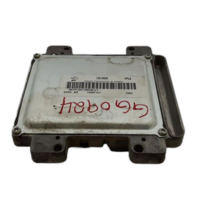
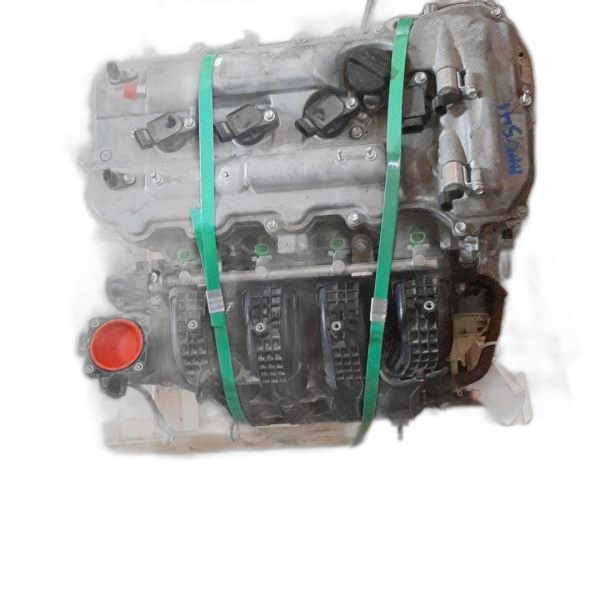
Below are the parts most often responsible for code P2152, ranked by how frequently each one is the actual culprit (per the diagnosis above). Tap any to see what we have for your vehicle.





The information in this article is provided for general reference and educational purposes only. Vehicle specifications, procedures, and part compatibility can vary by production date, trim level, and region. Always consult your vehicle's factory service manual and verify part numbers before purchasing or performing repairs. Safety-critical components such as airbags, seat belts, and braking systems should be installed by a qualified professional.
- 🧭 Diagnostic Flowchart
- 🛍️ Shop This Part
- What Does P2152 Mean?
- Can I Drive With P2152?
- Common Causes
- Symptoms
- Common Fixes & Costs
- DIY vs Professional
- Used vs. New Parts: Buying Guide
- What Happens If You Wait — Timeline
- Cost of Not Fixing It
- Diagnosis Steps
- When This Code Triggers (Freeze-Frame Conditions)
- Related Codes
- Climate & Environmental Factors
- How to Talk to a Mechanic About This Code
- Where to Take It: Dealer vs Independent vs Chain
- When to Walk Away From the Repair
- What Scan Tool You Need for This Code
- How to Clear the Code After You Fix It
- Will This Fail Emissions / State Inspection?
- Most Commonly Affected Vehicles
- Manufacturer-Specific Notes
- Real Owner Stories
- 2011 Chevrolet Traverse 3.6L V6
- GM Duramax Diesel Truck
- 2009 GMC Acadia
- How to Prevent This Code From Triggering
- Frequently Asked Questions
- What is the most common mistake when diagnosing P2152?
- Is P2152 a serious problem?
- What does 'Group C' mean?
- How much does it cost to fix code P2152?
- Can a bad battery cause code P2152?
- Can I fix P2152 myself?
- What is a 'wiggle test'?
- Key Takeaways
- 🎟️ Get 5% Off