

P2152 on 2009-2014 Buick Enclave: Fuel Injector Group 'C' Circuit Fixes
This code indicates a problem with the power supply circuit for 'Group C' fuel injectors, which on the GM 3.6L V6 are typically injectors for cylinders 2 and 5. The most common cause on this vehicle is a damaged fuel injector wiring harness, as noted in GM Technical Service Bulletin #PIP4924D. Inspecting and repairing the harness, especially where it may chafe against the intake plenum or valve cover bolts, is the most likely fix.
- P2152 on a Buick Enclave almost always points to a wiring problem before a part failure.
- Always inspect the fuel injector wiring harness for chafing or breaks as the first step, as outlined in TSB #PIP4924D.
- Do not replace fuel injectors or the ECM until the wiring harness has been completely ruled out as the cause.
- This code is often accompanied by other injector group codes (P2149, P2155), which further strengthens the likelihood of a harness issue.
What's Unique About the 2009-2014 Buick ENCLAVE
The first-generation Buick Enclave and its GM Lambda platform siblings (Chevy Traverse, GMC Acadia, Saturn Outlook) are known for wiring harness issues with their 3.6L (LLT and LFX) engines. The primary cause for P2152 is often not a failed part, but rather the fuel injector wiring harness chafing against other engine components. This is so common that GM issued Technical Service Bulletin #PIP4924D 🎬 Watch: How to diagnose a fuel injector circuit malfunction., which specifically advises technicians to inspect the harness for damage at common rub points, such as against the intake plenum, valve cover bolts, and fuel lines, when encountering this and related codes.
Diagnostic Flowchart
Tap your situation to follow the diagnostic path that matches what you're seeing on this vehicle.
Symptoms You May Notice
- Check Engine Light is on
- Engine runs rough or idles erratically
- Noticeable loss of power and poor acceleration
- Engine misfires, sometimes felt as a shudder
- Increased fuel consumption
- Engine may stall at low speeds
- Blowing the ECM1 fuse in some cases
- Replacing fuel injectors without first thoroughly inspecting the wiring harness. The TSB clearly points to the harness as the primary culprit, and replacing parts without checking the wiring can lead to unnecessary expense and not fix the root cause.
- Replacing the ECM without confirming an external wiring short wasn't the initial cause. A shorted harness can damage the new ECM as well.
Most Likely Causes
- Fuel Injector Wiring Harness Chafing or Damage 🔴 High Probability → Shop Engine Wiring Harness As documented in TSB #PIP4924D, the wiring harness is susceptible to rubbing through its insulation. Common chafe points are against the intake plenum, at valve cover bolts, against the fuel line, and on the side of the cylinder head under the plenum. A particularly notorious spot on these platforms is where the harness can rub on a sharp metal tab of the EGR valve gasket.
How to confirm: Visually inspect the entire fuel injector wiring harness, focusing on the specific areas mentioned in TSB #PIP4924D. Look for shiny spots on the harness, exposed copper wires, or breaks. Unplug the main harness connector (e.g., X160 or X161) and the injector connectors for the affected group. Use a multimeter to check for continuity on the power supply wire from the main harness connector to the injector connector. Also check for shorts to ground.
Typical fix: Repair the damaged section of the wire. This involves cutting out the bad section, soldering in a new piece of automotive-grade wire, and protecting the repair with heat-shrink tubing. Reroute the harness slightly or add protective conduit to prevent future chafing. If the chafe point was the EGR gasket tab, bend the tab over to prevent a repeat failure. In severe cases, a harness pigtail or the entire engine harness may need to be replaced.
Est. part cost: $5-$50 for repair materials - Failed Fuel Injector ⚪ Low Probability → Shop Fuel Injector While less common than wiring issues for this specific group voltage code, the direct injectors on the 3.6L engine can fail electrically, creating an open circuit. They are also prone to carbon buildup and mechanical failure (leaking), though that typically sets different codes.
How to confirm: After confirming the wiring is intact, test the resistance of the fuel injectors in Group C with a multimeter. For the 2009-2011 LLT engine, expect ~1.5-1.6 Ohms. For the 2012-2014 LFX engine, expect ~1.2-1.8 Ohms. An out-of-spec reading (often infinite for an open circuit) indicates a failed injector. This requires removing the intake manifold for access.
Typical fix: Replace the faulty fuel injector. It is often recommended to replace all injectors on the same bank, or all six, especially on higher-mileage vehicles to ensure balanced performance. This is a labor-intensive job as the intake manifold must be removed.
Est. part cost: $50-$150 per injector - Faulty Engine Control Module (ECM) ⚪ Low Probability → Shop Engine Control Module (ECM) An internal failure of the injector driver circuit within the ECM can cause this code, but it is rare. This is usually caused by an external short in the wiring that damages the ECM.
How to confirm: This should be the last resort after all wiring and components have been thoroughly tested and confirmed to be good. Confirmation involves verifying with a scan tool and multimeter that the ECM is not providing the high voltage supply to the injector group, despite having proper power and ground inputs and no shorts on the output circuit.
Typical fix: Replace and reprogram the Engine Control Module. This requires specialized tools to program the new module to the vehicle's VIN and security system.
Est. part cost: $300-$800
Rare But Worth Checking
- Corroded or loose pins at the main engine harness connectors (X160/X161) or at the ECM connector.
- Water intrusion into an injector connector after engine washing, causing a temporary short.
Diagnosis Steps
- Scan the vehicle for all stored trouble codes. Note any other injector-related codes (P2149, P2155, P0201-P0206) that are present, as they can help pinpoint a harness-wide issue.
- Obtain and review GM Technical Service Bulletin #PIP4924D (or its latest revision). The bulletin strongly suggests inspecting the fuel injector wiring harness first.
- Carefully inspect the entire fuel injector wiring harness for any signs of chafing, melting, or broken wires. Pay close attention to areas where the harness is secured by clips or runs near engine brackets, the intake plenum, and valve cover bolts.
- If no visible damage is found, use a wiring diagram to identify the power supply wire for injector Group 'C' (cylinders 2 & 5).
- Disconnect the main harness connector (e.g., X160/X161) and test for voltage on the ECM side of the connector with the key on. If voltage is missing, the issue may be with the ECM or its power supply.
- If voltage is present at the main connector, perform a continuity test on the supply wire from that connector to the individual injector connectors for cylinders 2 and 5 to find the break in the circuit.
- If the wiring is confirmed to be good, the intake manifold will need to be removed to access the injectors. Test the resistance of the fuel injectors in that group (cylinders 2 & 5). A normal reading is typically 1.5-1.6 Ohms for the LLT engine (2009-2011) or 1.2-1.8 Ohms for the LFX engine (2012-2014). Replace any that are out of specification.
- If both wiring and injectors are good, the final possibility is an internal failure of the injector driver circuit within the ECM. This is the least likely cause.
Parts You'll Likely Need
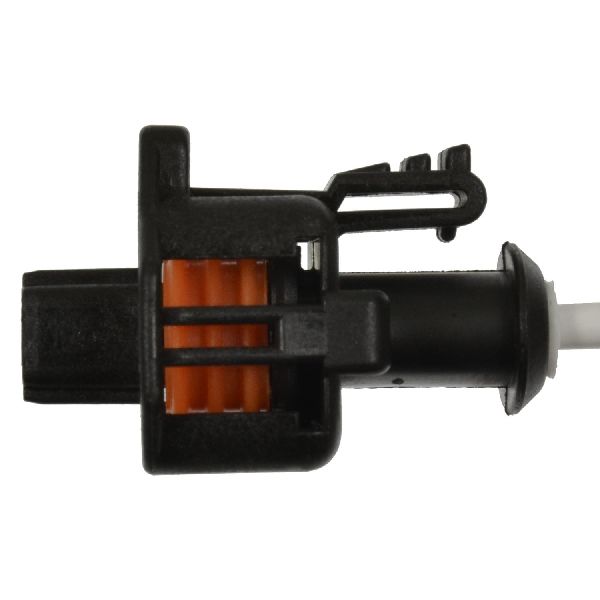
- Fuel Injector Wiring Harness Repair Supplies — The most common cause is a chafed or broken wire in the harness, which can be repaired without replacing major components.
Trusted brands: N/A (Solder, wire, heat shrink)
OEM price range: $5-$20
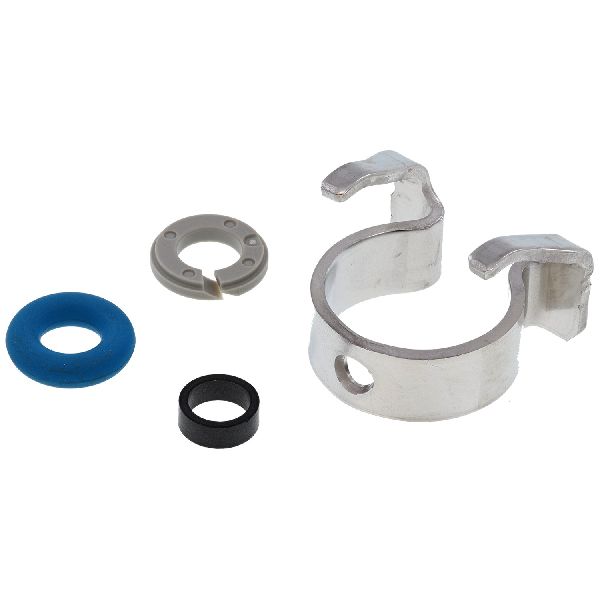
Aftermarket price range: $5-$20 - Fuel Injector
(OEM #12638530)— If the wiring is intact, an injector may have failed electrically, causing an open circuit. This part number is for the LLT engine; the LFX number may differ.
Trusted brands: ACDelco, Bosch
OEM price range: $100-$180
Aftermarket price range: $40-$90
Related Codes That Often Appear With This One
- P2149 — This is the code for Fuel Injector Group 'B' (or 'A'). A wiring harness issue can often affect the power supply for multiple injector groups simultaneously.
- P2155 — This is the code for Fuel Injector Group 'D'. Like P2149, it often appears with P2152 when a common wiring harness is damaged.
- P0201-P0206 — These codes correspond to individual injector circuit malfunctions (Cylinders 1-6). They can appear alongside the group code if the wiring fault is specific to one injector's control wire in addition to the group's power supply.
- P216D — This is another injector group supply voltage code. A technician on iATN reported seeing P2152, P2155, and P216D together on a 2011 Traverse due to a shorted wire blowing the ECM fuse.
Technical Service Bulletins (TSBs) & Recalls
- PIP4924D: Addresses multiple injector codes including P2152, advising technicians to inspect the fuel injector wiring harness for rub-through or internal wire opens. It lists specific chafe points. This TSB has been revised multiple times (e.g., PIP4924A, PIP4924B, PIP4924C), each time updating the applicable model years.
Platform-Specific Known Issues
- Technical Service Bulletin #PIP4924D explicitly calls out a high probability of the fuel injector wiring harness rubbing through or having internal wire opens, causing this and a host of other fuel injector codes. Specific chafe points are against the intake plenum and valve cover bolts.
- A post on MHH Auto forums for a 2009 GMC Acadia with P2152 and P2155 showed a user confirming continuity on the wires but still having no voltage, leading them to suspect the ECM as the final step.
Mechanic-Grade Diagnostic Values
- Fuel Injector Resistance (2009-2011 3.6L LLT Engine) — expected: ~1.5 - 1.6 Ohms. Failure: A reading of infinity (OL), near zero, or significantly outside the expected range.
- Fuel Injector Resistance (2012-2014 3.6L LFX Engine) — expected: ~1.2 - 1.8 Ohms. Failure: A reading outside this narrow range indicates an internal injector fault.
- Injector Circuit Voltage (Key On, Engine Off) — expected: 11.5V - 12.5V (Battery Voltage). Failure: Voltage significantly lower than battery voltage points to an open or short in the supply circuit.
- Injector Pulse Width at Idle (Scan Tool Live Data) — expected: 2 - 4 milliseconds (ms). Failure: A value of 0 ms on the affected cylinders indicates the ECM has disabled the injector.
Hidden / Shadow Codes Worth Checking
- Injector Circuit Status (Parameter ID): This is not a DTC, but a specific data parameter visible on a professional scan tool like the GM GDS2. It will display 'OK', 'Not Run', or 'Fault' for each injector circuit, providing a more granular view of the fault status than the generic trouble code. (see via GM GDS2 or equivalent high-level scan tool.)
Scan Tool Commands That Help
- GDS2 (GM Global Diagnostic System 2): Injector Test / Fuel Injector Balance — Use this after confirming wiring integrity. This bidirectional test commands each injector to fire individually while the tool monitors the drop in fuel rail pressure. A cylinder that shows significantly less pressure drop than others indicates a mechanically weak, clogged, or electrically failing injector that passed a basic resistance test.
- Kent Moore J-39021 (or equivalent): Injector Balance Test — This specialty tool manually pulses each injector while a fuel pressure gauge is connected. The technician records the pressure drop for each injector. The pressure drop between all cylinders should be within 1.5 PSI of each other. This is used to physically test injector flow without removing them from the vehicle.
Wiring & Ground Locations
- X160 / X161 — The main multi-way harness connectors for the fuel injectors, located at the rear of the intake manifold.. These are the primary junction points for the injector harness. A fault in the pins or wiring near these connectors can cause an entire group of injectors to fail. Service procedures point to disconnecting these to isolate the harness for testing.
- G101 — Located at the left front of the engine on the lower block, sometimes with a jumper to the frame cross rail.. This is a primary ground for the Engine Control Module (ECM). A poor connection here can cause erratic behavior and low voltage faults across multiple systems, including the injector drivers.
- G105 / G106 — Located at the front of the engine compartment, often on the frame rail near the radiator support or under the crank pulley.. These are main engine and frame grounds. A corroded or loose connection can introduce electrical noise or voltage offsets that affect sensor and module operation, potentially leading to incorrect fault codes.
- Injector Group 'C' Cylinders — Cylinders 2 and 5.. P2152 specifically refers to the power supply circuit for these two cylinders. Cylinder 2 is the front-most cylinder on the driver's side (Bank 2), and Cylinder 5 is the middle cylinder on the passenger's side (Bank 1).
Real Owner Repair Stories
- GM Preliminary Information Bulletin / Forum Reports (2009-2014 Chevrolet Traverse (Lambda Platform Sibling)) — Engine misfire, rough running, and DTCs including P2152, P2149, P2155.
❌ Tried (didn't work) Replacing injectors or ECM before thorough harness inspection.
✅ What actually fixed it The fuel injector wiring harness was found chafed on a sharp metal tab of the EGR valve gasket. The fix was to repair the damaged wires and physically bend the EGR gasket tab over to create clearance and prevent the problem from recurring. - YouTube channel 'prince lawson' (2012 Buick Enclave) — Persistent misfire code, eventually with a large puff of white smoke.
❌ Tried (didn't work) Replacing spark plugs., Replacing spark plugs and ignition coils.
✅ What actually fixed it The final fix was replacing the fuel injectors, which resolved the misfire and smoke issue. This indicates the injectors had failed mechanically or were leaking badly.
OEM Part Supersession History
12638530→12669384— Manufacturer update for improved performance or reliability.
Heads up: Part number 12638530 is for the 3.6L LLT engine (2009-2011). While 12669384 is the superseding part, it's also listed for the LFX engine. Always verify the correct part for your specific engine type (LLT vs LFX) before ordering.
Model Year Variations Within This Range
- 2009-2011: These models use the 3.6L LLT V6 engine with a Bosch ECM. The fuel injectors have a specified resistance of approximately 1.5-1.6 Ohms.
- 2012-2014: These models use the updated 3.6L LFX V6 engine with a Delphi ECM and integrated exhaust manifolds. The fuel injectors are different, with a specified resistance of approximately 1.2-1.8 Ohms. The wiring harnesses are not interchangeable with the earlier LLT engine.
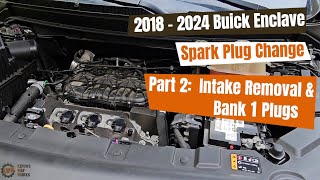
Helpful Videos

We Have This Part in Stock



The information in this article is provided for general reference and educational purposes only. Vehicle specifications, procedures, and part compatibility can vary by production date, trim level, and region. Always consult your vehicle's factory service manual and verify part numbers before purchasing or performing repairs. Safety-critical components such as airbags, seat belts, and braking systems should be installed by a qualified professional.
- Buick ENCLAVE:
- 🧭 Diagnostic Flowchart
- 🎬 Helpful Videos
- 🛍️ Shop This Part
- What's Unique About the 2009-2014 Buick ENCLAVE
- Symptoms You May Notice
- Most Likely Causes
- Rare But Worth Checking
- Diagnosis Steps
- Parts You'll Likely Need
- Related Codes That Often Appear With This One
- Technical Service Bulletins (TSBs) & Recalls
- Platform-Specific Known Issues
- Mechanic-Grade Diagnostic Values
- Hidden / Shadow Codes Worth Checking
- Scan Tool Commands That Help
- Wiring & Ground Locations
- Real Owner Repair Stories
- OEM Part Supersession History
- Model Year Variations Within This Range
- 🎟️ Get 5% Off