

P2152 on 2010-2014 Cadillac CTS: Injector Voltage Fault Causes and Fixes
On a 2010-2014 Cadillac CTS, code P2152 is almost always caused by a chafed fuel injector wiring harness, not faulty injectors. The fix involves inspecting, repairing, and protecting the harness. Parts are cheap (wire, tape), but labor can be moderate.
- For a P2152 code on a 2010-2014 Cadillac CTS, immediately suspect a wiring issue.
- Before buying any parts, perform a detailed visual inspection of the fuel injector wiring harness for signs of rubbing or damage, per TSB PIP4924D.
- Common chafe points are near the intake plenum, valve cover bolts, and fuel lines.
- Repairing the harness with basic wiring supplies is the most common and cost-effective solution.
- Only consider replacing fuel injectors or the ECM after the wiring harness has been proven to be in perfect condition.
What's Unique About the 2010-2014 Cadillac CTS
This issue is exceptionally common across many GM vehicles from this era, including the 2010-2014 CTS, due to a specific design and routing issue with the fuel injector wiring harness. GM issued Technical Service Bulletin (TSB) #PIP4924D that directly addresses this code, pointing technicians to inspect the harness for rubbing (chafing) against engine components. Common rub-through spots are specifically against the intake plenum, at valve cover bolts, against the high-pressure fuel line, and on the side of the cylinder head under the plenum. This known vulnerability makes a wiring inspection the absolute first step in diagnosis, far before suspecting the injectors or ECM.
Diagnostic Flowchart
Tap your situation to follow the diagnostic path that matches what you're seeing on this vehicle.
Symptoms You May Notice
- Check Engine Light (SES light) is on
- Engine running rough or vibrating (misfiring)
- Reduced engine power or poor acceleration
- Engine may stall at low speeds
- Inconsistent idle
- Flashing Check Engine Light under load
- Replacing one or more fuel injectors without first inspecting the wiring harness. Given the known TSB, the harness is the most likely culprit and checking it first can save hundreds of dollars.
- Replacing the Engine Control Module (ECM) prematurely. An ECM failure is rare and should only be considered after all other possibilities have been exhausted.
- Using incorrect resistance specifications for testing the injectors. These GDI injectors have a very low resistance (1.25-1.75 ohms), which can be mistaken for a short if compared to older port-style injectors (11-16 ohms).
Most Likely Causes
- Chafed or Damaged Fuel Injector Wiring Harness 🔴 High Probability → Shop Engine Wiring Harness As documented in TSB PIP4924D, the harness routing on the 3.0L and 3.6L engines makes it highly susceptible to rubbing against sharp edges on the engine, leading to exposed and shorted wires. The most common failure point is on the driver's side of the engine, where the harness can rub against an engine cover mounting stud or the edge of the intake plenum.
How to confirm: Perform a thorough visual and physical inspection of the fuel injector wiring harness. Remove the plastic engine cover. Pay close attention to where the harness runs near the intake plenum, valve cover bolts, high-pressure fuel lines, and the side of the cylinder head. Feel along the harness for rough or worn-through spots in the plastic conduit, which may hide the damaged wires inside.
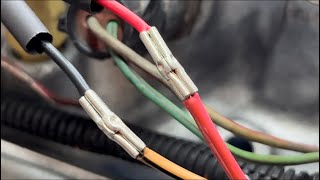
Typical fix: Repair the damaged wires using solder and heat shrink, or by splicing in new wire sections with weatherproof butt connectors. 🎬 Watch: Professional techniques for repairing damaged engine harness wiring. Protect the repaired area and the rest of the harness with high-quality electrical tape (e.g., Tesa cloth tape) and/or a new split-loom conduit. Re-route the harness slightly if possible to increase clearance from the sharp edge, or zip-tie it securely away from the point of contact.
Est. part cost: $5-$25 - Failed Fuel Injector ⚪ Low Probability → Shop Fuel Injector
How to confirm: If the wiring is confirmed to be intact, test the resistance of the fuel injectors in the affected group. On these GDI engines, resistance should be between 1.25-1.75 ohms when cool. A reading outside this range indicates a failed injector. A common misdiagnosis is using the 11-16 ohm spec for older port injectors. A more advanced test involves checking for a short to ground from either pin of the injector connector to the engine block.
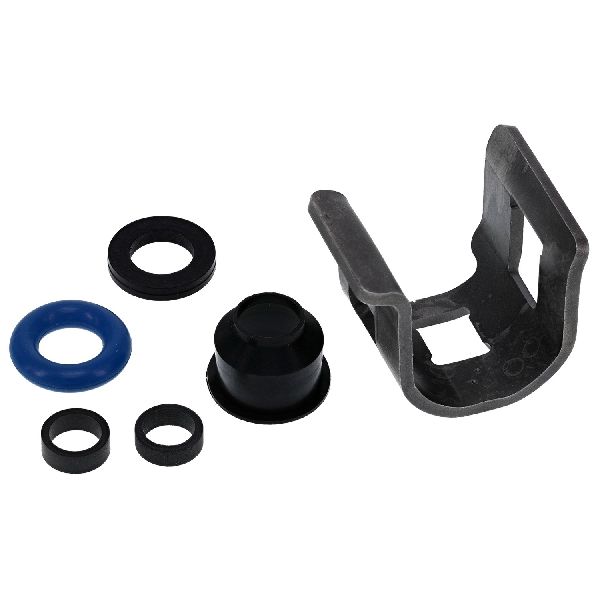
Typical fix: Replace the faulty fuel injector. It is often recommended to replace all injectors on the same bank or as a full set if they are high mileage. Lubricate the new injector's O-rings with clean engine oil or dielectric grease before installation.
Est. part cost: $50-$150 per injector - Failed Engine Control Module (ECM) ⚪ Low Probability → Shop Engine Control Module (ECM)
How to confirm: This should be the last resort after confirming the wiring and all injectors are good. A technician can use advanced diagnostic tools like a high-impedance voltmeter or oscilloscope to check the driver output from the ECM. If a test lamp connected to the supply circuit is always on or always off when it should be pulsing, and the wiring is good, the ECM is likely at fault.
Typical fix: Replace the ECM. This requires programming the new module to the vehicle's VIN and specific configuration.
Est. part cost: $300-$800
Rare But Worth Checking
- Corroded or Loose Connector: Water intrusion or vibration can cause a poor connection at the main engine harness connector or at the injector itself. Unplugging, cleaning with electrical contact cleaner, and re-seating the connectors can sometimes resolve the issue.
- Pinched Harness from Previous Repair: In some cases, the injector harness can be pinched between the intake manifold and the cylinder head during reassembly from a different repair (like spark plug replacement). This can crush the wires and cause an immediate or intermittent short, leading to the P2152 code.
Diagnosis Steps
- Read all stored DTCs with an OBD-II scanner. Note all codes present, especially any other injector group codes like P2149 or P2155.
- Remove the plastic engine cover and thoroughly inspect the fuel injector wiring harness as described in TSB PIP4924D. Look and feel for chafing against the intake plenum, valve cover bolts, fuel lines, and cylinder head.
- If damage is found, repair the wires using solder and heat-shrink tubing, protect the harness with new conduit/tape, and secure it away from the contact point. Clear the codes and test drive. This is the most likely fix.
- If no wiring damage is visible, disconnect the injectors in the suspect group (e.g., cylinders 3 and 6) and measure their resistance with a multimeter. The reading should be between 1.25-1.75 ohms. Replace any injector that is out of spec.
- Perform a voltage drop test on the supply circuit. The difference in voltage between the ECM connector and the injector connector should be less than 0.5V.
- Check for corrosion or damage at the injector connectors and the main engine harness connector. Clean with contact cleaner and apply dielectric grease as needed.
- If wiring and injectors test good, the final step is to suspect the ECM. This requires advanced diagnostics to confirm and is best left to a professional.
Parts You'll Likely Need
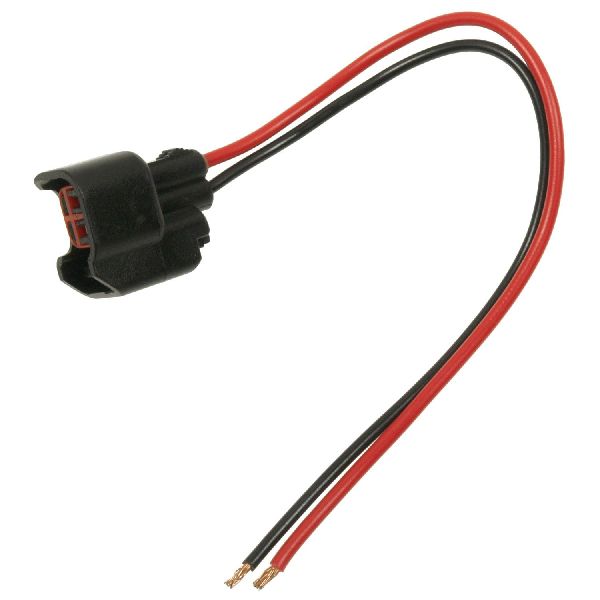
- Fuel Injector Wiring Harness Repair Supplies — This is the most common fix. You will need wire, solder, heat-shrink tubing, electrical tape, and split-loom conduit to repair the chafed section of the harness.
Trusted brands: 3M, Tesa (for cloth tape)
OEM price range: $10-$30
Aftermarket price range: $10-$30 - Fuel Injector
(OEM #12669384 (supersedes 12638530))— If the wiring is confirmed to be good, an injector with an internal short or open circuit is the next most likely cause. Note that part numbers differ between LLT (2010-11) and LFX (2012-14) engines.
Trusted brands: ACDelco (GM Genuine), Bosch
OEM price range: $80-$150
Aftermarket price range: $50-$100 - Fuel Injector Wiring Harness
(OEM #12604950)— In cases of severe or widespread damage, replacing the entire injector sub-harness may be easier than repairing multiple wires. 🎬 Watch: How to replace the entire injector harness assembly.
Trusted brands: ACDelco (GM Genuine)
OEM price range: $150-$200
Aftermarket price range: $75-$125
Related Codes That Often Appear With This One
- P2149 — P2149 is for Fuel Injector Group 'A'. Seeing both P2149 and P2152 strongly suggests a wiring harness issue that is affecting the supply voltage circuits for both injector groups.
- P0201-P0206 — These codes (e.g., P0201, P0202) indicate a circuit malfunction for individual injectors. They often accompany a group code like P2152 when a wiring short or open occurs.
- P2155 — This is another fuel injector group voltage code ('Group D'). Since GM pairs injectors on the same driver circuit (e.g., 3 and 6), a fault on that circuit will often set both P2152 and P2155 simultaneously.
Technical Service Bulletins (TSBs) & Recalls
- Bulletin #PIP4924D (dated 2014-01-21): Addresses multiple injector-related DTCs, including P2152, and instructs technicians to inspect the fuel injector wiring harness for rub through or internal wire opens. It lists specific models and engines affected.
Platform-Specific Known Issues
- The primary vehicle-specific issue is the high probability of the fuel injector wiring harness chafing, as documented by GM in Technical Service Bulletin PIP4924D. This bulletin covers the 2010-2014 CTS with the 3.0L and 3.6L engines and lists common rub-through spots, including against the intake plenum, valve cover bolts, and fuel lines.
Mechanic-Grade Diagnostic Values
- Fuel Injector Coil Resistance (GDI Engines) — expected: 1.25 - 1.75 ohms (when cool). Failure: A reading of 0 ohms (shorted), OL/infinite (open), or significantly outside the specified range.
- Injector Power Supply Voltage (Key On, Engine Off) — expected: 12.0V - 14.5V (Battery Voltage). Failure: 0V or significantly low voltage indicates an open or short in the power supply circuit before the injector.
- Injector Circuit Voltage Drop — expected: < 0.5 Volts. Failure: A voltage drop greater than 0.5V between the ECM supply terminal and the injector connector indicates high resistance in the wiring.
Hidden / Shadow Codes Worth Checking
- Cluster of TSB-related codes: While not a single 'hidden' code, seeing P2152 accompanied by other codes listed in TSB PIP4924D (such as P2149, P2155, or any P020x codes) is a powerful diagnostic indicator. The presence of multiple, seemingly separate injector codes strongly suggests the single, common point of failure is the wiring harness, not multiple failed components. (see via Any standard OBD-II scanner will read these codes. The key is interpreting the pattern of codes together.)
Scan Tool Commands That Help
- GM GDS2 / Tech2: Fuel Injector Balance Test — This bidirectional test is used after confirming the wiring integrity. It commands each injector to fire for a set duration while monitoring the resulting drop in fuel rail pressure. A cylinder that shows a significantly different pressure drop compared to others indicates a poorly performing injector, helping to isolate a faulty injector from a wiring issue.
Wiring & Ground Locations
- G101 — Located at the lower front of the engine block.. This is a primary ground for the Engine Control Module (ECM). A loose or corroded connection here can cause erratic ECM behavior and unstable reference voltages for the injector driver circuits, potentially triggering false codes.
- G111 — On the engine block, often located above the starter motor on the 3.6L LFX engine.. This is another primary engine block ground. A poor connection can cause electrical noise and unstable voltage across multiple actuator circuits, including the fuel injectors.
- Cylinder Numbering — On the longitudinally mounted V6, Bank 1 (Driver's Side) cylinders are 1-3-5 (front to back). Bank 2 (Passenger's Side) are 2-4-6 (front to back).. Knowing the cylinder layout is essential for locating the correct injector group. P2152 (Group B) is often paired with P2155 (Group D), which may correspond to injectors on cylinders 3 and 6, for example.
Real Owner Repair Stories
- CadillacForums.com user reports (2011 Cadillac CTS 3.6L (LLT)) — Check engine light with multiple injector codes (P2149, P2152, P0202, P0205), rough running, and reduced power.
❌ Tried (didn't work) Clearing codes (they returned immediately)
✅ What actually fixed it A single wire in the main engine harness was found chafed through where it was rubbing against a plastic mounting stud for the engine cover on the driver's side of the engine. The wire was repaired with solder and heat shrink, and protected with tape. This single repair resolved all stored trouble codes.
OEM Part Supersession History
12638530 (also 12632255, 12611545)→12669384— Standard part revision and consolidation by the manufacturer.
Heads up: This part number is for the LLT engine. The LFX engine (2012-2014) uses a different fuel injector.
Model Year Variations Within This Range
- 2010-2011: These models primarily use the 3.6L LLT V6 engine, which has an aluminum intake manifold and uses a Bosch ECM. The common fuel injector part number is 12638530 (superseded by 12669384).
- 2012-2014: These models use the updated 3.6L LFX V6 engine. The LFX features a lighter composite intake manifold, cylinder heads with integrated exhaust manifolds, and uses a Delphi ECM. The fuel injectors, high-pressure fuel pump, and timing components are different from the LLT. While the harness chafing issue remains the same, the specific part numbers for injectors and harnesses will not be interchangeable with earlier models.
Helpful Videos
We Have This Part in Stock


The information in this article is provided for general reference and educational purposes only. Vehicle specifications, procedures, and part compatibility can vary by production date, trim level, and region. Always consult your vehicle's factory service manual and verify part numbers before purchasing or performing repairs. Safety-critical components such as airbags, seat belts, and braking systems should be installed by a qualified professional.
- Cadillac CTS:
- 🧭 Diagnostic Flowchart
- 🎬 Helpful Videos
- 🛍️ Shop This Part
- What's Unique About the 2010-2014 Cadillac CTS
- Symptoms You May Notice
- Most Likely Causes
- Rare But Worth Checking
- Diagnosis Steps
- Parts You'll Likely Need
- Related Codes That Often Appear With This One
- Technical Service Bulletins (TSBs) & Recalls
- Platform-Specific Known Issues
- Mechanic-Grade Diagnostic Values
- Hidden / Shadow Codes Worth Checking
- Scan Tool Commands That Help
- Wiring & Ground Locations
- Real Owner Repair Stories
- OEM Part Supersession History
- Model Year Variations Within This Range
- 🎟️ Get 5% Off