

P2152 on 2011-2014 Chevrolet Camaro: Fuel Injector Group B Circuit Low Voltage Guide
On a 2011-2014 Camaro, code P2152 almost always indicates a problem with the fuel injector wiring harness. It is known to rub against the engine, causing a short or open circuit. Before replacing any injectors, thoroughly inspect the entire harness for damage, especially at the back of the cylinder heads and near the intake plenum, as this is the most likely and cost-effective fix.
- P2152 on a 2011-2014 Camaro points to an electrical issue with the 'Group B' fuel injectors.
- The most probable cause is a damaged fuel injector wiring harness rubbing against the engine; inspect this before buying parts.
- Other causes include a failed fuel injector or a bad connector, but these are less likely than the wiring issue.
- Driving with this code can cause misfires and potentially damage your catalytic converters, so prompt diagnosis is recommended.
- This issue is well-documented in both official GM service bulletins and owner forums.
What's Unique About the 2011-2014 Chevrolet CAMARO
The 5th generation Camaro, particularly with the V6 and V8 engines, is susceptible to a specific wiring issue. The fuel injector wiring harness is routed in a way that it can chafe against engine components. TSB PIP4924D identifies several common rub-through spots, including against the intake plenum, at valve cover bolts, against the fuel line, and on the side of the cylinder head under the plenum. This rubbing action eventually wears through the wire insulation, causing a short or open circuit that triggers codes like P2152. This is so common that a Technical Service Bulletin was issued to guide technicians to inspect this harness first.
Diagnostic Flowchart
Tap your situation to follow the diagnostic path that matches what you're seeing on this vehicle.
Symptoms You May Notice
- Check Engine Light is on
- Engine running rough or vibrating (misfiring)
- Reduced engine power or hesitation during acceleration
- "Service Stabilitrak" message may appear on the dash
- Engine may stall at idle
- Rough or unstable idle
- Replacing one or more fuel injectors without first inspecting the wiring harness. Many owners replace injectors only to have the code return because the root cause was the chafed wiring.
Most Likely Causes
- Chafed or Damaged Fuel Injector Wiring Harness 🔴 High Probability → Shop Engine Wiring Harness As documented in TSB #PIP4924D, the harness routing makes it vulnerable to rubbing against engine parts, leading to wire damage.
How to confirm: Carefully and thoroughly inspect the entire length of the fuel injector wiring harness. Per the TSB, pay close attention to where the harness may contact: the intake plenum, valve cover bolts, fuel lines, and the side of the cylinder head (especially under the plenum). Look for worn-through plastic loom and damaged, exposed, or shorted wires inside.
Typical fix: Repair the damaged section of the wire(s). This involves cutting out the bad section, splicing in a new piece of wire with solder and quality butt connectors, and protecting the repair with heat shrink tubing. The harness should then be re-routed or secured with zip ties away from the contact point to prevent recurrence. In cases of extensive or hard-to-find damage, replacing the entire engine wiring harness may be necessary, as documented by owners in forums.
Est. part cost: $10-$30 for repair materials, $200+ for a new harness - Faulty Fuel Injector 🟡 Medium Probability → Shop Fuel Injector
How to confirm: If the wiring is confirmed to be good, you can test the injectors. Measure the resistance of each injector in Group B and compare it to the others and to manufacturer specs (typically 11-16 Ohms). A significantly different reading indicates a bad injector. You can also swap a suspect injector with one from a different cylinder and see if the misfire code (e.g., P030X) follows the injector.
Typical fix: Replace the faulty fuel injector. It is often recommended to replace all injectors on that bank or all injectors at once if they are high mileage.
Est. part cost: $60-$150 per injector - Poor Connection at Harness or ECM ⚪ Low Probability
How to confirm: Disconnect and inspect the main fuel injector harness connector and the corresponding connectors at the ECM. Look for any bent, corroded, or backed-out pins.
Typical fix: Clean the connector pins and apply a small amount of dielectric grease before reconnecting. If a pin is damaged, the connector may need to be repinned or replaced.
Est. part cost: $5-$50
Rare But Worth Checking
- Faulty Engine Control Module (ECM): → Shop Engine Control Module (ECM) This is extremely rare. The ECM should only be considered after all other possibilities, especially wiring and injectors, have been exhaustively ruled out. An ECM failure for an injector driver circuit is uncommon.
Diagnosis Steps
- Scan the ECM for all stored trouble codes. Note P2152 and any other accompanying codes like P2149 or specific injector/misfire codes.
- Perform a detailed visual inspection of the fuel injector wiring harness as cited in TSB #PIP4924D. Check all areas where it comes close to the engine, especially against the intake plenum, at valve cover bolts, against the fuel line, and on the side of the head under the plenum.
- If harness damage is found, repair the wiring. Clear the codes and test drive to see if the code returns.
- If no wiring damage is visible, disconnect the harness and perform a continuity test on the power supply wire for the Group B injectors from the ECM to the injector connectors.
- Test the resistance of each fuel injector in Group B using a multimeter. Compare the Ohm readings to ensure they are all within specification (approx. 11-16 Ohms) and consistent with each other.
- If an injector is out of spec, replace it.
- If wiring and injectors test good, check for a stable power supply and good ground connections at the ECM. Key grounds are located at the rear of the cylinder heads.
- As a final, unlikely step, the ECM may need to be tested by a professional.
Parts You'll Likely Need
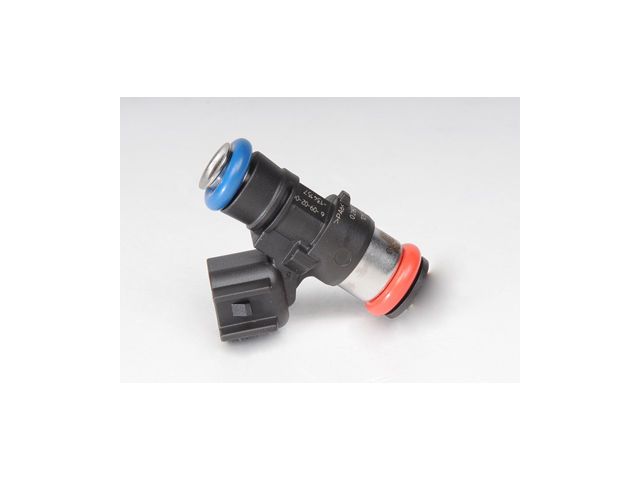
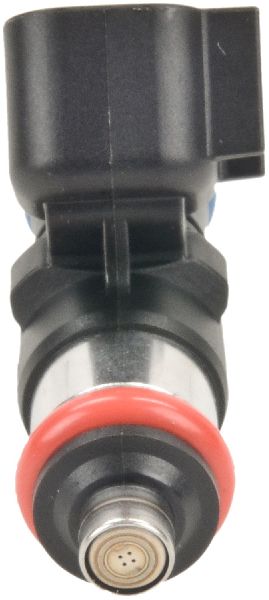
- Fuel Injector
(OEM #12634126)— If the wiring harness is intact, an injector with an internal short or open circuit is the next most likely cause.
Trusted brands: ACDelco, Bosch
OEM price range: $90-$140
Aftermarket price range: $50-$100 - Engine Wiring Harness
(OEM #12621095)— In cases of severe, multiple, or hard-to-find chafing, replacing the entire engine harness is the definitive fix. This has been the solution for some owners after failing to fix the issue by replacing injectors.
Trusted brands: ACDelco (Genuine GM)
OEM price range: $200-$300
Aftermarket price range: N/A - Fuel Injector Connector Pigtail — If the wiring is damaged right at the connector, or the connector itself is broken, a new pigtail will be needed for the repair.
Trusted brands: Standard Motor Products, ACDelco
OEM price range: $25-$40
Aftermarket price range: $10-$20
Related Codes That Often Appear With This One
- P2149 — This code is for 'Fuel Injector Group A Supply Voltage Circuit'. Seeing both P2149 and P2152 together strongly suggests a problem common to both injector banks, such as the main power feed to the harness or a major short in the harness affecting both circuits.
- P0201-P0206 — These are specific codes for each injector's circuit (e.g., P0201 for cylinder 1). A group fault like P2152 may be accompanied by a specific fault code for an injector within that group, like P0202 or P0204.
- P0300-P0306 — These are misfire codes (P0300 for random misfire, P0301-P0306 for specific cylinders). A fuel injector circuit problem will cause the corresponding cylinder(s) to misfire.
Technical Service Bulletins (TSBs) & Recalls
- PIP4924D: Addresses intermittent misfires, stalling, and various fuel injector circuit codes (P2149, P2152, etc.) by directing technicians to inspect the fuel injector wiring harness for rub-through damage at specific locations like the intake plenum, valve cover bolts, and side of the cylinder head.
Platform-Specific Known Issues
- A known issue documented in TSB #PIP4924D involves the fuel injector wiring harness rubbing through on engine components. Specific points of failure are against the intake plenum, valve cover bolts, fuel lines, and the side of the cylinder head. This is the primary suspect for code P2152 on this vehicle.
Mechanic-Grade Diagnostic Values
- Fuel Injector Coil Resistance — expected: 11.0 to 16.0 Ohms for high-impedance injectors used in these engines.. Failure: A reading of 0.0 Ohms (shorted), infinite/"OL" (open), or a value that deviates by more than 0.5 Ohms from the other injectors.
- Injector Circuit Voltage Drop — expected: Less than 0.5 Volts.. Failure: A voltage drop greater than 0.5V between the ECM supply pin and the injector connector indicates high resistance in the wiring.
- Engine Ground to Battery Negative Terminal Resistance — expected: < 0.1 Ohms.. Failure: A reading higher than 0.1 Ohms indicates a poor ground connection, which can cause a variety of electrical issues, including injector circuit faults.
Scan Tool Commands That Help
- GDS2 (GM Global Diagnostic System 2): Fuel Injector Balance Test — This function can be used after verifying the electrical circuit is intact. It commands each injector to fire and measures the corresponding drop in fuel rail pressure. An inconsistent pressure drop for an injector in Group B would point to a clogged or mechanically failing injector, rather than an electrical fault.
- GDS2 (GM Global Diagnostic System 2): Module Diagnostics > Control Functions — Allows a technician to access bidirectional controls for various modules, including the ECM. While it may not directly command an injector group, it allows for comprehensive testing of ECM outputs to confirm the module is functioning correctly before condemning it.
Wiring & Ground Locations
- G103 — Located at the rear of the left (driver's side) cylinder head.. This is a critical ground for the ECM and Body Control Module (BCM). A poor connection here can cause erratic behavior and fault codes, including injector circuit voltage issues.
- G104 — Located at the rear of the right (passenger's side) cylinder head.. Provides a primary ground path for engine-mounted components. Like G103, a loose or corroded connection here can affect the stability of the entire engine management system.
- Injector Power Supply Wire — Runs in the engine harness from the underhood fuse block to the fuel injectors. The wire color is typically Pink/Black (PNK/BLK) for the main injector voltage supply on many GM vehicles.. This is the specific wire that provides the voltage monitored by the ECM for code P2152. Damage to this wire is a direct cause of the fault.
- ECM Connector X1 / X2 / X3 (LFX Engine) — The Engine Control Module (ECM) on the LFX V6 is located on the driver's side of the engine bay. It has three main connectors: X1 (Blue), X2 (Black), and X3 (Gray).. Technicians need to know which connector and pin to test when diagnosing a circuit fault at the ECM. Injector control signals and power monitoring circuits originate from these connectors. Pinout charts are required for precise testing.
Real Owner Repair Stories
- Camaro5 Forum user 'jski73' (2011 Camaro 1LT V6 (LLT)) — Shuttering at highway speeds, no power, cruise control out, reduced engine power message.
❌ Tried (didn't work) Replaced all 6 fuel injectors and spark plugs., Swapped ignition coils and plugs between cylinders., Cleaned all harness connectors and applied dielectric grease., Swapped injector locations., Replaced a brand new injector thinking it was faulty., Replaced the fuel rail pressure sensor.
✅ What actually fixed it A mechanic diagnosed a short in the wiring harness. Instead of searching for the specific damaged spot, the entire engine wiring harness was replaced, which resolved all codes and drivability issues.
OEM Part Supersession History
12614941→12621095— Part revision or supplier change for the engine wiring harness (listed as 'Driver Side Fuel Injector Wiring Harness').12638530→12669384— Part revision for the fuel injector assembly.
Model Year Variations Within This Range
- 2011 vs 2012-2014 (V6 Models): For the 2012 model year, the V6 engine was updated from the 3.6L LLT to the 3.6L LFX. While fundamentally similar, the LFX features redesigned cylinder heads with integrated exhaust manifolds, a composite intake manifold (vs. aluminum on LLT), and a different ECM (Delphi for LFX vs. Bosch for LLT). These changes mean that some parts, like intake manifolds and ECM pinouts, are not interchangeable between 2011 (LLT) and 2012-2014 (LFX) models. However, the underlying cause of P2152 (wiring harness chafing) is common to both engine versions within this platform.
Helpful Videos
![What is P2152 Engine Code [Quick Guide]](https://img.youtube.com/vi/5MsBSetgrC8/mqdefault.jpg)
We Have This Part in Stock



The information in this article is provided for general reference and educational purposes only. Vehicle specifications, procedures, and part compatibility can vary by production date, trim level, and region. Always consult your vehicle's factory service manual and verify part numbers before purchasing or performing repairs. Safety-critical components such as airbags, seat belts, and braking systems should be installed by a qualified professional.
- Chevrolet CAMARO:
- 🧭 Diagnostic Flowchart
- 🎬 Helpful Videos
- 🛍️ Shop This Part
- What's Unique About the 2011-2014 Chevrolet CAMARO
- Symptoms You May Notice
- Most Likely Causes
- Rare But Worth Checking
- Diagnosis Steps
- Parts You'll Likely Need
- Related Codes That Often Appear With This One
- Technical Service Bulletins (TSBs) & Recalls
- Platform-Specific Known Issues
- Mechanic-Grade Diagnostic Values
- Scan Tool Commands That Help
- Wiring & Ground Locations
- Real Owner Repair Stories
- OEM Part Supersession History
- Model Year Variations Within This Range
- 🎟️ Get 5% Off