

P2152 on 2010-2014 Chevrolet Equinox: Injector Circuit Fault Causes & Fixes
On a 2010-2014 Equinox, code P2152 is almost always caused by a chafed or damaged fuel injector wiring harness, a known issue documented in GM TSB #PIP4924D. The fix is to carefully inspect the harness for damage, especially where it rubs against the intake plenum, valve cover bolts, or cylinder head, and repair the affected wires.
- For a 2010-2014 Equinox, P2152 strongly suggests a wiring problem, not a parts failure.
- Always inspect the fuel injector wiring harness for chafing before replacing any components, as instructed by GM TSB #PIP4924D.
- Common rub spots are where the harness touches the engine block, cylinder head, or mounting brackets.
- Driving with this code can lead to poor performance and expensive damage to the catalytic converter.
- If other injector codes (like P020x, P2146, P2149) are also present, a wiring harness fault is almost certain.
What's Unique About the 2010-2014 Chevrolet EQUINOX
The second-generation Chevrolet Equinox, along with its GMC Terrain sibling, is highly susceptible to this code due to a well-documented wiring harness issue. GM issued Technical Service Bulletin #PIP4924D because the fuel injector wiring harness is prone to rubbing against engine components. Specific chafe points mentioned in the TSB are against the intake plenum, at valve cover bolts, against a fuel line, and on the side of the cylinder head under the plenum. This chafing eventually wears through the wire insulation, causing a short or open circuit that triggers code P2152 and other related injector codes. This is far more common than an actual fuel injector or ECM failure.
Diagnostic Flowchart
Tap your situation to follow the diagnostic path that matches what you're seeing on this vehicle.
Symptoms You May Notice
- Check Engine Light is on
- Engine running rough or vibrating
- Noticeable loss of engine power and acceleration
- Engine misfires, which may feel like a shudder
- "Engine Power is Reduced" message on the dashboard
- Engine may stall at low speeds or idle 🎬 Watch: See how these symptoms look and sound in real-time.
- Replacing one or more fuel injectors without first performing a thorough inspection of the wiring harness. Given the known TSB, a wiring fault is the most probable cause and should always be investigated first to avoid unnecessary expense.
Most Likely Causes
- Chafed or Damaged Fuel Injector Wiring Harness 🔴 High Probability → Shop Engine Wiring Harness As documented in GM TSB #PIP4924D, the harness routing makes it susceptible to rubbing against the intake plenum, valve cover bolts, fuel lines, or the side of the cylinder head, causing wires to short or break. Owners and technicians frequently find the damage on a metal bracket at the upper rear of the engine that secures the harness.
How to confirm: Visually inspect the entire length of the fuel injector wiring harness, from the ECM to the injectors. Pay close attention to any point where it is secured by a bracket or makes contact with the engine, especially the sharp edges of brackets on the cylinder head. Look for worn insulation, exposed copper wire, or sharp bends. Wiggle the harness with the engine running to see if it induces a misfire.
Typical fix: Repair the damaged section of wire using solder and heat-shrink tubing or quality butt connectors. Secure the repaired harness away from the chafe point using protective conduit (loom) and zip ties to prevent recurrence.
Est. part cost: $10-$50 - Faulty Fuel Injector ⚪ Low Probability → Shop Fuel Injector
How to confirm: After confirming the wiring is intact, you can test the injector. Using a multimeter, check the resistance of the injectors in the affected group. Compare the readings to the manufacturer's specifications (typically 11-14 ohms for the 2.4L I4, ~12 ohms for the 3.0L V6, and 1.2-1.8 ohms for the 3.6L V6). A reading that is significantly different or open-loop indicates a faulty injector.
Typical fix: Replace the failed fuel injector. It is often recommended to replace them in sets, especially on high-mileage vehicles.
Est. part cost: $50-$120 - Blown Fuse or Faulty Relay ⚪ Low Probability
How to confirm: Locate the fuse box in the engine bay. Inspect the fuses related to the fuel injectors and ECM (often labeled INJ, F/INJ, or ECM). On the 2010-2017 Equinox, relevant fuses include F20, F21, F37, F38, F41, F42, and F52 in the under-hood fuse block.
Typical fix: Replace the blown fuse or faulty relay.
Est. part cost: $5-$25
Rare But Worth Checking
- Faulty Engine Control Module (ECM): → Shop Engine Control Module (ECM) An internal failure of the ECM's injector driver circuit can cause this code. This should only be considered after all wiring and component issues have been definitively ruled out, as it is the least likely and most expensive cause.
Diagnosis Steps
- Read all stored fault codes with an OBD-II scanner. Note any other injector-related codes, as they can help pinpoint the location of the fault.
- Perform a detailed visual inspection of the fuel injector wiring harness, as recommended by TSB #PIP4924D. Focus on chafe points against the intake manifold, valve cover bolts, fuel lines, and especially where the harness is secured to brackets on the cylinder head.
- If damage is found, repair the wiring using solder and heat-shrink tubing. Wrap the repaired section in protective loom and secure it away from sharp edges. Clear the codes and test drive to see if the code returns.
- If no wiring damage is visible, locate and inspect the fuses for the fuel injection system in the under-hood fuse box. Relevant fuses include 20, 21, 37, 38, 41, 42, and 52.
- If fuses are good, disconnect the harness from an injector in the suspect group. Use a multimeter to check for battery voltage at the power supply wire with the key on.
- If voltage is present, check the resistance of each injector in the group. Compare the readings to each other and to OEM specifications (11-14 ohms for 2.4L, ~12 ohms for 3.0L, 1.2-1.8 ohms for 3.6L). Replace any injector that is out of spec.
- If all injectors and wiring test good, the fault may lie within the Engine Control Module (ECM), but this is rare and should be the last consideration.
Parts You'll Likely Need
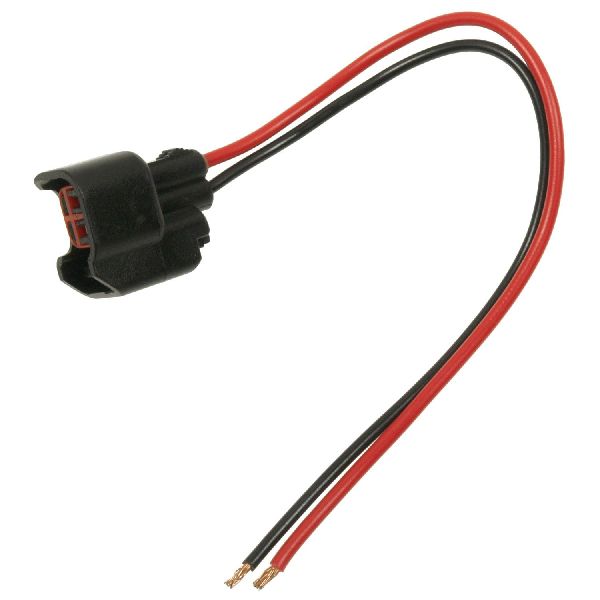
- Fuel Injector Wiring Harness Pigtail
(OEM #ACDelco PT2183 (GM 88988963))— If the wiring is damaged at the connector, a pigtail is used to replace the connector and a short length of wire. This is a common multi-purpose connector for GM vehicles.
Trusted brands: ACDelco, Dorman, Standard Motor Products
OEM price range: $30-$50
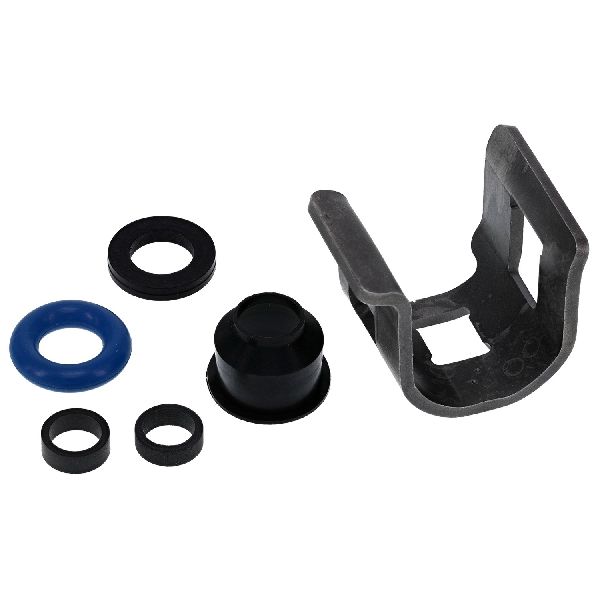
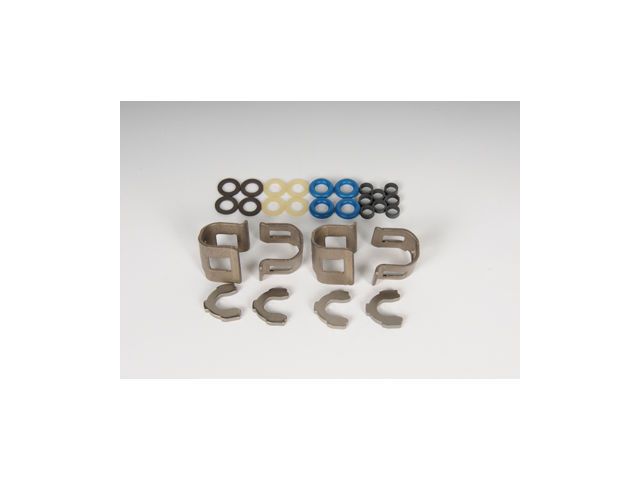
Aftermarket price range: $15-$30 - Fuel Injector
(OEM #12634126)— If the wiring is confirmed to be good, an injector in the affected bank may have failed internally. The 2.4L and V6 engines use different injectors.
Trusted brands: ACDelco, Bosch, Hitachi
OEM price range: $95-$120
Aftermarket price range: $45-$85
Related Codes That Often Appear With This One
- P2149 — This code is for 'Fuel Injector Group 'B' Supply Voltage Circuit High'. It often appears with P2152 if the damaged wire is intermittently shorting to ground and then creating an open circuit.
- P0201, P0202, P0203, P0204, P0205, P0206 — These are specific injector circuit codes for cylinders 1-6. If the wiring damage affects the control wire for a specific injector as well as the group supply voltage wire, you will see these codes alongside P2152.
- P2146 — This is the equivalent code for Injector Group 'A'. If the harness damage is severe enough to affect the wiring for both injector banks, both codes may be present.
Technical Service Bulletins (TSBs) & Recalls
- PIP4924D: Addresses SES light and misfires with various injector codes, including P2152. The primary instruction is to "Carefully inspect the fuel injector wiring harness for rub through or internal wire opens." It lists specific locations like against the intake plenum and valve cover bolts.
Platform-Specific Known Issues
- TSB #PIP4924D - Wiring Harness Chafing: TSB #PIP4924D explicitly calls out the fuel injector wiring harness for potential rub-through or internal wire opens on 2010-2014 Equinox and Terrain models. Common chafe points are against the intake plenum, valve cover bolts, fuel lines, and the side of the cylinder head under the plenum.
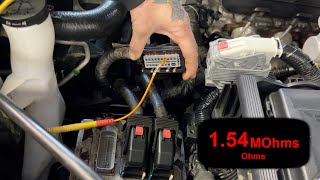
- Real-World Repair Story: A user on a Chevrolet forum with a 2011 Equinox reported experiencing codes P0264, P0267, and P0270 simultaneously. The cause was found to be the engine wiring harness rubbing through on a metal bracket at the back of the cylinder head, 🎬 Watch: A mechanic finds the exact wiring harness rub point. which is consistent with the TSB. This highlights how a single point of damage can trigger multiple injector-related codes.
Mechanic-Grade Diagnostic Values
- Fuel Injector Coil Resistance (2.4L I4 LAF/LEA) — expected: 11 - 14 Ohms. Failure: A reading significantly outside this range, or showing an open (OL) or short (near 0 Ohms).
- Fuel Injector Coil Resistance (3.0L V6 LF1/LFW) — expected: Approximately 12 Ohms (High Impedance). Failure: A significant deviation from 12 Ohms, or showing an open (OL) or short (near 0 Ohms).
- Fuel Injector Coil Resistance (3.6L V6 LFX) — expected: 1.2 - 1.8 Ohms (Low Impedance). Failure: A reading outside this range indicates an internal injector fault.
- Voltage Drop Test (Injector Power Circuit) — expected: Less than 0.5 Volts. Failure: A voltage drop greater than 0.5V between the ECM supply terminal and the injector connector indicates high resistance in the wiring.
- ECM Ground Circuit Resistance — expected: Less than 0.2 Ohms. Failure: Resistance higher than 0.2 Ohms from the ECM connector ground pin to the battery negative terminal indicates a poor ground connection.
Scan Tool Commands That Help
- GM GDS2 / Professional Scan Tool: Fuel Injector Balance / Automated Injector Balance Test — After confirming the wiring integrity, this command individually fires each injector while monitoring fuel pressure drop. It helps determine if an injector is mechanically faulty (clogged, weak) versus having an electrical circuit issue, preventing unnecessary replacement of good injectors.
Wiring & Ground Locations
- G112 — On the left rear of the engine block (for both 3.0L/3.6L V6 and 2.4L I4 engines).. This is a primary ground point for the Engine Control Module (ECM). A loose or corroded connection at G112 can cause erratic behavior and voltage-related fault codes for various components, including the fuel injector groups.
- G109 — On the right front of the engine block (on the 3.6L LFX V6).. This is another primary engine ground. A poor connection here can introduce electrical noise and voltage offsets that may affect the ECM's injector driver circuits.
- Injector Harness Chafe Points — Most commonly found where the harness is secured by a metal bracket at the upper rear of the engine, and where it rubs against the intake plenum, valve cover bolts, or the side of the cylinder head.. These are the specific locations identified in TSB #PIP4924D where the wiring insulation is known to wear through, causing a short or open circuit that directly triggers code P2152.
Real Owner Repair Stories
- Chevrolet Forum user 'Spre' (2011 Equinox 2.4L) — No start, no power to OBD-II port, flickering lights. After wiggling harness, would start for 3 seconds and then shut off.
❌ Tried (didn't work) Checking all fuses and relays., Checking ground points with a multimeter.
✅ What actually fixed it The problem was caused by an inexperienced person pulling on the main wiring harness boot where it passes through the firewall, damaging the internal wiring. The fix required inspecting and repairing the damaged wires within that harness bundle.
OEM Part Supersession History
12633784 (or ACDelco 217-3444)→— Fuel Injector for 2.4L I4 Engine
Heads up: This injector is NOT compatible with V6 engines. Using it in a 3.0L or 3.6L will cause performance issues and codes due to the impedance mismatch.12629927→— Fuel Injector for 3.0L V6 (LF1/LFW) Engine
Heads up: This is a high-impedance injector (~12 Ohms) specific to the 2010-2012 V6 models. It is not compatible with the later 3.6L LFX engine.12634126→— Fuel Injector for 3.6L V6 (LFX) Engine
Heads up: This is a low-impedance injector (~1.5 Ohms) specific to the 2013-2014 V6 models. It is not compatible with the earlier 3.0L V6 engine.
Model Year Variations Within This Range
- 2010-2012 (V6 Models): These models used the 3.0L LF1 V6 engine, which utilizes high-impedance fuel injectors with a resistance of approximately 12 Ohms.
- 2013-2014 (V6 Models): These models used the 3.6L LFX V6 engine. This engine uses different, low-impedance direct-injection fuel injectors with a resistance between 1.2 and 1.8 Ohms. This is a critical difference for diagnosis; testing for 12 Ohms on an LFX injector will lead to an incorrect diagnosis. Harness routing and chafe points may also differ slightly from the 3.0L.
Helpful Videos
We Have This Part in Stock


The information in this article is provided for general reference and educational purposes only. Vehicle specifications, procedures, and part compatibility can vary by production date, trim level, and region. Always consult your vehicle's factory service manual and verify part numbers before purchasing or performing repairs. Safety-critical components such as airbags, seat belts, and braking systems should be installed by a qualified professional.
- Chevrolet EQUINOX:
- 🧭 Diagnostic Flowchart
- 🎬 Helpful Videos
- 🛍️ Shop This Part
- What's Unique About the 2010-2014 Chevrolet EQUINOX
- Symptoms You May Notice
- Most Likely Causes
- Rare But Worth Checking
- Diagnosis Steps
- Parts You'll Likely Need
- Related Codes That Often Appear With This One
- Technical Service Bulletins (TSBs) & Recalls
- Platform-Specific Known Issues
- Mechanic-Grade Diagnostic Values
- Scan Tool Commands That Help
- Wiring & Ground Locations
- Real Owner Repair Stories
- OEM Part Supersession History
- Model Year Variations Within This Range
- 🎟️ Get 5% Off