

P2152 on 2010-2014 GMC Terrain: Fuel Injector Group 'C' Circuit Fault Causes & Fixes
On a 2010-2014 GMC Terrain, especially those with V6 engines, code P2152 is most often caused by a damaged fuel injector wiring harness that has rubbed against a bracket, the intake plenum, or another engine component. Before replacing any parts, a thorough inspection of the harness for chafing is critical, as a simple wire repair often fixes the issue. This is a well-documented problem cited in GM TSB PIP4924D.
- For a 2010-2014 GMC Terrain with a V6 engine, P2152 strongly suggests a wiring problem, not necessarily a bad part.
- Always inspect the fuel injector wiring harness for damage, especially near the intake plenum and cylinder heads, before spending money on new injectors.
- This issue is officially recognized by GM in Technical Service Bulletin #PIP4924D.
- Driving with this fault can cause expensive damage to your catalytic converter due to engine misfires.
What's Unique About the 2010-2014 Gmc TERRAIN
For this generation of GMC Terrain and its platform mates with V6 engines, there is a well-documented issue outlined in General Motors Technical Service Bulletin PIP4924D. The bulletin points directly to the fuel injector wiring harness being prone to rubbing through its insulation. Specific chafe points include against the intake plenum, at valve cover bolts, against fuel lines, and on the side of the cylinder head under the plenum. This makes a wiring fault a much higher probability on this vehicle compared to others where a faulty injector might be the first assumption.
Diagnostic Flowchart
Tap your situation to follow the diagnostic path that matches what you're seeing on this vehicle.
Symptoms You May Notice
- Check Engine Light is on
- Engine runs rough or vibrates (misfires).
- Hesitation or loss of power during acceleration.
- Rough, fluctuating idle.
- Engine may stall, especially at low speeds.
- Vehicle may be hard to start.
- Increased fuel consumption.
- Dark smoke from the exhaust.
- Replacing one or more fuel injectors without first inspecting the wiring harness. Due to the known TSB, the harness should always be the first component to be thoroughly checked, especially on V6 models.
Most Likely Causes
- Damaged Fuel Injector Wiring Harness 🔴 High Probability → Shop Engine Wiring Harness As cited in TSB #PIP4924D, the engine's movement and harness routing cause it to rub against sharp edges. Common chafe points are against the intake plenum, valve cover bolts, fuel lines, and the side of the cylinder head.
How to confirm: Visually inspect the entire fuel injector wiring harness, especially on the V6 engines, focusing on the areas where it routes near the intake plenum and cylinder heads. Look for shiny, worn-through spots on the plastic conduit. Use a multimeter to check for continuity and shorts to ground on the power supply wire for the injectors in Group C (cylinders 3 and 5).
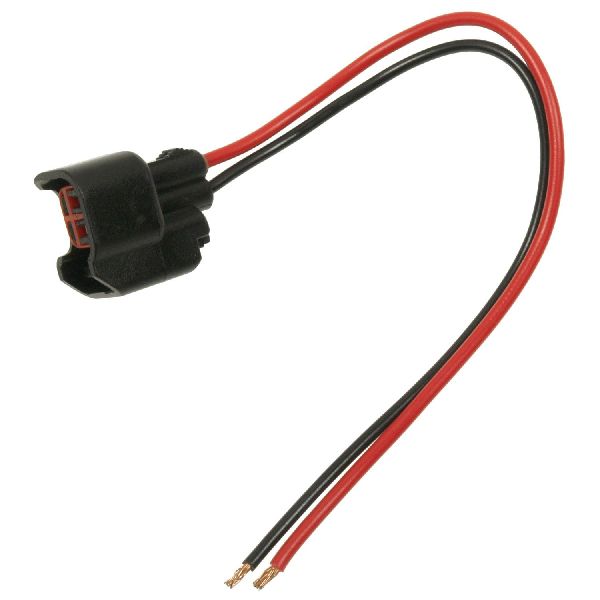
Typical fix: Repair the damaged section of wire using solder and heat-shrink tubing. Protect the repaired area with anti-abrasion tape or split-loom tubing. If damage is extensive, a harness pigtail connector (like ACDelco PT2832) may be needed.
Est. part cost: $5-$35 for wire repair supplies or a pigtail connector - Faulty Fuel Injector 🟡 Medium Probability → Shop Fuel Injector
How to confirm: After confirming the wiring is intact, test the resistance of the fuel injectors in Group C. For the 3.6L LFX V6 engine, the resistance should be between 1.2 and 1.8 ohms. For the 3.0L LF1 V6, the resistance is higher, around 12 ohms. A reading that is significantly outside the specified range indicates a failed injector.
Typical fix: Replace the failed fuel injector. It is often recommended to replace them in sets for balanced performance.
Est. part cost: $50-$150 per injector - Blown Fuse or Faulty Relay ⚪ Low Probability
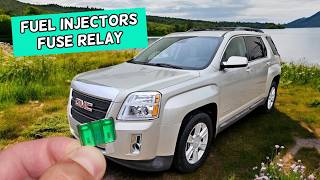
How to confirm: Locate and inspect the fuses and relays related to the fuel injection system in the under-hood fuse box. 🎬 Watch: How to find and replace fuel injector fuses and relays. For a 2012 model, relevant fuses include F20, F42, and F52 in the underhood block. Test the fuse for continuity and swap the relay with a known good one to see if the problem is resolved.
Typical fix: Replace the blown fuse or faulty relay.
Est. part cost: $1-$20
Rare But Worth Checking
- Faulty Powertrain Control Module (PCM): → Shop Engine Control Module (ECM) This is a last resort after all wiring and components have been thoroughly tested and confirmed to be good. A failed injector driver circuit inside the PCM can trigger this code.
Diagnosis Steps
- Scan the PCM for all stored trouble codes. Note if other injector group codes (P2146, P2149, P2155) or specific misfire codes (P0303, P0305) are present.
- Critical Step: Perform a detailed visual inspection of the fuel injector wiring harness, especially on V6 models. Per TSB PIP4924D, check for chafing against the intake plenum, valve cover bolts, fuel lines, and the side of the cylinder head. Pull back the plastic conduit in suspect areas to inspect the wires inside.
- Using a wiring diagram, identify the power supply wire for injector Group C (cylinders 3 and 5). Use a multimeter to check for proper voltage (should be battery voltage) at the injector connectors with the key on.
- Perform a continuity test on the power supply wire from the fuse/relay box to the injectors. Also, check for any shorts to ground, which is a common failure mode for this issue.
- If wiring and voltage are good, measure the internal resistance of each fuel injector in Group C. A 3.6L LFX injector should read between 1.2-1.8 ohms, while a 3.0L LF1 injector should be around 12 ohms. Readings outside this range indicate a faulty injector.
- As a final check, you can swap the suspect injector with one from a different cylinder and see if the misfire code follows the injector (e.g., P0305 moves to P0301).
- If all injectors and wiring test good, the fault may lie within the PCM's injector driver circuit, which requires more advanced diagnostics or professional service.
Parts You'll Likely Need
- Fuel Injector Wiring Harness Repair Supplies — Due to the high likelihood of a chafed wire (per TSB PIP4924D), repairing the existing harness with solder, heat shrink, and anti-abrasion tape is the most common and cost-effective fix.
Trusted brands: 3M, Tesa
Aftermarket price range: $5-$25 - Fuel Injector
(OEM #12629927 (For 3.0L) or 12638530 (For 3.6L))— If the wiring is intact, an injector with an internal open or short circuit is the next most likely cause. Part number varies by engine.
Trusted brands: ACDelco, GM Genuine Parts, Bosch
OEM price range: $90-$150
Aftermarket price range: $50-$100 - Fuel Injector Connector Pigtail
(OEM #ACDelco PT2160 (verify fitment))— If the connector itself is damaged or corroded, or if the wire is broken right at the connector, splicing in a new pigtail is the best repair.
Trusted brands: ACDelco, Dorman, Standard Motor Products
OEM price range: $25-$40
Aftermarket price range: $15-$30
Related Codes That Often Appear With This One
- P2146 — Fuel Injector Group 'A' Supply Voltage Circuit fault. Often appears with other group faults when a common wiring harness is damaged.
- P2149 — Fuel Injector Group 'B' Supply Voltage Circuit fault. Indicates a potential widespread wiring issue.
- P2155 — Fuel Injector Group 'D' Supply Voltage Circuit fault. Further points to a harness or PCM issue affecting multiple injector groups.
- P0300 — Random/Multiple Cylinder Misfire Detected. This is a direct symptom of multiple injectors being disabled.
- P0303, P0305 — Cylinder 3 and Cylinder 5 Misfire Detected. These are direct symptoms of the fuel injectors for those specific cylinders being disabled by the P2152 fault on V6 engines.
- P0203, P0205 — Cylinder 3 or 5 Injector Circuit/Open. These may appear alongside the group code, helping to pinpoint the issue to a specific injector circuit within the group.
Technical Service Bulletins (TSBs) & Recalls
- PIP4924D: Advises technicians to inspect the fuel injector wiring harness for rub through or internal wire opens when encountering a list of fuel injector codes, including P2152. It lists specific chafe points like against the intake plenum, valve cover bolts, and fuel lines.
Platform-Specific Known Issues
- A GM Technical Service Bulletin (PIP4924D) specifically calls out that codes P2146, P2149, P2152, and P2155 on these vehicles are likely caused by the fuel injector wiring harness rubbing through or developing an internal open circuit.
- Owners on forums frequently report finding the chafed wires on the V6 engines located on the back side of the engine, near the firewall, where the harness can rub against the intake manifold or brackets.
Mechanic-Grade Diagnostic Values
- Fuel Injector Coil Resistance (3.6L LFX V6) — expected: 1.2 - 1.8 Ohms. Failure: A reading significantly outside this range, or an open/shorted reading, indicates a failed injector coil.
- Fuel Injector Coil Resistance (3.0L LF1 V6) — expected: Approximately 12 Ohms. Failure: This is a high-impedance injector. A significant deviation, open circuit (OL), or short (near 0 Ohms) indicates a failed injector.
- Fuel Injector Circuit Voltage (Key On, Engine Off) — expected: Approximately 12 Volts (Battery Voltage). Failure: Low or no voltage on the power supply wire to the injector connector points to a problem in the wiring or the power source (fuse/relay), not the injector itself.
- Injector Balance Test (Pressure Drop) — expected: Pressure drop for each injector should be within 1.5 PSI of the average for all cylinders.. Failure: An injector with a pressure drop significantly different from the others is likely restricted or leaking.
Scan Tool Commands That Help
- GM GDS2 (or equivalent high-level scan tool): Fuel Injector Balance Test — This bidirectional command allows the technician to individually disable each fuel injector and measure the corresponding drop in fuel rail pressure. It is used to confirm if an injector is mechanically clogged or flowing poorly after electrical circuit integrity has been verified. A cylinder with a smaller pressure drop than the others indicates a poorly flowing injector.
Wiring & Ground Locations
- G105 / G112 — On the 3.0L LF1 engine, G105 and G112 are located on the left rear of the engine.. These are primary engine grounds for the Engine Control Module (ECM). A loose or corroded connection at these points can cause erratic voltage and false injector circuit codes.
- G109 — On the 3.0L LF1 engine, G109 is located on the right front of the engine.. This is another critical engine ground. Ensuring all engine grounds are clean and secure is a vital step before condemning the ECM or chasing wiring faults.
- ECM Connector X1 — The main 72-pin connector at the Engine Control Module, located in the engine bay.. The control and supply voltage circuits for all fuel injectors pass through this connector. It can be used as a central point for testing injector circuit continuity back to the injectors without having to remove the intake manifold first.
Real Owner Repair Stories
- equinoxforum.net user (2011 Chevrolet Equinox 3.0L V6) — Check engine light with codes P2149 and P2152, rough running engine.
❌ Tried (didn't work) Initial diagnosis suggested replacing fuel injectors.
✅ What actually fixed it The owner found the TSB related to wiring harness chafing. Upon inspection, they discovered several wires in the harness on the back side of the engine near the intake manifold had rubbed through their insulation and were shorting together. The fix was to separate the wires, repair the damaged sections with solder and heat shrink, and wrap the entire area with protective tape. This resolved both trouble codes.
Model Year Variations Within This Range
- 2010-2012: These models were equipped with the 3.0L LF1 V6 engine. The fuel injectors are a high-impedance design with a resistance of approximately 12 Ohms.
- 2013-2014: These models used the updated 3.6L LFX V6 engine. The direct-injection fuel injectors are a low-impedance design, with a resistance between 1.2 and 1.8 Ohms. While the TSB for harness chafing applies to both, the physical routing and specific injector part numbers are different.
Helpful Videos
We Have This Part in Stock


The information in this article is provided for general reference and educational purposes only. Vehicle specifications, procedures, and part compatibility can vary by production date, trim level, and region. Always consult your vehicle's factory service manual and verify part numbers before purchasing or performing repairs. Safety-critical components such as airbags, seat belts, and braking systems should be installed by a qualified professional.
- Gmc TERRAIN:
- 🧭 Diagnostic Flowchart
- 🎬 Helpful Videos
- 🛍️ Shop This Part
- What's Unique About the 2010-2014 Gmc TERRAIN
- Symptoms You May Notice
- Most Likely Causes
- Rare But Worth Checking
- Diagnosis Steps
- Parts You'll Likely Need
- Related Codes That Often Appear With This One
- Technical Service Bulletins (TSBs) & Recalls
- Platform-Specific Known Issues
- Mechanic-Grade Diagnostic Values
- Scan Tool Commands That Help
- Wiring & Ground Locations
- Real Owner Repair Stories
- Model Year Variations Within This Range
- 🎟️ Get 5% Off