

P2152 on 2009-2010 Saturn Outlook: Fuel Injector Group 'C' Circuit Causes and Fixes
On a 2009-2010 Saturn Outlook, code P2152 is almost always caused by a chafed or broken fuel injector wiring harness. This is a known issue documented in GM Technical Service Bulletin #PIP4924D. The fix involves inspecting the harness for damage where it rubs against the engine and repairing the wires, which is much cheaper than replacing injectors or the ECM.
- On a 2009-2010 Saturn Outlook, code P2152 almost always points to a wiring problem, not a bad fuel injector.
- Before buying any parts, perform a thorough visual inspection of the fuel injector wiring harness as detailed in TSB #PIP4924D.
- The code refers to 'Group C', which pairs injectors 2 and 5, meaning the wiring fault could be in the harness section for either cylinder.
- Repairing the damaged wire and properly securing the harness away from sharp edges is the most common and cost-effective solution.
What's Unique About the 2009-2010 Saturn OUTLOOK
The Saturn Outlook and its GM Lambda platform siblings (GMC Acadia, Buick Enclave, Chevy Traverse) with the 3.6L V6 engine are known for a specific wiring harness vulnerability. General Motors issued Technical Service Bulletin PIP4924D, acknowledging that the fuel injector harness is prone to rubbing against engine components, leading to frayed or broken wires. This makes a wiring fault the most probable cause for P2152 on this vehicle, far more likely than a random component failure.
Diagnostic Flowchart
Tap your situation to follow the diagnostic path that matches what you're seeing on this vehicle.
Symptoms You May Notice
- Check Engine Light (SES Light) is on, may be flashing
- Engine running rough, vibrating, or shaking
- Significant loss of engine power and acceleration, may enter 'Reduced Power Mode'
- Engine misfires, which may be felt as a shudder or hesitation
- Engine may stall at low speeds 🎬 Watch: Real-world diagnosis of a Saturn Outlook misfire
- Reduced fuel economy
- Strong smell of unburnt gasoline from the exhaust
- Replacing one or more fuel injectors without first inspecting the wiring harness. The code points to a group circuit fault, making a harness issue affecting multiple injectors more likely than two injectors failing simultaneously.
- Replacing the Engine Control Module (ECM) before confirming the wiring and injectors are good. This is an expensive and unnecessary repair in most cases.
- Mistaking a rough idle or shudder from the misfire for a transmission issue like torque converter clutch shudder.
Most Likely Causes
- Chafed, Broken, or Shorted Fuel Injector Wiring Harness 🔴 High Probability → Shop Engine Wiring Harness As documented in GM TSB #PIP4924D, the harness routing on the 3.6L V6 makes it highly susceptible to rubbing against engine components due to normal engine movement and vibration. This is the number one cause of this code on the Lambda platform.
How to confirm: Perform a thorough visual inspection of the fuel injector wiring harness. The TSB specifically calls out checking for rub-through 'against the intake plenum, at valve cover bolts, against the fuel line and on the side of the head under the plenum'. Another known chafe point on this engine family is against a sharp tab on the EGR valve gasket. Look for shiny spots, exposed copper wire, or breaks in the plastic loom. A continuity test with a multimeter can confirm an open wire.
Typical fix: Repair the damaged section of wire using solder and heat shrink tubing or a quality butt connector. Protect the repaired area with new conduit or high-temperature, anti-abrasion Tesa tape and secure the harness away from contact points with zip ties. If damage is extensive, the harness section may need to be replaced.
Est. part cost: $5-$25 for wire repair supplies, $70-$150 for a new harness section.
Rare But Worth Checking
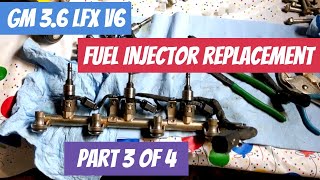
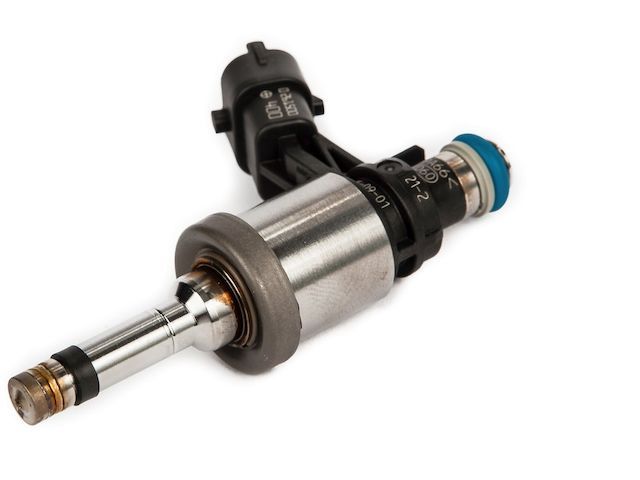
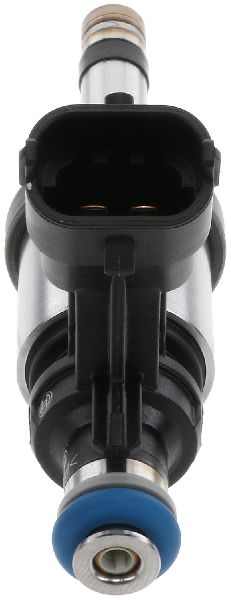
- Faulty Fuel Injector: → Shop Fuel Injector While less common than the wiring issue, an injector can fail with an internal open circuit. This should be considered only after the wiring harness has been thoroughly inspected and cleared of any faults. A user on YouTube with a platform-mate vehicle experienced multiple injector-related codes, including a misfire on cylinder 2, that were ultimately resolved by replacing all six injectors after a long diagnostic process.
- Failed Engine Control Module (ECM): → Shop Engine Control Module (ECM) This is the least likely cause. An internal failure of the injector driver circuit within the ECM can trigger P2152. A short in the injector harness can sometimes damage the ECM, making this a secondary failure. Diagnosis requires professional tools and should be the last step after confirming wiring and injectors are good. One forum user with both P2152 and P2155 codes was advised to replace the ECM after continuity tests passed, but this is an uncommon outcome.
Diagnosis Steps
- Scan for trouble codes to confirm P2152 and any other related codes. Note any specific cylinder misfire codes (P0302, P0305) or other injector group codes.
- Perform a thorough visual inspection of the entire fuel injector wiring harness, focusing on the known chafe points mentioned in TSB #PIP4924D: against the intake plenum, at valve cover bolts, against the fuel line, and on the side of the cylinder head. Also check for rubbing against the EGR valve gasket tab.
- Gently wiggle the harness in these areas with the engine running (if possible) to see if the idle quality changes, which can help pinpoint the location of a break.
- If damage is found, repair the wire(s), clear the codes, and perform a test drive to confirm the fix.
- If no visual damage is found, disconnect the battery. Disconnect the harness at the ECM and at the injectors for cylinders 2 and 5.
- Use a multimeter to test for continuity on the power supply wire for injectors 2 and 5. An open circuit (infinite resistance) confirms a broken wire.
- Also test each wire for a short to ground.
- If wiring tests good, test the resistance of the fuel injectors on cylinders 2 and 5. For the LLT engine, resistance should be between 1.5-1.6 ohms. 🎬 See how to perform professional fuel injection testing The older spec of 11-14 ohms from some service manuals may not apply to these direct injection injectors.
- If both the wiring and injectors are confirmed to be good, the fault may lie within the ECM, which typically requires professional diagnosis.
Parts You'll Likely Need
- Fuel Injector Wiring Harness Repair Supplies — Used to repair the most common cause: a chafed or broken wire in the existing harness.
Trusted brands: 3M, Tesa (for anti-abrasion tape)
OEM price range: $10-$25
Aftermarket price range: $5-$20 - Fuel Injector Wiring Harness (Bank 2 / Left Side)
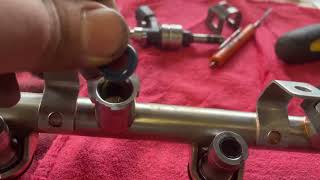
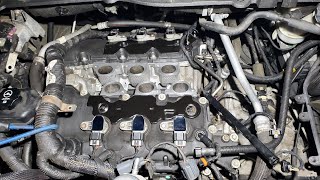
(OEM #12621095)— Required if the original harness is too damaged to repair. Bank 2 (driver's side, cylinders 2-4-6) is associated with Group C injectors. This part number supersedes 12614941. 🎬 Watch: Step-by-step guide to removing the intake and injectors Always verify the part number with your VIN.
Trusted brands: ACDelco, GM Genuine Parts
OEM price range: $100-$160
Aftermarket price range: $40-$80
Related Codes That Often Appear With This One
- P0300 — Random/Multiple Misfire Detected. This is a direct symptom of multiple injectors not firing.
- P0302, P0305 — Cylinder 2 and Cylinder 5 Misfire Detected. These codes specify the cylinders that are misfiring, which correspond to Injector Group 'C'.
- P0202, P0205 — Injector Circuit Malfunction for Cylinder 2 and Cylinder 5. These codes may appear with the group code, further pointing to an electrical issue in the harness.
- P2146, P2149, P2155 — Codes for other injector groups (A, B, D). If these appear alongside P2152, it's a very strong indication of widespread damage to the main injector wiring harness or a fault at a major connector. One user on an automotive forum reported having P2152 and P2155 simultaneously on a 2009 Acadia, pointing to a fault affecting both injector groups.
Technical Service Bulletins (TSBs) & Recalls
- PIP4924D: States that a Service Engine Soon (SES) light with misfires and various injector codes (including P2152, P2146, P2149, P2155, and P0201-P0206) is likely caused by the fuel injector wiring harness rubbing through or having internal wire opens. It advises technicians to inspect the harness carefully in several common problem areas.
Platform-Specific Known Issues
- A widespread and well-documented issue exists concerning the fuel injector wiring harness rubbing through its insulation, causing shorts or open circuits. This is covered by GM TSB #PIP4924D.
- Specific chafe points identified by GM include contact with the intake plenum, valve cover bolts, fuel lines, and the side of the cylinder head.
- Owners of Lambda platform vehicles have also reported general electrical issues stemming from clogged sunroof drains, which can allow water to leak onto the interior fuse box and other electronics, though this is not directly tied to P2152.
Mechanic-Grade Diagnostic Values
- Fuel injector control circuit voltage — expected: Battery voltage (approx. 12.6V) with key on, engine off.. Failure: No voltage or significantly low voltage indicates an open in the power supply wire.
- Voltage Drop Test (Cranking) — expected: Less than 0.5V difference between the ECM's Group C supply terminal and the injector connector.. Failure: A voltage drop greater than 0.5V indicates high resistance in the circuit, likely from a corroded pin or partially broken wire.
- Fuel Injector Coil Resistance (LLT Engine) — expected: 1.5 - 1.6 ohms. Failure: An infinite reading (OL) indicates an open coil. A reading near zero indicates a shorted coil.
Scan Tool Commands That Help
- GM Tech 2 / GDS2: Active Fuel Injector Test (AFIT) / Injector Balance Test — Use this after confirming the wiring integrity. This bidirectional test commands each injector to fire and measures the corresponding pressure drop in the fuel rail. It can identify a clogged, leaking, or electrically faulty injector that resistance and continuity tests might miss.
Wiring & Ground Locations
- G101 — Left side of the engine compartment, on the left frame rail.. This is a primary ground for the Engine Control Module (ECM). A poor connection here can cause a host of unpredictable electrical faults, including injector circuit codes.
- G110 — Right front of the engine, mounted to the cylinder head.. This is an engine block ground. Proper grounding is essential for stable sensor and actuator operation.
- G112 — Rear of the engine, mounted to the rear of the cylinder head.. Another critical engine ground point. Given the harness routes to the rear of the engine, checking this ground is important.
- ECM Connector X1 — On the Engine Control Module (ECM), typically mounted on the engine.. This is the main connector containing the driver circuits for the fuel injectors. Testing for continuity should be done from the pins in this connector to the injector connectors themselves.
Real Owner Repair Stories
- DuramaxDiesels.com forum user (Duramax-powered GM truck (different vehicle, but analogous electrical issue)) — Code P2152 appeared immediately after washing the engine bay.
❌ Tried (didn't work) Waiting several days for it to dry out., Replacing the injector pigtail connector.
✅ What actually fixed it The issue was resolved after disconnecting, inspecting with a multimeter (which showed good continuity), and firmly reconnecting the main multi-pin engine harness connector. The suspected cause was moisture or a poor pin connection in that main connector, not a break in the wiring itself.
OEM Part Supersession History
12614941→12621095— Likely an updated design with improved sheathing or routing clips to mitigate the known chafing issue.12634126→12638530— Standard part revision for the fuel injector used in the 3.6L LLT engine.
Heads up: This part number is for the 2009-2011 LLT engine; always verify with VIN.
Model Year Variations Within This Range
- 2009-2010: No significant variations exist for this fault within the 2009-2010 model years for the Saturn Outlook. Both years use the 3.6L LLT V6 engine, and both are susceptible to the wiring harness issue described in TSB PIP4924D.
Helpful Videos
We Have This Part in Stock


The information in this article is provided for general reference and educational purposes only. Vehicle specifications, procedures, and part compatibility can vary by production date, trim level, and region. Always consult your vehicle's factory service manual and verify part numbers before purchasing or performing repairs. Safety-critical components such as airbags, seat belts, and braking systems should be installed by a qualified professional.
- Saturn OUTLOOK:
- 🧭 Diagnostic Flowchart
- 🎬 Helpful Videos
- 🛍️ Shop This Part
- What's Unique About the 2009-2010 Saturn OUTLOOK
- Symptoms You May Notice
- Most Likely Causes
- Rare But Worth Checking
- Diagnosis Steps
- Parts You'll Likely Need
- Related Codes That Often Appear With This One
- Technical Service Bulletins (TSBs) & Recalls
- Platform-Specific Known Issues
- Mechanic-Grade Diagnostic Values
- Scan Tool Commands That Help
- Wiring & Ground Locations
- Real Owner Repair Stories
- OEM Part Supersession History
- Model Year Variations Within This Range
- 🎟️ Get 5% Off