

OBD-II Code P2154: Fuel Injector Group 'C' Power Supply Circuit Too High
What P2154 means, why it triggers, and how to fix it
- P2154 is an electrical circuit fault, not a mechanical injector failure; replacing the fuel injector resolves this code less than 5% of the time.
- Inspect the engine wiring harness for chafing first, as rubbed-through insulation shorting to a 12V source is the leading cause of this code.
- Stop driving the vehicle immediately; continuing to drive with disabled cylinders dumps raw fuel into the exhaust, causing a $1,200+ catalytic converter failure within weeks.
- Use a digital multimeter to probe the injector connector with the key on/engine off; a reading above 12.5V confirms a short-to-power in the harness or PCM.
What Does P2154 Mean?
P2154 means the Powertrain Control Module (PCM) detects the voltage in the 'Group C' fuel injector electrical circuit exceeds the manufacturer's limit. Because this is typically a 12-volt circuit, any sustained reading significantly above battery voltage triggers the code. To protect the sensitive injector coils and internal driver circuits from melting, the PCM immediately disables the injectors in this group, causing severe misfires and rough idling.
Technical definition: Fuel Injector Group 'C' Supply Voltage Circuit High.
Can I Drive With P2154?
Yes, But With Caution. You can drive short distances, but do not take long trips or drive aggressively. The engine runs poorly, and continuing to drive exposes the catalytic converter to raw, unburned fuel. This causes the converter to overheat and melt internally, leading to a secondary repair costing between $800 and $2,500.
Common Causes
- Damaged or Frayed Wiring Harness (Very Common) — The most frequent cause. The injector wiring harness rubs against engine components, wearing away the insulation. This allows the power supply wire to short against another wire carrying higher voltage. Rodent damage and heat degradation are also common culprits.
- Corroded or Loose Connector (Common) — Electrical connectors at the fuel injectors or main engine harness become loose or contaminated. Water intrusion causes metal pins to corrode, creating high resistance and erratic voltage readings.
- Faulty Powertrain Control Module (PCM/ECM) (Common) — An internal voltage regulator or injector driver inside the PCM malfunctions, sending an incorrect high voltage signal to the injector group. This is caused by internal component failure, moisture intrusion, or voltage spikes.
- Injector Connector Fretting/Terminal Wear (Common) — Microscopic engine vibrations cause wear (fretting) on the metal terminals inside the injector connector. This creates a poor connection leading to voltage irregularities, heavily noted in GM Technical Service Bulletin 23-NA-027.
- High-Pressure Fuel Pump Failure (Diesel Engines) (Less Common) — On specific diesel engines (like the 6.7L Cummins), a failing high-pressure fuel pump (CP4) disintegrates, sending metal debris throughout the fuel system. This contaminates and electrically shorts the fuel injectors, causing P2154 (FCA TSB 18-054-21).
- PCM Software/Calibration Error (Less Common) — The PCM's software contains a glitch causing it to misinterpret normal voltage fluctuations as a high voltage event. A manufacturer software update corrects this logic error without replacing parts.
- Faulty Fuel Injector (Rare) — An internal failure of the fuel injector's coil rarely causes a 'high voltage' code. The code almost always points to a problem in the electrical circuit supplying the injector, not the injector itself.
Symptoms
- Check Engine Light is On — The Malfunction Indicator Lamp (MIL) illuminates immediately when the PCM logs the P2154 fault.
- Rough Idle and Engine Misfires — With injectors shut down, the corresponding cylinders cannot contribute power, resulting in a violent shake, stumble, or misfire at idle.
- Reduced Engine Power and Limp Mode — The vehicle feels sluggish. The PCM activates 'limp mode,' intentionally limiting engine RPM and speed to prevent further damage.
- Poor Fuel Economy — The engine runs inefficiently with disabled cylinders, causing a severe drop in gas mileage.
- Raw Fuel Smell — If the issue is intermittent, an injector is commanded incorrectly, allowing unburned fuel to pass into the exhaust, creating a strong gasoline odor.
Diagnostic Flowchart
Tap your situation to follow the diagnostic path that matches what you're seeing on this code.
Common Fixes & Costs
- Repairing Wiring Harness — Parts: $10-$50 (for wire, tape, loom), Labor: $200-$450 (labor only), ~2.5 hr book time (Intermediate)
- Cleaning or Replacing Connectors — Parts: $15-$80 (for contact cleaner or new pigtail), Labor: $100-$200 (labor only), ~1 hr book time (DIY)
- Replacing Engine Control Module (ECM/PCM) — Parts: $600-$1200 (for the module), Labor: $200-$400 (for installation and programming), ~2 hr book time (Professional)
- Updating or Re-flashing PCM Software — Parts: $0, Labor: $150-$250 (dealer labor only), ~1 hr book time (Professional)
- Replacing a Fuel Injector — Parts: $50-$450 (per injector), Labor: $250-$500 (labor only), ~2.5 hr book time (DIY)
Used vs. New Parts: Buying Guide
When a used part is worth it: A used PCM makes sense on an older, high-mileage vehicle where a new OEM module is a disproportionately large expense compared to the car's total value.
Donor-vehicle mileage cap: roughly under 80000 miles for the part to have meaningful remaining life.
Donor quality checklist:
- Verify the donor vehicle was not scrapped due to electrical, flood, or fire damage.
- Purchase from a reputable salvage yard offering at least a 30-day warranty.
- Match the OEM part number exactly. Superseded modules are often incompatible.
- Visually inspect the connector pins for corrosion, burning, or physical damage.
Decision logic:
- If Vehicle is less than 10 years old OR the new part costs less than $500 → Buy new. Warranty and reliability benefits outweigh the minimal cost savings.
- If Vehicle is over 10 years old AND the new part costs over $800 → Buy a used part from a reputable source to control repair costs.
- If The part requires complex vehicle-specific programming (like a PCM) → Factor in programming costs. Some used modules cannot be reprogrammed, making a new or refurbished unit safer.
Warranty tradeoff: Used parts typically include a 30-90 day functional warranty. New aftermarket parts carry a 1-3 year warranty, while new OEM parts match the factory warranty if installed by a dealer.
Worst-case if a used part fails: $400-$1500. If the used PCM fails, you pay for diagnostic time, removal/reinstallation labor, and programming fees a second time.
What Happens If You Wait — Timeline
- 0-1 week: Check Engine Light is on with code P2154. Engine has a rough idle and feels sluggish. The PCM has disabled at least one injector group. (MPG impact: 5-10%% · Added cost: $0-20 in wasted fuel)
- 1 week - 2 months: Continuous driving with a dead cylinder causes a noticeable drop in power and a 10-20% decrease in fuel economy. Raw, unburned fuel regularly enters the exhaust system. (MPG impact: 10-20%% · Added cost: $50-150 in wasted fuel)
- 2-4 months: Unburned fuel superheats the catalytic converter, causing the internal ceramic substrate to melt and clog. The vehicle emits a rotten-egg smell from the exhaust. (MPG impact: 15-25%% · Added cost: $1,200-$2,800 (Catalytic converter replacement is now required))
- 4+ months: The catalytic converter becomes completely blocked, causing severe backpressure. The engine suffers extreme power loss, stalls frequently, and sustains internal damage from fuel-washed cylinder walls. (MPG impact: 25-50%% · Added cost: $2,500-$5,000+ (Cost of catalytic converter plus engine repairs))
Cost of Not Fixing It
- 0-1 month: Noticeable 5-15% drop in fuel economy, rough idle, poor acceleration, and potential stalling. The vehicle fails emissions testing. (Added cost: Negligible, other than increased fuel consumption.)
- 1-6 months: Raw fuel from disabled cylinders continuously enters the exhaust, causing the catalytic converter to overheat, melt internally, and fail. (Added cost: $1200-$2800)
- 6+ months: Long-term misfires cause excess fuel to wash lubricating oil from cylinder walls, accelerating wear on pistons and rings. This leads to loss of compression and requires major engine repairs. (Added cost: $2500-$5000+)
Diagnosis Steps
- Read Codes and Review Freeze Frame Data
Use an OBD-II scanner to confirm P2154 is active. Misfire codes (P030X) or specific injector codes (P020C) are expected. Review freeze frame data to see engine conditions (RPM, load, temp) when the code set.
Tools: OBD-II Scanner (Beginner) - Check for Technical Service Bulletins (TSBs)
Search for TSBs for your vehicle's make, model, and year related to P2154 or injector wiring. Manufacturers release bulletins for known pattern failures, saving hours of diagnostic time.
Tools: Online Service Manual Subscription or Google Search (Beginner) - Perform a Detailed Visual Inspection
Inspect the injector wiring harness for Group C. Look for chafing against the intake manifold, valve covers, or ECM brackets. Check for melting from hot exhaust components or rodent damage. Unplug connectors and look for corrosion or bent pins.
Tools: Flashlight, Inspection Mirror (Beginner) - Measure Voltage at the Injector Connector
With the ignition on (engine off), use a multimeter set to DC volts. Probe the power supply wire at the injector connector for Group C. A normal reading is battery voltage (approx. 11.5-12.5V). A reading significantly higher (>13.0V) confirms a short-to-power and validates the code.
Tools: Digital Multimeter (Intermediate) - Test the Circuit with a Noid Light
Disconnect the suspect injector, plug in a noid light, and crank the engine. A steady, rhythmic flash indicates the PCM driver and wiring are functioning correctly. No flash, or a light that stays on constantly, confirms a wiring or PCM issue.
Tools: Noid Light Kit (Intermediate) - Perform a Continuity and Short-to-Power Test
Disconnect the battery and PCM connector. Check for continuity on the supply wire between the injector connector and the PCM connector. Then, check for continuity between that supply wire and a known power source (like the positive battery terminal). Any reading indicates a short to power.
Tools: Digital Multimeter, Vehicle Wiring Diagram (Advanced) - Isolate the PCM
If all wiring and connectors test good, the fault lies within the PCM. Ensure all power and ground connections to the PCM are clean and tight. A poor ground causes the module to read voltages incorrectly. If grounds are good, the PCM's internal injector driver has failed.
Tools: Digital Multimeter, Wiring Diagram (Professional) - Analyze Live Data PIDs
Using an advanced scan tool, monitor 'Short-Term Fuel Trim' (STFT) and 'Injector Pulse Width' for the affected cylinders. When the fault occurs, STFT values spike as the PCM compensates before disabling the injectors, and pulse width drops to zero.
Tools: Advanced OBD-II Scan Tool (Advanced) - Perform Injector Resistance Test
Set your multimeter to Ohms (Ω). Measure resistance across the two pins of the fuel injector. Standard port injectors read 11-14 Ohms. Piezo injectors read 0.2-0.5 Ohms. A reading of infinity (OL) indicates an open coil; near zero indicates a shorted coil.
Tools: Digital Multimeter (Advanced) - Analyze the Circuit with an Oscilloscope
Use an oscilloscope to view the injector's voltage pattern. A P2154 fault pattern shows a baseline voltage higher than battery voltage, or a voltage level that does not drop to near zero when the injector is commanded on.
Tools: Automotive Oscilloscope, Back-probe Pins (Professional)
When This Code Triggers (Freeze-Frame Conditions)
- Engine Coolant Temp: 180-200°F (82-93°C) (Detected when the engine is fully warmed up and operating in closed-loop fuel control.)
- RPM: 1500-2500 RPM (Sets during steady-state cruising or light acceleration, rarely at idle or heavy throttle.)
- Engine Load: 30-60% (Indicates a moderate load condition, consistent with maintaining speed on a level road.)
- Vehicle Speed: 35-55 mph (56-88 km/h) (Registered at cruising speeds where wiring harness vibrations cause intermittent shorts.)
Related Codes
- P020C - P020F — These specify a circuit malfunction for an individual injector (e.g., P020C is Cylinder 3). Seeing both together strongly suggests the problem is isolated to the circuit path specific to that cylinder's injector.
- P0300-P0308 — These are cylinder misfire codes. They are a symptom, not the cause. The PCM logs P2154, disables the injector group, and this lack of fuel causes the cylinder to misfire. Fixing P2154 resolves the misfire.
- P2153 — The direct opposite code: 'Fuel Injector Group C Supply Voltage Circuit Low'. P2153 points to an open circuit or short to ground. Seeing both intermittently indicates a severely damaged wire shorting to both power and ground.
- P2150 / P2151 — The 'low' and 'high' voltage codes for Injector Group 'B'. If your vehicle logs faults for multiple injector groups simultaneously, the probability of a faulty PCM increases significantly.
Climate & Environmental Factors
- High Humidity / Wet Climates: Increases moisture intrusion into connectors and the PCM, leading to corrosion. This creates unintended electrical paths or high resistance, triggering voltage codes.
- Cold Climates / Road Salt: Road salt dramatically accelerates corrosion of wiring, connectors, and PCM casings. Extreme cold makes wire insulation brittle and susceptible to cracking.
- Extreme Heat: Prolonged exposure to high engine bay temperatures degrades wire insulation and plastic connector housings, making them brittle and prone to exposing wires.
How to Talk to a Mechanic About This Code
Say this: "I have a check engine light with code P2154 for 'Fuel Injector Group C Circuit High'. I need a diagnostic appointment. Please start by inspecting the wiring harness for shorts and testing the circuit voltage, rather than assuming it's a bad injector."
This signals to the shop that you understand P2154 is an electrical fault. It directs them toward proper diagnosis (testing the circuit) and away from the most common misdiagnosis (unnecessarily replacing fuel injectors).
Avoid saying:
- 'My engine is misfiring, please fix it.' (This is a symptom, not the root cause, and leads them to replace spark plugs or coils unnecessarily).
- 'Just replace the injectors for Group C.' (This is the most common misdiagnosis and will not fix a wiring or PCM issue).
- 'My check engine light is on, can you look at it?' (This is too vague and invites a broad, expensive diagnostic process).
Questions to ask before authorizing the repair:
- Did you perform a voltage test at the injector connector? What was the reading?
- Can you show me the damaged section of the wiring harness or the corroded connector?
- If you're recommending a PCM replacement, how did you rule out a short in the harness?
- What is the warranty on this electrical repair and any parts being replaced?
Where to Take It: Dealer vs Independent vs Chain
- Dealer:
A safe, but expensive, choice. Necessary if the PCM needs to be replaced and programmed. Also the best choice for in-warranty repairs.
Best for: Vehicles still under powertrain warranty., Repairs requiring PCM replacement and programming., Complex electrical issues on German or other high-end makes., When a known TSB (Technical Service Bulletin) exists for the issue.
Downsides: Highest labor rates, often 1.5-2x more than independent shops., Defaults to replacing a larger assembly (like the entire engine harness) when a simpler wire repair suffices. (Typical cost: +50% vs. baseline) - Independent Shop:
Excellent choice, provided you find a shop with ASE-certified technicians known for strong electrical diagnostic skills. Ask if they are comfortable diagnosing short circuits.
Best for: Out-of-warranty vehicles where cost is a major factor., Shops with a strong reputation for electrical and diagnostic work., Finding a mechanic who will repair a wiring harness rather than replace the whole thing.
Downsides: Diagnostic skill varies greatly from shop to shop., Lacks access to the latest manufacturer-specific software or programming tools. (Typical cost: +0% vs. baseline) - Chain Shop:
AVOID. This electrical fault is outside the scope of what chain shops handle well. The likelihood of an incorrect and expensive misdiagnosis is very high.
Best for: Simple, high-volume jobs like oil changes, tires, and brake pads.
Downsides: Technicians are often less experienced and pressured to meet sales quotas., Not equipped for complex electrical diagnostics; high risk of misdiagnosis. (Typical cost: -10% vs. baseline)
When to Walk Away From the Repair
If the total estimated repair cost exceeds 50% of the car's private-party value, it is time to seriously consider not fixing it.
- Car worth $12000, fix is $450: Fix it. A wiring harness repair is a minor cost relative to the vehicle's value.
- Car worth $4000, fix is $1500: Borderline. A PCM replacement is a significant expense. Get a second opinion before authorizing the repair.
- Car worth $3500, fix is $3800: Walk away. The cost to replace the PCM and a damaged catalytic converter exceeds the vehicle's value. Sell the car as a 'mechanic's special'.
What Scan Tool You Need for This Code
Minimum: A code reader that retrieves generic and manufacturer-specific codes (P2154) and displays freeze-frame data.
A $20 reader only confirms the code's presence. It cannot show live data (like system voltage or injector pulse width) essential for diagnosing whether the problem is happening right now.
Budget: BlueDriver Pro (~$99) — Streams live data to your smartphone, allowing you to graph system voltage and watch injector data in real-time. This is crucial for seeing voltage irregularities.
Mid-range: Foxwell NT510 Elite (~$180) — Offers bidirectional control. This allows you to send commands to vehicle components, including an 'injector buzz test' to check if the injector is responding.
Professional: Autel MaxiCOM MK808 series (~$400-500) — Provides full bidirectional control, allowing you to command individual injectors and view deep, manufacturer-specific live data. Performs injector coding necessary for modern diesel engines.
Rent vs buy: For this code, a simple rental scanner is not enough. Diagnosis requires live data. Buying a tool like the BlueDriver Pro is a worthwhile investment. If you need bidirectional controls, a mid-range tool is required.
How to Clear the Code After You Fix It
- Reconnect the battery if disconnected during repair.
- Use an OBD-II scan tool to clear P2154 and any related misfire codes.
- Perform a complete drive cycle to run the readiness monitors and confirm the fix.
Drive cycle (~30 minutes): Start the engine cold (below 122°F). Idle for 2-5 minutes with the A/C and defroster on. Drive 10-15 minutes in mixed city/highway conditions, maintaining 55 mph when possible. Perform several smooth accelerations and decelerations. Idle for one minute before shutting off.
Readiness monitors affected: Catalyst Monitor, Oxygen (O2) Sensor Monitor, Evaporative (EVAP) System Monitor
Before emissions retest: drive at least 100 miles to fully set monitors.
Watch out for:
- Disconnecting the battery clears the code but resets all emissions monitors to 'Not Ready', causing an automatic emissions test failure.
- The code returns immediately upon the next drive if the underlying electrical short circuit is not repaired.
Will This Fail Emissions / State Inspection?
Yes — this code typically fails an OBD-II emissions inspection.
- California: An active Check Engine Light is an automatic smog check failure. After repair, all required readiness monitors must be 'Ready' to pass, requiring 50-100 miles of driving.
- New York: The NYS DMV inspection includes an OBD-II scan. Code P2154 causes an automatic failure of the emissions portion.
- Texas: In the 17 counties requiring emissions testing, an illuminated Check Engine Light is an automatic failure. You cannot pass until the fault is repaired and cleared.
Most Commonly Affected Vehicles
- Ford F-250/F-350 Super Duty (2011-2023) — Common on the 6.7L Power Stroke diesel. The main engine harness chafes where it passes over the driver-side valve cover and near the alternator.
- Chevrolet / GMC Silverado / Sierra, Equinox, Traverse (2010-2017) — TSB PIP4924D notes injector harness chafing against the intake plenum, valve cover bolts, and fuel lines. TSB 23-NA-027 addresses injector connector fretting on diesel models.
- Dodge / Ram Ram 2500/3500 (2007-2020) — Cummins diesel injector harnesses are a known issue. For 2019-2020 models, TSB 18-054-21 warns that a CP4 high-pressure fuel pump failure causes this code, requiring full fuel system replacement.
- Jeep / Chrysler Various (2008-2016) — Injector group faults are common, often caused by a wiring issue or an internal failure of the Totally Integrated Power Module (TIPM) or PCM.
- Subaru Impreza, Crosstrek, Forester, Legacy, Outback (2017-2022) — Subaru TSB 09-74-21 and 09-81-21R relate to injector issues on direct-injection engines, acknowledging that injector failure causes various DTCs.
- BMW Various with N54/N63 Engines (e.g., 335i, 535i, 550i) (2007-2016) — These models use piezoelectric injectors sensitive to failure. An internal electrical failure triggers circuit codes.
- Hyundai / Kia Various (2010-2020) — Wiring harness routing leads to chafing against engine or body components, particularly near the firewall and intake manifold.
- Volvo XC60 (2017-2017) — This specific model year is noted in repair databases as susceptible to P2154, pointing to a wiring harness issue near the engine.
Manufacturer-Specific Notes
- General Motors (GM): GM has multiple TSBs (PIP4924D, 21-NA-149) regarding injector wiring harnesses rubbing through on intake manifolds and ECM brackets. TSB 23-NA-027 addresses fretting corrosion on diesel injector connectors caused by normal engine vibration.
- Ford: On 6.7L Power Stroke engines, the large engine harness draping over the driver's side is a common chafe point. Plastic harness clips break, allowing the harness to sag and rub against hot or vibrating components.
- FCA (Dodge / Ram): TSB 18-054-21 for 2019-2020 Ram HD trucks with the 6.7L Cummins states a high-pressure fuel pump (CP4) failure sends metal through the system, causing injector circuit codes. Technicians must inspect the fuel system for contamination before chasing electrical faults.
- Volkswagen / Audi: The injector wiring harness routed underneath the plastic engine cover becomes brittle from heat. Moving this brittle harness during routine service causes internal wire breaks or shorts.
Real Owner Stories
2015 GMC Sierra 1500 at 110K miles
Check engine light came on with codes P2154 and P0306 (Cylinder 6 misfire). Engine had a noticeable rough idle.
What they tried:
- Owner initially replaced the fuel injector for cylinder 6, but the codes returned immediately.
- Took it to a shop that performed a visual inspection and found the injector wiring harness was rubbing against a bracket near the back of the engine.
- The shop repaired the chafed wires and re-secured the harness away from the bracket.
Outcome: Wiring repair cost $350. The P2154 and misfire codes were cleared and did not return. The rough idle was resolved.
Lesson: Always perform a thorough visual inspection of the wiring harness for chafing before replacing parts. This code is most often a wiring issue, not a component failure.
2012 Ford F-350 6.7L Power Stroke at 155K miles
Vehicle suddenly went into limp mode with P2154 and multiple injector circuit codes for one bank.
What they tried:
- A mechanic diagnosed the issue by testing voltage at the injector connectors, confirming it was high.
- After tracing the wiring and finding no visible damage, they suspected the PCM.
- The PCM was replaced and programmed by the dealer.
Outcome: PCM replacement was the fix, costing approximately $1,100 for the part and $300 for labor and programming. The truck ran perfectly afterward.
Lesson: If multiple injector group codes appear simultaneously and wiring inspection reveals no faults, the PCM becomes the primary suspect. A faulty internal voltage regulator causes these symptoms.
2018 Ram 3500 6.7L Cummins at 85K miles
Truck experienced a sudden loss of power, rough running, and a flurry of codes including P2154.
What they tried:
- The owner took the truck to a diesel specialist who was aware of FCA TSB 18-054-21.
- Instead of starting with electrical diagnosis, the tech first checked the fuel filter for metal shavings.
- Metal debris was found, indicating the failure of the CP4 high-pressure fuel pump.
Outcome: The entire fuel system (pump, rails, lines, injectors) had to be replaced to remove contamination, a repair costing over $8,000. The electrical codes were a symptom of the injectors being shorted out by metal debris.
Lesson: On specific vehicles with known critical TSBs (like the Ram/Cummins CP4 pump), investigate the known mechanical failure first, as it manifests as secondary electrical codes.
How to Prevent This Code From Triggering
- Install protective wire loom or heat-resistant tape on vulnerable harness sections (During any service that provides access to the engine harness) — Adds a physical barrier against abrasion and high heat, preventing wires from rubbing through their insulation on engine brackets or hot components.
- Inspect and secure engine wiring harnesses with high-quality zip ties (Every 30,000 miles or during oil changes) — Engine vibration causes harnesses to sag or shift over time. Ensuring they are properly secured in their factory clips prevents contact with moving or hot parts.
- Maintain the battery and charging system (Annually) — A faulty alternator creates voltage spikes, while a bad battery causes unstable voltage. These electrical irregularities stress and damage the sensitive driver circuits within the PCM.
- Keep PCM and injector connectors clean and dry (Inspect during major services) — Moisture from a cowl leak or engine cleaning seeps into connectors, causing corrosion that leads to high resistance or short circuits.
Frequently Asked Questions
What does 'Injector Group C' actually mean?
Automakers group injectors to be controlled together by a single PCM driver. 'Group C' designates a specific set of injectors, which varies by engine (e.g., cylinders 3 and 5 on a V8). Consult your vehicle's wiring diagram to identify the exact cylinders in Group C.
What is the most common misdiagnosis for P2154?
The most common mistake is immediately replacing the fuel injectors in the affected group. This code is electrical and almost always caused by a wiring, connector, or PCM issue. Replacing a mechanically sound injector will not fix a circuit fault.
Can I just clear the P2154 code and keep driving?
You can clear the code with a scanner, but it returns immediately if the underlying electrical fault remains. This is a 'hard fault' that does not go away on its own. You cannot permanently clear it until the circuit is repaired.
My scanner shows P2154 and a misfire code (P0305). Does that mean the injector is bad?
No, the misfire code is a direct result of the P2154 fault. The PCM detects high voltage and disables the injector group to prevent damage, starving the cylinder and causing a misfire. Fix the high voltage circuit problem first, and the misfire will resolve.
Can I fix P2154 myself?
A DIY repair is possible if you find an obvious wiring chafe or a corroded connector. However, accurately diagnosing the circuit requires a digital multimeter, a wiring diagram, and electrical testing knowledge. If the fix requires PCM replacement or programming, take it to a professional.
Will a fuel injector cleaner fix this code?
No. P2154 is an electrical circuit code, not a performance or fuel flow code. Fuel system cleaners help with clogged injectors but have no effect on electrical short circuits.
Why does the computer shut off the injectors?
This is a critical safety feature. Sustained high voltage quickly destroys the delicate coil windings inside a fuel injector and burns out the driver circuit inside the PCM. Disabling the injector group prevents catastrophic component damage.
What is the difference between a 'high' and 'low' circuit code?
A 'High' circuit code (P2154) means the voltage is above the expected level, almost always caused by a short to a power source. A 'Low' circuit code (P2153) means the voltage is below the expected level, typically caused by a short to ground or an open circuit.
Key Takeaways
- P2154 is an electrical circuit fault, not a mechanical injector failure; replacing the fuel injector resolves this code less than 5% of the time.
- Inspect the engine wiring harness for chafing first, as rubbed-through insulation shorting to a 12V source is the leading cause of this code.
- Stop driving the vehicle immediately; continuing to drive with disabled cylinders dumps raw fuel into the exhaust, causing a $1,200+ catalytic converter failure within weeks.
- Use a digital multimeter to probe the injector connector with the key on/engine off; a reading above 12.5V confirms a short-to-power in the harness or PCM.
Shop the Parts Behind P2154
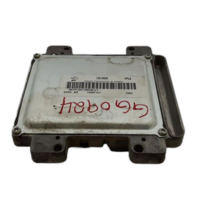
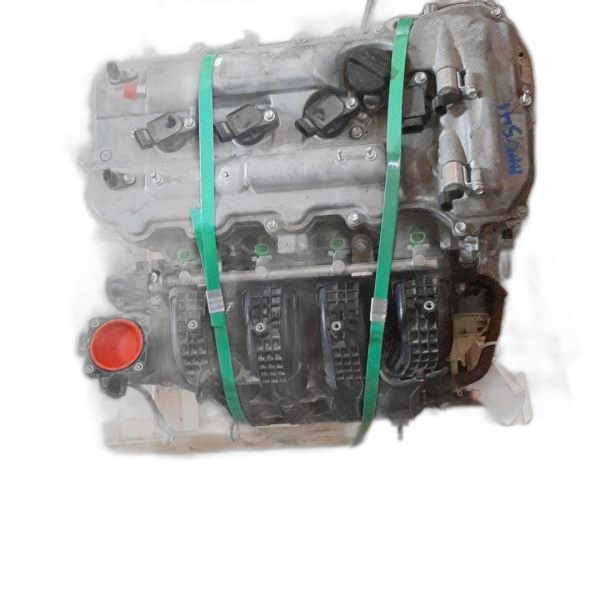
Below are the parts most often responsible for code P2154, ranked by how frequently each one is the actual culprit (per the diagnosis above). Tap any to see what we have for your vehicle.


The information in this article is provided for general reference and educational purposes only. Vehicle specifications, procedures, and part compatibility can vary by production date, trim level, and region. Always consult your vehicle's factory service manual and verify part numbers before purchasing or performing repairs. Safety-critical components such as airbags, seat belts, and braking systems should be installed by a qualified professional.
- 🧭 Diagnostic Flowchart
- 🛍️ Shop This Part
- What Does P2154 Mean?
- Can I Drive With P2154?
- Common Causes
- Symptoms
- Common Fixes & Costs
- Used vs. New Parts: Buying Guide
- What Happens If You Wait — Timeline
- Cost of Not Fixing It
- Diagnosis Steps
- When This Code Triggers (Freeze-Frame Conditions)
- Related Codes
- Climate & Environmental Factors
- How to Talk to a Mechanic About This Code
- Where to Take It: Dealer vs Independent vs Chain
- When to Walk Away From the Repair
- What Scan Tool You Need for This Code
- How to Clear the Code After You Fix It
- Will This Fail Emissions / State Inspection?
- Most Commonly Affected Vehicles
- Manufacturer-Specific Notes
- Real Owner Stories
- 2015 GMC Sierra 1500 at 110K miles
- 2012 Ford F-350 6.7L Power Stroke at 155K miles
- 2018 Ram 3500 6.7L Cummins at 85K miles
- How to Prevent This Code From Triggering
- Frequently Asked Questions
- What does 'Injector Group C' actually mean?
- What is the most common misdiagnosis for P2154?
- Can I just clear the P2154 code and keep driving?
- My scanner shows P2154 and a misfire code (P0305). Does that mean the injector is bad?
- Can I fix P2154 myself?
- Will a fuel injector cleaner fix this code?
- Why does the computer shut off the injectors?
- What is the difference between a 'high' and 'low' circuit code?
- Key Takeaways
- 🎟️ Get 5% Off