

OBD-II Code P2155: Fuel Injector Group 'D' Supply Voltage Circuit Low/Open
The Ultimate Guide to What P2155 Means, Why It Triggers, and How to Fix It for Good
- P2155 disables an entire group of fuel injectors, causing a severe misfire that destroys catalytic converters in under 50 miles.
- Wiring harness chafing—not a failed fuel injector—causes over 80% of P2155 codes, especially on GM 3.6L V6 engines.
- Never replace the PCM or fuel injectors without first performing a multimeter continuity test on the injector power supply circuit.
- A blown 'INJ' fuse instantly confirms a dead short-to-ground in the wiring harness, requiring a physical wire repair.
What Does P2155 Mean?
P2155 means the Powertrain Control Module (PCM) detects low voltage or an open circuit on the power supply line for fuel injector 'Group D'. To prevent electrical damage, the PCM instantly disables this entire group of injectors, causing a severe multi-cylinder misfire.
Technical definition: SAE definition: Fuel Injector Group 'D' Supply Voltage Circuit Low/Open. The PCM monitors the shared voltage supply circuit for a specific bank of injectors. If voltage drops below a calibrated threshold (typically under 10V) or resistance goes infinite (open circuit) for more than 4 seconds, the PCM sets P2155 and cuts power to the group.
🎬 Watch: Step-by-step diagnosis for the P2155 open circuit fault.Can I Drive With P2155?
No — Do Not Drive. Do not drive. The engine runs extremely rough, misfires, and lacks power. Continuing to drive dumps unburned fuel into the exhaust, destroying the catalytic converter in under 50 miles. This turns a $200 wiring repair into a $3,500+ converter replacement.
Common Causes
- Chafed or Damaged Wiring Harness (Very Common) — Causes over 80% of P2155 codes. Engine vibration rubs the injector wiring harness against brackets, valve covers, or EGR valves, wearing through insulation and causing a short-to-ground or open circuit. Rodent damage also falls into this category.
- Corroded or Loose Electrical Connector (Common) — Moisture, engine oil, or diesel fuel infiltrates the main harness junction or injector connectors. This degrades the pins, creating high resistance and a voltage drop that triggers the code.
- Failed Fuel Injector (Less Common) — An injector with an internal short circuit pulls the voltage down for the entire group. While less common than wiring faults, it directly triggers P2155.
- Blown Fuse or Faulty Relay (Less Common) — A blown 'INJ' fuse cuts power to the injector group. However, fuses blow because of an underlying short circuit in the wiring that must be located and repaired.
- Poor Engine or ECM Ground (Rare) — A corroded main engine ground strap causes unstable voltage across the electrical system, skewing the PCM's injector circuit readings.
- Faulty Powertrain Control Module (PCM) (Very Rare) — The internal driver circuit supplying voltage to the injector group fails. Only consider this after exhaustively testing all wiring and injectors.
Symptoms
- Violent Engine Shaking & Power Loss — With an entire injector group disabled, the engine runs on half its cylinders. Acceleration is sluggish, and the vehicle shakes violently at idle.
- Hard Start or No-Start — If the fault is present during cranking, the engine struggles to start because multiple cylinders lack fuel.
- 'Service Stabilitrak' Warning — The PCM enters limp mode and disables traction control because erratic engine performance interferes with stability algorithms.
- Raw Fuel Smell — Unburned fuel from the misfiring cylinders exits the exhaust, creating a strong gasoline or diesel odor.
- Check Engine Light Flashing (also visible on scanner) — The PCM illuminates the MIL immediately. If the resulting misfire is severe enough to damage the catalytic converter, the light will flash.
Diagnostic Flowchart
Tap your situation to follow the diagnostic path that matches what you're seeing on this code.
Common Fixes & Costs
- Repair Damaged Wiring Harness — Parts: $10-$30, Labor: $150-$400, ~2.0 hr book time (Intermediate)
- Replace Connector Pigtail
— Parts: $20-$50, Labor: $100-$250, ~1.5 hr book time
(Intermediate)
GM 3.6L V6: OEM ACDelco PT2160 (Alt: Standard Motor Products S-1024) - Replace Fuel Injector(s)
— Parts: $50-$300 per injector, Labor: $300-$800, ~3.0 hr book time
(Professional)
GM 3.6L V6 (2012+): OEM ACDelco 12669384 (Alt: Bosch 62852) - Clean Main Engine Ground — Parts: $5, Labor: $50-$100, ~1.0 hr book time (Beginner)
- Replace Powertrain Control Module (PCM) — Parts: $400-$800, Labor: $150-$300, ~1.5 hr book time (Professional)
Used vs. New Parts: Buying Guide
When a used part is worth it: Never buy used junkyard fuel injectors or wiring pigtails. Only purchase 'remanufactured' OEM injectors from reputable suppliers who flow-match sets and provide warranties.
Donor-vehicle mileage cap: roughly under 60000 miles for the part to have meaningful remaining life.
Donor quality checklist:
- Verify remanufactured injectors use OEM-spec internal parts.
- Ensure injectors are flow-matched as a set.
- Demand a minimum 1-year warranty.
Decision logic:
- If The part is a wiring pigtail or connector → Always buy new. Used connectors carry the same heat and vibration damage as your broken one.
- If The part is a fuel injector → Buy a quality remanufactured OEM injector. Avoid cheap aftermarket knockoffs.
- If The part is an ECM/PCM → Buy a pre-programmed, remanufactured unit from a specialist. Junkyard modules require expensive dealer programming.
Warranty tradeoff: Used parts offer 30 days at best. Remanufactured OEM injectors offer 1-year warranties. New OEM parts carry standard manufacturer warranties.
Worst-case if a used part fails: $1,000+ if a cheap aftermarket injector fails, requiring repeat labor to remove the intake manifold.
What Happens If You Wait — Timeline
- 0-10 miles: PCM disables the injector group. Engine runs on half its cylinders, causing violent shaking and severe power loss. (MPG impact: 50%+% · Added cost: $0)
- 10-50 miles: Unburned fuel dumps into the exhaust. Catalytic converter temperatures exceed 2,000°F, and the ceramic substrate begins to melt. (MPG impact: 50%+% · Added cost: $100)
- 50-100 miles: Catalytic converter melts into a solid blockage. Extreme exhaust backpressure causes the engine to stall repeatedly. (MPG impact: N/A% · Added cost: $1,200 - $3,500)
- 100+ miles: Unburned fuel washes past piston rings, diluting engine oil. Main bearings fail, requiring complete engine replacement. (MPG impact: N/A% · Added cost: $4,500 - $8,000+)
Cost of Not Fixing It
- Immediate (0-50 miles): Severe power loss and violent shaking. Unburned fuel washes oil from cylinder walls, accelerating piston ring wear. (Added cost: $0)
- Short-Term (50-200 miles): Catastrophic catalytic converter failure. Unburned fuel superheats the substrate, melting it into a solid blockage. (Added cost: $1,200 - $3,500)
- Long-Term (200+ miles): Engine replacement required due to fuel-diluted oil destroying main bearings, plus full exhaust system replacement. (Added cost: $4,500 - $8,000+)
Diagnosis Steps
- Read Codes and Freeze Frame Data
Confirm P2155. Note misfire codes (P03xx) or individual injector codes (P02xx) to pinpoint affected cylinders. Check freeze frame data for engine temperature and load when the fault occurred.
Tools: OBD-II Scanner (Beginner) - Perform a Visual Harness Inspection
Inspect the entire fuel injector wiring harness. Look for chafing, melting, or rodent damage where the harness touches metal brackets, EGR valves, or valve covers.
Tools: Flashlight, Inspection Mirror (Beginner) - Inspect Injector Fuses
Locate the under-hood fuse box and check the 'INJ' fuses. A blown fuse confirms a hard short-to-ground in the wiring harness.
Tools: Owner's Manual, Fuse Puller (Beginner) - Perform a Wiggle Test
Start the engine. Carefully wiggle sections of the injector wiring harness and connectors. Listen for changes in idle or watch live scanner data for fault triggers to locate intermittent breaks.
Tools: Hands, OBD-II Scanner (Intermediate) - Test Injector Resistance
Disconnect the injectors in Group D. Measure resistance across the two terminals. Compare to OEM specs (e.g., GM 3.6L GDI is ~1.5 Ω). A reading of 'OL' (open) or near-zero (shorted) confirms a bad injector.
Tools: Digital Multimeter, Service Manual (Advanced) - Test Wiring for Shorts and Continuity
Disconnect the battery and PCM. Measure continuity on the power supply wire from the PCM to the injector connector. Then, test for continuity between the power wire and the engine block. Any continuity to the block confirms a short-to-ground.
Tools: Digital Multimeter, Wiring Diagram (Advanced) - Perform a Voltage Drop Test
With the key on (engine off), measure voltage between the injector power supply pin and a known good ground. It should read full battery voltage (12V+). Readings below 10V indicate high resistance upstream.
Tools: Digital Multimeter, Wiring Diagram (Advanced) - Analyze Live Data PIDs
Monitor injector pulse widths. If Group D shows 0 ms while others pulse at 2-4 ms, the PCM has intentionally shut down the bank due to the detected fault.
Tools: Professional OBD-II Scan Tool (Advanced)
When This Code Triggers (Freeze-Frame Conditions)
- Engine Coolant Temp: 180-210°F (Faults often manifest after the engine reaches operating temperature, as heat expands components and softens wire insulation.)
- RPM: 1500-3000 RPM (Triggers under load during steady acceleration or hill climbing, rarely at idle.)
- Engine Load: 30-70% (Sets when moderate to high fuel demand exposes voltage drops in the supply circuit.)
- Vehicle Speed: 30-60 mph (Appears during city or highway driving consistent with engine load.)
Climate & Environmental Factors
- Thermal Expansion: Heat softens wire insulation. A damaged wire may only short to ground when the engine is fully hot, causing intermittent P2155 codes that disappear when cold.
- Engine Vibration: Constant vibration rubs harnesses against sharp metal brackets, eventually slicing through the protective loom and wire insulation.
- Moisture Intrusion: Pressure washing the engine bay forces water into aging connectors, corroding pins and creating voltage-dropping resistance.
How to Talk to a Mechanic About This Code
Say this: "I have a P2155 code. Please perform a multimeter continuity and short test on the Group D injector wiring harness before quoting any parts. Do not replace injectors without providing their failed resistance readings."
Directs the shop toward proper electrical diagnosis instead of blindly swapping expensive injectors or PCMs, which is the most common way customers are overcharged for this code.
Avoid saying:
- 'My car is shaking, just fix it.'
- 'My check engine light is on, can you look at it?'
- 'A friend told me I need new fuel injectors.'
Questions to ask before authorizing the repair:
- Did you find the specific point of failure in the wiring harness? Can you show me a picture of it?
- If recommending an injector, what was its resistance reading compared to OEM spec?
- If recommending a PCM, how did you definitively rule out a wiring short?
Where to Take It: Dealer vs Independent vs Chain
- Dealer:
Use only for warranty claims or unavoidable PCM programming.
Best for: Vehicles under powertrain warranty., Confirmed PCM failures requiring proprietary programming.
Downsides: Labor rates are 50% higher., Dealers often mandate replacing a $1,200 wiring harness instead of performing a $150 wire repair. (Typical cost: +50% vs. baseline) - Independent Shop:
Best fit. An independent diagnostic specialist will find the broken wire and repair it cost-effectively.
Best for: Out-of-warranty vehicles., Targeted electrical diagnostics and wire repairs.
Downsides: Requires finding a shop with ASE-certified electrical specialists. (Typical cost: +0% vs. baseline) - Chain Shop:
AVOID. This code requires multimeter diagnostics, not part swapping.
Best for: Oil changes and brake pads.
Downsides: Technicians lack advanced electrical training., High pressure to sell expensive, unnecessary parts. (Typical cost: -10% vs. baseline)
When to Walk Away From the Repair
If the total estimated repair cost exceeds 50% of your car's current private-party value, sell the vehicle.
- Car worth $5000, fix is $300: Fix it. A standard wire repair is well below the threshold.
- Car worth $5000, fix is $3200: Walk away. The estimate includes a catalytic converter destroyed by driving with the misfire. Cost exceeds 50% of value.
- Car worth $15000, fix is $3200: Fix it. Even with a ruined converter, the repair is only 20% of the vehicle's value.
What Scan Tool You Need for This Code
Minimum: A scanner that reads live data streams, paired with a digital multimeter. The multimeter is more critical than the scanner for P2155.
Basic readers only give the code. You need live data to watch injector pulse widths drop to 0 ms, confirming the PCM shut down the bank.
Budget: BlueDriver Pro (~$120) — Provides live data graphing to monitor faults during a harness wiggle test.
Mid-range: Autel MK808 (~$350) — Adds bidirectional controls to command components on/off for circuit testing.
Professional: Launch X431 Series (~$800) — Offers full ECU coding and access to OEM wiring diagrams essential for tracing shorts.
Rent vs buy: Buy a budget Bluetooth scanner and a $40 multimeter. This $160 investment is cheaper than one hour of shop diagnostic time.
How to Clear the Code After You Fix It
- Reconnect the battery if disconnected.
- Use an OBD-II scan tool to clear P2155 and associated misfire codes.
- Perform a complete drive cycle to reset readiness monitors.
Drive cycle (~30 minutes): 1) Cold start (engine off 8+ hours). 2) Idle 3 minutes with A/C and defroster on. 3) Drive steady at 55 mph for 10 minutes. 4) Drive 15 minutes in stop-and-go traffic. 5) Cool completely.
Readiness monitors affected: Catalyst Monitor, Evaporative System Monitor, O2 Sensor Monitor, Misfire Monitor
Before emissions retest: drive at least 100 miles to fully set monitors.
Watch out for:
- Disconnecting the battery clears the code but resets monitors to 'Not Ready', guaranteeing an emissions failure.
- The code returns instantly if a chafed wire was taped over without repairing the broken copper strands.
Will This Fail Emissions / State Inspection?
Yes — this code typically fails an OBD-II emissions inspection.
- California: Active P2155 is an automatic failure. All OBD readiness monitors must read 'Ready' post-repair, requiring a 50-100 mile drive cycle.
- New York: Immediate failure. NYS DMV inspection systems flag the active Check Engine Light and stored code.
- Texas: Fails the OBD portion of the annual safety inspection in the 17 emissions-testing counties.
Most Commonly Affected Vehicles
- (2009-2017) — Wiring harness frequently chafes against the EGR valve bracket or intake manifold, shorting the injector circuit to ground.
- (2007-2018) — The large electrical pass-through connector on the valve cover corrodes, causing high resistance for injectors 3 and 8.
- (2005-2016) — Injector connector pigtails fail due to extreme engine vibration and heat, requiring replacement.
Real Owner Stories
2011 GMC Acadia quoted $1,800 for injectors; fixed for $250.
Violent shaking and P2155 code. Shop recommended replacing all 6 injectors.
Outcome: Found a harness section rubbed through on a metal bracket. A mobile mechanic soldered the two broken wires for $250. Code never returned.
Lesson: Always inspect the wiring harness on GM V6 engines before authorizing expensive injector replacements.
2008 Ram 2500 Cummins fixed with dielectric grease.
Truck ran rough, blowing white smoke with P2155.
Outcome: Pins for injectors 3 and 8 were heavily corroded. Cleaned pins, applied dielectric grease, and the code cleared.
Lesson: On Cummins engines, inspect the valve cover pass-through connector before pulling injectors.
2010 Chevy Traverse with hot-engine-only stalling.
P2155 triggered only after 30 minutes of driving. Shop quoted $1,100 for a new ECM.
Outcome: Harness was rubbing on the EGR gasket tab. When hot, insulation softened and shorted. Repaired wire and bent tab for $200.
Lesson: Intermittent faults that appear only when hot are classic thermal-expansion wiring shorts.
2011 Chevy Malibu blowing 'INJ' fuses instantly.
Car stalled. Replacing the 15A injector fuse resulted in immediate blown fuses upon key-on.
Outcome: Found harness melted against a hot exhaust pipe, shorting directly to the block. Repaired wire and rerouted harness.
Lesson: A fuse that blows instantly confirms a dead short-to-ground. Stop replacing fuses and find the melted wire.
How to Prevent This Code From Triggering
- Wrap Vulnerable Harnesses (Once) — Applying automotive-grade Tesa tape or Kevlar sleeves to harnesses near brackets prevents the vibration chafing that causes 80% of these codes.
- Secure Loose Clips (During oil changes) — Use high-quality zip ties to secure loose harnesses away from sharp metal edges. Do not overtighten.
- Apply Dielectric Grease (When disconnecting connectors) — Seals out moisture and prevents pin corrosion, maintaining low resistance in the injector circuits.
Frequently Asked Questions
Can I drive with a P2155 code?
No. Driving dumps unburned fuel into the exhaust, which melts the catalytic converter in under 50 miles. Tow the vehicle to avoid adding $2,500+ to your repair bill.
Does P2155 mean I need new fuel injectors?
Rarely. This code flags a voltage supply issue to a group of injectors, usually caused by a chafed wire or corroded connector. Always test the wiring harness before buying parts.
Why does my car say 'Service Stabilitrak' with this code?
The severe engine misfire caused by disabled injectors tricks the PCM into disabling traction control systems. Fixing the P2155 wiring fault automatically clears the Stabilitrak warning.
How much does it cost to fix P2155?
If it is a chafed wire, expect $150 to $400 for diagnostic time and repair. If a direct-injection fuel injector has internally shorted, replacement costs $450 to $1,200 depending on manifold access.
Key Takeaways
- P2155 disables an entire group of fuel injectors, causing a severe misfire that destroys catalytic converters in under 50 miles.
- Wiring harness chafing—not a failed fuel injector—causes over 80% of P2155 codes, especially on GM 3.6L V6 engines.
- Never replace the PCM or fuel injectors without first performing a multimeter continuity test on the injector power supply circuit.
- A blown 'INJ' fuse instantly confirms a dead short-to-ground in the wiring harness, requiring a physical wire repair.
Helpful Videos
Shop the Parts Behind P2155
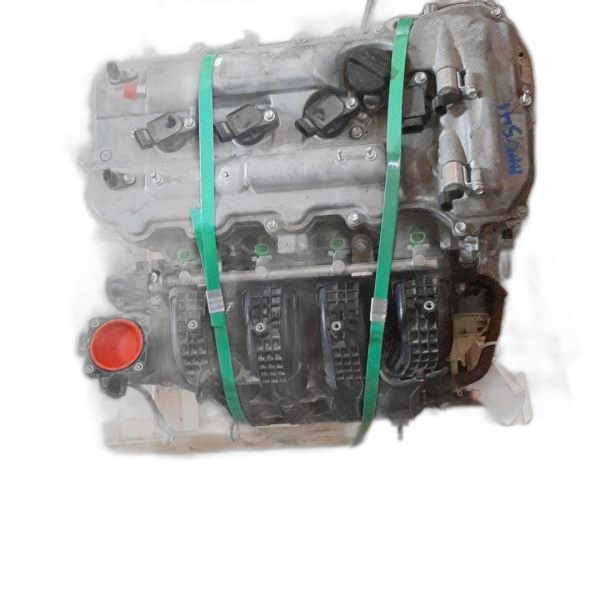
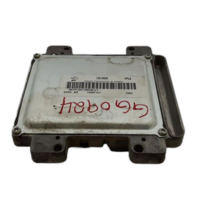
Below are the parts most often responsible for code P2155, ranked by how frequently each one is the actual culprit (per the diagnosis above). Tap any to see what we have for your vehicle.





The information in this article is provided for general reference and educational purposes only. Vehicle specifications, procedures, and part compatibility can vary by production date, trim level, and region. Always consult your vehicle's factory service manual and verify part numbers before purchasing or performing repairs. Safety-critical components such as airbags, seat belts, and braking systems should be installed by a qualified professional.
- 🧭 Diagnostic Flowchart
- 🎬 Helpful Videos
- 🛍️ Shop This Part
- What Does P2155 Mean?
- Can I Drive With P2155?
- Common Causes
- Symptoms
- Common Fixes & Costs
- Used vs. New Parts: Buying Guide
- What Happens If You Wait — Timeline
- Cost of Not Fixing It
- Diagnosis Steps
- When This Code Triggers (Freeze-Frame Conditions)
- Climate & Environmental Factors
- How to Talk to a Mechanic About This Code
- Where to Take It: Dealer vs Independent vs Chain
- When to Walk Away From the Repair
- What Scan Tool You Need for This Code
- How to Clear the Code After You Fix It
- Will This Fail Emissions / State Inspection?
- Most Commonly Affected Vehicles
- Real Owner Stories
- 2011 GMC Acadia quoted $1,800 for injectors; fixed for $250.
- 2008 Ram 2500 Cummins fixed with dielectric grease.
- 2010 Chevy Traverse with hot-engine-only stalling.
- 2011 Chevy Malibu blowing 'INJ' fuses instantly.
- How to Prevent This Code From Triggering
- Frequently Asked Questions
- Can I drive with a P2155 code?
- Does P2155 mean I need new fuel injectors?
- Why does my car say 'Service Stabilitrak' with this code?
- How much does it cost to fix P2155?
- Key Takeaways
- 🎟️ Get 5% Off