

P2155 on 2009-2014 Buick Enclave: Fuel Injector Circuit Causes and Fixes
On a 2009-2014 Buick Enclave, code P2155 is almost always caused by a damaged fuel injector wiring harness that chafes against the engine. The fix is to inspect, repair, or replace the harness. This is a known issue covered by GM Technical Service Bulletin #PIP4924D, which applies to the Enclave and its platform mates like the Chevy Traverse and GMC Acadia.
- P2155 on a 2009-2014 Enclave points to an electrical problem with the fuel injectors on one side of the engine (Bank 2).
- The most likely cause by far is a damaged fuel injector wiring harness, as identified in GM TSB #PIP4924D.
- A thorough visual inspection of the wiring harness for chafing is the first and most important diagnostic step.
- This issue is shared with other GM vehicles using the same 3.6L V6 engine, such as the Chevrolet Traverse, GMC Acadia, and Saturn Outlook.
What's Unique About the 2009-2014 Buick ENCLAVE
🎬 Check out the top 5 common first-generation Enclave problems.The first-generation Buick Enclave and its platform mates on the GM Lambda platform (like the Chevy Traverse, GMC Acadia, and Saturn Outlook) with the 3.6L V6 engine are known for a specific wiring harness issue. GM issued Technical Service Bulletin #PIP4924D, which directly addresses P2155 and other related codes. The bulletin points to the fuel injector wiring harness rubbing through its insulation at several common points in the engine bay, causing a short or open circuit. This makes the wiring harness the primary suspect, far more so than a faulty injector or ECM.
Diagnostic Flowchart
Tap your situation to follow the diagnostic path that matches what you're seeing on this vehicle.
Symptoms You May Notice
- Check Engine Light (SES light) is on
- Engine misfires, which may feel like a shudder or stumble
- Rough or unstable idle
- Noticeable loss of engine power and poor acceleration
- Reduced fuel economy
- In some cases, the engine may be hard to start
- Engine may shake violently at idle
- Replacing one or more fuel injectors without first inspecting the wiring harness. The TSB clearly indicates the harness is the most likely culprit, and replacing injectors will not fix a wiring problem.
Most Likely Causes
- Chafed or Damaged Fuel Injector Wiring Harness 🔴 High Probability → Shop Engine Wiring Harness As documented in GM TSB #PIP4924D, the harness routing can cause it to rub against engine components. Common chafe points include the intake plenum, valve cover bolts, fuel lines, and the side of the cylinder head under the plenum. The constant engine vibration wears through the wire's insulation, causing a short to ground or an open circuit.
How to confirm: Visually inspect the entire fuel injector wiring harness, paying close attention to the areas mentioned in the TSB. Look for exposed copper wires, melted insulation, or breaks. You may need to remove the plastic engine cover and intake plenum for a clear view. You can also use a multimeter to check for continuity from the ECM connector to the injector connectors.
Typical fix: Repair the damaged section of the wire(s) using solder and heat-shrink tubing. If the damage is extensive or near a connector, replacing the injector connector pigtail or the entire fuel injector harness is recommended. After repair, secure the harness away from sharp edges or hot surfaces to prevent recurrence.
Est. part cost: $10-$30 for repair materials, $150-$250 for a new harness
Rare But Worth Checking
- Faulty Fuel Injector: → Shop Fuel Injector While less common than the wiring issue, an injector can fail internally (short or open circuit), which would also trigger a circuit code. This should be considered after the wiring harness has been thoroughly inspected and ruled out. A resistance test with a multimeter can confirm if the injector coil is open.
- Failed Engine Control Module (ECM): → Shop Engine Control Module (ECM) An internal failure of the injector driver circuit within the ECM is rare but possible. This should be the last item to consider after all wiring and components have been tested and confirmed to be good. Diagnostic procedures often state to replace the ECM if all other tests pass.
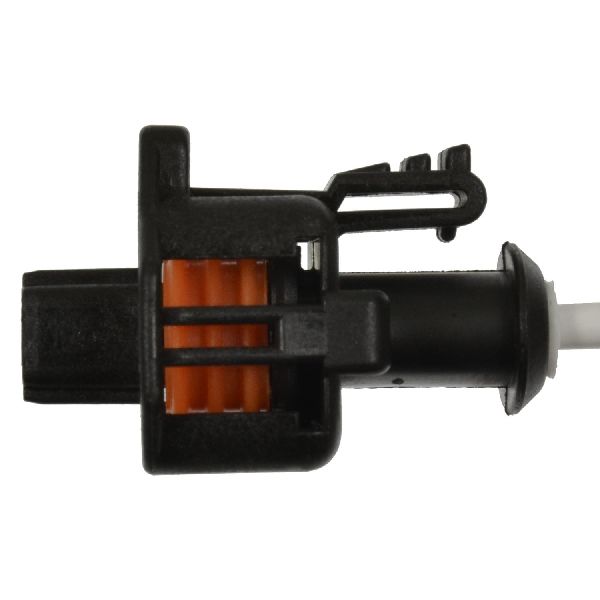
- Corroded or Loose Connector Pins: The main harness connector or the individual fuel injector connectors can become corroded or have pins that back out, causing an intermittent open circuit. This can happen at the injector itself or at the main ECM connector.
Diagnosis Steps
- Scan for all DTCs. Note P2155 and any other accompanying codes, such as misfire codes (P030x) or other injector circuit codes (P2149, P020x).
- Perform a detailed visual inspection of the fuel injector wiring harness as outlined in TSB #PIP4924D. Remove the engine cover. Check for any signs of rubbing, melting, or chafing against the intake manifold, valve covers, fuel lines, or cylinder heads.
- If damage is found, disconnect the battery. Carefully repair the broken/chafed wires with solder and heat-shrink tubing. Ensure the repair is secure and insulated. 🎬 See how to fix misfires on specific injector banks. Reroute the harness slightly if possible to add clearance.
- If no visible damage is found, disconnect the harness from the injectors on Bank 2 (cylinders 2, 4, 6) and from the ECM.
- Use a digital multimeter (DMM) to check for continuity on the supply voltage wire from the ECM connector pin to each of the three injector connector pins. An open circuit (OL reading) indicates a broken wire.
- Check the same wire for a short to ground. There should be no continuity between the supply voltage wire and a known good ground.
- If wiring tests good, test the resistance of the fuel injectors themselves. A healthy injector will have a specific resistance value (check service manual, often 1.5-2.5 ohms for this engine type); an open (OL) or shorted (near zero ohms) injector needs replacement.
- If all wiring and injectors test normal, the fault may lie within the ECM, but this is the least likely cause.
- After any repairs, clear the DTCs, start the engine, and check if the code returns.
Parts You'll Likely Need
- Fuel Injector Wiring Harness
(OEM #Varies by specific engine and year, not a single part number. Often repaired or pigtails are used.)— This is the most common failure point for code P2155 on this vehicle, as documented by a GM Technical Service Bulletin.
Trusted brands: ACDelco (OEM), Standard Motor Products
OEM price range: $200-$250
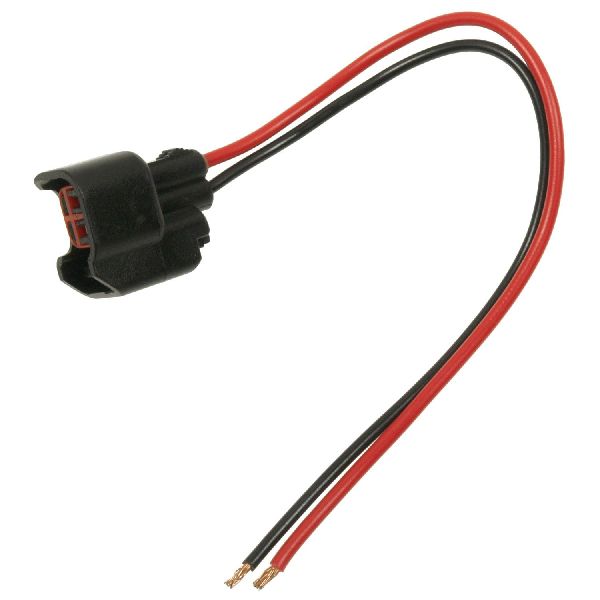
Aftermarket price range: $150-$200 - Fuel Injector Connector Pigtail
(OEM #ACDelco PT2160)— If the wiring damage is isolated to the area immediately around one injector connector, replacing just the pigtail is a cost-effective repair.
Trusted brands: ACDelco, Dorman
OEM price range: $20-$40
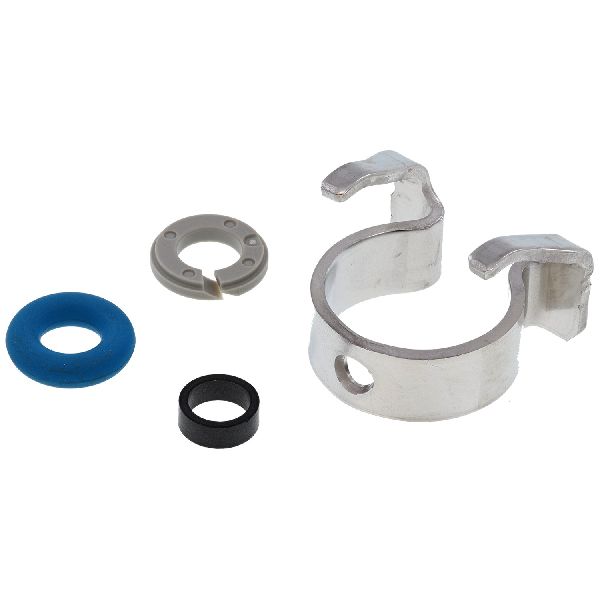
Aftermarket price range: $10-$25 - Fuel Injector
(OEM #ACDelco 12669384 (supersedes 12638530, 12632255, 12611545 for LLT/LFX))— A less common cause, a fuel injector can fail electrically (short/open) and trigger this circuit code after wiring issues have been ruled out.
Trusted brands: ACDelco (OEM), Bosch, Delphi
OEM price range: $70-$100 per injector
Aftermarket price range: $40-$70 per injector
Related Codes That Often Appear With This One
- P2149 — This code is for 'Fuel Injector Group A Supply Voltage Circuit'. If the wiring harness damage affects both injector banks, you may see codes for both Group A (P2149) and Group B (P2155) simultaneously.
- P0300 — This is a 'Random/Multiple Cylinder Misfire Detected' code. Since P2155 affects an entire bank of injectors, it will cause multiple cylinders to misfire.
- P0302, P0304, P0306 — These are misfire codes for specific cylinders (2, 4, and 6). Since P2155 relates to the injector bank for these cylinders, it's common to see one or more of these codes appear alongside it.
- P0201-P0206 — These are individual injector circuit codes. They are listed in the same TSB as P2155 and can be caused by the same wiring harness issue.
- P2152 — This code is for 'Fuel Injector Group C Supply Voltage Circuit'. In some cases, a user on an MHH Auto forum reported having both P2155 and P2152 on a 2009 GMC Acadia, indicating a widespread wiring issue.
Technical Service Bulletins (TSBs) & Recalls
- PIP4924D: Addresses SES light and misfires with a list of injector codes including P2155. It instructs technicians to inspect the fuel injector wiring harness for rub through or open wires at common spots like against the intake plenum, valve cover bolts, fuel lines, and the side of the cylinder head.
Platform-Specific Known Issues
- GM Technical Service Bulletin #PIP4924D specifically calls out that the fuel injector wiring harness is prone to rubbing through on various engine components, leading to codes like P2155. This is the most critical vehicle-specific issue related to this code.
- Owner experiences on forums confirm this is a widespread issue. For example, a user on the MHH Auto forum with a 2009 GMC Acadia (a platform mate) experienced P2155 and P2152, and diagnostic steps pointed towards wiring or the ECM after continuity checks passed.
Mechanic-Grade Diagnostic Values
- Fuel Injector Coil Resistance — expected: 1.5-2.5 ohms. Failure: A reading of OL (open circuit) or significantly less than the specified range indicates a failed injector.
- Injector High Voltage Supply Circuit to Ground — expected: OL (infinite resistance). Failure: Any reading less than infinite resistance indicates a short to ground in the harness or injector.
- Injector Supply Voltage (Key On) — expected: 11.5–12.5 V (Battery Voltage). Failure: Voltage below 10V suggests a problem upstream in the wiring or ECM.
Scan Tool Commands That Help
- GDS2: Reset Transmission Pressure Adapts — While not a direct fix for P2155, if significant engine work like harness or injector replacement is performed, drivability issues like shuddering can occur. Resetting these adapts and performing the relearn drive cycle can resolve post-repair shifting complaints.
Wiring & Ground Locations
- G105 / G106 — G105 is on the left side of the engine compartment. G106 is located on the left rear of the engine (for 2012 models). On some platform mates, G106 is a primary engine ground on the front center of the frame cross rail.. These are main engine and chassis grounds. The Engine Control Module (ECM) relies on a clean ground path. A loose or corroded connection at these points can cause erratic ECM behavior and various electrical faults, complicating the diagnosis of circuit codes like P2155.
- X160 / X161 — These are multi-way harness connectors located at the rear of the intake manifold.. The service manual specifies disconnecting these connectors to isolate the ECM side of the harness from the injector side for testing continuity and shorts, which is a critical step in diagnosing P2155.
- ECM (Engine Control Module) — Located at the right front of the engine compartment.. This is the source of the voltage supply and control for the injector circuits. All diagnostic tests ultimately lead back to verifying the integrity of the wiring to and from the ECM, or the ECM itself.
Real Owner Repair Stories
- MHH Auto Forum (2009 GMC Acadia (platform mate to Enclave)) — DTCs P2155 (Injector Group 4) and P2152 (Injector Group 3) were present.
❌ Tried (didn't work) The technician followed the official test procedure and performed continuity checks on the wiring from the ECM connector to the injector connectors for the affected circuits (injectors 3, 4, and 6).
✅ What actually fixed it The wiring continuity tested good, leading the technician to conclude the ECM was the likely culprit, as per the final step in the diagnostic flowchart. The thread ends with the technician asking for confirmation before replacing the ECM, highlighting that when the common harness chafe isn't found, the ECM becomes the primary suspect.
OEM Part Supersession History
12611545, 12632255, 12638530→12669384— Standard part evolution for improved performance, reliability, or manufacturing efficiency.
Heads up: Aftermarket sellers strongly recommend replacing injectors as a full set rather than mixing original parts with new ones, due to potential differences in fuel flow and atomization characteristics that could affect engine balance.
Model Year Variations Within This Range
- 2009-2011 vs 2012-2014: The 2009-2011 models primarily use the 3.6L LLT engine, while 2012-2014 models use the updated LFX engine. The LFX features a composite intake manifold (vs. aluminum on LLT), integrated exhaust manifolds within the cylinder head, and uses a different Delphi ECM (vs. Bosch on the LLT). These changes mean some parts, like intake manifold gaskets and potentially sections of the wiring harness, are not interchangeable. However, the fundamental issue of the injector harness chafing, as described in TSB PIP4924D, applies to both engine versions within this generation.
Helpful Videos
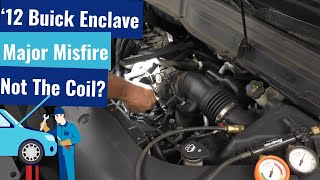
We Have This Part in Stock


The information in this article is provided for general reference and educational purposes only. Vehicle specifications, procedures, and part compatibility can vary by production date, trim level, and region. Always consult your vehicle's factory service manual and verify part numbers before purchasing or performing repairs. Safety-critical components such as airbags, seat belts, and braking systems should be installed by a qualified professional.
- Buick ENCLAVE:
- 🧭 Diagnostic Flowchart
- 🎬 Helpful Videos
- 🛍️ Shop This Part
- What's Unique About the 2009-2014 Buick ENCLAVE
- Symptoms You May Notice
- Most Likely Causes
- Rare But Worth Checking
- Diagnosis Steps
- Parts You'll Likely Need
- Related Codes That Often Appear With This One
- Technical Service Bulletins (TSBs) & Recalls
- Platform-Specific Known Issues
- Mechanic-Grade Diagnostic Values
- Scan Tool Commands That Help
- Wiring & Ground Locations
- Real Owner Repair Stories
- OEM Part Supersession History
- Model Year Variations Within This Range
- 🎟️ Get 5% Off