

P2155 on 2010-2014 Cadillac CTS: Causes and Fixes for Injector Circuit Faults
On a 2010-2014 Cadillac CTS, code P2155 is almost always caused by a chafed or damaged fuel injector wiring harness, a known issue covered by GM TSB #PIP4924D. The fix involves inspecting the harness for damage, especially around the intake plenum and valve covers, and repairing the wires.
- P2155 on a 2010-2014 CTS almost always points to a wiring problem, not a bad part.
- Before buying any parts, carefully inspect the fuel injector wiring harness for signs of rubbing or damage, especially near the intake and valve covers.
- This is a known issue covered by GM TSB #PIP4924D.
- Cylinder 4 is the middle cylinder on the driver's side of the V6 engine.
- Driving with this code can cause expensive damage to your catalytic converter, so prompt diagnosis is recommended.
What's Unique About the 2010-2014 Cadillac CTS
The second-generation Cadillac CTS, particularly models with V6 engines, is susceptible to a specific wiring harness issue. The harness that supplies power and control signals to the fuel injectors is routed in a way that makes it prone to rubbing against engine components like the intake plenum, valve cover bolts, or fuel lines. This chafing can expose and break the wires, leading to an open or short circuit that triggers P2155 and other related injector codes, as documented in a GM Technical Service Bulletin (TSB).
Diagnostic Flowchart
Tap your situation to follow the diagnostic path that matches what you're seeing on this vehicle.
Symptoms You May Notice
- Check Engine Light is on
- Rough or unstable idle
- Engine misfire, which may feel like a shudder or stumble, particularly under load between 1500-3000 RPM.
- Noticeable loss of engine power, especially during acceleration
- Engine may stall in severe cases.
- A feeling described by some owners as a "fishbite" or surge.
- Replacing the fuel injector for cylinder 4 without first thoroughly inspecting the wiring harness. The symptoms are identical, but the wiring is the most probable cause on this specific vehicle.
- Replacing the spark plug and ignition coil for cylinder 4. While these can cause a misfire, they will not set the P2155 injector circuit code.
Most Likely Causes
- Chafed or Damaged Fuel Injector Wiring Harness 🔴 High Probability → Shop Engine Wiring Harness As identified in TSB #PIP4924D, the injector harness routing on these V6 engines makes it vulnerable to rubbing through its insulation. Common chafe points are where the harness contacts the sharp edges of the intake plenum, the corners of the valve covers, and nearby fuel line brackets.
How to confirm: Perform a careful visual and tactile inspection of the fuel injector wiring harness. Focus on areas where it is routed tightly or makes contact with engine components. Look for worn insulation, exposed copper, or broken wires. The damage is often found on the section of the harness that runs between the two cylinder banks at the rear of the intake manifold.
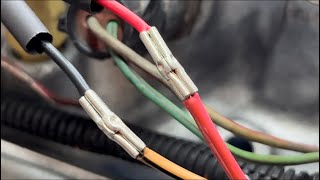
Typical fix: Repair the damaged section of the wire using solder and heat-shrink tubing for a durable, moisture-proof seal. If damage is extensive or in multiple locations, replacing the entire fuel injector harness (or the affected bank's pigtail) is recommended.
Est. part cost: $5-$20 for wiring repair supplies, $150-$300 for a new harness.
Rare But Worth Checking
- Faulty Fuel Injector: → Shop Fuel Injector An internal failure of the cylinder 4 fuel injector can cause an open or short in the circuit. This is less common than the wiring issue but is the next logical part to check. The injector coil can fail when hot, leading to intermittent issues.
- Failed Engine Control Module (ECM): → Shop Engine Control Module (ECM) The injector driver circuit within the ECM can fail. This is rare and should only be considered after the wiring and the injector have been definitively ruled out as the cause.
- Corroded or Loose Connector Pins: The pins in the main harness connector (X116 or X117 at the rear of the intake) or at the injector itself can become corroded or loose, causing high resistance or an intermittent open circuit.
Diagnosis Steps
- Read the trouble codes with an OBD-II scanner and note all present codes and freeze-frame data.
- Locate Cylinder 4: On the V6 engines in the CTS, the cylinders are numbered with odds on the passenger side (Bank 1) and evens on the driver's side (Bank 2), from front to back. Cylinder 4 is the middle cylinder on the driver's side of the engine.
- Perform a Thorough Visual Inspection: As per TSB #PIP4924D, meticulously inspect the fuel injector wiring harness. Pay close attention to contact points with the intake manifold, valve covers, fuel lines, and the back of the cylinder heads. A YouTube video by 1A Auto for a similar CTS model shows the general location of the harness and how it can chafe.
- If damage is found, repair the wiring. Use solder and heat-shrink tubing for a permanent fix. 🎬 Watch: Professional techniques for repairing damaged engine harness wiring. Clear codes and test drive to see if the fault returns.
- Check Injector Resistance: If no wiring damage is visible, disconnect the harness at the cylinder 4 injector. Check the resistance of the fuel injector. For 2012-2014 LFX V6 engines, the resistance should be between 1.2 and 1.8 ohms. For 2010-2011 LLT V6 engines, it should be around 11-15 ohms. If it's outside this range, the injector is likely faulty.
- Check for Shorts/Opens: With the harness disconnected from the injector and the ECM, use a digital multimeter to check the control circuit wire for continuity (no opens) and to ensure there is no short to ground or power.
- If both the wiring and injector test good, the fault may lie with the ECM's injector driver, which would require professional diagnosis or replacement.
Parts You'll Likely Need
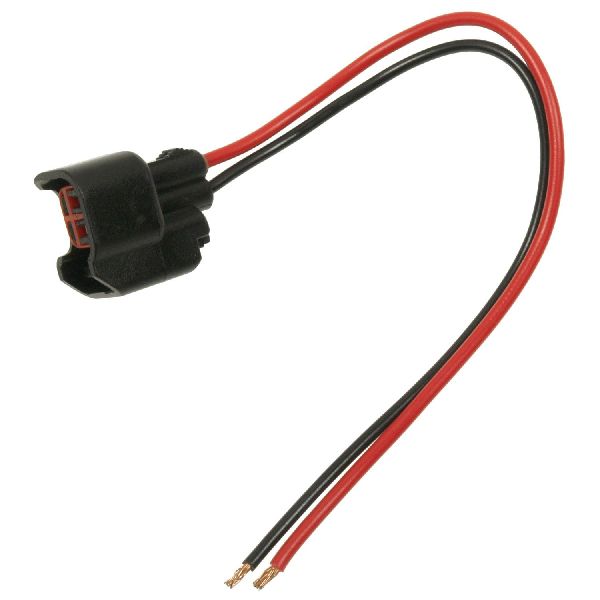
- Fuel Injector Wiring Harness Repair Supplies — The most common cause is a chafed wire that needs to be cut, soldered, and protected with heat shrink.
Trusted brands: Dorman, ACDelco
OEM price range: $5-$20
Aftermarket price range: $5-$20 - Fuel Injector
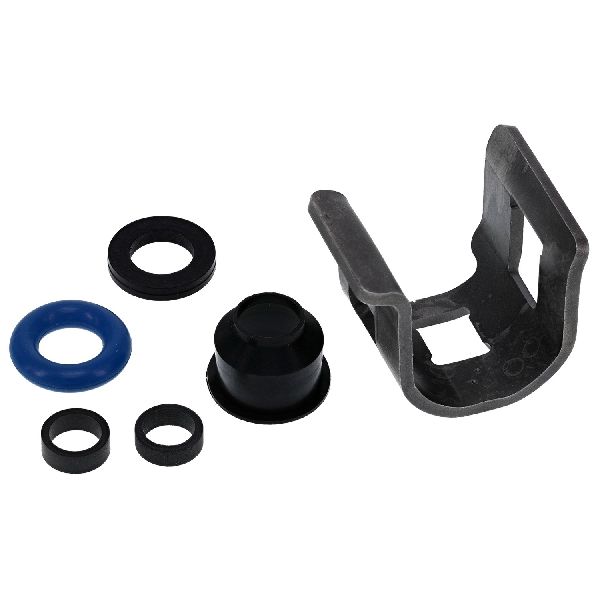
(OEM #12629927)— If the wiring is intact, the injector itself may have failed. This part number is associated with the 3.0L V6 engine. 🎬 See this step-by-step 3.0L fuel injector replacement walkthrough. The 3.6L engines (LLT/LFX) use different part numbers. 🎬 Watch: How to replace injectors to fix a flashing check engine light. Always verify with VIN.
Trusted brands: ACDelco, Hitachi
OEM price range: $90-$150
Aftermarket price range: $40-$80 - Fuel Injector Wiring Harness
(OEM #12689346 (replaces 12627091))— If wiring damage is extensive, replacing the entire harness is the best option. This part number appears to be a general GM injector harness; confirm fitment with VIN.
Trusted brands: GM Genuine Parts
OEM price range: $150-$250
Related Codes That Often Appear With This One
- P0204 — This is the generic code for 'Cylinder 4 Injector Circuit Malfunction' and often appears with P2155.
- P0304 — This code indicates 'Cylinder 4 Misfire Detected'. It is a direct result of the injector being disabled by the P2155 fault.
- P2146, P2149, P2152, P216A, P216D — These are the corresponding injector control circuit codes for the other cylinders. If the harness is chafed badly, multiple injector circuits can be affected, causing several of these codes to appear together.
Technical Service Bulletins (TSBs) & Recalls
- PIP4924D: Addresses a Service Engine Soon light and misfires caused by the fuel injector wiring harness rubbing through. It lists P2155 as one of the potential diagnostic trouble codes. This is the primary document for this issue.
Platform-Specific Known Issues
- A known wiring harness chafing issue is documented in GM Technical Service Bulletin #PIP4924D, which applies to 2010-2014 CTS models and lists P2155 as a potential resulting code.
- Owner experiences on forums frequently cite this exact issue. For example, a thread on Just Commodores (a forum for a platform mate) describes a similar misfire issue traced to injector wiring rubbing on the plenum chamber.
Mechanic-Grade Diagnostic Values
- Fuel Injector Resistance (3.6L LFX V6, 2012-2014) — expected: 1.2 - 1.8 Ohms. Failure: A reading outside this narrow range indicates an internal injector fault.
- Fuel Injector Resistance (3.0L LF1 / 3.6L LLT V6, 2010-2011) — expected: ~11 - 15 Ohms. Failure: A significant deviation, open circuit (OL), or shorted (near 0 Ohms) indicates a failed injector.
- Injector Pulse Width (at idle, warm engine) — expected: 2 - 4 milliseconds (ms). Failure: A value of 0 ms on cylinder 4 while other cylinders show normal pulse width points to the ECM not commanding the injector or a complete open circuit.
- Injector Circuit Voltage (Key On) — expected: 11.5–12.5 V. Failure: Voltage below 10V suggests an upstream problem in the wiring or control module.
Scan Tool Commands That Help
- GM GDS2 / Tech2: Fuel Injector Balance Test — This function, found in the Special Functions or Output Controls menu, pulses each injector individually and measures the corresponding drop in fuel rail pressure. It is used to confirm if an injector is mechanically stuck, clogged, or flowing differently than the others, after electrical circuit integrity has been verified.
- GM GDS2 / Tech2: Injector Control Circuit Test Status — While the engine is running, this parameter in the scan tool data list will display 'OK', 'Not Run', or 'Fault'. Wiggling the harness while monitoring this status can help pinpoint an intermittent open or short in the wiring. A change from 'OK' to 'Fault' during the wiggle test indicates the location of the wiring issue.
Wiring & Ground Locations
- G131 / G136 — On the rear of the left cylinder bank (driver's side). G131 and G136 are listed for the 3.0L & 3.6L engines.. The ECM and its related sensor/actuator circuits require a clean ground reference. A loose or corroded ground at the cylinder head can cause erratic voltage and unpredictable behavior in the injector circuits, potentially triggering circuit codes like P2155.
- G104 — Right front of the engine compartment.. This is a major ground point for the Engine Control Module (ECM). A poor connection here can affect the entire engine management system, including all injector driver circuits.
- Harness Connectors X116 / X117 — Located at the rear of the intake manifold.. These are the main multi-way connectors that bridge the engine wiring harness to the fuel injector harness. Diagnostic procedures often require disconnecting these to isolate the ECM side of the circuit from the injector side for testing.
- ECM Connector X1 — At the Engine Control Module.. This is the main connector where the injector control circuits originate. Probing the specific pins for the cylinder 4 injector is the final step to confirm if the ECM driver is sending a signal before condemning the module. Pinouts vary by year and engine (LLT vs LFX).
OEM Part Supersession History
12642021→12629927— Standard part update or manufacturer change.
Heads up: This part number (12629927) is for the 3.0L V6 engine only. It is not compatible with the 3.6L LLT or LFX engines.N/A→12634126— N/A
Heads up: This is the correct fuel injector part number for the 3.6L LFX V6 engine (2012-2014). It is a low-impedance injector and is not compatible with the earlier 3.6L LLT engine.N/A→12638530— N/A
Heads up: This is the correct fuel injector part number for the 3.6L LLT V6 engine (2010-2011). It is a high-impedance injector and is not compatible with the later 3.6L LFX engine.
Model Year Variations Within This Range
- 2010-2011: These models were equipped with the 3.0L LF1 or 3.6L LLT V6. Both engines use a high-impedance (~12 Ohm) fuel injector (e.g., PN 12638530 for the LLT) and have an aluminum intake manifold. The ECM is typically a Bosch unit.
- 2012-2014: The primary V6 was the updated 3.6L LFX. This engine uses low-impedance (~1.2-1.8 Ohm) fuel injectors (PN 12634126), a composite intake manifold, and integrated exhaust manifolds. The ECM is a Delphi unit. The different intake design may change the exact location of harness chafing compared to earlier models.
Helpful Videos
We Have This Part in Stock


The information in this article is provided for general reference and educational purposes only. Vehicle specifications, procedures, and part compatibility can vary by production date, trim level, and region. Always consult your vehicle's factory service manual and verify part numbers before purchasing or performing repairs. Safety-critical components such as airbags, seat belts, and braking systems should be installed by a qualified professional.
- Cadillac CTS:
- 🧭 Diagnostic Flowchart
- 🎬 Helpful Videos
- 🛍️ Shop This Part
- What's Unique About the 2010-2014 Cadillac CTS
- Symptoms You May Notice
- Most Likely Causes
- Rare But Worth Checking
- Diagnosis Steps
- Parts You'll Likely Need
- Related Codes That Often Appear With This One
- Technical Service Bulletins (TSBs) & Recalls
- Platform-Specific Known Issues
- Mechanic-Grade Diagnostic Values
- Scan Tool Commands That Help
- Wiring & Ground Locations
- OEM Part Supersession History
- Model Year Variations Within This Range
- 🎟️ Get 5% Off