

P2155 on 2010-2014 Chevrolet Equinox: Fuel Injector Circuit Fault Causes and Fixes
This code almost always indicates a problem with the wiring for the #4 fuel injector, not the injector itself. A GM Technical Service Bulletin points to a known issue with the fuel injector wiring harness chafing or breaking. Inspect the harness thoroughly, especially where it passes near the EGR valve or engine brackets, before replacing any parts.
- P2155 on a 2010-2014 Equinox V6 points to an electrical fault in the circuit for the cylinder #4 fuel injector.
- The most likely cause is a damaged wiring harness, as documented by a GM Technical Service Bulletin (TSB #PIP4924D).
- Always inspect the wiring harness thoroughly for chafing or breaks, especially near the intake and valve covers, before spending money on a new fuel injector.
- Driving with this code can cause expensive damage to the catalytic converter.
What's Unique About the 2010-2014 Chevrolet EQUINOX
For this generation of Chevrolet Equinox and its platform mates (like the GMC Terrain), the V6 engine's fuel injector wiring harness is known to be susceptible to damage. General Motors issued Technical Service Bulletin (TSB) #PIP4924D, which was updated several times, specifically to address this problem. It guides technicians to inspect the harness for areas where it has rubbed through or has internal wire breaks. Common chafe points include contact with the intake plenum, valve cover bolts, fuel lines, and the side of the cylinder head under the plenum. A particularly notorious spot is where the harness can chafe on a metal tab of the EGR valve gasket. This makes a wiring fault the most common cause for P2155 and related injector codes on this platform.
Diagnostic Flowchart
Tap your situation to follow the diagnostic path that matches what you're seeing on this vehicle.
Symptoms You May Notice
- Check Engine Light is on
- Engine runs rough or shakes, especially at idle
- Noticeable loss of engine power and poor acceleration
- Engine misfires, sometimes felt as a violent shake
- Vehicle may enter a reduced power 'limp mode'
- Poor fuel economy
- Smell of raw fuel from the exhaust
- Replacing the fuel injector for cylinder #4 without first thoroughly inspecting the wiring harness. The harness is the most likely culprit, and replacing the injector will not fix a wiring problem.
Most Likely Causes
- Chafed or Damaged Fuel Injector Wiring Harness 🔴 High Probability → Shop Engine Wiring Harness As documented in GM TSB #PIP4924D, the harness routing can lead to it rubbing against engine components, causing wires to break or short out. Specific chafe points mentioned in service bulletins and owner forums include against the intake plenum, at valve cover bolts, against fuel lines, and on the side of the cylinder head under the plenum. Another documented chafe point is a sharp tab on the EGR valve's metal gasket.
How to confirm: Visually inspect the entire fuel injector harness, especially the section near cylinder #4 (middle cylinder, bank 1, firewall side) and where the harness bends or is close to the EGR valve or engine covers. A critical retainer clip on the driver's side rocker cover must be fully seated to maintain clearance from the EGR valve. Perform a 'wiggle test' on the harness with the engine running to see if it triggers the misfire. Use a multimeter to check for continuity from the ECM connector to the injector connector.
Typical fix: Repair the specific broken or shorted wire(s). This involves cutting the damaged section, splicing in a new piece of wire using solder and heat-shrink tubing, and protecting the repair with high-temperature, anti-abrasion loom or tape. In severe cases, the harness pigtail or the entire engine harness may need replacement. Ensure the harness retainer near injector #4 is properly seated on its stud.
Est. part cost: $5-$50 for repair materials - Failed Fuel Injector 🟡 Medium Probability → Shop Fuel Injector
How to confirm: After confirming the wiring is intact, unplug the connector at the #4 fuel injector and measure its internal resistance with a multimeter. Compare the reading to the manufacturer's specification (typically between 1.2 and 1.8 ohms for the 3.6L LFX engine). An 'open' or infinite resistance reading indicates a failed injector. A professional scan tool's 'Injector Balance Test' can also identify a faulty injector by measuring the fuel pressure drop when it fires; a variance of more than 20% from the other cylinders indicates a problem.
Typical fix: Replace the faulty fuel injector. It is often recommended to replace the intake manifold gaskets at the same time. It's also wise to lubricate the new injector's O-rings before installation to prevent pinching.
Est. part cost: $50-$150 - Faulty Engine Control Module (ECM) ⚪ Low Probability → Shop Engine Control Module (ECM) While less common for the V6, the ECM on the Equinox platform can be susceptible to failure from heat and vibration, or from oil intrusion on 2.4L models. A failure of the internal injector driver circuit can trigger P2155.
How to confirm: This is diagnosed by exclusion. If both the wiring harness and the fuel injector test perfectly, the fault may lie with the injector driver circuit inside the ECM. This requires advanced diagnostic tools, like an oscilloscope, to confirm the ECM is not sending the grounding signal to the injector.
Typical fix: Replace and reprogram the Engine Control Module. This is typically done by a professional shop or dealership as it requires vehicle-specific programming.
Est. part cost: $300-$800
Rare But Worth Checking
- Corroded or Loose Connector Pins:
- Loose Main Engine or Body Ground:
Diagnosis Steps
- Retrieve all stored DTCs with an OBD-II scanner and note the freeze frame data.
- Identify Cylinder #4. On the transverse V6 engines, this is the middle cylinder on the cylinder bank closer to the firewall (Bank 1).
- Carefully and thoroughly inspect the engine wiring harness, focusing on the fuel injector circuits. As per TSB #PIP4924D, pay close attention to areas near the intake plenum, valve cover bolts, fuel lines, and where the harness passes the side of the cylinder head for signs of rubbing, melting, or chafing. Specifically check for chafing on the EGR valve gasket tab and ensure the harness retainer on the driver's side rocker cover is fully seated.
- If a damaged section is found, perform a continuity test with a multimeter to confirm the wire is broken or shorted to ground.
- If the harness appears visually okay, perform a 'wiggle test' by gently moving sections of the harness while the engine is idling to see if the misfire can be induced.
- If the harness is confirmed to be good, disconnect the electrical connector from the fuel injector on cylinder #4.
- Measure the resistance across the two pins of the fuel injector itself. A typical value is between 1.2-1.8 ohms for the 3.6L engine, but check the service manual for your specific engine. An infinite reading (OL) means the injector has failed internally.
- Check for voltage at the injector connector. With the key on, one of the pins should have battery voltage.
- If available, use a scan tool to perform an 'Injector Balance Test'. This bidirectional command measures the pressure drop as each injector fires. A cylinder that deviates more than 20% from the average of the others indicates a problem.
- If the injector and wiring are good, inspect main engine ground connections (e.g., G109, G112) for tightness and corrosion.
- If all other tests pass, the final step is to suspect the ECM. This requires professional-level diagnostics, often using an oscilloscope to check for the control signal from the ECM.
Parts You'll Likely Need
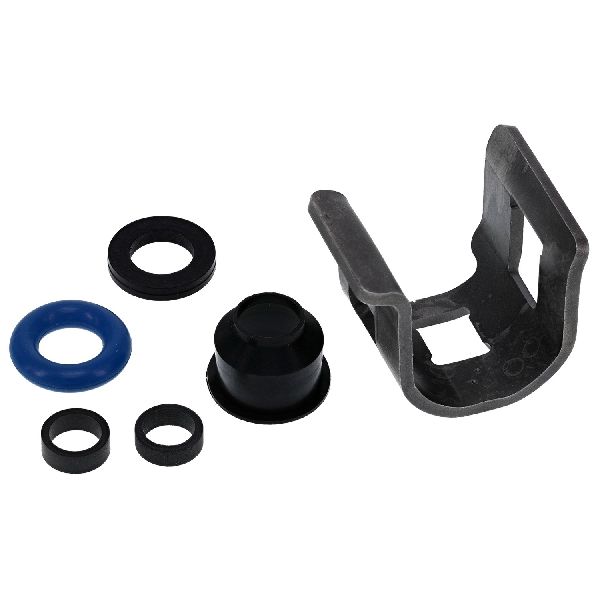
- Fuel Injector
(OEM #12638530)— If the injector's internal coil has failed (tested with a multimeter), it must be replaced. This is a common failure point after the wiring has been ruled out. This part number is widely used across many GM 3.6L V6 engines.
Trusted brands: ACDelco, Bosch, Standard Motor Products
OEM price range: $90-$140
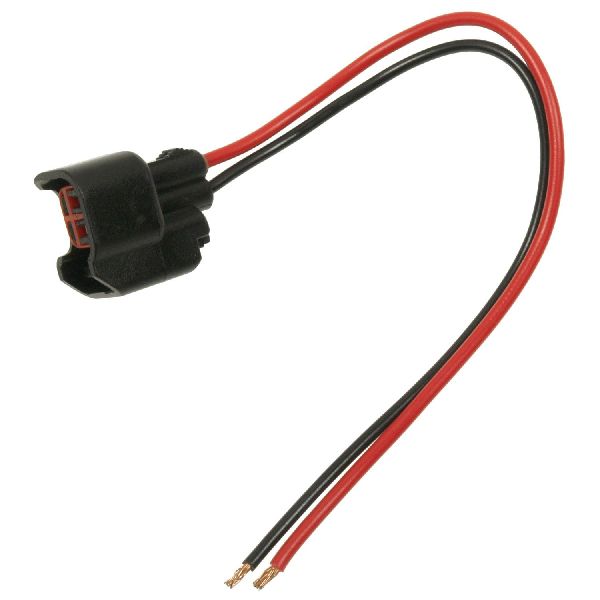
Aftermarket price range: $40-$80 - Fuel Injector Connector Pigtail
(OEM #19352907 (GM Genuine Parts))— If the wiring is damaged right at the connector, or the connector itself is broken, splicing in a new pigtail is the standard repair. Dorman 85139 is a common aftermarket alternative.
Trusted brands: ACDelco, Dorman
OEM price range: $25-$40
Aftermarket price range: $10-$20
Related Codes That Often Appear With This One
- P0304 — P0304 indicates a misfire on cylinder 4. Since P2155 disables the injector for cylinder 4, a misfire is the direct result. 🎬 Watch: How to diagnose and fix a cylinder 4 misfire
- P2146 — This code is for Injector Group 'A' (Cylinder 1). If the wiring harness has chafed in a spot that affects multiple injector circuits, these codes can appear together.
- P2149 — This code is for Injector Group 'B' (Cylinder 2). Like P2146, it can appear with P2155 if there is widespread harness damage.
- P0204 — This is a more generic code for 'Cylinder 4 Injector Control Circuit'. It often appears alongside P2155 as they both point to an electrical issue with the same injector circuit.
Technical Service Bulletins (TSBs) & Recalls
- PIP4924D: States that for a list of codes including P2155, technicians should inspect the fuel injector wiring harness for rub-through or internal wire opens. It lists common chafe points against the intake, valve covers, and fuel lines. This TSB covers a wide range of GM vehicles with 3.0L and 3.6L V6 engines.
Platform-Specific Known Issues
- A known issue, documented in TSB #PIP4924D, involves the fuel injector wiring harness rubbing through or developing internal opens. This makes a wiring fault the most probable cause for code P2155 on these vehicles.
- Specific chafe points to check are against the intake plenum, at valve cover bolts, against the fuel line, and on the side of the head under the plenum. A particularly hidden chafe point is a sharp tab on the metal gasket for the EGR valve.
Mechanic-Grade Diagnostic Values
- Fuel Injector Coil Resistance — expected: 1.2 to 1.8 ohms (for 3.6L LFX engine). Failure: An 'Open' or infinite resistance reading (OL on multimeter).
- Injector Pulse Width (Scan Tool Live Data) — expected: All injectors should have similar readings at idle, within ~1 millisecond of each other.. Failure: One injector having a significantly longer pulse width (e.g., 3.6ms while others are at 1.9ms) indicates the ECM is compensating for a clogged or under-performing injector.
- Injector Balance Test (Scan Tool) — expected: The fuel pressure drop for each injector should be within 20% of the average of the other injectors.. Failure: A pressure drop that is more than 20% different from the average indicates a faulty (clogged or leaking) injector.
- Injector Balance Test (Manual Gauge) — expected: The pressure drop between the highest and lowest reading cylinders should be 1.5 PSI (10 kPa) or less.. Failure: A difference greater than 1.5 PSI indicates an imbalance that requires further investigation.
Scan Tool Commands That Help
- GDS2 (GM) or equivalent professional scan tool: Fuel Injector Balance Test — This is a key functional test used after confirming the electrical circuit is intact. It commands each injector to fire and measures the resulting drop in fuel rail pressure to assess its mechanical performance (flow). It can quickly identify a clogged or underperforming injector without disassembly.
- GDS2 (GM) or equivalent professional scan tool: Fuel Pump Relay Control — Used to manually turn the fuel pump on or off. This is useful for bleeding pressure from the system before service, or for running the pump to check for leaks or perform pressure tests without running the engine.
Wiring & Ground Locations
- ECM Connectors X1, X2, X3 (3.6L LFX) — On the Engine Control Module (ECM). They can be identified by the color of their plastic housing and Terminal Position Assurance (TPA) clips.. To perform circuit tests from the ECM, you must identify the correct connector. For the 3.6L LFX, X1 is Black with a Blue TPA, X2 is Black with a Black TPA, and X3 is Black with a Gray TPA. Knowing this prevents probing the wrong wires.
- G109 — On the right front of the engine for the 3.6L V6.. A poor engine ground can cause erratic behavior in sensors and actuators, including the fuel injectors. This is a primary ground point for the engine management system.
- G112 — On the left rear of the engine for the 3.6L V6.. Similar to other engine grounds, a loose or corroded G112 can lead to voltage drops and intermittent faults that are difficult to trace.
- G104 — On the right rear corner of the engine compartment.. A GM service bulletin specifically mentions inspecting ground G104 for cleanliness and tightness when diagnosing certain electrical issues.
- Injector Harness Retainer — A plastic clip on the wiring harness that attaches to a stud on the driver's side rocker cover, near the #4 fuel injector.. This retainer is critical for positioning the harness correctly. If it is not fully seated, the harness can sag and make contact with a sharp tab on the EGR valve gasket, leading to a chafed wire and an open circuit.
Real Owner Repair Stories
- YouTube user 'solved : No start 2010 Equinox. Loose ground wire' (2010 Chevrolet Equinox) — Intermittent dying, eventually leading to a crank-no-start condition. 'Service Stabilitrak' message appeared. Occurred within a month of having a used engine installed.
❌ Tried (didn't work) Replacing the starter, Swapping relays in the fuse box
✅ What actually fixed it The mechanic who installed the engine had not fully tightened a main ground wire bolt located on the firewall, behind the A/C compressor. Tightening this loose ground resolved all issues. - YouTube user 'Equinox, Terrain V6 injector cleaning' (2012 Chevrolet Equinox V6) — Intermittent misfire on cylinder 4 (P0304).
❌ Tried (didn't work) Replacing the spark plug on cylinder 4, Swapping the ignition coil from cylinder 4 with another cylinder
✅ What actually fixed it Suspecting a clogged injector but wanting to avoid removing the intake manifold, the owner performed an on-car injector cleaning. They disabled the fuel pump (fuse #52), connected a hose to the fuel rail's Schrader valve, and ran the engine on 1.5 cans of aerosol carburetor cleaner fed directly into the rail. This cleaning procedure eliminated the misfire.
OEM Part Supersession History
12638530→12669384— Standard part revision by the manufacturer.
Heads up: These parts are interchangeable. Other compatible part numbers include 12632255 and 12611545.12662115→12689347— Standard part revision for the fuel injector wiring harness.
Model Year Variations Within This Range
- 2010-2012: These models were available with the 264-hp 3.0L LFW V6 engine.
- 2013-2014: The optional V6 was upgraded to the 301-hp 3.6L LFX engine, which featured a new cylinder head design, composite intake manifold, and was lighter than the previous 3.0L/3.6L V6s. While the P2155 fault is common to both, the physical routing of the harness around the different intake may vary slightly.
Helpful Videos

We Have This Part in Stock


The information in this article is provided for general reference and educational purposes only. Vehicle specifications, procedures, and part compatibility can vary by production date, trim level, and region. Always consult your vehicle's factory service manual and verify part numbers before purchasing or performing repairs. Safety-critical components such as airbags, seat belts, and braking systems should be installed by a qualified professional.
- Chevrolet EQUINOX:
- 🧭 Diagnostic Flowchart
- 🎬 Helpful Videos
- 🛍️ Shop This Part
- What's Unique About the 2010-2014 Chevrolet EQUINOX
- Symptoms You May Notice
- Most Likely Causes
- Rare But Worth Checking
- Diagnosis Steps
- Parts You'll Likely Need
- Related Codes That Often Appear With This One
- Technical Service Bulletins (TSBs) & Recalls
- Platform-Specific Known Issues
- Mechanic-Grade Diagnostic Values
- Scan Tool Commands That Help
- Wiring & Ground Locations
- Real Owner Repair Stories
- OEM Part Supersession History
- Model Year Variations Within This Range
- 🎟️ Get 5% Off