

P2155 on 2012-2014 Chevrolet Impala: Fuel Injector Circuit Fault Causes & Fixes
On a 2012-2014 Impala with the 3.6L V6 engine, code P2155 almost always points to a damaged fuel injector wiring harness, specifically for the cylinder 4 circuit. Before replacing any components, inspect the harness for chafing against the intake plenum, valve cover bolts, or cylinder head, as noted in GM TSB #PIP4924D.
- P2155 on a 2012-2014 Impala almost always means there is a problem with the wiring, not the fuel injector itself.
- Before buying any parts, your first and most important step is to carefully inspect the fuel injector wiring harness for signs of rubbing or damage.
- This issue is documented by GM in Technical Service Bulletin #PIP4924D.
- Do not drive the vehicle with this code active, as you risk causing expensive damage to the catalytic converter.
What's Unique About the 2012-2014 Chevrolet IMPALA
The 2012-2014 Impala, particularly models with the 3.6L LFX V6, is subject to a known issue documented in General Motors Technical Service Bulletin #PIP4924D. The fuel injector wiring harness is prone to rubbing against engine components, leading to chafed or broken wires. Specific chafe points are against the intake plenum, valve cover bolts, fuel lines, and the side of the cylinder head under the plenum. 🎬 See a real-world example of this common wiring harness failure. This design flaw makes the wiring harness the primary suspect for code P2155, far more so than an actual fuel injector failure.
Diagnostic Flowchart
Tap your situation to follow the diagnostic path that matches what you're seeing on this vehicle.
Generation note: The 2012-2014 period covers two generations of the Impala. The 2012 and 2013 models are part of the ninth generation. In 2014, Chevrolet sold both the ninth-generation carryover as the "Impala Limited" and the all-new tenth generation. The TSB and common wiring issues are most associated with the ninth-generation platform and its 3.6L LFX V6 engine, which was also used in the tenth generation.
Symptoms You May Notice
- Check Engine Light is on (may be flashing)
- Engine running rough or vibrating heavily
- Noticeable loss of engine power and poor acceleration
- Engine misfire, specifically on cylinder 4
- Poor fuel economy
- Engine may stall
- "Service Stabilitrak" message may appear on the dash
- Replacing the cylinder 4 fuel injector without first inspecting the wiring harness. The code points to a circuit fault, which is most often in the wiring, not the component itself, a fact confirmed by TSB #PIP4924D and numerous owner experiences.
- Replacing spark plugs or ignition coils. While these can cause a misfire, P2155 is a specific electrical code for the fuel injector circuit, not the ignition system. The companion code P0304 (Cylinder 4 Misfire) is a symptom of the P2155 fault, not a separate issue.
Most Likely Causes
- Chafed or Damaged Fuel Injector Wiring Harness 🔴 High Probability → Shop Engine Wiring Harness As documented in TSB #PIP4924D, the harness routing on this platform makes it susceptible to rubbing against engine components. Common chafe points are against the intake plenum, at valve cover bolts, against fuel lines, and on the side of the cylinder head under the plenum. Engine vibration eventually wears through the wire's insulation, causing a short or a complete break.
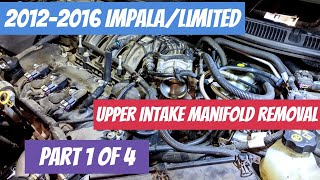
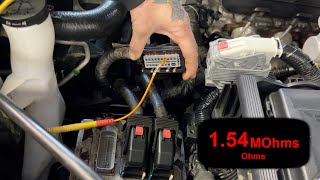
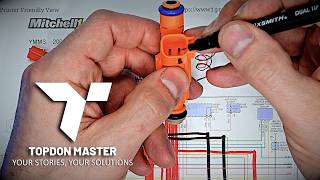
How to confirm: Perform a thorough visual inspection of the fuel injector wiring harness, focusing on the specific points of contact mentioned in the TSB. This may require removing the plastic engine cover and upper intake manifold for full access. 🎬 Watch: Step-by-step guide to removing the upper intake manifold. If no damage is visible, use a multimeter to perform a continuity test on the wires for the cylinder 4 injector from the ECM to the injector connector. 🎬 Watch: A simple breakdown of fuel injector wiring diagrams. Resistance should be less than 0.2 ohms. The wires for the injectors on the 3.6L LFX are twisted pairs; for cylinder 4, the wires are typically a solid light blue and a light blue with a white tracer.
Typical fix: Repair the broken or chafed section of wire using a quality butt connector and heat-shrink tubing. Protect the repaired area with loom or re-route the harness slightly to prevent future contact. If damage is severe or near the connector, a new pigtail (e.g., ACDelco PT2712) can be spliced in. If damage is extensive, the entire bank's harness may need replacement.
Est. part cost: $5-$50 - Failed Fuel Injector ⚪ Low Probability → Shop Fuel Injector
How to confirm: After confirming the wiring is 100% intact, test the fuel injector's internal resistance with a multimeter. Disconnect the injector and measure across its two pins. For the 3.6L LFX direct injection engine, the expected resistance is very low, around 1.8 to 2.3 ohms when cold. A reading of OL (Open Line/infinite) or zero ohms indicates a failed injector.
Typical fix: Replace the faulty fuel injector. It is often recommended to replace the intake manifold gaskets and injector seals at the same time. Ensure the new injector is fully seated.
Est. part cost: $50-$150 - Loose or Corroded Electrical Connector ⚪ Low Probability
How to confirm: Visually inspect the connectors at the cylinder 4 fuel injector and the ECM. Look for any signs of corrosion, moisture, or backed-out pins. Disconnect and reconnect them to ensure a secure connection. Wiggle the connector with the engine running to see if it affects the misfire.
Typical fix: Clean any corrosion from the connector pins using a specialized electrical contact cleaner. If pins are damaged or a connector is broken, replace the connector pigtail.
Est. part cost: $10-$30
Rare But Worth Checking
- Faulty Engine Control Module (ECM): → Shop Engine Control Module (ECM) This is extremely rare and should only be considered after all wiring and component tests have been exhausted. The internal driver circuit for the injector group can fail, but it is much more likely to be a wiring issue.
- Blown Injector Fuse: Some GM vehicles have separate fuses for 'odd' and 'even' injector banks in the underhood fuse box. While less common than chafing, a blown fuse can cause this code and should be checked early in the diagnosis.
Diagnosis Steps
- Read all stored DTCs with an OBD-II scanner. Note if P2155 is accompanied by P0304, which is highly expected.
- Check the underhood fuse box for any blown fuses related to the fuel injectors (e.g., 'INJ Bank 2', 'Even INJ').
- Perform a detailed visual inspection of the entire fuel injector wiring harness. This will likely require removing the engine cover and possibly the upper intake manifold.
- Pay close attention to the specific chafe points identified in TSB #PIP4924D: where the harness runs near or touches the intake manifold, valve covers, fuel lines, and the side of the cylinder head.
- If visible damage (chafing, breaks, melting) is found, repair the wire(s). Clear codes and re-test.
- If no damage is visible, disconnect the battery. Disconnect the connectors for the ECM and the cylinder 4 fuel injector.
- Use a multimeter to test for continuity on the supply voltage wire between the ECM connector and the injector connector. Resistance should be less than 0.2 ohms.
- Test the same wire for a short to ground. Resistance to a known good ground should be infinite (OL).
- If wiring tests are good, test the resistance of the fuel injector itself. It should be between 1.8 and 2.3 ohms for the LFX engine.
- If the injector has failed (usually open circuit, OL), replace it.
- If both wiring and the injector test good, the fault may lie within the ECM, which typically requires professional diagnosis.
Parts You'll Likely Need
- Fuel Injector Wiring Harness Repair Supplies — The most common cause is a simple break in the wiring harness that needs to be spliced and protected.
Trusted brands: 3M, Dorman
OEM price range: $5-$20
Aftermarket price range: $5-$20 - Fuel Injector Connector Pigtail
(OEM #ACDelco PT2712 (GM 13584094))— If the damage is right at the connector, splicing in a new pigtail is the standard repair.
Trusted brands: ACDelco, Dorman
OEM price range: $25-$40
Aftermarket price range: $10-$25 - Fuel Injector
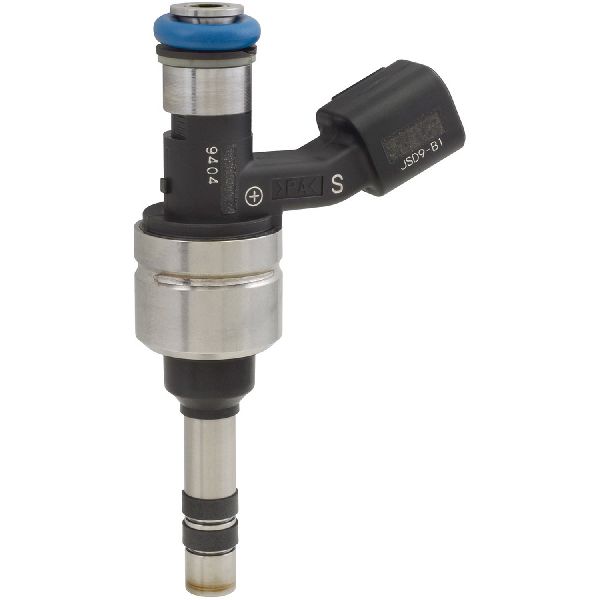
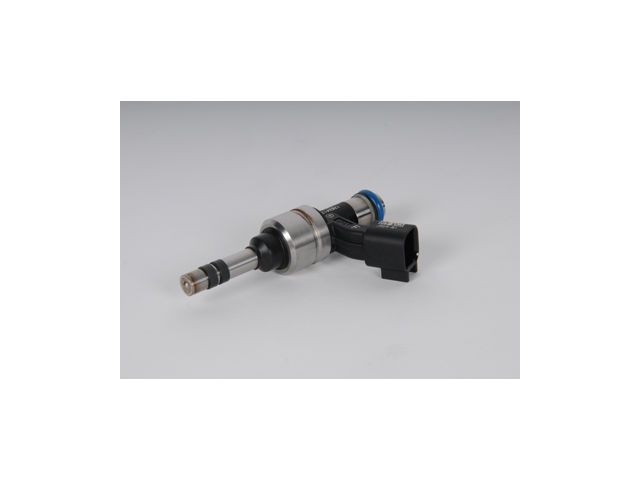
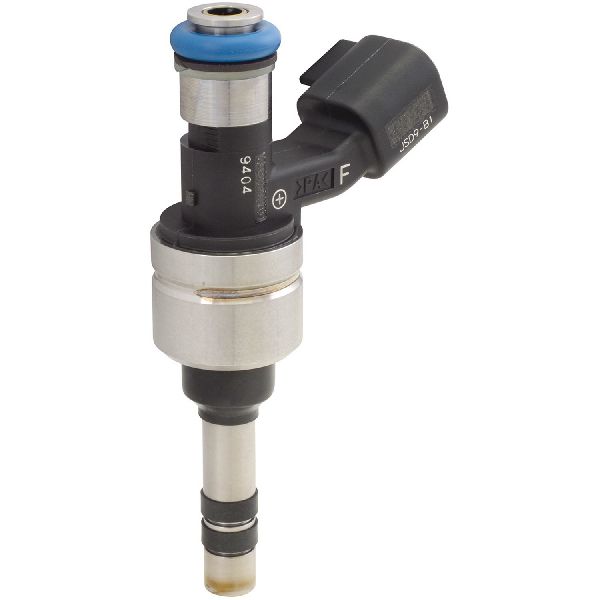
(OEM #12669384)— If the wiring is confirmed to be good, the injector itself may have failed with an internal open circuit.
Trusted brands: ACDelco, Bosch
OEM price range: $90-$150
Aftermarket price range: $50-$100
Related Codes That Often Appear With This One
- P0304 — This code for 'Cylinder 4 Misfire Detected' is the most common companion to P2155 on this engine. P2155 causes the ECM to shut down the cylinder 4 injector, which directly results in a misfire on that cylinder.
- P0300 — This is a 'Random/Multiple Cylinder Misfire' code. It can appear if the engine's vibration from the primary misfire on cylinder 4 is severe enough to be misinterpreted by the ECM.
- P0204 — This is a more generic code for 'Cylinder 4 Injector Circuit/Open'. It often appears alongside the group supply voltage code P2155.
- P2146, P2149, P2152 — These are codes for the other fuel injector groups (A, B, C). If the wiring harness damage is extensive, it can affect multiple circuits, causing several of these codes to appear at once, strongly indicating a harness problem over a component failure.
Technical Service Bulletins (TSBs) & Recalls
- PIP4924D: Advises technicians to inspect the fuel injector wiring harness for rub-through or internal wire opens when encountering a range of fuel injector codes, including P2155. This TSB is the definitive guide for this issue on a wide range of GM vehicles with the 3.6L V6. [⭐ MANUFACTURER TSB — highest authority]
Platform-Specific Known Issues
- TSB #PIP4924D explicitly identifies that codes P2146, P2149, P2152, and P2155 can be caused by the fuel injector wiring harness rubbing through or developing an internal open. The primary fix is to inspect and repair the harness, specifically where it contacts the intake plenum, valve cover bolts, fuel lines, and cylinder head. [⭐ MANUFACTURER TSB — highest authority]
Mechanic-Grade Diagnostic Values
- Fuel Injector Coil Resistance (3.6L LFX Direct Injection) — expected: 1.8 - 2.3 Ohms (cold). Failure: A reading of OL (Open Line/infinite) or near zero ohms indicates a failed injector.
- Injector Circuit Continuity — expected: < 0.2 Ohms. Failure: Resistance greater than 0.2 Ω indicates a compromised wire or poor connection.
- Injector Circuit Voltage (Key On, Engine at Idle) — expected: 11.5–12.5 V. Failure: Voltage below 10V on the power lead indicates a problem upstream in the wiring or ECM.
Scan Tool Commands That Help
- GDS2 / Tech2: Fuel Injector Balance Test — This is a GM-recommended procedure to run after verifying the wiring is intact. It pulses each injector and measures the fuel pressure drop to identify a mechanically faulty (leaking, clogged) injector that might not have an electrical fault.
- GDS2 / Tech2: Cylinder Power Balance — This function allows the technician to disable individual cylinders one by one to see the effect on engine RPM. When disabling the faulty cylinder (Cylinder 4), there should be little to no change in engine speed, confirming it wasn't contributing power.
Wiring & Ground Locations
- K20 ECM Connector X1 — On the Engine Control Module (ECM), which is typically mounted on the engine. For the LFX V6, the ECM has three large connectors (X1, X2, X3). X1 is often identifiable by a blue Terminal Position Assurance (TPA) lock.. The control and supply voltage circuits for all fuel injectors run through the ECM connectors. Testing for continuity and shorts should be done from the pins at this connector to the injector connector to verify the entire harness length.
- Cylinder 4 Injector Wires — Within the engine wiring harness, running from the ECM to the cylinder 4 fuel injector.. These are the specific wires that carry the signal and voltage for the injector in question. On the 3.6L LFX, they are a twisted pair, typically a solid light blue wire (low side driver) and a light blue wire with a white tracer (high side driver).
- G102 — Near the battery, on the right side of the engine compartment.. This is a major ground point for the engine compartment. While not directly for the injector circuit, a poor ground here can cause erratic behavior in the ECM and other modules.
- G111 — Above the starter motor on the engine block.. This is a primary engine-to-chassis ground. A loose or corroded connection here can cause a wide range of electrical issues, including problems that could be misdiagnosed as a component failure.
Real Owner Repair Stories
- The Truck Stop forum (user with a GM truck) (GM Truck with similar engine/wiring principles) — Engine misfire and an injector group fault code similar to P2155.
❌ Tried (didn't work) Initial visual inspection of the wiring harness did not reveal any obvious faults.
✅ What actually fixed it The user was able to make the misfire come and go by wiggling the large harness connectors on the driver's side valve cover. After disconnecting, twisting the plugs 360 degrees to reseat the pins, and reconnecting them, the problem was resolved, indicating a poor pin connection inside the main harness connector was the root cause.
OEM Part Supersession History
12638530, 12632255, 12611545→12669384— Standard part consolidation and design updates by the manufacturer.
Heads up: Part number 12669384 is specified for the 3.6L LFX engine. Always verify the part number with your vehicle's VIN before ordering.
Model Year Variations Within This Range
- 2012-2014: The 2012-2013 models and the 2014 "Impala Limited" are ninth-generation Impalas. The all-new 2014 Impala is the tenth generation. While both used the 3.6L LFX V6, there can be differences in harness routing and ECM connector pinouts. The TSB #PIP4924D applies broadly to the LFX engine family across these years, but verifying wiring diagrams for the specific generation is crucial for accurate diagnosis.
Helpful Videos
We Have This Part in Stock



The information in this article is provided for general reference and educational purposes only. Vehicle specifications, procedures, and part compatibility can vary by production date, trim level, and region. Always consult your vehicle's factory service manual and verify part numbers before purchasing or performing repairs. Safety-critical components such as airbags, seat belts, and braking systems should be installed by a qualified professional.
- Chevrolet IMPALA:
- 🧭 Diagnostic Flowchart
- 🎬 Helpful Videos
- 🛍️ Shop This Part
- What's Unique About the 2012-2014 Chevrolet IMPALA
- Symptoms You May Notice
- Most Likely Causes
- Rare But Worth Checking
- Diagnosis Steps
- Parts You'll Likely Need
- Related Codes That Often Appear With This One
- Technical Service Bulletins (TSBs) & Recalls
- Platform-Specific Known Issues
- Mechanic-Grade Diagnostic Values
- Scan Tool Commands That Help
- Wiring & Ground Locations
- Real Owner Repair Stories
- OEM Part Supersession History
- Model Year Variations Within This Range
- 🎟️ Get 5% Off