

P2155 on 2009-2013 Chevrolet Malibu: Fuel Injector Circuit Fault Causes and Fixes
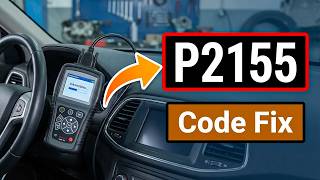
On a 2009-2013 Malibu, code P2155 almost always indicates a problem with the fuel injector wiring harness. It's a known issue where the harness chafes against engine components, causing a short or open circuit. The fix is to inspect the harness, repair the damaged wires, and protect it from future rubbing. This is a well-documented issue covered by GM Technical Service Bulletin PIP4924C.
- P2155 on a 2009-2013 Malibu is very likely caused by a damaged fuel injector wiring harness, as documented in GM TSB PIP4924C.
- Before replacing any parts, your first step should be a detailed visual inspection of the wiring harness for signs of rubbing, especially near the intake, valve covers, and fuel lines.
- The fix is often an inexpensive wire repair, not a costly component replacement.
- This code will cause noticeable drivability issues like misfiring and power loss, and should be addressed promptly to avoid potential catalytic converter damage.
What's Unique About the 2009-2013 Chevrolet MALIBU
The 2009-2013 Chevrolet Malibu is specifically named in a General Motors Technical Service Bulletin (TSB) for this exact issue. TSB PIP4924C directly links P2155 and a host of other injector codes to the fuel injector wiring harness rubbing through or developing internal breaks. This isn't a random failure; it's a documented pattern where engine movement causes the harness to chafe against parts like the intake plenum, valve cover bolts, fuel lines, or the side of the cylinder head, making the wiring harness the primary suspect for this code. Other GM bulletins reference similar chafing issues on brackets near the ECM and at the rear of the engine.
Diagnostic Flowchart
Tap your situation to follow the diagnostic path that matches what you're seeing on this vehicle.
Generation note: This range covers the end of the 7th generation (2009-2012) and the first year of the 8th generation (2013) Malibu. The TSB PIP4924C covers models up to 2013, indicating that the fuel injector wiring harness issue is prevalent across both generations within this year range. The 2.4L and 3.6L engines were used across many other GM platforms, which also suffer from this issue.
Symptoms You May Notice
- Check Engine Light (SES Light) is on.
- Engine misfires or runs rough, especially at idle.
- Noticeable loss of power and poor acceleration.
- Hard starting or extended cranking.
- Engine may stall.
- Reduced fuel economy.
- Engine may enter a reduced power or "limp" mode.
- Replacing one or more fuel injectors without first thoroughly inspecting the wiring harness. The TSB specifically warns that the cause is often the wiring, not the components themselves.
- Mistaking the low resistance of a healthy GDI injector (1-2 ohms) for a short circuit. Technicians accustomed to older port injectors (12-16 ohms) may misdiagnose a good part.
Most Likely Causes
- Chafed or Damaged Fuel Injector Wiring Harness 🔴 High Probability → Shop Engine Wiring Harness As documented in TSB PIP4924C, the harness routing makes it susceptible to rubbing against the intake plenum, valve cover bolts, fuel lines, and the side of the cylinder head. Engine vibration during normal operation causes this wear over time. Other documented chafe points on similar GM engines include harness contact with the generator bracket, air cleaner housing, and ECM brackets.
How to confirm: Visually inspect the entire fuel injector wiring harness, especially in the areas mentioned in TSB PIP4924C. Look for worn-through conduit, exposed copper wires, or shiny spots from rubbing. Wiggle the harness with the engine running (if possible) to see if the misfire changes. A continuity test with a multimeter from the ECM connector to the injector connector can confirm an open or shorted wire.
Typical fix: Repair the damaged section of the wire(s) using solder or butt connectors and heat shrink tubing. Secure the harness away from the contact point using zip ties, anti-abrasion tape, or by repairing broken mounting clips. In severe cases, the entire harness may need replacement.
Est. part cost: $10-$30 for repair materials, $150-$450 for a new harness. - Failed Fuel Injector 🟡 Medium Probability → Shop Fuel Injector The direct injection (GDI) injectors used on the 2.4L and 3.6L engines operate under high pressure and can fail internally, though wiring is a more common cause for this specific code.
How to confirm: If the wiring is confirmed to be good, test the resistance of the fuel injectors in the affected group with a multimeter. For the 3.6L GDI engine, the resistance should be between 1.5 and 2.5 ohms. For older 2.4L port-injected engines, the resistance is higher, around 12.5 ohms. A reading of infinity (open circuit) or near zero (short) indicates a failed injector.
Typical fix: Replace the faulty fuel injector. On direct injection engines, this is more involved and may require removing the intake manifold. 🎬 See this step-by-step guide for replacing injectors on 4-cylinder models.
Est. part cost: $50-$190 per injector. - Loose or Corroded Connectors ⚪ Low Probability
How to confirm: Unplug and inspect the connectors at the fuel injectors and the ECM. Look for bent pins, corrosion, oil contamination, or backed-out terminals.
Typical fix: Clean the connectors with electrical contact cleaner. Apply dielectric grease to seal the connection. If pins are damaged, the connector pigtail or harness may need to be replaced.
Est. part cost: $5-$25
Rare But Worth Checking
- Faulty Engine Control Module (ECM): → Shop Engine Control Module (ECM) This is a last resort. The ECM's internal injector driver can fail, but this is much less common than wiring or injector issues. All other possibilities should be exhausted before condemning the ECM.
- Blown Fuse: A fuse related to the fuel injector circuit could be blown, causing a loss of power. A Reddit user with a 2011 Malibu traced a similar issue to a shorted wire causing the injector fuse to blow repeatedly. A short in the harness is the likely cause of a repeatedly blown fuse.
Diagnosis Steps
- Scan the ECM for all stored trouble codes. Note if P2155 is accompanied by other injector or misfire codes (e.g., P0304 for cylinder 4).
- Perform a thorough visual inspection of the fuel injector wiring harness as detailed in TSB PIP4924C. Pay close attention to contact points against the intake plenum, valve cover bolts, fuel lines, and cylinder head. Widen the search to other known chafe points like the generator bracket and air cleaner housing.
- If chafing or damage is found, turn the ignition off, disconnect the battery, and repair the affected wires. Ensure the repaired section is protected with convoluted tubing or re-routed to prevent future damage.
- If no visual damage is found, check the fuse for the fuel injector circuit (often a 10A or 15A).
- If the fuse is good, use a multimeter to check for proper supply voltage (typically 12V) at the fuel injector connector on the affected circuit with the key on. A healthy circuit should read 11.5–12.5 V.
- Test the resistance of the fuel injectors in Group B to ensure they are within specification. For the 3.6L GDI engine, this is 1.5-2.5 Ohms. A reading of OL (open) or near 0 (short) indicates a bad injector.
- If all wiring, fuses, and injectors test good, the final and least likely possibility is a fault within the Engine Control Module (ECM).
Parts You'll Likely Need
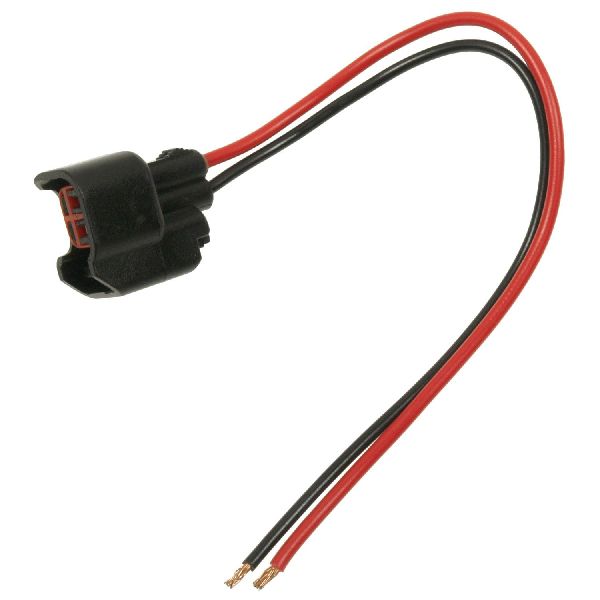
- Fuel Injector Wiring Harness Repair Supplies — The most common cause is a chafed wire that needs to be cut, spliced, and protected. This requires basic wiring repair materials.
Trusted brands: 3M
Aftermarket price range: $10-$30 - Fuel Injector Wiring Harness — If the harness is severely damaged in multiple locations, replacement is a more reliable option than multiple repairs.
Trusted brands: ACDelco, Dorman
OEM price range: $250-$450
Aftermarket price range: $150-$300 - Fuel Injector (2.4L GDI)
(OEM #12636111)— If the injector itself has failed its resistance test. This is a common injector for the 2.4L Ecotec engine.
Trusted brands: ACDelco (GM OE), Bosch
OEM price range: $80-$120
Aftermarket price range: $40-$70 - Fuel Injector (3.6L LFX)
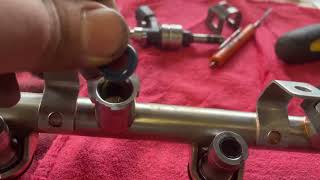
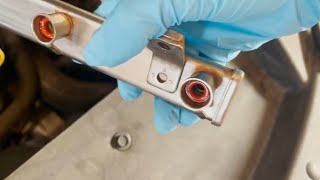
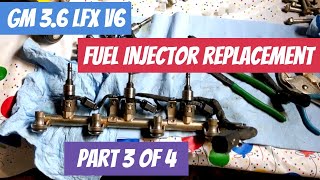
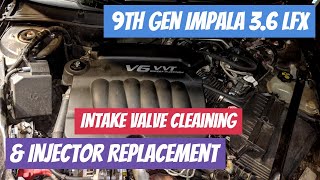
(OEM #12669384)— If the injector itself has failed its resistance test on a V6 model. 🎬 Watch: This detailed video covers 3.6L intake removal and injector replacement.
Trusted brands: ACDelco (GM OE), Bosch
OEM price range: $160-$190
Aftermarket price range: $50-$120
Related Codes That Often Appear With This One
- P0201-P0206 — These codes indicate a circuit malfunction for individual injectors. Seeing them with P2155 strongly suggests a common power supply or wiring harness problem affecting multiple injectors.
- P2146, P2149, P2152 — These are codes for other injector groups (e.g., Group A). When multiple group codes are present, it reinforces the likelihood of a widespread wiring harness issue or an ECM fault, as noted in TSB PIP4924C.
- P0300-P0306 — These are random or specific cylinder misfire codes. A fault in the injector circuit will prevent proper fueling, leading to misfires in the corresponding cylinders.
Technical Service Bulletins (TSBs) & Recalls
- PIP4924C: Addresses SES
Platform-Specific Known Issues
- TSB PIP4924C explicitly identifies a known issue on 2009-2013 Malibus where the fuel injector wiring harness chafes against engine components, causing various injector circuit codes, including P2155.
- A thread on ChevyHHR.net regarding a 2.4L Ecotec engine (shared with the Malibu) details an owner's experience testing injector resistance, finding them to be around 12.5 ohms for the port-injected version.
- A YouTube video by 'Norman Perez' shows a repair on a 2014 Impala with the 3.6L V6 where an injector failed open, reading infinite resistance. The video highlights the need to remove the intake manifold for access.
Mechanic-Grade Diagnostic Values
- Fuel Injector Resistance (3.6L GDI Engine) — expected: 1.5 - 2.5 Ω. Failure: A reading of OL (infinity) indicates an open circuit; a reading near 0 Ω indicates a short.
- Fuel Injector Resistance (Duramax Diesel - for comparison) — expected: 0.2 - 0.3 Ω. Failure: Readings outside this very low range suggest an issue.
- Supply Voltage at Injector Connector (Key On) — expected: 11.5 - 12.5 V. Failure: Voltage below 10V points to an upstream problem in the wiring or ECM.
- Wiring Continuity from ECM to Injector — expected: < 0.2 Ω. Failure: Resistance greater than 0.2 Ω indicates a compromised wire or connector pin creating excessive resistance.
Scan Tool Commands That Help
- GM GDS2/Tech2: Injector Test — This bidirectional command allows a technician to individually disable one injector at a time to see if the engine RPM drop is consistent across all cylinders. If disabling an injector causes no change in engine performance, that cylinder is the source of the misfire. This helps isolate the problem cylinder before testing components.
- GM GDS2/Tech2: Fuel Injector Balance Test — This automated test fires each injector for a set duration and measures the corresponding drop in fuel rail pressure. It can identify a clogged or weak injector that isn't flowing the correct amount of fuel, even if its electrical resistance is normal. A video on a 3.6L GM engine demonstrates the use of a Kent-Moore AFIT (Active Fuel Injector Tester) which performs a similar, more advanced flow analysis.
Wiring & Ground Locations
- ECM (Engine Control Module) — Located in the left front of the engine compartment.. The ECM provides the voltage and ground control for the fuel injectors. All wiring tests for the injector circuits will originate or terminate at the ECM connectors.
- ECM Connectors (e.g., J1/X1, J2/X2) — These are the main multi-pin plugs that connect the engine harness to the ECM. On many GM vehicles, they are lever-lock style connectors.. To test for continuity or shorts in the injector harness without cutting wires, you must disconnect these connectors and test from the specific pins that correspond to the injector group 'B' supply and control circuits.
- Underhood Fuse Block — Located on the left side of the engine compartment.. This block contains the fuses that supply power to the ECM and the fuel injector circuits, such as 'ECM IGN FUSE 16 (10A)' and 'EMISSION 1 FUSE 6 (10A)' on a 2012 Malibu. A blown fuse here will cut power to the circuit and trigger the code.
Real Owner Repair Stories
- The Truck Stop forum user 'Rockabillyrat' (GMC Sierra with LBZ Duramax diesel (experiences similar P2155 code logic)) — Engine went into limp mode, throwing code P2155 (Fuel Injector Group D Supply Voltage Circuit/Open).
❌ Tried (didn't work) Initial visual inspection showed no obvious issues.
✅ What actually fixed it The user was advised that 9 out of 10 times, this code is a wiring issue. The recommended fix was to test the resistance of each injector from the ECM connector. A discrepancy between the resistance at the ECM plug versus at the injector itself would confirm a wiring problem between the two points, often at the large harness connector on the driver's side valve cover.
Model Year Variations Within This Range
- 2009-2012 vs 2013: The 2009-2012 models are 7th generation, while the 2013 model year marked the beginning of the 8th generation Malibu. While they share engines like the 3.6L V6, the chassis and wiring harness routing can differ. A forum discussion on a different GM platform (LML trucks) noted that engine wiring harnesses can have different part numbers even for the same engine from year to year (e.g., 2011, 2012, and 2013-2014 were all different) due to minor changes in sensor wiring or connector types. This means a replacement harness must be sourced for the exact year and model.
- 2012-2014: The 3.6L LFX engine, a direct-injection V6, became a common option in the Malibu starting in 2012, replacing the port-injected LY7. The LFX uses high-pressure direct injectors with different electrical characteristics and requires a high-pressure fuel pump, making its fuel system diagnosis different from the earlier LY7 or the 4-cylinder models.
Helpful Videos
We Have This Part in Stock


The information in this article is provided for general reference and educational purposes only. Vehicle specifications, procedures, and part compatibility can vary by production date, trim level, and region. Always consult your vehicle's factory service manual and verify part numbers before purchasing or performing repairs. Safety-critical components such as airbags, seat belts, and braking systems should be installed by a qualified professional.
- Chevrolet MALIBU:
- 🧭 Diagnostic Flowchart
- 🎬 Helpful Videos
- 🛍️ Shop This Part
- What's Unique About the 2009-2013 Chevrolet MALIBU
- Symptoms You May Notice
- Most Likely Causes
- Rare But Worth Checking
- Diagnosis Steps
- Parts You'll Likely Need
- Related Codes That Often Appear With This One
- Technical Service Bulletins (TSBs) & Recalls
- Platform-Specific Known Issues
- Mechanic-Grade Diagnostic Values
- Scan Tool Commands That Help
- Wiring & Ground Locations
- Real Owner Repair Stories
- Model Year Variations Within This Range
- 🎟️ Get 5% Off