

P2155 on 2009-2014 Chevrolet Traverse: Fuel Injector Circuit 'D' Causes and Fixes
On a 2009-2014 Traverse, P2155 almost always points to a problem with the cylinder 4 fuel injector circuit. The most common cause is a chafed or damaged fuel injector wiring harness, an issue documented by GM in TSB #PIP4924D. Before replacing any parts, meticulously inspect the wiring harness where it runs near the intake plenum, valve cover bolts, and fuel lines for signs of rubbing.
- P2155 on a Traverse means a circuit problem for the cylinder 4 fuel injector.
- The most likely cause is a chafed wire in the fuel injector harness, a known issue covered by a TSB.
- Always inspect the wiring harness thoroughly before spending money on a new fuel injector.
- Cylinder 4 is the middle cylinder on the engine bank closer to the radiator.
- Driving with this code can lead to catalytic converter damage, so prompt diagnosis is recommended.
What's Unique About the 2009-2014 Chevrolet TRAVERSE
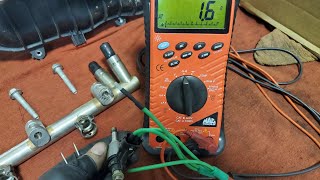
The GM 3.6L V6 engine used in the Traverse and its platform mates (Buick Enclave, GMC Acadia, Saturn Outlook) is known for a specific issue outlined in Technical Service Bulletin (TSB) #PIP4924D. The fuel injector wiring harness is prone to rubbing against engine components, leading to chafed wires and open circuits that trigger P2155 and other related codes. 🎬 Watch: How to diagnose and fix the P2155 open circuit code. Specific chafe points are against the intake plenum, valve cover bolts, fuel lines, and the side of the cylinder head under the plenum. Unlike other injector circuits on this engine that are paired (like cylinders 2 & 5 or 3 & 6), the high voltage supply circuits for injectors 1 and 4 are independent, which helps isolate the fault directly to cylinder 4's wiring or components when P2155 is present.
Diagnostic Flowchart
Tap your situation to follow the diagnostic path that matches what you're seeing on this vehicle.
Symptoms You May Notice
- Check Engine Light is on
- Rough or shaking idle
- Noticeable loss of engine power, especially when climbing hills
- Engine misfiring or stumbling during acceleration
- Reduced fuel economy
- Difficulty starting the engine
- Engine may stall if the circuit fault is severe
- Replacing the cylinder 4 fuel injector without first thoroughly inspecting the wiring harness. The harness is the most likely culprit due to the known TSB.
- Replacing the ECM before confirming the wiring and injector are good. This is an expensive and usually unnecessary repair.
- Using the wrong resistance specification to test the fuel injector. The LLT (2009-2012) and LFX (2012-2014) engines have vastly different injector resistance values; testing an LFX injector (~1.5 Ohms) with the LLT spec (~12 Ohms) would lead to an incorrect diagnosis.
Most Likely Causes
- Chafed or Damaged Fuel Injector Wiring Harness 🔴 High Probability → Shop Engine Wiring Harness As documented in GM TSB #PIP4924D, the harness routing can cause it to rub against the intake plenum, valve cover bolts, fuel lines, or the side of the cylinder head under the intake. The constant engine vibration wears through the wire's insulation, causing a short or open circuit.
How to confirm: Visually inspect the entire fuel injector harness, paying close attention to the section that runs to cylinder 4 (middle cylinder on the bank closer to the radiator). Carefully peel back any loom or tape. Look for any signs of rubbing, melting, or exposed copper wire, especially where the harness makes contact with sharp metal edges like bracket corners or bolt heads. The wires for injector 4 are typically a twisted pair of Light Blue and Light Blue/White.
Typical fix: Repair the damaged section of wire using solder and heat-shrink tubing. For added protection, wrap the repaired area with high-temperature electrical tape or a new wire loom. Secure the harness away from the contact point using zip ties to prevent future chafing. If the damage is severe or at the connector, a new pigtail connector may be needed.
Est. part cost: $5-$30 - Failed Cylinder 4 Fuel Injector 🟡 Medium Probability → Shop Fuel Injector While wiring is more common, the direct injection (DI) injectors on the 3.6L engine operate under high pressure and can fail internally. The internal coil winding can break, creating an open circuit. It is critical to use the correct resistance specification based on the engine type (LLT vs. LFX).
How to confirm: If the wiring is confirmed to be good, unplug the connector at the cylinder 4 injector and measure the resistance across its two pins with a multimeter. For the 2009-2012 LLT engine, the spec is ~11.8-12.6 ohms. For the 2012-2014 LFX engine, the spec is much lower, ~1.2-1.8 ohms. An 'OL' or infinite reading indicates a failed, open injector coil.
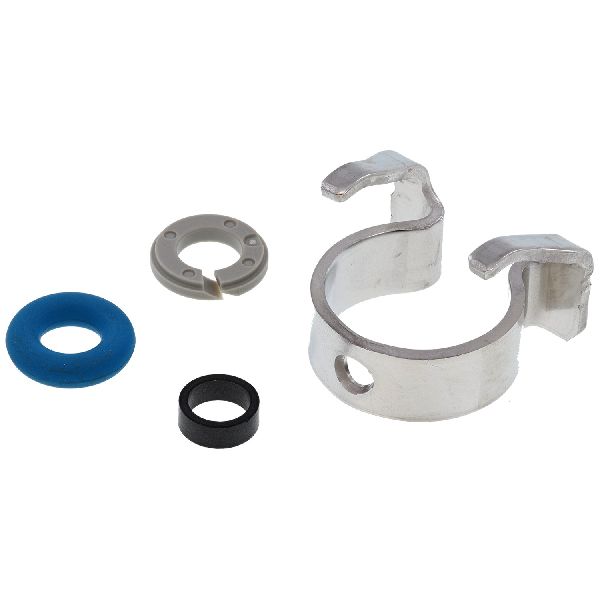
Typical fix: Replace the failed fuel injector. It is critical to also replace the injector's Teflon seal and O-rings. It's often recommended to replace all injectors on the same bank, especially on higher mileage vehicles.
Est. part cost: $80-$160 - Loose or Corroded Electrical Connector ⚪ Low Probability
How to confirm: Unplug and inspect the injector connector for cylinder 4 and the corresponding connectors at the ECM (Connector X1). Look for bent pins, green or white corrosion, moisture, or a loose fit. Wiggle the connector with the engine running (if possible) to see if it induces a misfire.
Typical fix: Clean the connector pins with electrical contact cleaner and a small brush. Apply a small amount of dielectric grease to the seal before reconnecting. If pins are damaged or the connector housing is broken, replace the connector pigtail.
Est. part cost: $15-$40
Rare But Worth Checking
- Faulty Engine Control Module (ECM): → Shop Engine Control Module (ECM) This is the least likely cause. The ECM's internal injector driver can fail, but this is rare. All other possibilities, especially wiring, must be exhaustively ruled out before condemning the ECM. A forum user on MHH Auto considered this possibility after confirming wiring continuity but before finding the root cause. A faulty ECM ground (G110) can also cause erratic behavior that mimics an internal failure.
Diagnosis Steps
- Use an OBD-II scanner to confirm P2155 and check for any other codes, like P0304.
- Crucial Step: Perform a detailed visual inspection of the fuel injector wiring harness. On the 3.6L V6, cylinder 4 is the middle cylinder on Bank 2 (the bank closer to the radiator). Carefully check where the harness may contact the intake manifold, valve covers, and fuel lines for any signs of chafing or damage, as specified in TSB #PIP4924D. Pay extra attention to harness contact points against the side of the cylinder head under the plenum.
- If no visible damage is found, disconnect the harness from the cylinder 4 injector. Inspect the connector for corrosion or damage.
- Use a multimeter set to Ohms (Ω) to check the resistance of the fuel injector itself. Verify your engine type. For the 2009-2012 LLT engine, expect ~11.8-12.6 ohms. For the 2012-2014 LFX engine, expect ~1.2-1.8 ohms. A reading outside the spec or an open circuit (OL) indicates a bad injector.
- If the injector tests good, test the wiring harness. Disconnect the ECM connector X1 and the injector connector. Check for continuity on the Light Blue and Light Blue/White wires from ECM pins 50 and 74 to the injector connector. Resistance should be less than 0.5 ohms. Also, check for a short to ground on both wires.
- A 'noid light' can be used to verify if the ECM is sending a pulse signal to the injector connector. If the noid light flashes when cranking the engine, the ECM driver is likely working.
- If the wiring and injector both test good, and there is no pulse from the ECM, inspect the ECM ground G110 (located on the right rear of the engine) for tightness and corrosion before condemning the ECM.
Parts You'll Likely Need
- Fuel Injector
(OEM #12638530 (LLT) / 12632255 (LFX))— If the injector's internal coil has failed, it must be replaced. This is the second most common cause after wiring issues. Part number is engine-specific.
Trusted brands: ACDelco, Bosch, Standard Motor Products
OEM price range: $120-$160
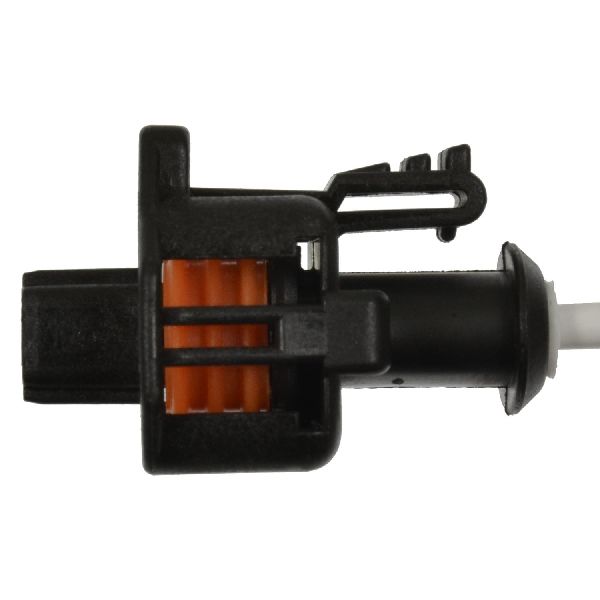
Aftermarket price range: $80-$120 - Fuel Injector Connector Pigtail — If the wiring is damaged at the connector, or the connector itself is broken, a replacement pigtail is needed to repair the harness.
Trusted brands: Dorman, ACDelco, Standard Motor Products
OEM price range: $25-$40
Aftermarket price range: $15-$30 - Fuel Injector Wiring Harness (Bank 2 / Front)
(OEM #12621095 (replaces 12614941))— In cases of extensive damage to the front bank's injector harness, replacing the entire section may be easier than repairing multiple wires. This part is listed for the 'Left' or driver's side, which corresponds to the front bank (Bank 2) on the transverse-mounted 3.6L engine.
Trusted brands: ACDelco (GM Genuine)
OEM price range: $160-$175
Related Codes That Often Appear With This One
- P0304 — P0304 means 'Cylinder 4 Misfire Detected'. Since P2155 causes the ECM to shut down the injector for cylinder 4, that cylinder will not fire, directly causing a P0304 code.
- P0204 — P0204 is 'Cylinder 4 Injector Circuit Malfunction'. It is a more general code for the same circuit and often appears alongside P2155.
- P2146, P2149, P2152 — These are fault codes for other injector groups (Group A, B, C). If the wiring harness is severely damaged in multiple locations, it's possible to have faults on several injector circuits simultaneously. A user on MHH Auto reported P2155 alongside P2152 on their 2009 GMC Acadia.
Technical Service Bulletins (TSBs) & Recalls
- PIP4924D: Addresses SES light and misfires with various injector codes (P0201-P0206, P2146, P2149, P2152, P2155, etc.). Recommends carefully inspecting the fuel injector wiring harness for rubbing against the intake plenum, valve cover bolts, fuel lines, and the side of the cylinder head.
Platform-Specific Known Issues
- A GM Technical Service Bulletin (PIP4924D) exists for this exact issue, covering the 2009-2014 Traverse with the 3.6L engine. It specifically calls out injector circuit codes (including P2155) being caused by the fuel injector wiring harness rubbing through against engine components.
- Owners and technicians on forums frequently confirm that finding and repairing a chafed wire is the most common solution. The damage is often subtle and requires careful inspection of the harness, especially under the intake manifold.
Mechanic-Grade Diagnostic Values
- Fuel Injector Coil Resistance (2009-2012 3.6L LLT Engine) — expected: 11.8 - 12.6 Ohms. Failure: A reading of OL (Open Line/infinite resistance) or significantly outside this range indicates a failed injector.
- Fuel Injector Coil Resistance (2012-2014 3.6L LFX Engine) — expected: 1.2 - 1.8 Ohms. Failure: A reading of OL (Open Line/infinite resistance) or significantly outside this range indicates a failed injector. Note the much lower resistance compared to the LLT.
- Injector Supply Voltage (Key On, Engine Off) — expected: 11.5 - 12.5 Volts. Failure: Voltage below 10V suggests an upstream wiring or power supply problem before the injector.
- Wiring Harness Continuity Test — expected: < 0.5 Ohms. Failure: Higher resistance indicates a compromised wire (corrosion, partial break) or a poor connection at a connector pin.
- Injector Control Voltage (Scoped) — expected: Baseline of ~9V, with a boost to ~65V from an ECM capacitor, followed by control pulses.. Failure: Absence of the 65V spike or control pulses indicates a fault in the ECM driver circuit or wiring.
Scan Tool Commands That Help
- GDS2 / Tech2: Injector Control Circuit Test Status — Monitor this live data parameter while performing a 'wiggle test' on the wiring harness. The status should change from 'OK' or 'Not Run' to 'Fault' if an intermittent open or short is present in the circuit.
- Kent Moore AFIT (Active Fuel Injector Tester): Flow Testing Analysis — This is a dealer-level diagnostic tool used to functionally test injectors, which can help determine if an injector is mechanically faulty, beyond just its electrical resistance.
Wiring & Ground Locations
- ECM (Engine Control Module) — In the engine bay, located next to the vacuum pump. It is a large silver module held in by plastic snaps, with three large harness connectors.. The ECM controls the injector driver for cylinder 4. All wiring tests for the injector circuit ultimately lead back to this module.
- ECM Connector X1, Pins 50 & 74 — On the main ECM harness connector. Pin 50 is the control circuit (Light Blue wire) and Pin 74 is the supply circuit (Light Blue/White wire) for the cylinder 4 fuel injector.. These are the specific pins to test for continuity and shorts to ground when diagnosing a fault in the cylinder 4 injector circuit, allowing you to isolate the wiring from the ECM itself.
- G110 — Located on the right rear of the engine, mounted to the back of the cylinder head on a bracket, often appearing above the power steering pressure hose.. This is a critical ground for the Engine Control Module (via ECM connector X2, pins 1, 2, and 4). A loose or corroded G110 can cause a host of erratic electrical issues and codes, including injector driver faults.
When the Usual Fixes Don't Work
- While the most common cause is a chafed wiring harness, a definitive failure of the fuel injector itself is a frequent secondary cause. A key piece of counter-evidence against a simple diagnosis is the significant difference in injector resistance between the LLT (2009-2012) and LFX (2012-2014) engines. A technician unaware of this change might test a healthy 1.5 Ohm LFX injector and incorrectly condemn it because the value is so much lower than the ~12 Ohm spec they might be familiar with from older models. This makes verifying the correct engine type and diagnostic value essential before ordering parts.
OEM Part Supersession History
12638530→12669384— Standard part update/revision.
Heads up: This injector is for the LLT engine and is NOT compatible with the 2012+ LFX engine due to different electrical resistance.12614941→12621095— Standard part update/revision for the Bank 2 (front) injector wiring harness.
Model Year Variations Within This Range
- 2009-2012: These models use the 3.6L LLT V6 engine. They are equipped with high-impedance fuel injectors (PN 12638530) with a resistance of ~11.8-12.6 Ohms and typically use a Bosch ECM.
- 2012-2014: These models use the updated 3.6L LFX V6 engine. They are equipped with low-impedance fuel injectors (PN 12632255) with a resistance of ~1.2-1.8 Ohms and typically use a Delphi ECM. The parts are not interchangeable with the earlier LLT engine.
Helpful Videos

We Have This Part in Stock


The information in this article is provided for general reference and educational purposes only. Vehicle specifications, procedures, and part compatibility can vary by production date, trim level, and region. Always consult your vehicle's factory service manual and verify part numbers before purchasing or performing repairs. Safety-critical components such as airbags, seat belts, and braking systems should be installed by a qualified professional.
- Chevrolet TRAVERSE:
- 🧭 Diagnostic Flowchart
- 🎬 Helpful Videos
- 🛍️ Shop This Part
- What's Unique About the 2009-2014 Chevrolet TRAVERSE
- Symptoms You May Notice
- Most Likely Causes
- Rare But Worth Checking
- Diagnosis Steps
- Parts You'll Likely Need
- Related Codes That Often Appear With This One
- Technical Service Bulletins (TSBs) & Recalls
- Platform-Specific Known Issues
- Mechanic-Grade Diagnostic Values
- Scan Tool Commands That Help
- Wiring & Ground Locations
- When the Usual Fixes Don't Work
- OEM Part Supersession History
- Model Year Variations Within This Range
- 🎟️ Get 5% Off