

P2159 on 2013-2014 Audi RS5: Vehicle Speed Sensor 'B' Causes and Fixes
On a 2013-2014 Audi RS5, code P2159 almost always indicates a failure of an internal transmission speed sensor module, not a simple wheel sensor. This is a known issue covered by Audi TSB A351619, requiring professional replacement of a sensor module (repair kit P/N: 0B5398009F) inside the transmission. Expect a costly repair, with independent shops charging several thousand dollars and dealers potentially quoting over $10,000 for a full mechatronics replacement.
- P2159 on a 2013-2014 RS5 is a serious code that most likely points to an internal transmission failure, not a simple wheel sensor.
- Diagnosis MUST begin with a full scan to check for other codes (P0501, P2765) mentioned in Audi TSB A351619. This TSB is the key to a correct diagnosis.
- Do not replace any parts until you have confirmed if the TSB applies. Replacing a wheel speed sensor will not fix the problem if the fault is internal.
- This is not a DIY-friendly repair. The fix requires transmission disassembly and should be handled by a qualified technician familiar with Audi S-Tronic transmissions.
What's Unique About the 2013-2014 Audi RS5
The 2013-2014 Audi RS5 uses the DL501 (0B5) 7-speed S-Tronic transmission, which is known for mechatronics issues. Unlike many cars where P2159 points to an easy-to-fix external ABS sensor, on this specific platform, the code is the subject of a detailed Technical Service Bulletin (TSB A351619). This TSB identifies the root cause as a faulty sensor module (G676) and its circuit board located in the rear of the transmission case. Repairing it requires transmission disassembly to install a specific repair kit (P/N 0B5398009F), making it a complex and expensive job specific to this powertrain.
Diagnostic Flowchart
Tap your situation to follow the diagnostic path that matches what you're seeing on this vehicle.
Symptoms You May Notice
- "Gearbox malfunction: you can continue driving" message in the instrument cluster
- Illuminated ABS and/or Electronic Stability Control (ESC) warning lights
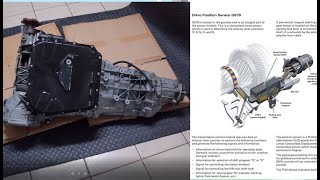
- Sport Differential error warning on the dash 🎬 Watch: A real-world look at these RS5 gearbox failure symptoms.
- Harsh, erratic, or delayed transmission shifting
- Vehicle may enter a limited functionality 'limp mode'
- Speedometer may work erratically or not at all
- Cruise control is inoperative
- Replacing an ABS wheel speed sensor when the true fault lies within the transmission. This is a common mistake if a technician does not check for the specific combination of fault codes (P2159, P0501, P2765) and their associated DFCC numbers as specified in TSB A351619.
Most Likely Causes
- Faulty Internal Transmission Sensor Module (per TSB A351619) 🔴 High Probability → Shop Transmission Assembly This is a documented failure pattern on the DL501 transmission. The TSB confirms an issue with the G676 sensor module and its circuit board, which can fail due to heat and delamination over time.
How to confirm: Use a diagnostic tool like VCDS to confirm P2159 is present with DFCC 8099, alongside P0501 (DFCC 8098) and P2765 (DFCC 8095). The presence of this exact combination of codes and DFCCs is required for the TSB to apply.
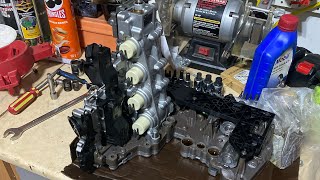
Typical fix: Replace the internal sensor module and its wiring loom using Audi repair kit P/N 0B5398009F. This requires removing the transmission from the vehicle and disassembling the rear casing. 🎬 See this teardown of the DL501 to access the G676 sensor.
Est. part cost: $400-$800 for the OEM repair kit - Faulty ABS Wheel Speed Sensor ⚪ Low Probability → Shop ABS Wheel Speed Sensor These sensors are exposed to the elements and can fail from corrosion or damage. However, on this platform, it's a much less common cause for P2159 when accompanied by a gearbox malfunction warning.
How to confirm: If P2159 appears alone without other transmission codes, use a scan tool to monitor live data from all four wheel speed sensors while driving. A faulty sensor will show an erratic, lagging, or zero-speed reading compared to the others.
Typical fix: Replace the faulty ABS sensor at the corresponding wheel hub. This is a simple DIY job held in by a single bolt.
Est. part cost: $40-$150
Rare But Worth Checking
- Wiring Harness Damage: Damage to the wiring leading to either an ABS sensor or, more critically, the main transmission harness can cause this code. This should be inspected before replacing expensive components.
- Contaminated Transmission Fluid / Debris: → Shop Transmission Assembly Excessive metallic debris from normal wear can accumulate on the magnetic speed sensors inside the transmission, disrupting their signal. A fluid change might temporarily help but doesn't fix the root cause of the wear or a failing sensor board.
- Dirty or Damaged ABS Tone Ring: The notched reluctor ring that the ABS sensor reads can become caked with grease or dirt, or get damaged, causing an implausible signal. A visual inspection and cleaning should be performed when checking the ABS sensor.
Diagnosis Steps
- Perform a full vehicle scan with an Audi-specific diagnostic tool (like VCDS or ODIS) to retrieve all DTCs and their associated DFCC (Diagnostic Fault Code Context) numbers.
- Carefully compare the list of codes to Audi TSB A351619 2032211/5. If P2159 (DFCC 8099), P0501 (DFCC 8098), and P2765 (DFCC 8095) are all present, the diagnosis is a faulty internal sensor module. Proceed with the TSB repair.
- If P2159 is stored alone or with non-TSB-related codes, the issue is likely an external sensor.
- Access the live data stream for the ABS module (Address 03 in VCDS) and monitor the output from all four wheel speed sensors.
- Drive the vehicle slowly (or spin the wheels with the car on a lift) and confirm all sensors read smoothly and within 1-2 km/h of each other.
- If one sensor reads erratically, drops to zero, or doesn't respond, that sensor or its wiring is the likely culprit.
- Visually inspect the wiring harness for the suspect sensor for any signs of damage, corrosion, or loose connections from the wheel well to the control module. Also inspect the ABS tone ring for debris or damage.
Parts You'll Likely Need
- Mechatronic Sensor Module Repair Kit
(OEM #0B5398009F)— This is the specific OEM kit required to perform the repair outlined in TSB A351619. It includes the sensor module with circuit boards and wiring loom.
Trusted brands: Audi Genuine
OEM price range: $550-$800
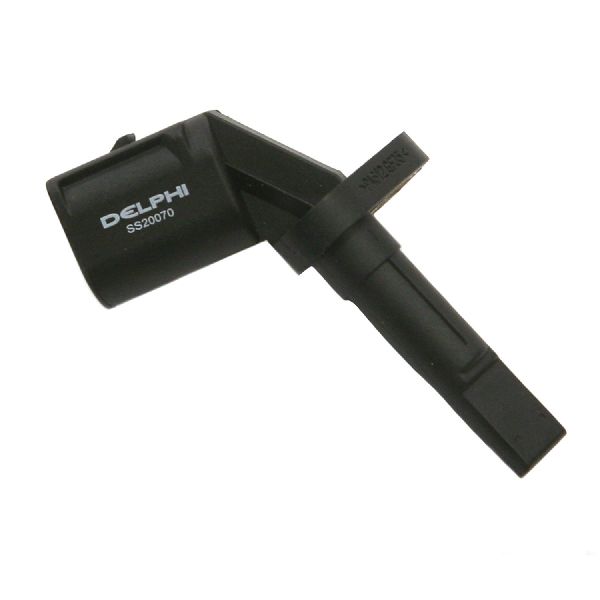
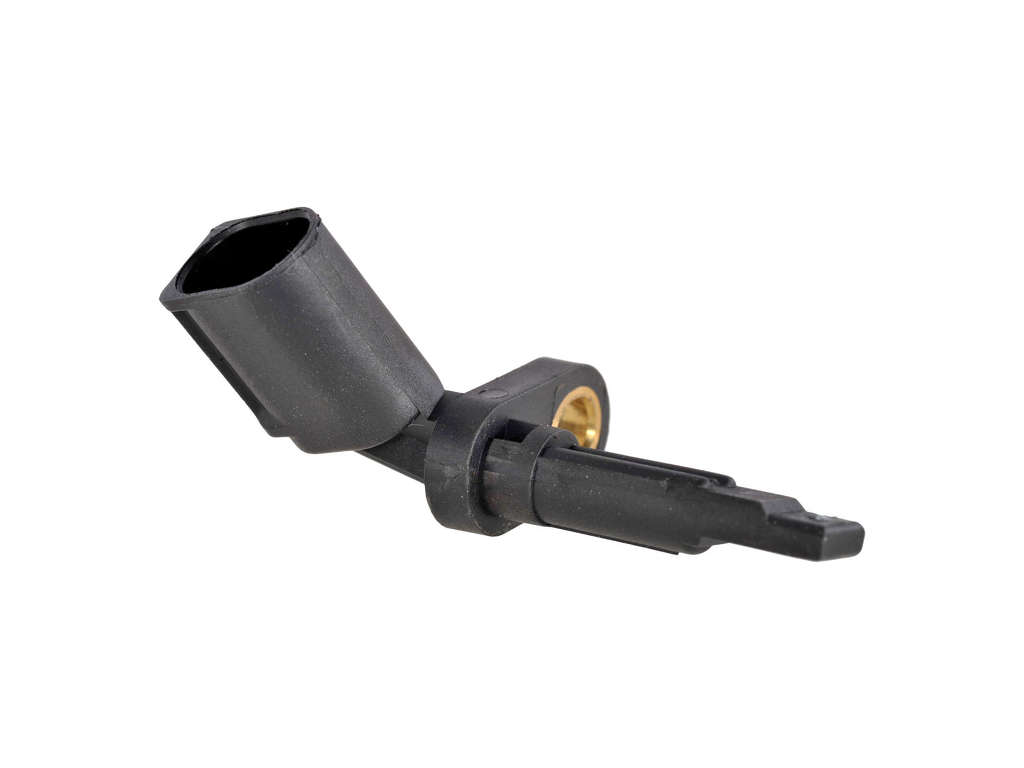
Aftermarket price range: N/A - ABS Wheel Speed Sensor
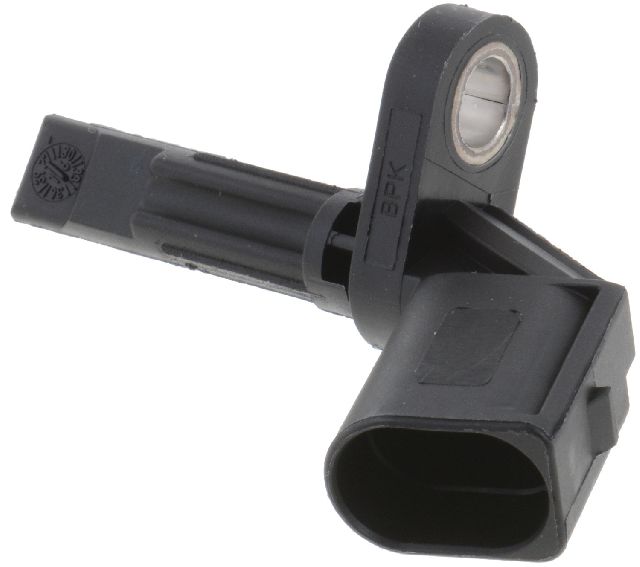
(OEM #4E0927804F)— This is the fix for the less common cause, where the fault is an external wheel sensor rather than the internal transmission sensor.
Trusted brands: Bosch, ATE, Delphi
OEM price range: $100-$180
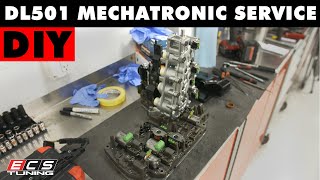
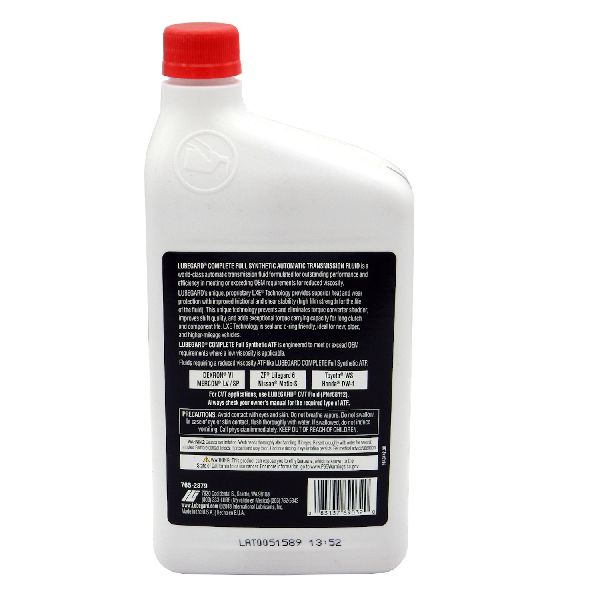
Aftermarket price range: $40-$90 - S-Tronic Transmission Service Kit — Required for the mechatronics repair. Includes transmission fluid (MTF and ATF), a new pan gasket, and often a new filter. 🎬 Watch: Step-by-step guide to performing a full S-Tronic transmission service. The DL501 has separate fluids for the gear section and mechatronic section.
Trusted brands: Audi Genuine, FCP Euro, Vaico, ECS Tuning
OEM price range: $250-$400
Aftermarket price range: $150-$250
Related Codes That Often Appear With This One
- P0501 — Stands for 'Vehicle Speed Sensor ‘A’ Range/Performance'. This code, along with P2159, is specifically mentioned in TSB A351619 as pointing to the internal mechatronics sensor failure.
- P2765 — Stands for 'Input/Turbine Speed Sensor 'B' Circuit'. This is another code listed in TSB A351619 that, when present with P2159, confirms the internal transmission fault.
- P179E — Stands for 'Drive Position Sensor Electrical Error'. This is another common code related to the same internal sensor module failure on the DL501 transmission.
- P179F — Stands for 'Sensor for transmission range, malfunction'. Also points to the internal sensor module and is often seen with P179E.
Technical Service Bulletins (TSBs) & Recalls
- A351619 / 35 16 23 2032211/5: Details the diagnostic procedure for a 'Gearbox malfunction' warning. It requires checking for a specific combination of DTCs and their corresponding DFCC numbers (e.g., P2159 w/ DFCC 8099) to confirm the need to replace the internal G676 sensor module and its circuit board.
Platform-Specific Known Issues
- The DL501 S-Tronic transmission in the B8.5 chassis (including the 2013-2014 RS5) is subject to TSB A351619 (also 2032211/5), which outlines a specific failure of the internal G676 sensor module that triggers code P2159 along with P0501 and P2765.
Mechanic-Grade Diagnostic Values
- Clutch Pressure during VCDS Calibration — expected: Ramps up during calibration, can reach up to 20 bar (294 PSI).. Failure: Inability to complete calibration or hold pressure may indicate a hydraulic or solenoid issue.
- VCDS Advanced Measuring Values for Clutch Health — expected: Monitor clutch pressures (pkp0, pkp1) and clutch slip.. Failure: High clutch pressures without significant slip can indicate a worn clutch pack that the mechatronic is compensating for, meaning a sensor kit alone may not be a complete fix.
- VCDS Advanced Measuring Values for Post-Adaptation Drive — expected: Monitor 'Adaptation status of the engagement point 1' and 'Adaptation status of the engagement point 2'.. Failure: Values do not change to 'adapted' after a sufficient test drive in various gears (D and S modes), indicating a problem with the adaptation process or the repair.
Hidden / Shadow Codes Worth Checking
- P17D8 with symptom code 8040: Torque limitation because of clutch temperature. Often seen with mechatronic failures. (see via Audi-specific scan tools like VCDS or ODIS will display the primary DTC and the associated symptom code.)
- P0726 with symptom code 7980: RPM signal of engine control unit, implausible signal. Indicates a data mismatch relevant to the mechatronic unit. (see via Audi-specific scan tools like VCDS or ODIS.)
- P174B with symptom code 8027: Valve 4 in the sub-gearbox 1, electric fault. Points to an electrical issue within the mechatronic valve body. (see via Audi-specific scan tools like VCDS or ODIS.)
- P179C with symptom code 8029: Main pressure valve, electric fault. Points to an electrical issue with a key hydraulic valve in the mechatronic. (see via Audi-specific scan tools like VCDS or ODIS.)
Scan Tool Commands That Help
- VCDS or ODIS: Basic Settings for 02-Auto Trans — This multi-step procedure is mandatory after replacing the mechatronic repair kit or servicing the transmission fluid to recalibrate the system. It must be performed in a specific order.
- VCDS: 1. Erase counter for start and stop processes — First step of the basic settings procedure. Performed with Key On, Engine Off.
- VCDS: 2. Clutch valve calibration — Second step of the basic settings procedure. Performed with Engine On.
- VCDS: 3. Distance sensor calibration — Third step of the basic settings procedure. Performed with Engine On. Clunking noises are normal during this step.
- VCDS or ODIS: Clutch Adaptation Drive — After completing the Basic Settings, a test drive is required to allow the clutches to learn their engagement points. This involves driving in both D and S modes to engage all gears.
Wiring & Ground Locations
- J217 (Transmission Control Module) — Inside a protective plastic box in the floor cavity beneath the front passenger seat and carpet, in front of the floorpan crossmember.. While the fault is usually the sensor inside the transmission, a failure of the external TCM or its wiring can cause similar issues. This location is susceptible to water damage from clogged sunroof or evaporator drains, which can lead to corrosion and module failure.
- Main Transmission Harness Connector — External connector on the transmission housing.. This is the main electrical interface to the transmission. To disconnect, a bolt is removed and the connector is twisted counter-clockwise to release. Poor connection or corrosion here can cause a variety of transmission faults.
- TCM CAN Bus Pins — At the J217 (TCM) and J533 (Gateway) connectors.. For advanced diagnostics, a technician can test the CAN bus communication lines. This involves checking resistance between Pin 2 and Pin 6 on the TCM harness connector, and checking continuity from Pin 2 of the TCM to Pin 6 of the J533 gateway, and from Pin 6 of the TCM to Pin 16 of the J533 gateway.
Real Owner Repair Stories
- Reddit user on r/Audi (B8.5 Audi S5 (shares DL501 transmission)) — Car drives normally when cold. Once at operating temperature, it 'can't tell where the shift lever is and gets very angry.' After cooling down, it works fine again.
✅ What actually fixed it Replacement of the internal G676 position sensor. The repair cost $6,000 and included new fluid, filter, and multiple seals. - YouTube channel Auto23 (2013 Audi RS5) — 'Transmission malfunction' light appears on the dash once the car reaches operating temperature. Fault codes P179E (Drive position sensor, Electrical malfunction) and P060A were present.
✅ What actually fixed it The diagnosis was a faulty G676 sensor module. The video documents the owner's journey and the complexity of the repair, which requires removing and splitting the transmission case. - Reddit user on r/AudiS4 (2013 Audi S5) — Random neutral slips and 'trans malfunction' light.
✅ What actually fixed it The owner purchased a Vemo-branded mechatronic repair kit (P/N 0B5398009F) from FCP Euro. The mechanic successfully installed the kit and performed a full VCDS reset and adaptation, which resolved the issue.
OEM Part Supersession History
0B5398009A, 0B5398009B, 0B5398009C, 0B5398009D, 0B5398009E→0B5398009F— Progressive updates by the manufacturer to improve reliability and address failure points of the sensor board and wiring.
Heads up: All previous versions are superseded by the 'F' revision. Using an older revision is not recommended.
Model Year Variations Within This Range
- Entire DL501 (0B5) production run: Earlier versions of the DL501 transmission are considered more prone to mechatronic failures. Audi reportedly made at least two revisions to the transmission over its lifespan to improve reliability. The 2013-2014 RS5 falls within the period where these failures are a known pattern documented by TSBs.
Helpful Videos

We Have This Part in Stock



The information in this article is provided for general reference and educational purposes only. Vehicle specifications, procedures, and part compatibility can vary by production date, trim level, and region. Always consult your vehicle's factory service manual and verify part numbers before purchasing or performing repairs. Safety-critical components such as airbags, seat belts, and braking systems should be installed by a qualified professional.
- Audi RS5:
- 🧭 Diagnostic Flowchart
- 🎬 Helpful Videos
- 🛍️ Shop This Part
- What's Unique About the 2013-2014 Audi RS5
- Symptoms You May Notice
- Most Likely Causes
- Rare But Worth Checking
- Diagnosis Steps
- Parts You'll Likely Need
- Related Codes That Often Appear With This One
- Technical Service Bulletins (TSBs) & Recalls
- Platform-Specific Known Issues
- Mechanic-Grade Diagnostic Values
- Hidden / Shadow Codes Worth Checking
- Scan Tool Commands That Help
- Wiring & Ground Locations
- Real Owner Repair Stories
- OEM Part Supersession History
- Model Year Variations Within This Range
- 🎟️ Get 5% Off