

OBD-II Code P2169: Exhaust Pressure Regulator Vent Solenoid Control Circuit/Open
The Ultimate Guide to Understanding, Diagnosing, and Fixing P2169
- Code P2169 indicates a broken electrical connection (an 'open' circuit) to the exhaust pressure regulator vent solenoid, not a mechanical failure of the exhaust itself.
- Inspect the wiring harness and connector at the solenoid first; chafed wires or green pin corrosion cause over 60% of these faults.
- Do not drive the vehicle for more than 10-15 miles; uncontrolled exhaust backpressure causes catastrophic turbocharger failure costing upwards of $2,500.
- Test the solenoid's internal coil resistance with a multimeter before replacing it; a reading of 'OL' (Over Limit) confirms the part is dead and requires replacement.
What Does P2169 Mean?
P2169 means your car's Powertrain Control Module (PCM) detected a break or 'open' in the electrical circuit for the exhaust pressure regulator's vent solenoid. This solenoid is a small, electronically controlled valve the PCM uses to manage exhaust pressure. This function is critical for turbocharged engines and emissions systems like the EGR and DPF. The 'Open' designation specifically points to a broken wire, a disconnected plug, a blown fuse, or an internally failed solenoid coil.
🎬 Watch: How to check a solenoid coil with a multimeter.Technical definition: The official SAE/OBD-II definition is 'Exhaust Pressure Regulator Vent Solenoid Control Circuit/Open'. This indicates the Powertrain Control Module (PCM) detected a lack of continuity in the electrical circuit controlling the exhaust pressure regulator vent solenoid. The PCM continuously monitors this circuit; when it commands the solenoid, it expects a specific voltage and current signature. If this signature is missing, indicating zero current flow, the PCM stores code P2169 and illuminates the Malfunction Indicator Lamp (MIL).
Can I Drive With P2169?
Yes, but not recommended You can drive the vehicle, but we strongly advise against it for any significant distance. Performance is severely compromised, resulting in poor acceleration and reduced power. Continuing to drive with high exhaust backpressure causes catastrophic turbocharger failure (a $1,500-$3,500+ repair) and damages the Diesel Particulate Filter (DPF) on diesel engines (a $2,000-$4,000+ replacement). Drive only to the nearest qualified repair shop.
Common Causes
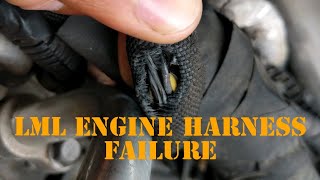
- Damaged Wiring or Connectors (Very Common) — Engine vibration and heat cause wires leading to the solenoid to chafe, break, or melt. Connectors also suffer from backed-out pins or broken locking tabs, instantly breaking the electrical connection. 🎬 See how engine vibration causes common wiring harness failures.
- Water Intrusion and Corrosion (Common) — Moisture from road spray penetrates the solenoid's electrical connector. This causes green pin corrosion that blocks the electrical signal and creates an open circuit fault.
- Failed Exhaust Pressure Regulator Vent Solenoid (Common) — The solenoid's internal electromagnetic coil breaks over time due to extreme heat cycles, creating a literal 'open' circuit that the PCM detects.
- Blown Fuse or Fusible Link (Less Common) — An intermittent short circuit blows the solenoid's power supply fuse, instantly cutting power and triggering the code.
- Soot or Carbon Buildup (Less Common) — Heavy soot deposits on diesel engines cause the mechanical regulator valve to stick. This overworks and overheats the solenoid coil until it fails electrically.
- Faulty Powertrain Control Module (PCM) (Rare) — The internal PCM driver circuit controlling the solenoid fails. Rule out all wiring and solenoid issues before replacing the PCM.
Symptoms
- Reduced Engine Power (Limp Mode) — The vehicle feels sluggish and hesitates. The PCM limits power because it cannot safely manage exhaust backpressure and turbocharger efficiency.
- Decreased Fuel Economy — An engine struggling to breathe against incorrect backpressure burns significantly more fuel to maintain speed, dropping MPG by 10-20%.
- Rough or Unstable Idle — The engine idles unevenly because improper exhaust backpressure disrupts the engine's ability to maintain a stable RPM.
- Audible Change in Exhaust or Turbo Noise — The exhaust tone sounds 'choked' or louder than usual. On turbocharged vehicles, the normal sound of the turbo spooling disappears.
- Check Engine Light On (also visible on scanner) — The Malfunction Indicator Lamp (MIL) illuminates immediately after the PCM detects the open circuit.
Diagnostic Flowchart
Tap your situation to follow the diagnostic path that matches what you're seeing on this code.
Common Fixes & Costs
- Repairing Damaged Wiring or Connector — Parts: $10-$30, Labor: $100-$200, ~1.5 hr book time (Intermediate)
- Replacing the Exhaust Pressure Regulator Vent Solenoid — Parts: $70-$250, Labor: $100-$300, ~1.5 hr book time (DIY)
- Replacing a Blown Fuse — Parts: $1-$5, Labor: $0-$50, ~0.2 hr book time (DIY)
- Replacing the Powertrain Control Module (PCM) — Parts: $600-$1200, Labor: $200-$400, ~1.5 hr book time (Professional)
Used vs. New Parts: Buying Guide
When a used part is worth it: A used OEM part from a low-mileage donor vehicle is cost-effective for older vehicles where a new part exceeds $300.
Donor-vehicle mileage cap: roughly under 80000 miles for the part to have meaningful remaining life.
Donor quality checklist:
- Verify the donor vehicle was not scrapped for an engine or emissions-related failure.
- Inspect the part for corrosion, heat damage, or physical cracks.
- Match the OEM part number exactly; similar-looking solenoids have different internal resistance.
Decision logic:
- If The part is under $100 and available new from an aftermarket brand like Dorman or SMP. → Buy new. Small savings on a used part aren't worth the risk of repeat labor.
- If The vehicle is over 10 years old and the OEM part is over $300. → A used part from a reputable salvage yard with a warranty is a reasonable choice.
- If The solenoid is part of a larger assembly like a VGT actuator. → Buy a new or professionally remanufactured unit with a warranty due to the high labor cost of replacement.
Warranty tradeoff: Used parts carry a 30-90 day parts-only warranty. New aftermarket parts offer 1-year to lifetime warranties. New OEM parts installed by a dealer include a 12-month/12,000-mile parts and labor warranty.
Worst-case if a used part fails: $200-$500 if a used solenoid fails, primarily due to repeating the diagnostic and replacement labor.
Cost of Not Fixing It
- Short-Term (0-3 months): Noticeable decrease in fuel economy (10-20% drop), poor acceleration, and failed emissions tests. Soot accumulates faster in the DPF. (Added cost: $50-$200 in wasted fuel.)
- Medium-Term (3-9 months): High risk of DPF clogging, requiring a forced regeneration or professional cleaning. Excessive backpressure strains turbocharger seals. (Added cost: $150-$1500)
- Long-Term (9+ months): Catastrophic failure of the turbocharger due to excessive heat and pressure. The DPF becomes permanently clogged with ash and requires replacement. (Added cost: $2,500-$7,500+)
Diagnosis Steps
- Scan for Codes and Review Freeze Frame Data
Use an OBD-II scanner to confirm P2169 is the primary code. Record any other codes and review the freeze frame data to see the exact engine conditions (RPM, temp, load) when the fault triggered.
Tools: OBD-II Scanner (Beginner) - Thorough Visual Inspection
Locate the exhaust pressure regulator vent solenoid. Meticulously inspect the wiring harness for burns, chafing, or rodent damage. Unplug the connector and check for green corrosion, moisture, or pushed-out pins.
Tools: Flashlight, Inspection Mirror (Beginner) - Check Fuses and Relays
Locate the fuse protecting the solenoid circuit using the owner's manual. A blown fuse indicates a short circuit that you must trace and repair before replacing the fuse.
Tools: Owner's Manual, Fuse Puller, Digital Multimeter (Beginner) - Check for Power and Ground at the Connector
Turn the ignition on (engine off). Disconnect the solenoid. Use a multimeter to check the harness connector. One pin must have battery voltage (~12V) or a 5V reference, depending on the vehicle. The other pin is the PCM control/ground. Verify continuity to chassis ground.
Tools: Digital Multimeter, Repair Manual (Intermediate) - Test the Solenoid's Internal Resistance
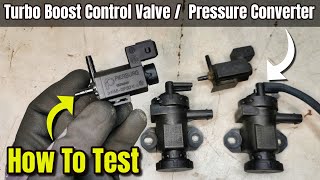
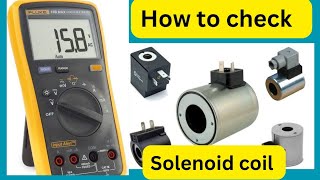
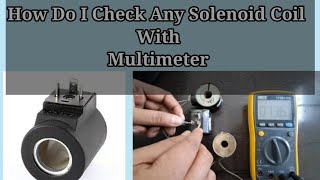
Set a multimeter to Ohms (Ω). Measure the resistance between the two pins on the solenoid itself. Most solenoids read between 5 and 40 Ohms (check your specific manual). A reading of 'OL' (Over Limit) confirms the internal coil is broken and the solenoid requires replacement.
Tools: Digital Multimeter, Vehicle-Specific Repair Manual (Intermediate) - Command the Solenoid with a Scan Tool
Use a bi-directional scan tool to command the solenoid ON and OFF. You should hear an audible click. If the PCM sends the command but the voltage at the connector doesn't change, the wiring is broken. If voltage changes but the solenoid doesn't click, the solenoid is seized.
Tools: Bi-Directional Scan Tool, Digital Multimeter (Advanced) - Perform a 'Wiggle Test'
If the fault is intermittent, have a helper gently wiggle the wiring harness at various points between the solenoid and the PCM while monitoring the solenoid's resistance. A sudden reading change exposes a hidden break inside the wire insulation.
Tools: Digital Multimeter (Advanced) - Test PCM Driver Circuit
Disconnect the battery and the PCM connector. Check for continuity on the control wire from the PCM pin directly to the solenoid connector. If the wire is intact and the solenoid is good, the PCM's internal driver has failed.
Tools: Digital Multimeter, PCM Pinout Diagram (Professional)
When This Code Triggers (Freeze-Frame Conditions)
- Engine Coolant Temp: 180-210°F (The fault often triggers once the engine is fully warmed up and enters closed-loop operation.)
- RPM: 1500-2500 RPM (The PCM actively commands the solenoid during steady-state cruising or light acceleration.)
- Engine Load: 30-60% (Corresponds to normal driving conditions where the PCM manages boost and exhaust pressure.)
- Vehicle Speed: 40-65 mph (Highway speeds where the system is under consistent load and the PCM expects a solenoid response.)
Related Codes
- P2170 — Means 'Exhaust Pressure Regulator Vent Solenoid Control Circuit Low'. While P2169 is a broken wire (open), P2170 means the wire is touching a ground source (short to ground).
- P2171 — Means 'Exhaust Pressure Regulator Vent Solenoid Control Circuit High'. This indicates the control wire is shorted to a power source, receiving constant voltage.
- P0471 — Relates to the sensor that MEASURES pressure, not the solenoid that CONTROLS it. The inability to control pressure (P2169) causes the pressure to go out of range, triggering P0471 as a secondary symptom.
- P0046 — Turbo Boost Control Solenoid Circuit Range/Performance. Because exhaust pressure drives the turbo, a failed vent solenoid (P2169) prevents proper boost control, triggering P0046.
Climate & Environmental Factors
- Cold Climates with Road Salt: Road salt mixed with moisture creates a highly corrosive slush. This accelerates corrosion inside wiring harnesses and connectors, directly causing the open circuits that trigger P2169.
- High Humidity: Moisture easily penetrates non-sealed electrical connectors, leading to green pin corrosion and intermittent open circuits even without road salt.
- Extreme Engine Heat: The solenoid and wiring sit near hot exhaust components. Constant heat cycles bake the wire insulation until it becomes brittle and cracks, exposing the copper wire to breakage.
How to Talk to a Mechanic About This Code
Say this: "I have a check engine light and my scanner shows code P2169. I understand this is an 'open circuit' for the exhaust pressure regulator vent solenoid. I'd like to book a diagnostic appointment. Please start by testing the circuit—checking the wiring, connector, and the solenoid's resistance—before recommending a part replacement."
This signals you're an informed customer. It directs the technician to perform a proper electrical diagnosis rather than just swapping the most likely part, preventing unnecessary upsells.
Avoid saying:
- 'My check engine light is on, can you look at it?'
- 'The truck feels sluggish, I think it might be the turbo.'
- 'Just fix whatever is wrong.'
Questions to ask before authorizing the repair:
- What were the results of the electrical tests? Specifically, what was the resistance reading on the solenoid coil?
- Did you confirm there is power and a good ground at the solenoid's connector?
- If the wiring is the problem, can you show me the damaged section? Is a spot repair possible?
- If you are recommending replacing the solenoid, what is the warranty on the part and the labor?
Where to Take It: Dealer vs Independent vs Chain
- Dealer:
Recommended only for warranty work or known TSBs. For out-of-warranty vehicles, an independent specialist is more cost-effective.
Best for: Vehicles under powertrain or emissions warranty., Known manufacturer-specific issues covered by a TSB, like the Land Rover software glitch or GM harness chafing., Complex PCM replacement and programming.
Downsides: Highest labor rates, often 40-60% more than independent shops., May default to replacing expensive assemblies rather than performing a detailed wiring repair. (Typical cost: +50% vs. baseline) - Independent Shop:
Best fit. An independent shop is perfectly equipped to handle the electrical diagnosis required for P2169 and is significantly more affordable than a dealer.
Best for: Out-of-warranty vehicles, especially diesel trucks., Diagnosing and repairing electrical circuit faults., Getting a second opinion after a dealership quote.
Downsides: Quality varies. Look for shops with ASE-certified technicians specializing in electrical diagnostics or diesel engines. (Typical cost: +0% vs. baseline) - Chain Shop:
AVOID. This code requires specific diagnostic skills not found at chain repair shops. The risk of an incorrect repair is high.
Best for: Simple, high-volume jobs like oil changes, tires, and brake pads.
Downsides: Technicians lack the in-depth electrical diagnostic skills needed for circuit codes., High pressure to sell parts leads to misdiagnosis and unnecessary upselling. (Typical cost: -10% vs. baseline)
When to Walk Away From the Repair
If the total estimated repair cost exceeds 40-50% of your car's private-party value, seriously consider selling or trading it in as-is.
- Car worth $18000, fix is $600: Fix it. The repair cost is only 3% of the vehicle's value.
- Car worth $8000, fix is $1600: Borderline, but likely worth fixing. The repair is 20% of the vehicle's value. Get a second opinion to confirm the diagnosis before proceeding.
- Car worth $4000, fix is $3500: Walk away. The repair cost is 88% of the car's value. This assumes P2169 was ignored and led to catastrophic turbo and DPF failure.
What Scan Tool You Need for This Code
Minimum: A scan tool with live data streaming and bi-directional control (Active Tests).
A basic $20 code reader only shows the P2169 code. It cannot help you diagnose if the fault is the wire, the connector, or the solenoid. You need bi-directional control to command the solenoid and test its function, preventing expensive guesswork.
Budget: BlueDriver Pro (~$100) — Connects to your smartphone via Bluetooth. It reads the code, provides freeze frame data, and graphs live data streams. While lacking full bi-directional controls, its detailed live data is a crucial first step.
Mid-range: Foxwell NT510 Elite / Launch CRP123X (~$150) — Offers bi-directional control for many vehicles. This allows you to command the vent solenoid on and off directly from the tool to see if it clicks and if circuit voltage changes, definitively testing its operation.
Professional: Autel MaxiCOM MK900 (~$550) — A professional-level tablet offering full bi-directional control, detailed live data, and advanced service functions. Overkill for a single job but a worthwhile investment for a serious DIYer.
Rent vs buy: For P2169, a basic rental code reader is insufficient. You need bi-directional control. If you plan to DIY the diagnosis, buy a mid-range scanner. It pays for itself by helping you avoid replacing the wrong part or paying a shop's diagnostic fee.
How to Clear the Code After You Fix It
- Use an OBD-II scan tool to clear the Diagnostic Trouble Codes (DTCs).
- Perform a complete drive cycle to allow the vehicle's readiness monitors to run their self-tests.
Drive cycle (~30 minutes): Start with a cold engine. Idle for 3 minutes. Drive for 15 minutes in mixed stop-and-go city traffic. Drive for 15 minutes at a steady highway speed (55-60 mph). Allow the vehicle to cool down completely.
Readiness monitors affected: Comprehensive Component Monitor, Catalyst (CAT) Monitor, Evaporative System (EVAP) Monitor
Before emissions retest: drive at least 100 miles to fully set monitors.
Watch out for:
- Clearing the code without performing a drive cycle results in a 'Not Ready' status at an emissions test.
- The code returns immediately if the broken wire or failed solenoid was not properly fixed.
Will This Fail Emissions / State Inspection?
Yes — this code typically fails an OBD-II emissions inspection.
- California: An active Check Engine Light for P2169 is an automatic failure. All required readiness monitors must be 'Ready'.
- New York: Fails the NYVIP3 OBD-II inspection if the MIL is on. 2001+ vehicles fail if more than one readiness monitor is 'Not Ready'.
- Texas: In the 17 emissions-testing counties, an illuminated MIL for P2169 results in an automatic OBD-II test failure.
Most Commonly Affected Vehicles
- Ford F-Series Super Duty (6.7L PowerStroke) (2011-2019) — Extremely common. The solenoid is exposed to extreme turbo heat, leading to internal coil failure. Access requires removing components on the turbo pedestal.
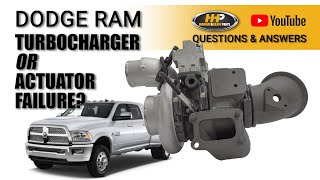
- Dodge / Ram 2500/3500 (6.7L Cummins) (2007-2024) — Exhaust pressure control is integral to the Variable Geometry Turbo (VGT). P2169 often accompanies a failing VGT actuator or soot buildup causing stuck turbo vanes.
- Chevrolet / GMC Silverado/Sierra 2500HD/3500HD (Duramax LML/LGH) (2011-2016) — Service bulletin PIP5198A identifies the engine harness rubbing on a sharp tab of the EGR valve gasket, severing wires and causing circuit faults.
- Land Rover Discovery 4 / LR4 (2016-2016) — TSB SSM72392 states P2169-13 triggers falsely on V6 gasoline models due to a software glitch. No physical repair is necessary.
- Volkswagen / Audi Golf, Jetta, A3 (TDI Models) (2009-2015) — Common on TDI engines as part of the complex EGR/DPF system. Check with a dealer for extended emissions warranty coverage before paying for repairs.
- BMW 1 Series, 3 Series, 5 Series, X5 (Diesel) (2010-2018) — A P2169 fault disrupts DPF regeneration cycles on BMW diesels, leading to severe DPF clogging if ignored.
- Hyundai / Kia Kona, Sportage, Santa Fe (CRDi Diesel) (2015-2022) — Typically points to a standard electrical fault: a failed solenoid or a broken wire right at the connector.
- Tata Mega XL (2017-2023) — High vibration causes the wire to break flush with the plastic solenoid connector. Inspect this exact spot first.
Manufacturer-Specific Notes
- Land Rover / Jaguar: On 2016 V6 gasoline models, P2169 appears despite the vehicle lacking the component. TSB SSM72392 confirms this is a software error requiring no physical repair.
- Ford / Ram / GM (Diesel Trucks): P2169 rarely appears alone on heavy-duty diesels. It frequently accompanies DPF, EGR, or DEF codes. Always check TSBs, as a PCM reflash or a different emissions component is often the root cause.
- Ram (Cummins): FCA issued extended warranties (X99 and X93) for the turbocharger actuator on 2013-2015 Ram trucks. These cover related codes like P0046 and U010C, which may be relevant if P2169 is present.
- Generic Scan Tools: Basic generic scanners sometimes incorrectly define P2169 as an O2 sensor fault (e.g., 'O2 Sensor Signal Stuck Rich'). Always verify the code definition with a manufacturer-specific manual.
Frequently Asked Questions
What exactly does the exhaust pressure regulator vent solenoid do?
It is a computer-controlled valve that vents exhaust pressure from the manifold or turbocharger. The PCM uses it to precisely manage exhaust backpressure for optimal engine performance and emissions control.
Can I fix P2169 myself?
Yes, if the cause is a blown fuse, a visibly broken wire, or an easily accessible failed solenoid. Tracing an intermittent open in a complex wiring harness requires advanced skills and a bi-directional scan tool. Stop DIYing and consult a shop if multimeter tests are inconclusive.
How much does it cost to fix P2169?
Costs range from $5 for a simple fuse to $150-$300 for a wiring repair. Replacing the solenoid costs $170-$550 depending on labor rates and part access. A PCM replacement is the most expensive scenario, costing $800-$1,600 including programming.
My scanner says P2169 is an O2 sensor fault. Is that correct?
No. Some generic scan tools have incorrect code definitions in their databases. P2169 definitively indicates an 'Exhaust Pressure Regulator Vent Solenoid Control Circuit/Open'. Relying on the wrong definition leads to replacing unnecessary parts.
Could the problem be the exhaust pressure sensor instead of the solenoid?
No, P2169 specifically points to an electrical open in the solenoid's control circuit. A faulty sensor sets a different code, like P0471. Fix the electrical circuit fault first before addressing any secondary sensor performance codes.
Will P2169 clear itself?
No. P2169 indicates a hard electrical fault like a broken wire or dead coil. The Check Engine Light remains on until the physical problem is repaired and the code is cleared with a scan tool.
Is P2169 a serious code?
Yes, it is highly serious for turbocharged and diesel engines. Ignoring it causes severe performance drops and leads to catastrophic, expensive damage to the turbocharger or Diesel Particulate Filter (DPF).
Key Takeaways
- Code P2169 indicates a broken electrical connection (an 'open' circuit) to the exhaust pressure regulator vent solenoid, not a mechanical failure of the exhaust itself.
- Inspect the wiring harness and connector at the solenoid first; chafed wires or green pin corrosion cause over 60% of these faults.
- Do not drive the vehicle for more than 10-15 miles; uncontrolled exhaust backpressure causes catastrophic turbocharger failure costing upwards of $2,500.
- Test the solenoid's internal coil resistance with a multimeter before replacing it; a reading of 'OL' (Over Limit) confirms the part is dead and requires replacement.
Helpful Videos


Shop the Parts Behind P2169
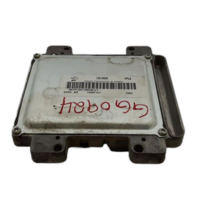
Below are the parts most often responsible for code P2169, ranked by how frequently each one is the actual culprit (per the diagnosis above). Tap any to see what we have for your vehicle.


The information in this article is provided for general reference and educational purposes only. Vehicle specifications, procedures, and part compatibility can vary by production date, trim level, and region. Always consult your vehicle's factory service manual and verify part numbers before purchasing or performing repairs. Safety-critical components such as airbags, seat belts, and braking systems should be installed by a qualified professional.
- 🧭 Diagnostic Flowchart
- 🎬 Helpful Videos
- 🛍️ Shop This Part
- What Does P2169 Mean?
- Can I Drive With P2169?
- Common Causes
- Symptoms
- Common Fixes & Costs
- Used vs. New Parts: Buying Guide
- Cost of Not Fixing It
- Diagnosis Steps
- When This Code Triggers (Freeze-Frame Conditions)
- Related Codes
- Climate & Environmental Factors
- How to Talk to a Mechanic About This Code
- Where to Take It: Dealer vs Independent vs Chain
- When to Walk Away From the Repair
- What Scan Tool You Need for This Code
- How to Clear the Code After You Fix It
- Will This Fail Emissions / State Inspection?
- Most Commonly Affected Vehicles
- Manufacturer-Specific Notes
- Frequently Asked Questions
- What exactly does the exhaust pressure regulator vent solenoid do?
- Can I fix P2169 myself?
- How much does it cost to fix P2169?
- My scanner says P2169 is an O2 sensor fault. Is that correct?
- Could the problem be the exhaust pressure sensor instead of the solenoid?
- Will P2169 clear itself?
- Is P2169 a serious code?
- Key Takeaways
- 🎟️ Get 5% Off