

OBD-II Code P2170: Exhaust Pressure Regulator Vent Solenoid Control Circuit Low
A comprehensive guide to what P2170 means, its causes, and how to diagnose and fix it.
- P2170 indicates a low-voltage electrical fault in the exhaust pressure regulator vent solenoid circuit, most often caused by corroded wiring or outdated PCM software.
- Driving with P2170 triggers a protective 'Limp Mode,' cutting engine power by up to 50% and creating a safety hazard during highway merging.
- For 2017-2019 Jaguar and Land Rover models, P2170-11 specifically flags the active exhaust valve system and requires a dealer-level PCM software update (TSB JLRTB02020NAS2) before replacing any physical parts.
- Proper diagnosis requires a multimeter to verify a 4.5V-5.5V reference signal at the actuator connector and less than 0.2 Ohms of resistance across the wiring harness.
What Does P2170 Mean?
P2170 signifies that your vehicle's Powertrain Control Module (PCM) detects a low-voltage electrical fault in the exhaust pressure regulator vent solenoid circuit. This solenoid vents excess exhaust pressure, optimizing turbocharger and emissions performance. The 'Circuit Low' message means the PCM receives a voltage signal below the manufacturer's specified range, indicating a short circuit to ground, broken wiring, or a failed solenoid.
Technical definition: The official SAE/OBD-II definition is 'Exhaust Pressure Regulator Vent Solenoid Control Circuit Low'. The Powertrain Control Module (PCM) detects the voltage signal from the solenoid's control circuit is below the minimum threshold. On modern Jaguar and Land Rover vehicles, this generic code specifically flags a failure in the active exhaust valve system.
🎬 Watch: Understanding Jaguar's active exhaust system and common failures.Can I Drive With P2170?
Yes, But With Caution. You can drive, but we do not recommend it. The engine enters 'Limp Mode,' causing severe power loss that creates a safety hazard in traffic. Continuing to drive with this fault forces an improper air-fuel ratio, destroying the catalytic converter over time—a repair costing $1,200 to $2,800.
Common Causes
- Outdated Powertrain Control Module (PCM) Software (Very Common) — Jaguar and Land Rover PCM software is notoriously oversensitive, triggering the P2170 code incorrectly. Manufacturers issued Technical Service Bulletins (TSBs) requiring a software update to permanently resolve this.
- Damaged or Corroded Wiring/Connectors (Very Common) — The solenoid's wiring harness sits exposed to road salt, moisture, and heat. This causes frayed wires, corroded connector pins, and a complete loss of electrical signal.
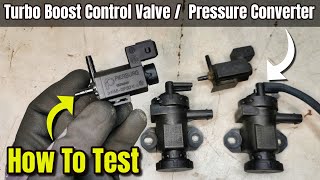
- Faulty Exhaust Pressure Regulator Vent Solenoid/Actuator (Common) — The solenoid or actuator fails internally when its electronic coil shorts out or breaks. 🎬 See this step-by-step guide on how to test solenoid valves. On JLR vehicles, this active exhaust valve actuator failure is often temperature-dependent, occurring only when cold.
- Mechanically Bound Exhaust Valve or Actuator (Less Common) — Carbon buildup, corrosion, or a misaligned heat shield binds the exhaust valve. When the valve cannot move freely, the actuator draws incorrect voltage, forcing the PCM to register an electrical fault.
- Blown Fuse or Faulty Relay (Less Common) — A blown fuse or a faulty relay in the circuit cuts power and causes a 'Circuit Low' code. This is sometimes caused by a blown fuse for a seemingly unrelated system sharing the same power feed.
- Faulty Powertrain Control Module (PCM) (Rare) — The internal driver circuit in the PCM that controls the solenoid fails. This is the least likely cause and requires exhaustive testing of all wiring and solenoids before replacement.
Symptoms
- Check Engine Light is On — The primary indicator. The light remains illuminated as long as the PCM detects the low-voltage fault.
- Limp Mode / Severe Power Loss — To protect the engine, the PCM commands 'Restricted Performance' or 'Limp Mode,' making the vehicle sluggish, choppy, and unsafe for highway merging.
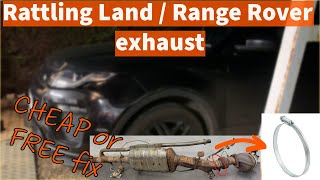
- Abnormal Exhaust Noise — On vehicles with active exhaust systems (like Land Rover), the exhaust sticks in loud or quiet mode, or produces a distinct metallic rattle from the rear actuator. 🎬 Watch: How to fix a rattling Land Rover exhaust actuator.
- Engine Stalling — The engine stalls unexpectedly while driving or idling due to severe exhaust backpressure irregularities.
Diagnostic Flowchart
Tap your situation to follow the diagnostic path that matches what you're seeing on this code.
Common Fixes & Costs
- Updating Powertrain Control Module (PCM) Software — Parts: $0, Labor: $150-$300, ~1.0 hr book time (Professional)
- Repairing Damaged Wiring or Connector — Parts: $10-$50, Labor: $120-$250, ~1.5 hr book time (Intermediate)
- Replacing the Exhaust Pressure Regulator Vent Solenoid / Actuator — Parts: $150-$250, Labor: $100-$200, ~1.2 hr book time (DIY)
- Realigning or Repairing Exhaust Heat Shield — Parts: $0-$20, Labor: $50-$150, ~0.8 hr book time (DIY)
- Replacing the Powertrain Control Module (PCM) — Parts: $500-$1800, Labor: $150-$300, ~1.5 hr book time (Professional)
DIY vs Professional
- Repairing Damaged Wiring or Connector 🟢 Beginner
Tools: Multimeter, wire strippers, crimpers, heat gun, quality heat-shrink connectors. - Replacing the Exhaust Pressure Regulator Vent Solenoid / Actuator 🟢 Beginner
Tools: Basic socket set, wrenches, penetrating oil. - Updating Powertrain Control Module (PCM) Software 🟢 Beginner
Tools: Manufacturer-specific diagnostic tool (e.g., JLR Pathfinder) and a stable battery support unit. - Realigning or Repairing Exhaust Heat Shield 🟢 Beginner
Tools: Pry bar, basic hand tools.
Used vs. New Parts: Buying Guide
When a used part is worth it: A used OEM active exhaust actuator from a low-mileage donor vehicle is a cost-effective alternative to a new OEM unit, offering identical fit and function.
Donor-vehicle mileage cap: roughly under 60000 miles for the part to have meaningful remaining life.
Donor quality checklist:
- Verify the donor vehicle wasn't scrapped for an emissions failure.
- Avoid parts from regions with heavy road salt use, as corrosion destroys the actuator housing and connector.
- Match the part number exactly.
Decision logic:
- If Vehicle is under warranty (e.g., 4yr/50k miles) → Use new OEM parts installed by a dealer to maintain warranty coverage.
- If A software update (TSB) is the recommended fix → This cannot be substituted; a dealer or qualified shop must perform the update.
- If The cost of a new OEM actuator is prohibitively high (> $300) → A used OEM part from a reputable salvage yard with a 90-day warranty is a smart choice.
- If Aftermarket options are available for significantly less → Proceed with caution. Verify reviews and warranty, as aftermarket electrical quality is inconsistent.
Warranty tradeoff: Used parts carry a 30-90 day warranty. New aftermarket parts offer 1-year warranties. New OEM parts carry a 1-2 year warranty.
Worst-case if a used part fails: $250-$500 if a cheap aftermarket part fails prematurely, requiring repeat labor costs.
What Happens If You Wait — Timeline
- 0-1 month: Check Engine Light illuminates. Vehicle frequently enters 'Limp Mode,' causing severe power loss and sluggish acceleration. (MPG impact: 5-10%% · Added cost: $20-50 in wasted fuel)
- 1-4 months: Continued operation with a malfunctioning exhaust valve forces an improper air-fuel ratio, stressing the catalytic converter with incorrect exhaust gas temperatures. (MPG impact: 10-15%% · Added cost: $50-200 in wasted fuel)
- 4-8 months: Sustained incorrect exhaust backpressure causes the catalytic converter's internal substrate to overheat, crack, or melt irreversibly. (MPG impact: 15-20%% · Added cost: $1200-$2800 (Catalytic converter replacement required))
- 8+ months: A fully clogged catalytic converter creates extreme exhaust backpressure, leading to engine overheating, cracked exhaust manifolds, or internal engine damage. (MPG impact: >20%% · Added cost: $3000+ (Engine or turbocharger damage))
Cost of Not Fixing It
- 0-1 month: Persistent 'Limp Mode' with severe power loss and poor acceleration creates a safety hazard in traffic. (Added cost: Negligible)
- 1-6 months: Driving with an incorrect air-fuel ratio overheats and destroys the catalytic converter. (Added cost: $1200-$2800)
- 6+ months: A clogged catalytic converter causes excessive backpressure, leading to engine overheating, damaged exhaust manifolds, or internal engine failure. (Added cost: $3000+)
Diagnosis Steps
- Read Codes & Check TSBs
Use an OBD-II scanner to confirm P2170. Look for sub-codes like P2170-11 ('Circuit Short to Ground') common on JLR vehicles. Immediately check for manufacturer Technical Service Bulletins (TSBs) like JLRTB02020NAS2, which dictate a software update before any physical repairs.
Tools: OBD-II Scanner, Online TSB Database (Beginner) - Visual Inspection of Actuator & Wiring
Locate the exhaust pressure regulator vent solenoid near the muffler. Inspect the wiring harness for melting, chafing, or breaks. Check the connector for green corrosion or loose pins. Ensure nearby heat shields are not physically binding the actuator arm.
Tools: Flashlight, Inspection Mirror (Beginner) - Test Circuit Voltage at Connector
With the ignition on (engine off), disconnect the solenoid connector. Use a multimeter to verify battery voltage (approx. 12V) on the power wire. Check the control wire for a reference voltage from the PCM (4.5V-5.5V on JLR systems). A 0V reading confirms a wiring or PCM issue.
Tools: Multimeter (Intermediate) - Test Solenoid/Actuator Resistance
Measure the resistance between the disconnected component's electrical terminals. Compare to manufacturer specs (typically 10-50 Ohms). An infinite reading (OL) means an open internal circuit; a near-zero reading means a shorted coil.
Tools: Multimeter, Vehicle Service Manual (Intermediate) - Test Wiring Harness Integrity (Shorts & Continuity)
Disconnect the harness from both the solenoid and PCM. Test the control wire for continuity to a chassis ground; any reading under 1 Ohm confirms a short to ground. Next, measure resistance from the PCM pin to the solenoid pin; it must be under 0.2 Ohms. High resistance indicates a broken wire.
Tools: Multimeter, Wiring Diagram (Advanced) - Perform Commanded State Test
Use a bi-directional scan tool to command the solenoid ON and OFF. Listen for a click or watch the active exhaust valve move. This verifies the PCM's ability to control the circuit and confirms mechanical operation.
Tools: Bi-Directional Scan Tool (Advanced) - Component Bench Test
Remove the actuator. Apply battery voltage and ground directly to the terminals using fused jumper wires to verify mechanical actuation. For JLR actuators suspected of cold-weather failure, freeze the component for two hours and re-test.
Tools: Fused Jumper Wires, 12V Power Source (Advanced)
When This Code Triggers (Freeze-Frame Conditions)
- Engine Coolant Temp: 180-200°F (80-93°C) (The fault logs most often when the engine is fully warmed up and running for several minutes.)
- RPM: 1500-2500 RPM (The code sets during steady-state cruising or light acceleration, rarely at idle or heavy acceleration.)
- Engine Load: 30-60% (Occurs under moderate engine load, consistent with highway cruising or maintaining speed on an incline.)
- Vehicle Speed: 45-65 mph (72-105 kph) (The fault triggers at steady highway speeds where the exhaust system is hot and operating consistently.)
Related Codes
- P2170-11 — A manufacturer-specific sub-code (used by JLR) meaning 'Circuit Short to Ground'. This confirms the PCM detected a specific electrical short, directing technicians to focus on wiring rather than mechanical issues.
- P0079 — This code for 'Exhaust Valve Control Solenoid Circuit Low Bank 1' is functionally identical to P2170 but specifies Bank 1 on a V-style engine. Diagnosis is identical.
- P0449 — Refers to the EVAP Vent Valve/Solenoid Circuit. It is also a 'circuit low' code for a solenoid, but belongs to the fuel vapor system located near the charcoal canister.
- P2270 — Means 'O2 Sensor Signal Stuck Lean Bank 1 Sensor 2'. It points to a problem with the oxygen sensor's reading, not the pressure regulator circuit. A faulty O2 sensor does not cause P2170.
Climate & Environmental Factors
- Cold Weather: Low temperatures exacerbate internal faults within the electronic actuator. JLR diagnostic documents recommend a 'freezer test' to replicate temperature-sensitive failures.
- Road Salt / High Humidity: Salt spray creates a powerful electrolyte that dramatically accelerates corrosion of the wiring harness, connector pins, and actuator housing. This corrosion causes high resistance or a direct short to ground.
How to Talk to a Mechanic About This Code
Say this: "I have a P2170 code on my [Vehicle Make/Model]. I'd like to schedule a diagnostic. Based on my research, this often relates to the active exhaust valve actuator circuit, a software TSB, or wiring damage near the muffler. Can you please start by checking for TSBs and inspecting that specific area?"
This signals you are an informed customer, directing the technician to the most probable causes. It prevents a costly 'exploratory' diagnosis and reduces the chance of a shop replacing a good part without testing the circuit and checking for software updates first.
Avoid saying:
- 'My check engine light is on, can you just fix it?'
- 'I think I need a new exhaust.'
- 'Just do whatever you think is best.'
Questions to ask before authorizing the repair:
- Did you find a Technical Service Bulletin (TSB) for this code on my vehicle's VIN?
- If you are recommending a part replacement, what were the specific voltage and resistance readings from the component and its wiring harness?
- Did you check for mechanical issues, like a misaligned heat shield, that could be binding the actuator?
- What is the warranty on the proposed repair, including both parts and labor?
Where to Take It: Dealer vs Independent vs Chain
- Dealer:
Recommended, and often required, for JLR vehicles due to software-based fixes. The best choice for any vehicle still under warranty.
Best for: Jaguar or Land Rover vehicles, as a PCM software update is a very common fix that only they can perform., Vehicles still under the powertrain or emissions warranty.
Downsides: Highest labor rates, typically 1.5-2x more than an independent shop., May be less willing to perform a simple wiring repair versus replacing a larger harness. (Typical cost: +50% vs. baseline) - Independent Shop:
A good choice for non-JLR makes. If you have a JLR vehicle, seek out a specialist independent shop that explicitly states they have dealer-level diagnostic software.
Best for: Out-of-warranty, non-JLR vehicles where the cause is likely wiring or a simple part replacement., Marque-specialist shops (e.g., a JLR specialist) who have diagnostic tools like Autologic or a licensed Pathfinder subscription.
Downsides: A general shop lacks the specific software to fix JLR vehicles., Diagnostic skill varies; ensure the shop is well-regarded for electrical troubleshooting. (Typical cost: +0% vs. baseline) - Chain Shop:
Not Recommended. These shops are ill-equipped for the specific electrical and software-based diagnosis that P2170 requires.
Best for: Simple, unrelated maintenance like oil changes or tires.
Downsides: Technicians lack experience with make-specific issues like the JLR TSBs for P2170., High pressure to sell parts leads to replacing the actuator without proper circuit diagnosis. (Typical cost: -10% vs. baseline)
When to Walk Away From the Repair
If the total estimated repair cost exceeds 40-50% of your car's current private-party value, consider selling or trading in the vehicle instead of repairing it.
- Car worth $8000, fix is $650: Fix it. The repair cost is well under the threshold and restores the vehicle's drivability and value.
- Car worth $12500, fix is $250: Fix it. This represents a minor repair (likely a software update or heat shield alignment) on a valuable vehicle.
- Car worth $3500, fix is $2800: Walk away. A shop quoted a PCM replacement costing 80% of the car's value. Get a second opinion, but be prepared to sell the vehicle 'as-is'.
What Scan Tool You Need for This Code
Minimum: A scanner that reads manufacturer-specific codes (e.g., P2170-11 for JLR) and displays live data for the solenoid circuit.
A basic $20 code reader only shows 'P2170'. It cannot see the crucial manufacturer sub-code, display live voltage from the PCM, or command the actuator to move. Without this, you are guessing at the cause.
Budget: iCarsoft LR V1.0 / Kingbolen Soloscan (~$80) — Reads JLR-specific fault codes and definitions. Displays live data streams to check for voltage, but lacks bi-directional control.
Mid-range: Foxwell NT530/NT710 (with JLR software) or iCarsoft LR V3.0 (~$250) — Provides full system access, reads specific sub-codes, and offers bi-directional control to command the actuator ON/OFF. This allows you to confirm if the entire circuit is working.
Professional: Autel MaxiCOM MK808S / Launch X431 Series (~$500-800) — Offers full bi-directional control, comprehensive live data graphing, and the ability to perform software updates (ECU coding/programming) required by TSBs.
Rent vs buy: Auto parts stores only rent basic code readers, which are insufficient for this code. Buying a mid-range tool with bi-directional control is essential for proper diagnosis and saves hundreds in shop labor.
How to Clear the Code After You Fix It
- Use an OBD-II scan tool to clear the P2170 fault code.
- Perform a complete drive cycle to allow the onboard diagnostic monitors to run and achieve a 'Ready' state.
Drive cycle (~30 minutes): 1) Cold start after sitting 8+ hours. 2) Idle for 3 minutes with A/C and defroster on. 3) Drive 20 minutes with mixed stop-and-go and steady highway speeds (55-60 mph for 5 minutes). 4) Allow vehicle to cool completely.
Readiness monitors affected: Catalyst Monitor, Oxygen (O2) Sensor Monitor, Evaporative System (EVAP) Monitor
Before emissions retest: drive at least 100 miles to fully set monitors.
Watch out for:
- Clearing the code turns off the Check Engine Light but resets all readiness monitors to 'Not Ready,' guaranteeing an emissions test failure.
- The code returns immediately if the root cause (e.g., shorted wire) was not fixed.
- Disconnecting the battery clears the code but erases all adaptive memory, requiring a much longer drive cycle to reset monitors.
Will This Fail Emissions / State Inspection?
Yes — this code typically fails an OBD-II emissions inspection.
- California: An active P2170 code is an automatic failure. After repair, all OBD readiness monitors must be 'Ready' before a re-test, requiring up to 100 miles of driving.
- New York: An illuminated Check Engine Light results in an automatic failure. NY allows one monitor to be 'Not Ready' on 2001+ vehicles after clearing the code.
- Texas: In emissions-testing counties, an active P2170 code causes an automatic failure. Readiness monitors must be set before passing the OBD-II test.
Most Commonly Affected Vehicles
- Land Rover Discovery, Discovery Sport (2017-2019) — P2170 (often P2170-11) almost exclusively points to the active exhaust valve system. TSBs JLRTB02020NAS2 and SSM74333 dictate a PCM software update, heat shield alignment, or replacing actuator LR141782.
- Land Rover Range Rover Evoque (2012-2019) — Relates to the active exhaust valve. A common symptom is an exhaust rattle, fixed with a return spring kit or PCM update per TSB JLRTB02020NAS2.
- Jaguar E-Pace (2018-2019) — Shares the active exhaust issue with Land Rover. TSBs JLRTB02020NAS2 and SSM74333 recommend a PCM software update as the first step for code P2170-11.
- Ford F-150, Explorer (2017-2021) — Drivability complaints on 10-speed transmission models are often due to transmission software issues (TSB 21-2145) presenting as power loss, rather than a true P2170 exhaust fault.
- Chevrolet / GMC Silverado, Sierra (2007-2013) — These vehicles display 'Reduced Engine Power' messages commonly caused by faulty throttle position sensors or wiring, which mimic P2170 symptoms.
Manufacturer-Specific Notes
- Land Rover / Jaguar: P2170 is highly specific to the 'Active Exhaust Valve' actuator. Technicians must check TSBs (JLRTB02020NAS2, SSM74333), as a PCM software update is often the only required fix. The Federal Emissions Warranty covers related components for 4yr/50k miles.
- Land Rover / Jaguar (Confounding Recall): A recall (NHTSA D126/H575) for 2019-2024 mild-hybrid models addresses a faulty DC-DC converter causing sudden power loss. Symptoms are identical to P2170 'Limp Mode'. Verify if your vehicle is affected to avoid misdiagnosis.
- Ford: On 2017+ F-150s, widespread power loss complaints relate to transmission software or valve body issues. Technicians must rule out transmission TSBs before focusing on engine components for P2170.
Real Owner Stories
2018 Jaguar E-Pace with P2170-11
Check Engine Light and 'Restricted Performance' message appeared intermittently in cold weather. The exhaust note stuck in 'quiet' mode.
What they tried:
- Cleared the code, but it returned within two days.
- An independent shop suggested an expensive exploratory diagnosis.
- Researched online and found TSB JLRTB02020NAS2.
Outcome: Took the car to a Jaguar dealer. They confirmed the TSB applied and performed a PCM software update for $180. The code never returned.
Lesson: For modern JLR vehicles, always check for TSBs related to P2170 before authorizing physical repairs. A software update is the most common fix.
2017 Land Rover Discovery at 65K miles
P2170 code present with a noticeable metallic rattle from the rear exhaust during startup.
What they tried:
- A mechanic replaced the active exhaust actuator, but the code and rattle returned.
- The mechanic quoted over $2,000 to replace the entire rear exhaust assembly.
Outcome: A specialist shop found the heat shield was misaligned and vibrating against the actuator arm, causing it to bind. They realigned the shield for $150. The rattle and code were resolved.
Lesson: A 'Circuit Low' code is often triggered by a mechanical bind stressing the electrical component. Inspect for physical interference before replacing parts.
Lotus Evora S with aftermarket exhaust
P2170 appeared after installing an aftermarket exhaust system with a new valve controller.
What they tried:
- Replaced the exhaust valve control solenoid with a new OEM part, but the code remained.
Outcome: A diagnostic specialist discovered the main air conditioning fuse had blown. The power feed for the exhaust valve solenoid shared the A/C clutch circuit. Replacing the fuse resolved the code.
Lesson: A 'Circuit Low' code means a lack of voltage. Always check for blown fuses on shared circuits before suspecting expensive components.
How to Prevent This Code From Triggering
- Apply Dielectric Grease to Connectors (During any underbody service or every 2-3 years) — Applying non-conductive dielectric grease to the actuator's electrical connector seals out moisture and road salt, preventing the pin corrosion that causes 'Circuit Low' faults.
- Regularly Wash Vehicle Undercarriage (Monthly, especially in winter (Rust Belt regions)) — Washing away road salt prevents the buildup of corrosive electrolytes that destroy wiring insulation and metal exhaust components.
- Clean and Lubricate Active Exhaust Valve Mechanism (Every 30,000 miles or if noise appears) — Carbon buildup causes the valve flap to stick. Cleaning the mechanism and lubricating pivot points ensures it moves freely, preventing the actuator motor from straining and drawing excessive current.
- Inspect Exhaust Hangers and Mounts (During every oil change) — Worn exhaust hangers allow the system to sag. This misaligns the active exhaust heat shield, causing it to interfere with the actuator's movement and trigger a fault.
Frequently Asked Questions
What does the exhaust pressure regulator vent solenoid actually do?
It functions as a computer-controlled valve for exhaust gases. The PCM commands it to open to release excess pressure, optimizing turbocharger and emissions performance. On performance cars, it also changes the exhaust sound profile.
What is the difference between P2170 and P2170-11?
P2170 is a generic code for a low voltage condition in the circuit. P2170-11 is a manufacturer-specific enhancement used by Jaguar Land Rover meaning 'Circuit Short to Ground.' This saves diagnostic time by pointing directly to an electrical short.
What is the most common misdiagnosis for P2170?
On Land Rovers and Jaguars, mechanics mistakenly replace the entire exhaust assembly when only a PCM software update or bolt-on actuator is needed. On other vehicles, replacing the PCM without exhaustively testing the wiring for a short to ground is a costly error.
Can a bad O2 sensor cause a P2170 code?
No. Oxygen (O2) sensors measure exhaust gas content and trigger their own specific codes (like P0137 or P2270). P2170 strictly indicates an electrical fault in the pressure vent solenoid's control circuit.
I replaced the solenoid, but the code came back. What now?
The fault lies in the wiring harness (an intermittent short to ground) or requires a manufacturer software update. Check for relevant TSBs and perform a 'wiggle test' on the harness while measuring resistance to locate the short.
Why did my cruise control get disabled when the Check Engine Light came on?
This is a standard safety feature on modern vehicles. When the PCM stores an engine or transmission fault code, it disables non-essential systems like cruise control and remote start to force the driver to seek repairs.
Can I just clean the solenoid or valve?
If carbon buildup causes the valve to bind mechanically, cleaning provides a temporary fix. However, P2170 is an electrical circuit code. Cleaning will not resolve a shorted wire, a burnt-out solenoid coil, or outdated PCM software.
Key Takeaways
- P2170 indicates a low-voltage electrical fault in the exhaust pressure regulator vent solenoid circuit, most often caused by corroded wiring or outdated PCM software.
- Driving with P2170 triggers a protective 'Limp Mode,' cutting engine power by up to 50% and creating a safety hazard during highway merging.
- For 2017-2019 Jaguar and Land Rover models, P2170-11 specifically flags the active exhaust valve system and requires a dealer-level PCM software update (TSB JLRTB02020NAS2) before replacing any physical parts.
- Proper diagnosis requires a multimeter to verify a 4.5V-5.5V reference signal at the actuator connector and less than 0.2 Ohms of resistance across the wiring harness.
Helpful Videos

Shop the Parts Behind P2170
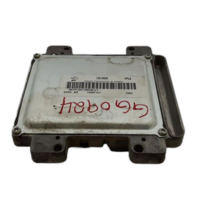
Below are the parts most often responsible for code P2170, ranked by how frequently each one is the actual culprit (per the diagnosis above). Tap any to see what we have for your vehicle.



The information in this article is provided for general reference and educational purposes only. Vehicle specifications, procedures, and part compatibility can vary by production date, trim level, and region. Always consult your vehicle's factory service manual and verify part numbers before purchasing or performing repairs. Safety-critical components such as airbags, seat belts, and braking systems should be installed by a qualified professional.
- 🧭 Diagnostic Flowchart
- 🎬 Helpful Videos
- 🛍️ Shop This Part
- What Does P2170 Mean?
- Can I Drive With P2170?
- Common Causes
- Symptoms
- Common Fixes & Costs
- DIY vs Professional
- Used vs. New Parts: Buying Guide
- What Happens If You Wait — Timeline
- Cost of Not Fixing It
- Diagnosis Steps
- When This Code Triggers (Freeze-Frame Conditions)
- Related Codes
- Climate & Environmental Factors
- How to Talk to a Mechanic About This Code
- Where to Take It: Dealer vs Independent vs Chain
- When to Walk Away From the Repair
- What Scan Tool You Need for This Code
- How to Clear the Code After You Fix It
- Will This Fail Emissions / State Inspection?
- Most Commonly Affected Vehicles
- Manufacturer-Specific Notes
- Real Owner Stories
- 2018 Jaguar E-Pace with P2170-11
- 2017 Land Rover Discovery at 65K miles
- Lotus Evora S with aftermarket exhaust
- How to Prevent This Code From Triggering
- Frequently Asked Questions
- What does the exhaust pressure regulator vent solenoid actually do?
- What is the difference between P2170 and P2170-11?
- What is the most common misdiagnosis for P2170?
- Can a bad O2 sensor cause a P2170 code?
- I replaced the solenoid, but the code came back. What now?
- Why did my cruise control get disabled when the Check Engine Light came on?
- Can I just clean the solenoid or valve?
- Key Takeaways
- 🎟️ Get 5% Off