

P2172 on 2015-2020 Dodge Challenger: High Airflow/Vacuum Leak Causes & Fixes
Code P2172 on a Dodge Challenger means a large vacuum leak has been detected. The most common causes are a cracked or disconnected vacuum hose (like the PCV hose) or a faulty throttle body. In some cases, a PCM software update or replacement is required per a manufacturer TSB.
- P2172 on your Challenger indicates a major vacuum leak.
- Always start with the simplest fix: check all vacuum hoses for cracks or disconnections before buying expensive parts.
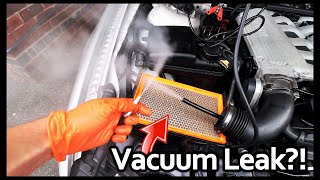
- A smoke test is the most effective tool for finding hard-to-see leaks in the intake system.
- Be aware that a faulty throttle body is a common cause if no vacuum leaks are found.
- If all else fails, this code can be caused by a faulty PCM, as documented in a manufacturer TSB, which requires professional service.
What's Unique About the 2015-2020 Dodge CHALLENGER
For the 2015-2020 Challenger, this code is not always a simple vacuum leak. Dodge has issued Technical Service Bulletins (TSBs) that point to more complex issues. Specifically, TSB #18-050-20 indicates that this code on 2019 models with the 6.2L Supercharged V8 can be caused by an internal PCM fault, requiring the module to be replaced and reprogrammed by a dealer. This is a critical distinction from many other vehicles where P2172 is almost exclusively a physical leak.
Diagnostic Flowchart
Tap your situation to follow the diagnostic path that matches what you're seeing on this vehicle.
Symptoms You May Notice
- Check Engine Light is on
- Flashing red lightning bolt symbol on the instrument cluster (Electronic Throttle Control warning)
- Engine stalling, especially when coming to a stop or at low RPMs
- Rough or unstable idle
- Hesitation or lack of throttle response
- Audible hissing sound from the engine bay
- Vehicle enters 'limp mode' with severely reduced power. 🎬 Watch: A breakdown of P2172 causes and common fixes.
- Replacing the throttle body when the actual problem is a simple, inexpensive vacuum hose that has cracked or disconnected.
- Replacing MAP or other sensors when the root cause is a large physical leak that a smoke test would have found.
- Ignoring the possibility of a PCM issue as described in TSB #18-050-20 after all other physical causes have been ruled out.
- Failing to perform a throttle relearn procedure after replacing a battery or cleaning/replacing the throttle body, causing the code to persist.
Most Likely Causes
- Vacuum Leak 🔴 High Probability Hoses, especially the PCV hose and intake air tube connections, can become brittle, crack, or disconnect over time due to heat and age. Intake manifold gaskets can also fail, creating a leak.
How to confirm: Visually inspect all vacuum lines connected to the intake manifold, throttle body, and brake booster. A common culprit is an uncapped vacuum port on the throttle body or intake. The most effective method is to perform a smoke test, which forces smoke into the intake system to reveal the exact location of any leaks. 🎬 See how to find hidden leaks using a smoke tester.
Typical fix: Replace the cracked or disconnected hose or a faulty gasket. Cap any open vacuum ports.
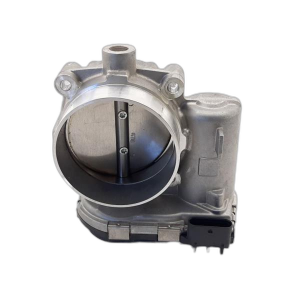
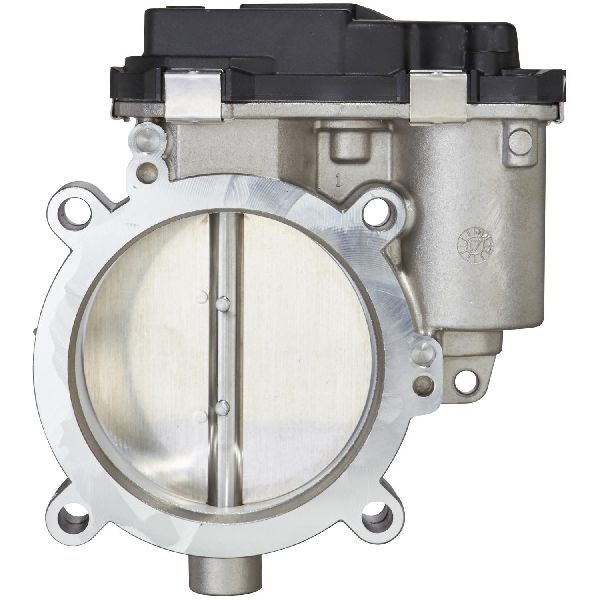
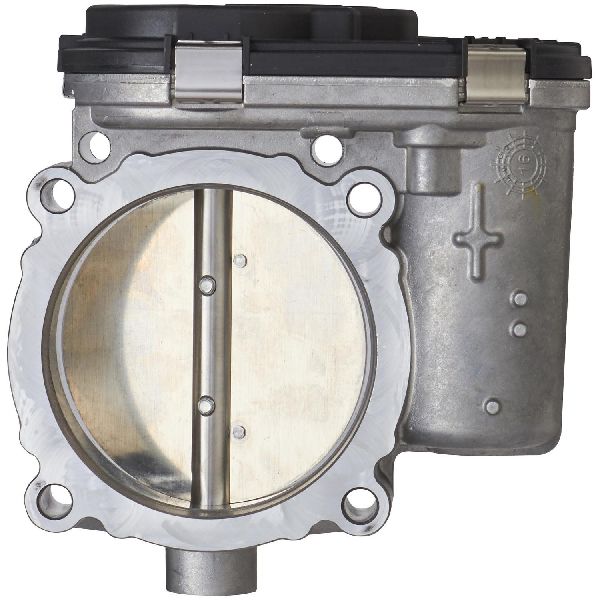
Est. part cost: $15-$150 - Faulty or Dirty Throttle Body 🟡 Medium Probability → Shop Fuel Injection Throttle Body The throttle plate can stick open due to carbon buildup, or the internal electronic sensors can fail, causing excessive airflow when it should be closed. This is a very common failure point discussed in owner forums.
How to confirm: Remove the air intake tube and visually inspect the throttle body for carbon deposits or physical obstruction. With the engine off, check if the throttle plate moves freely. A scan tool can also be used to check if the commanded throttle position matches the actual position. Cleaning is a first step, but replacement is often the permanent fix.
Typical fix: Clean the throttle body with a dedicated cleaner or replace the entire throttle body assembly if it's electronically faulty. An electronic throttle control (ETC) relearn procedure is highly recommended after cleaning or replacement, and is sometimes required after a dead battery event.
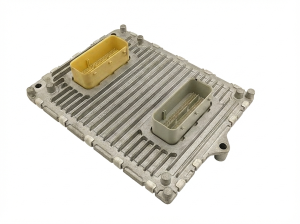
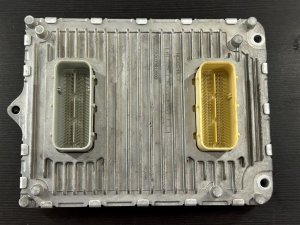
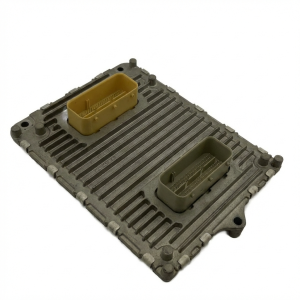
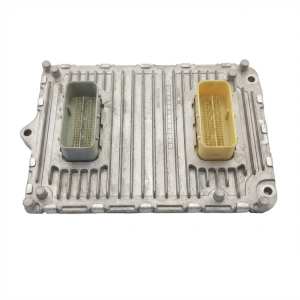
Est. part cost: $200-$500 - Faulty Powertrain Control Module (PCM) ⚪ Low Probability → Shop Engine Control Module (ECM) Manufacturer TSB #18-050-20 specifically calls out PCM failure as a cause for this code on 2019 Dodge Challenger, Charger, and Jeep Grand Cherokee models with the 6.2L engine.
How to confirm: This must be diagnosed by a dealer or a qualified shop. All other potential causes (vacuum leaks, throttle body issues) must be ruled out first. The technician will check if the vehicle's VIN falls under the TSB and perform advanced diagnostics.
Typical fix: Replace and reprogram the Powertrain Control Module.
Est. part cost: $800-$1500
Rare But Worth Checking
- Faulty PCV Valve: → Shop PCV Valve A Positive Crankcase Ventilation (PCV) valve that is stuck open can create a significant vacuum leak. It's an inexpensive part to check and replace during diagnosis.
- Leaking Brake Booster: → Shop Power Brake Booster The brake booster uses engine vacuum to operate. A leak in its diaphragm or the connecting hose can cause a large, unmetered air leak, triggering P2172.
- Lost Throttle Body Calibration: → Shop Fuel Injection Throttle Body A dead or disconnected battery can cause the PCM to lose its learned throttle body parameters. This can trigger P2172 immediately upon restart. A throttle relearn procedure often resolves this. 🎬 Watch: How to perform a Hemi throttle position calibration relearn.
Diagnosis Steps
- Read the code with an OBD-II scanner and check for any other accompanying codes.
- Visually inspect the engine bay for any obviously disconnected, cracked, or collapsed vacuum hoses, paying close attention to the PCV system and brake booster line.
- Listen for a hissing sound while the engine is running, which can help pinpoint the leak's general area.
- If a battery was recently replaced or disconnected, perform an Electronic Throttle Control (ETC) relearn procedure first.
- If no obvious leak is found, perform a smoke test on the intake system. This is the most reliable way to find hidden leaks.
- If no leaks are found, inspect and clean the throttle body. Check for carbon buildup or damage and ensure the throttle plate is not stuck open.
- Check for any applicable Technical Service Bulletins (TSBs) for your vehicle's VIN. If TSB #18-050-20 applies to your 6.2L model and other causes are ruled out, the PCM is the likely culprit.
- If the PCM is suspected, consult a dealership or qualified repair shop for final diagnosis and replacement.
Parts You'll Likely Need
- PCV Valve — A common failure point that can cause a vacuum leak. It's often replaced as preventative maintenance during diagnosis.
Trusted brands: Mopar, Standard Motor Products
OEM price range: $15-$30
Aftermarket price range: $10-$20 - Electronic Throttle Body (3.6L V6)
(OEM #5184349AE / 5184349AF)— The internal electronics can fail or the throttle plate can stick, causing incorrect airflow and triggering code P2172. The sensors are integrated and not sold separately.
Trusted brands: Mopar, Hitachi
OEM price range: $250-$400
Aftermarket price range: $150-$300 - Electronic Throttle Body (5.7L & 6.4L V8)
(OEM #53034251AD (supersedes 53034251AB, 53034251AC))— The internal electronics can fail or the throttle plate can stick, causing incorrect airflow and triggering code P2172. This part is shared across many HEMI applications.
Trusted brands: Mopar, Bosch
OEM price range: $300-$500
Aftermarket price range: $150-$350 - Powertrain Control Module (PCM) — A known issue documented in TSB #18-050-20 where an internal fault in the PCM itself triggers the P2172 code on specific 6.2L models.
Trusted brands: Mopar
OEM price range: $800+
Aftermarket price range: $500+
Related Codes That Often Appear With This One
- P0456 — Indicates a small EVAP system leak, which can sometimes occur alongside larger vacuum issues. Mentioned in TSB #18-045-16 REV. A.
- P0123 — Indicates a high voltage signal from the throttle position sensor, which can be related to a failing throttle body. Mentioned in TSB #18-045-16 REV. A.
- P0223 — Indicates a high voltage signal from the secondary throttle position sensor, also pointing towards a throttle body fault. Mentioned in TSB #18-045-16 REV. A.
Technical Service Bulletins (TSBs) & Recalls
- 18-050-20: Powertrain Control Module (PCM) Replacement - P2172 - High Airflow/Vacuum Leak Detected (Instantaneous Accumulation)
- 18-045-16 REV. A: Flash: Powertrain Diagnostic and System Improvements (addresses P2172 among other codes)
Platform-Specific Known Issues
- TSB #18-050-20 documents a known issue for 2019 models with the 6.2L engine where the Powertrain Control Module (PCM) can fail and cause a P2172 code, requiring replacement and reprogramming.
- TSB #18-045-16 REV. A is a broader software update for the PCM that addresses multiple codes, including P2172, suggesting that software glitches can be a factor.
- A dead or disconnected battery frequently causes this code to appear upon restart. This is because the PCM loses its learned values for the throttle body's closed position. Performing an 'ETC Relearn' procedure is a critical first step in this scenario before replacing parts.
Mechanic-Grade Diagnostic Values
- MAP Sensor Voltage (Engine Running) — expected: Below 2.0 volts at idle, rising to above 3.5 volts at Wide Open Throttle (WOT).. Failure: Voltage that does not vary with throttle changes, or is stuck high at idle.
- Throttle Position Sensor 1 (TPS1) Voltage (KOEO) — expected: Starts at approximately 0.3-0.7 volts with throttle closed and increases smoothly to above 4.3-4.7 volts at WOT.. Failure: Voltage that is erratic, does not change with throttle movement, or is stuck at a specific value (e.g., 2.5V).
- Throttle Position Sensor 2 (TPS2) Voltage (KOEO) — expected: Starts at approximately 4.3-4.7 volts with throttle closed and decreases smoothly to approximately 0.3-0.7 volts at WOT.. Failure: Voltage that does not change inversely to TPS1, is erratic, or is stuck.
Scan Tool Commands That Help
- wiTECH or equivalent professional scan tool: ETC Relearn / Throttle Follower Test — This function is critical after replacing or cleaning the throttle body, replacing the PCM, or after the battery has been disconnected. It forces the PCM to relearn the throttle plate's closed, open, and partial positions, which can resolve a P2172 code caused by lost calibration.
Wiring & Ground Locations
- Throttle Body / MAP / PCM Harness — The engine wiring harness that contains the circuits connecting the Powertrain Control Module (PCM) to the Electronic Throttle Body and the Manifold Absolute Pressure (MAP) sensor.. This is the data pathway for all components involved in setting code P2172. Service manuals advise inspecting this harness for chafed, pierced, pinched, or corroded wires and checking for good pin contact at all three connectors, as a wiring fault can mimic a component failure.
- Main Engine/Chassis Ground — The primary ground strap connecting the engine block to the vehicle's chassis, traceable from the negative battery terminal.. A poor engine ground can cause floating or incorrect voltage readings for all engine sensors, including the throttle position and MAP sensors, leading to erratic data and potentially triggering a P2172 code.
"I Checked Everything" — The Actual Cause
- The most notable scenario is a faulty Powertrain Control Module (PCM) as identified in TSB #18-050-20 for 2019 6.2L models. A smoke test will show no leaks because the fault is electronic; the PCM incorrectly interprets sensor data and triggers the P2172 code. All physical leak checks will pass, leading a technician to the PCM as the root cause after exhausting other options.
- An intermittently sticking EVAP canister purge solenoid/valve can cause this code. When stuck open, it creates a vacuum leak. However, it may function correctly during a static smoke test in the garage, only to stick open under specific driving conditions, making it a difficult-to-diagnose cause if the smoke test is the only diagnostic performed.
When the Usual Fixes Don't Work
- While P2172 is overwhelmingly caused by a vacuum leak or a faulty throttle body, there are documented cases where neither fix resolves the issue. In these instances, particularly on 2019 6.2L models, the root cause was an internal failure of the Powertrain Control Module (PCM), as outlined in TSB #18-050-20. An owner could replace hoses and a brand new throttle body, perform a smoke test that passes, and still have the code return until the PCM is replaced and reprogrammed by a dealer. This contradicts the common wisdom that P2172 is always a physical 'unmetered air' problem.
OEM Part Supersession History
53034251AB, 53034251AC→53034251AD— Standard part revision and improvement by the manufacturer.
Heads up: The newer part number (53034251AD) is the correct and compatible replacement for the older versions on the specified vehicles.
Model Year Variations Within This Range
- 2019: Models equipped with the 6.2L Supercharged engine are subject to TSB #18-050-20, which identifies the PCM itself as a potential cause for P2172. This is a specific known failure point for this model year and engine combination that is less likely on other years/engines.
Helpful Videos
Used OEM Parts in Stock
New Aftermarket Parts Available



The information in this article is provided for general reference and educational purposes only. Vehicle specifications, procedures, and part compatibility can vary by production date, trim level, and region. Always consult your vehicle's factory service manual and verify part numbers before purchasing or performing repairs. Safety-critical components such as airbags, seat belts, and braking systems should be installed by a qualified professional.
- Dodge CHALLENGER:
- 🧭 Diagnostic Flowchart
- 🎬 Helpful Videos
- 🛍️ Shop This Part
- What's Unique About the 2015-2020 Dodge CHALLENGER
- Symptoms You May Notice
- Most Likely Causes
- Rare But Worth Checking
- Diagnosis Steps
- Parts You'll Likely Need
- Related Codes That Often Appear With This One
- Technical Service Bulletins (TSBs) & Recalls
- Platform-Specific Known Issues
- Mechanic-Grade Diagnostic Values
- Scan Tool Commands That Help
- Wiring & Ground Locations
- "I Checked Everything" — The Actual Cause
- When the Usual Fixes Don't Work
- OEM Part Supersession History
- Model Year Variations Within This Range
- 🎟️ Get 5% Off