

P2172 on 2015-2020 Dodge Charger: High Airflow & Vacuum Leak Causes and Fixes
On a 2015-2020 Dodge Charger, code P2172 is most often caused by a simple vacuum leak from a cracked hose or a dirty throttle body. A smoke test is the most reliable way to find such leaks. However, for 2019 models with the 6.2L Supercharged engine, a known TSB points to a faulty Powertrain Control Module (PCM), a more complex and expensive repair. In some cases, particularly after a battery replacement, a simple throttle relearn procedure may resolve the issue.
- P2172 means your Charger's engine is getting more air than the computer expects, usually from a vacuum leak.
- Before buying any parts, perform a thorough visual inspection of all intake hoses, followed by a smoke test to pinpoint the leak.
- A dirty throttle body is a common cause; cleaning it is a cheap and effective diagnostic step.
- If you own a 2019 Charger with the 6.2L Supercharged engine, be aware that a faulty PCM is a known issue for this code and may require a trip to the dealer.
What's Unique About the 2015-2020 Dodge CHARGER
While P2172 commonly points to a simple vacuum leak on many vehicles, the Dodge Charger platform and its relatives have a notable exception. For high-performance 2019 models equipped with the 6.2L Supercharged V8 (Hellcat), Dodge issued Technical Service Bulletin #18-050-20, identifying the Powertrain Control Module (PCM) itself as the root cause. This TSB also applies to the Dodge Challenger and Jeep Grand Cherokee with the same engine and year. This means that after ruling out common leaks, owners of these specific vehicles may be looking at a computer replacement, which is an uncommon and significantly more costly repair for this type of code.
Diagnostic Flowchart
Tap your situation to follow the diagnostic path that matches what you're seeing on this vehicle.
Symptoms You May Notice
- Check Engine Light is on
- Flashing Electronic Throttle Control (ETC) or 'lightning bolt' light on the dash
- Rough, surging, or unstable idle
- Engine stalling, especially when coming to a stop
- Hesitation or lack of throttle response
- Vehicle enters a reduced power 'limp mode'
- Possible no-start condition
- Automatic transmission may not shift correctly
- Replacing the throttle body when the issue is just a simple vacuum leak from a PCV hose.
- Replacing O2 sensors because the engine is running lean (P0171/P0174), when the lean condition is caused by the unmetered air from the vacuum leak that triggers P2172.
Most Likely Causes
- Vacuum Leak 🔴 High Probability Hoses made of plastic and rubber, like the PCV hose or intake air ducts, can become brittle and crack over time due to constant exposure to engine heat and oil vapors. The PCV system is a very common source of leaks. 🎬 Watch: How to find a vacuum leak causing an idle stall.
How to confirm: Visually inspect all vacuum lines connected to the intake manifold, especially the PCV hose and brake booster line. The most definitive method is to have a mechanic perform a smoke test, which forces smoke into the intake system to reveal the exact location of any leaks.
Typical fix: Replace the cracked or disconnected hose or leaking gasket.
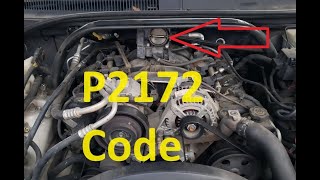
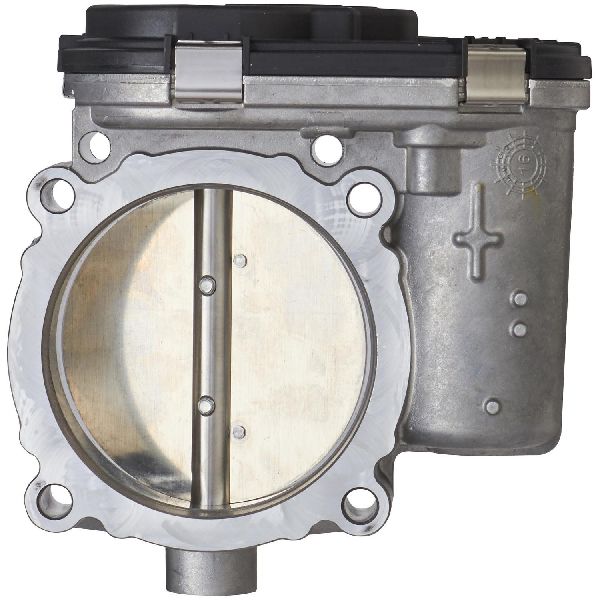
Est. part cost: $15-$150 - Dirty or Sticking Throttle Body 🟡 Medium Probability → Shop Fuel Injection Throttle Body Carbon and oil vapor from the PCV system can build up around the throttle plate, preventing it from closing completely. This allows excess air to leak past, causing a high idle and triggering the code.
How to confirm: Remove the air intake tube from the throttle body and visually inspect the throttle plate and bore for black carbon deposits. A dirty throttle body was a known issue on older models as well.
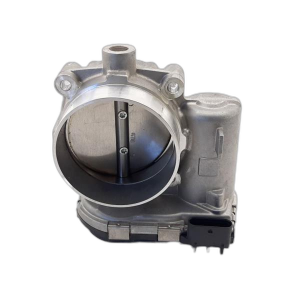
Typical fix: Clean the throttle body thoroughly with a dedicated throttle body cleaner and a soft cloth or brush. If cleaning doesn't resolve the issue or the internal electronics have failed, the entire assembly must be replaced.
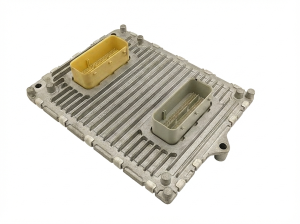
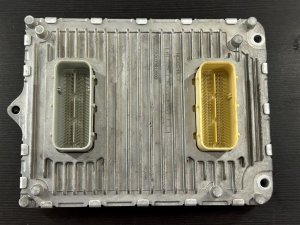
Est. part cost: $10 (cleaner) - $350 (new throttle body) - Faulty Powertrain Control Module (PCM) ⚪ Low Probability → Shop Engine Control Module (ECM) A specific manufacturing issue prompted TSB #18-050-20 for 2019 models with the 6.2L Supercharged V8 engine (Sales Code ESD or ESJ). This is not a common failure on other engines but is the prescribed fix for this specific, high-performance variant when other causes are ruled out.
How to confirm: This is a diagnosis of exclusion. If a smoke test finds no vacuum leaks, the throttle body is clean and functioning, and sensors test correctly, the PCM is the likely culprit per the TSB. This must be confirmed by a dealership or qualified shop using a wiTECH scan tool.
Typical fix: Replace the PCM and reprogram it with the latest software, as outlined in TSB #18-050-20.
Est. part cost: $800-$1500
Rare But Worth Checking
- Faulty Manifold Absolute Pressure (MAP) Sensor: → Shop Manifold Absolute Pressure Sensor A MAP sensor that is sending incorrect pressure readings to the PCM can fool the computer into thinking there is a vacuum leak. This will usually be accompanied by other MAP sensor-specific codes. Diagnosis involves checking sensor voltage with a scan tool.
- Leaking Intake Manifold Gaskets: → Shop Engine Intake Manifold While less common than a simple hose leak, the gaskets sealing the intake manifold to the cylinder heads can fail, creating a significant vacuum leak. A smoke test is the best way to confirm this.
- Lost Throttle Body Calibration: → Shop Fuel Injection Throttle Body In some instances, particularly after a dead or replaced battery, the PCM can 'lose' the learned idle and closed positions of the throttle plate. A 'throttle relearn' procedure may be required. One owner on a Hellcat forum reported this exact scenario fixed their P2172 code.
Diagnosis Steps
- Scan for all DTCs. Address any codes for the MAP sensor, Throttle Position Sensor (TPS), or 5-volt reference circuits first, as they can cause a false P2172.
- Perform a thorough visual inspection of the engine bay. Look for any obviously cracked, disconnected, or collapsed vacuum hoses, paying close attention to the PCV valve and hose, brake booster line, and the main intake air duct.
- Conduct a smoke test. This is the most effective way to find hard-to-see leaks in the intake system. Feed smoke into the intake and watch for where it escapes. This is considered the most reliable method for finding the most common cause. 🎬 Watch: How to perform a smoke test to find hidden leaks.
- If no leaks are found, inspect and clean the throttle body. Remove the intake tube and check for heavy carbon buildup that could prevent the throttle plate from closing fully. Clean it with appropriate cleaner and a soft cloth.
- Using a scan tool, monitor live data. Watch the MAP sensor reading (should be steady at idle), Short-Term and Long-Term Fuel Trims (high positive numbers suggest a vacuum leak), and Throttle Position Sensor voltage (should be smooth as the pedal is pressed).
- If the battery was recently dead or replaced, perform a throttle relearn procedure. This can sometimes be done by following a specific sequence of key-on/key-off steps or with a capable scan tool.
- If all other steps fail to find a cause, and the vehicle is a 2019 model with a 6.2L Supercharged engine, consult a Dodge dealer regarding TSB #18-050-20, which points to a faulty PCM.
Parts You'll Likely Need
- PCV Valve and Hose
(OEM #68340603AA (5.7L HEMI, check specific application))— This is one of the most common sources of vacuum leaks on many engines due to its exposure to oil vapor and heat.
Trusted brands: Mopar, Dorman
OEM price range: $40-$80
Aftermarket price range: $20-$50 - Throttle Body Assembly
(OEM #05184349AC (Common for 3.6L Pentastar))— Required if the original is mechanically stuck, has a failed internal sensor, and cannot be fixed by cleaning.
Trusted brands: Mopar, Hitachi, BBK (Performance)
OEM price range: $250-$400
Aftermarket price range: $150-$250 - Powertrain Control Module (PCM) — This is the specific fix identified in TSB #18-050-20 for certain 2019 6.2L Supercharged models.
Trusted brands: Mopar
OEM price range: $800-$1500
Aftermarket price range: Not Recommended
Related Codes That Often Appear With This One
- P0171 / P0174 — These codes indicate a 'System Too Lean' condition on Bank 1 and Bank 2, respectively. They are a direct result of the unmetered air from the vacuum leak that causes P2172.
- P0456 — A small EVAP system leak, often seen with other system integrity codes. TSB #18-045-16 REV. A lists P2172 and P0456 together as potential concurrent faults.
- P0123 / P0223 — Indicates a high voltage issue with the primary or secondary Throttle Position Sensor circuits, which can be related to throttle body problems. TSB #18-045-16 REV. A also groups these with P2172.
Technical Service Bulletins (TSBs) & Recalls
- 18-050-20: Addresses P2172 on 2019 6.2L models by recommending PCM replacement. This TSB also applies to the 2019 Dodge Challenger and Jeep Grand Cherokee with the same engine.
- 18-045-16 REV. A: Lists P2172 along with a number of other potential codes, suggesting it can be part of a multi-code fault scenario.
Platform-Specific Known Issues
- TSB #18-050-20 specifically identifies a faulty Powertrain Control Module (PCM) as the cause for the P2172 code on 2019 Dodge Charger models equipped with the 6.2L Supercharged V8 engine. The prescribed fix is to replace and reprogram the PCM.
Mechanic-Grade Diagnostic Values
- MAP Sensor Voltage at Idle — expected: Below 2.0 Volts. Failure: Voltage significantly higher than 2.0V at idle suggests a vacuum leak or faulty sensor.
- MAP Sensor Voltage at Wide Open Throttle (WOT) — expected: Above 3.5 Volts. Failure: Failure to reach above 3.5V when snapping the throttle could indicate a sensor or wiring issue.
- Throttle Position Sensor 1 (TP1) Voltage Range — expected: Approx. 0.7V (closed) to 4.3V (open). Failure: Voltage that is stuck, erratic, or does not sweep smoothly through this range indicates a faulty sensor.
- Throttle Position Sensor 2 (TP2) Voltage Range — expected: Approx. 4.3V (closed) to 0.7V (open). Failure: This sensor's voltage should be inverse to TP1. If it doesn't sweep smoothly or mirrors TP1, the sensor is bad.
- Long-Term Fuel Trim (LTFT) — expected: Close to 0% (+/- 5%). Failure: Sustained high positive numbers (e.g., > +10%) strongly suggest the PCM is adding fuel to compensate for unmetered air from a vacuum leak.
Scan Tool Commands That Help
- wiTECH or equivalent advanced scan tool: Throttle Follower Test — This bidirectional test commands the throttle plate to move while graphing the voltage from both TP sensors. It is used to confirm if the sensors are reporting the throttle's position accurately and smoothly through their entire range of motion.
- wiTECH or equivalent advanced scan tool: ETC Learn (Electronic Throttle Control Learn) — This function should be performed after replacing the throttle body or PCM, or if the calibration is suspected to be lost (e.g., after a battery replacement). It forces the PCM to relearn the closed, open, and limp-home positions of the throttle plate.
Wiring & Ground Locations
- MAP Sensor Connector — On the top of the intake manifold, near the throttle body, after removing the plastic engine cover.. The MAP sensor provides the primary reading that determines if there is a 'high airflow' condition. A poor connection, corroded pins, or damaged wiring at this 3-pin connector can send false signals to the PCM, triggering P2172. The pins are typically for a 5-volt reference, a ground, and the signal return to the PCM.
- PCM Ground — PCM grounds are typically body grounds located near the PCM itself. On some Chrysler/Dodge vehicles, a key ground point can be found behind the instrument cluster or on the left side of the dash.. A poor ground connection for the PCM can cause erratic behavior and misinterpretation of sensor data, including the MAP and TP sensors. Verifying the PCM has a clean, tight ground is a crucial step in diagnosing elusive electronic faults.
- Throttle Body Connector — Directly on the electronic throttle body assembly.. This connector carries power to the throttle motor and returns the throttle position sensor signals to the PCM. Damage or corrosion here can cause the throttle plate to not respond correctly or can corrupt the position signals, leading to a mismatch between expected and actual airflow.
Real Owner Repair Stories
- Online Mechanic Tips YouTube Channel (Chrysler 200 (shares platform architecture and some parts with Charger)) — Check engine light, flashing throttle control light, very high and fluctuating idle.
❌ Tried (didn't work) The vehicle was brought from another shop that had already replaced the throttle body.
✅ What actually fixed it The technician discovered the aftermarket replacement throttle body had an extra, unused vacuum port nipple intended for a different vehicle application. This port was left uncapped, creating a massive vacuum leak. The fix was to cap the unused vacuum port and perform an ETC (Electronic Throttle Control) relearn procedure with a scan tool.
"I Checked Everything" — The Actual Cause
- In a case involving a similar Chrysler/Dodge vehicle, a new aftermarket throttle body was installed, but the P2172 code persisted with a high idle. A smoke test may have come back clean if the machine was hooked up past the throttle body. The actual cause was an open, uncapped vacuum nipple on the new throttle body itself, which was intended for a different vehicle model but was included on the universal replacement part. The fix was simply to find and cap the open port.
OEM Part Supersession History
53034251AB, 53034251AC→Check with dealer for latest part number— Part revisions for throttle bodies are common to address reliability or minor design changes.
Heads up: Some aftermarket throttle bodies are designed for multiple applications and may have extra vacuum ports that must be capped if not used on the Charger, otherwise a large vacuum leak and P2172 will result.
Model Year Variations Within This Range
- 2019: For 2019 Dodge Charger models with the 6.2L Supercharged V8, TSB #18-050-20 specifies that the root cause of P2172 is likely a faulty Powertrain Control Module (PCM), not a typical vacuum leak. This is a specific known issue for this engine and model year.
Helpful Videos

Used OEM Parts in Stock
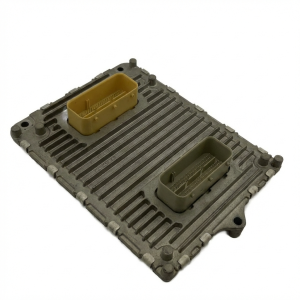
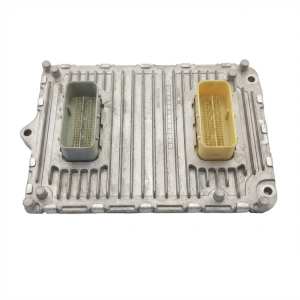
New Aftermarket Parts Available
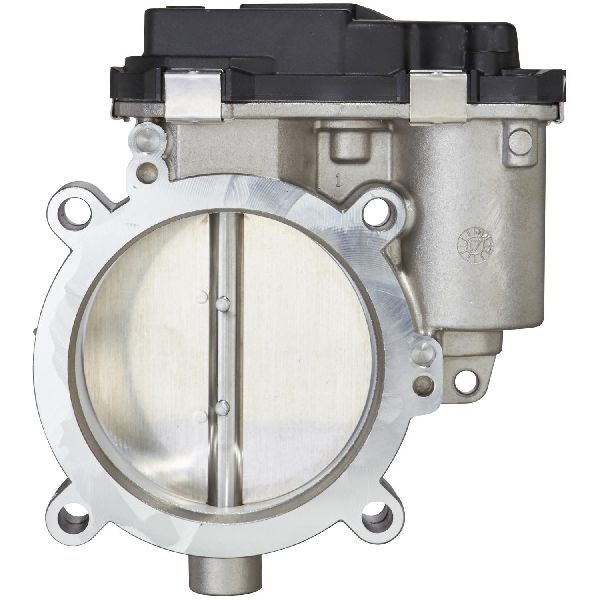



The information in this article is provided for general reference and educational purposes only. Vehicle specifications, procedures, and part compatibility can vary by production date, trim level, and region. Always consult your vehicle's factory service manual and verify part numbers before purchasing or performing repairs. Safety-critical components such as airbags, seat belts, and braking systems should be installed by a qualified professional.
- Dodge CHARGER:
- 🧭 Diagnostic Flowchart
- 🎬 Helpful Videos
- 🛍️ Shop This Part
- What's Unique About the 2015-2020 Dodge CHARGER
- Symptoms You May Notice
- Most Likely Causes
- Rare But Worth Checking
- Diagnosis Steps
- Parts You'll Likely Need
- Related Codes That Often Appear With This One
- Technical Service Bulletins (TSBs) & Recalls
- Platform-Specific Known Issues
- Mechanic-Grade Diagnostic Values
- Scan Tool Commands That Help
- Wiring & Ground Locations
- Real Owner Repair Stories
- "I Checked Everything" — The Actual Cause
- OEM Part Supersession History
- Model Year Variations Within This Range
- 🎟️ Get 5% Off