

P2172 on 2013-2015 Dodge Dart: High Airflow/Vacuum Leak Causes and Fixes
On a 2013-2015 Dodge Dart, code P2172 is most often caused by a vacuum leak from a cracked hose, faulty intake manifold gasket, or a bad PCV valve. A PCM software update may also be required. Expect to pay $100-$400 for diagnosis and repair at a shop.
- For a 2013-2015 Dodge Dart, P2172 is most likely a vacuum leak or an issue requiring a PCM software update.
- Before starting any physical repairs, check with a Dodge dealer to see if your vehicle needs the software update specified in TSBs #18-022-17 or #18-023-16.
- The most common physical causes are vacuum leaks from hoses, the intake manifold gasket, or a stuck-open purge valve.
- A smoke test is the most reliable method for locating hard-to-find vacuum leaks.
- Do not immediately replace the expensive throttle body; it is more likely that a cheaper component or a software update is the root cause.
What's Unique About the 2013-2015 Dodge DART

For the 2013-2015 Dodge Dart, particularly those with the 2.4L Tigershark engine, code P2172 is a well-documented issue frequently addressed by manufacturer Technical Service Bulletins (TSBs). These TSBs often recommend a PCM software update to adjust the sensitivity of the diagnostic monitors, which could falsely trigger the code. However, this doesn't rule out physical causes. Owners on forums and mechanics frequently report finding actual vacuum leaks, especially a failed intake manifold gasket. Additionally, this engine is known for oil consumption, and some owners have reported the P2172 code appearing when the engine oil level is critically low.
Diagnostic Flowchart

Tap your situation to follow the diagnostic path that matches what you're seeing on this vehicle.
Symptoms You May Notice
- Check Engine Light is on
- Flashing electronic throttle control (ETC) or 'lightning bolt' light on the dash
- Engine stalling, especially when coming to a stop or when RPMs drop below 1000
- Rough, surging, or unstable idle
- Lack of power or no throttle response
- Vehicle enters 'limp mode' with severely reduced power
- Audible hissing or sucking sound from the engine bay, indicating a vacuum leak
- Replacing the throttle body when the issue is a simple vacuum leak (like a cracked hose or intake gasket) or only requires a PCM software update.
- Replacing oxygen sensors. A vacuum leak creates a lean condition, which can trigger O2 sensor codes, but the sensors are merely reporting the problem, they are not the cause.
- Ignoring TSBs. Many owners and shops have spent significant time and money chasing physical parts when the primary fix was a software reflash from the dealer.
Most Likely Causes

- Vacuum Leak (Intake Manifold Gasket, Hoses) 🔴 High Probability The 2.4L engine's plastic intake manifold and associated rubber/plastic hoses are susceptible to cracking from heat cycles. The intake manifold gasket is a particularly common failure point. Forum users and mechanics frequently pinpoint this as the root cause after performing a smoke test. A cracked PCV valve or hose is also a very common source.
How to confirm: Perform a smoke test. Introduce smoke into the intake system via a vacuum line and watch for where it escapes. Common leak points are the edges of the intake manifold where it meets the cylinder head, the throttle body gasket, and any vacuum hose connections. Alternatively, with the engine running, carefully spray short bursts of brake cleaner around suspected leak points. A sudden change in engine idle speed indicates you've found the leak.
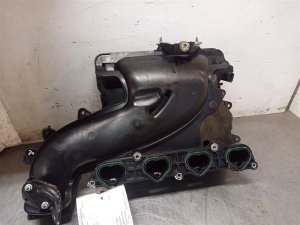
Typical fix: Replace the failed gasket or hose. The intake manifold must be removed to replace its gasket.
Est. part cost: $10-$150 - Powertrain Control Module (PCM) Software Update Needed 🔴 High Probability → Shop Engine Control Module (ECM) Chrysler/Dodge released multiple TSBs for the 2.4L engine in both the Dart and Chrysler 200, indicating the original PCM software was overly sensitive and could set P2172 incorrectly. The updates recalibrate the thresholds for detecting a high airflow condition.
How to confirm: A Dodge dealership or a qualified shop with a wiTECH scan tool must check your vehicle's VIN and current software calibration ID. They will compare it against the latest version referenced in TSBs #18-022-17 REV. A or #18-023-16 REV. B/C/D.
Typical fix: Reprogram or 'flash' the PCM with the updated software. This is a dealer or specialty shop-level repair.
Est. part cost: $0 (if covered by warranty/recall) - $200 - Faulty Purge Valve Solenoid 🟡 Medium Probability The EVAP purge valve can fail by sticking open, creating a constant vacuum leak that the PCM doesn't command. This is a common failure part on many modern vehicles and is often implicated alongside EVAP codes like P0441 or P0456.
How to confirm: With the engine off, disconnect the purge valve and try to blow through it. If air passes, it's stuck open and must be replaced. A scan tool can also command the valve to cycle while you monitor engine vacuum or fuel trim data for changes.
Typical fix: Replace the purge valve solenoid. It is typically an easy-to-access part in the engine bay.
Est. part cost: $25-$70 - Dirty or Faulty Throttle Body ⚪ Low Probability → Shop Fuel Injection Throttle Body Carbon buildup around the throttle plate can prevent it from closing completely, allowing excess air to enter at idle. In some cases, an aftermarket replacement throttle body may have an extra, uncapped vacuum nipple for other vehicle applications, creating a massive vacuum leak.
How to confirm: Remove the intake air tube and visually inspect the throttle plate and bore for black carbon deposits. If a replacement was recently installed, check for any open nipples on the throttle body housing that should be capped.
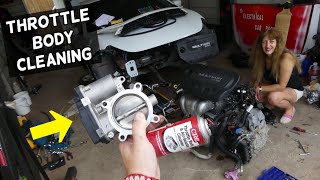
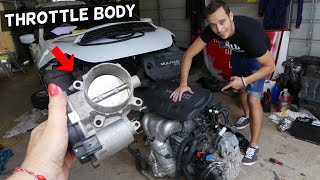
Typical fix: Clean the throttle body with a dedicated throttle body cleaner and a soft cloth. 🎬 Watch: A step-by-step guide to cleaning your Dodge Dart throttle body. If cleaning doesn't help, or if the unit is faulty, replace the entire throttle body assembly. 🎬 See this walkthrough on how to remove and replace the throttle body. A throttle relearn procedure is required after cleaning or replacement.
Est. part cost: $10 (cleaner) - $250 (new throttle body)
Rare But Worth Checking
- Low Engine Oil Level: The 2.4L Tigershark engine can consume oil. On vehicles equipped with MultiAir technology, critically low oil level and pressure can affect valve timing and lift, potentially leading to a variety of codes, including P2172, as reported by some owners. This should be one of the first and easiest checks.
- Faulty Manifold Absolute Pressure (MAP) Sensor: → Shop Manifold Absolute Pressure Sensor A failing MAP sensor can send incorrect pressure readings to the PCM, making the computer believe there is a vacuum leak when there isn't one. This will usually be accompanied by other MAP sensor-specific codes.
- Cracked PCV Valve or Hose: → Shop PCV Valve The Positive Crankcase Ventilation (PCV) system is a common source of vacuum leaks. The valve itself or the hose connecting it to the intake manifold can crack or collapse, creating a significant unmetered air leak.
Diagnosis Steps
- Check Engine Oil Level: Before any other step, verify the engine oil is at the proper level. Low oil can cause various issues on the 2.4L MultiAir engine.
- Check for TSBs: Call a Dodge dealership with your VIN. Ask if TSB #18-022-17 REV. A or #18-023-16 (and its revisions) are open for your vehicle. A PCM reflash might be the primary, and simplest, fix.
- Scan for Other Codes: Use an OBD-II scanner to check for any other codes. Codes for the EVAP system (P0456, P0441), MAP sensor, or lean conditions (P0171) provide strong clues.
- Perform a Smoke Test: This is the most effective way to find a vacuum leak. Introduce smoke into the intake system. Watch for smoke escaping from the intake manifold gasket, PCV hoses, brake booster line, or the throttle body itself.
- Inspect for Obvious Leaks: Visually inspect all vacuum hoses connected to the intake manifold for cracks, breaks, or loose connections. Pay close attention to the PCV hose and the brake booster hose.
- Test the Purge Valve: Disconnect the electrical connector and the hose leading from the valve to the intake manifold. With the engine running, check for suction at the valve's port. There should be no suction at idle. If there is, the valve is stuck open and needs replacement.
- Inspect and Clean the Throttle Body: Remove the air intake duct and inspect the throttle body for heavy carbon buildup. If dirty, clean it using throttle body cleaner and a rag. Check for any uncapped ports if it's an aftermarket unit.
- Perform Throttle Relearn: After cleaning or replacing the throttle body, a relearn procedure is necessary. A common manual method is: Turn ignition to 'ON' (engine off). Wait for dash lights to settle. Slowly press the accelerator pedal to the floor and slowly release it. Turn ignition 'OFF'. Start the engine and let it idle for several minutes to recalibrate.
- Check MAP Sensor Data: Using a scan tool with live data, monitor the MAP sensor reading at idle and compare it to a known good value for your engine and altitude. An erratic or out-of-spec reading could indicate a faulty sensor.
Parts You'll Likely Need
- Intake Manifold Gasket
Related Codes That Often Appear With This One
- P0456 — EVAP System Small Leak. Both codes can be caused by vacuum leaks or a faulty purge valve. They are listed together in TSB #18-022-17 REV. A and other related bulletins.
- P1D73 — AGS (Active Grille Shutter) Performance. This code is also listed in the same TSBs, suggesting a common electronic module or software-related root cause that is fixed with a PCM flash.
- U0140 — Lost Communication With Body Control Module. Its presence with P2172 in TSBs points towards a broader electronic module communication or software update issue.
- P0441 — Evap Purge System Performance. Directly related to the purge valve system, which can cause a vacuum leak if it fails in the open position.
- P2173 — Throttle Actuator Control System - High Air Flow Detected. This is a similar code, often triggered by the same vacuum leak conditions.
Technical Service Bulletins (TSBs) & Recalls

- 18-022-17 REV. A: Flash: Powertrain Diagnostic and System Improvements, lists P2172 as a code addressed by a PCM software update.
- 18-023-16 REV. B: Involves reprogramming the PCM for various DTCs including P2172 on 2.4L engines.
Platform-Specific Known Issues
- TSB #18-022-17 REV. A and #18-023-16 REV. B from Chrysler specifically address P2172 on 2013-2015 Darts (and other vehicles) with the 2.4L engine. The fix involves a PCM software update to correct over-sensitive diagnostics and improve idle stability.
Mechanic-Grade Diagnostic Values
- MAP Sensor Signal Voltage (Key On, Engine Off) — expected: ~4.5 V. Failure: Voltage significantly lower or higher than ~4.5V indicates a potential sensor or wiring issue. This reading reflects atmospheric pressure.
- MAP Sensor Signal Voltage (Engine Idling) — expected: 1.0 - 2.0 V. Failure: A voltage higher than this range at idle suggests a vacuum leak (less vacuum in the manifold).
- MAP Sensor 5V Reference — expected: ~5.0 V. Failure: A reading other than ~5.0V points to a wiring problem or a fault in the PCM.
- Short Term & Long Term Fuel Trims (STFT/LTFT) at Idle — expected: Close to 0% (ideally within +/- 5%). Failure: High positive fuel trims (e.g., > +10%) indicate the PCM is adding fuel to compensate for excess unmetered air, a classic sign of a vacuum leak.
Scan Tool Commands That Help
- wiTECH or equivalent professional scanner: Live Data Viewer (MAP, TPS, Fuel Trims) — Essential for diagnosing P2172. Use it to watch MAP sensor voltage, throttle position percentage, and short/long term fuel trims at idle and under throttle. High positive fuel trims at idle that decrease as RPMs rise strongly suggest a vacuum leak.
- wiTECH or equivalent professional scanner: Throttle Actuator Command Test — To verify if the throttle body is responding correctly to PCM commands. A sluggish or non-responsive test can indicate a failing throttle body, but this is less common than a vacuum leak for P2172.
Wiring & Ground Locations
- Engine to Chassis Ground — On the passenger side of the engine, a ground strap connects from the engine to the strut tower area.. While not a direct cause of P2172, a corroded or loose main engine ground can cause a host of bizarre electrical issues, including erratic sensor readings that could potentially confuse the PCM. Ensuring this ground is clean and tight is a good preventative measure for any electrical diagnosis.
- Battery to Chassis Ground — The main negative battery cable grounds to the chassis behind the driver's side wheel well area.. Corrosion at this primary ground point is a known issue on the Dart and can lead to no-start conditions and widespread electrical faults. A stable voltage supply and ground are critical for accurate sensor readings; an unstable ground could contribute to incorrect data that might trigger fault codes.
- G103 / G109 — Ground points located on the left side of the engine compartment, on or near the wheel well.. These are common grounding points for various engine compartment components, including potentially the PCM or related sensors. A wiring diagram indicates the Powertrain Control Module utilizes these grounds. A fault at these locations could interrupt proper sensor signals.
Real Owner Repair Stories
- Reddit user /u/FrancoDad on r/dodgedart (Dodge Dart, year/engine not specified but in context of 2.4L oil consumption discussion) — Stalling at low RPMs (below 1000), P2172 code present.
❌ Tried (didn't work) Checking oil level (was low, but not the root cause of the code), Considering throttle body/sensor replacement
✅ What actually fixed it The user reported a similar problem on their car was ultimately a vacuum leak at the intake manifold. - Reddit user /u/sav3370 on r/dodgedart (2014 Dodge Dart) — Battery light would randomly come on, car would not start and required a jump.
❌ Tried (didn't work) Jumping the car (temporary fix)
✅ What actually fixed it A corroded ground wire was diagnosed and fixed by a shop for under $120.
OEM Part Supersession History
Mopar 4892962AA→Unknown, but multiple revisions exist.— The intake manifold gasket for the 2.4L engine is a very common failure point. While a direct supersession chain isn't published in public sources, the existence of aftermarket gaskets specifically for the 2013-2016 Dart 2.4L suggests high demand due to OEM failure.
Model Year Variations Within This Range
- 2014-2016: For the 2014 model year, the 2.4L Tigershark engine became standard on the SXT, Limited, and GT trims, whereas it was only on the GT in 2013. The base SE trim retained the 2.0L engine. This is important because P2172 is most prevalent and well-documented on the 2.4L engine.
Helpful Videos
Used OEM Parts in Stock
New Aftermarket Parts Available


The information in this article is provided for general reference and educational purposes only. Vehicle specifications, procedures, and part compatibility can vary by production date, trim level, and region. Always consult your vehicle's factory service manual and verify part numbers before purchasing or performing repairs. Safety-critical components such as airbags, seat belts, and braking systems should be installed by a qualified professional.
- Dodge DART:
- 🧭 Diagnostic Flowchart
- 🎬 Helpful Videos
- 🛍️ Shop This Part
- What's Unique About the 2013-2015 Dodge DART
- Symptoms You May Notice
- Most Likely Causes
- Rare But Worth Checking
- Diagnosis Steps
- Parts You'll Likely Need
- Related Codes That Often Appear With This One
- Technical Service Bulletins (TSBs) & Recalls
- Platform-Specific Known Issues
- Mechanic-Grade Diagnostic Values
- Scan Tool Commands That Help
- Wiring & Ground Locations
- Real Owner Repair Stories
- OEM Part Supersession History
- Model Year Variations Within This Range
- 🎟️ Get 5% Off