

P2172 on 2003-2008 Dodge Ram 1500 5.7L Hemi: High Airflow & Vacuum Leak Fixes
P2172 on a 3rd Gen Ram 1500 Hemi almost always means a large vacuum leak. The most common cause is a cracked plastic intake manifold or a bad intake gasket. A smoke test is the best way to find the leak before replacing any parts. Do not immediately replace the throttle body, as it is rarely the cause.
- P2172 means your truck has a large vacuum leak and is unsafe to drive due to potential stalling and limp mode.
- The most likely cause by far is a cracked plastic intake manifold; confirm with a smoke test before buying parts.
- Do not misdiagnose this as a bad throttle body, which is an expensive and unlikely fix.
- Check simple items like the PCV valve and all connected vacuum hoses first.
What's Unique About the 2003-2008 Dodge Ram 1500
The 5.7L Hemi engine in this generation (2003-2008) uses a plastic intake manifold. While lightweight and efficient, this material can become brittle with age and repeated heat cycles, making it prone to cracking. This specific failure is a very common cause for P2172 on this platform, often more so than simple vacuum hose failures. A YouTube video clearly demonstrates a smoke test where smoke billows from the body of the intake manifold on a 2004 Ram, confirming this failure mode. 🎬 Watch: See a smoke test pinpoint a cracked intake manifold. The code's logic is even noted in service manuals as being intended to limit engine speed if such a large crack occurs.
Symptoms You May Notice
- Check Engine Light is on
- Flashing Electronic Throttle Control (ETC) light (red lightning bolt symbol)
- Engine goes into 'limp mode' with drastically reduced power and poor throttle response
- Rough, erratic, or very high idle speed
- Engine may stall, especially when coming to a stop
- Loud hissing or sucking sound from the engine bay
- Hard brake pedal (if the brake booster or its hose is the source of the leak)
- Replacing the throttle body. This is an expensive part and is rarely the cause of P2172. The issue is almost always unmetered air (a vacuum leak), not a problem with the throttle itself.
- Replacing the accelerator pedal position sensor (APPS). This sensor relates to driver input, not the detection of excess air in the manifold.
Most Likely Causes
- Cracked Intake Manifold or Failed Gasket 🔴 High Probability → Shop Engine Intake Manifold The stock 5.7L Hemi intake manifold is made of plastic, which can develop cracks over time due to heat and vibration, leading to a massive vacuum leak. This is the most widely reported cause in forums and repair videos.
How to confirm: Perform a smoke test. Introduce smoke into the intake system via a vacuum port (like the brake booster line) and look for smoke emerging from the body of the intake manifold or around its sealing edges. A visual inspection may reveal cracks, but they are often hidden on the underside.
Typical fix: Replace the intake manifold and the intake manifold gaskets. The plastic manifold itself is not repairable. 🎬 See this step-by-step guide on replacing the intake manifold. The OEM part number for many 2003-2005 models is 53032774AA.
Est. part cost: $150-$400 - Failed PCV Valve or Hose 🟡 Medium Probability → Shop PCV Valve The PCV (Positive Crankcase Ventilation) hoses are rubber and can become brittle and crack. The valve itself can also stick open, creating a constant vacuum leak.
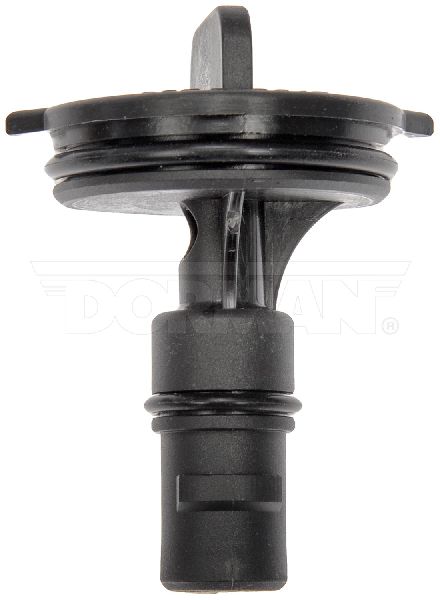
How to confirm: Visually inspect the PCV valve and its hoses for cracks or breaks. The valve is typically located on the intake manifold. Remove the valve and shake it; if it doesn't rattle, it is likely stuck and should be replaced. 🎬 Watch: How to quickly replace a faulty PCV valve.
Typical fix: Replace the PCV valve and any damaged rubber hoses. A common Mopar part number for the PCV valve is 53032940AB.
Est. part cost: $15-$50 - Leaking Power Brake Booster or Vacuum Hose ⚪ Low Probability → Shop Power Brake Booster The large vacuum hose going to the brake booster can crack, or the diaphragm inside the booster can rupture, causing a very large vacuum leak.
How to confirm: Listen for a hissing sound near the firewall or brake pedal. With the engine off, pump the brake pedal several times to deplete vacuum, then start the engine while holding the pedal down. If the pedal is hard and does not sink slightly, the booster or its line is likely leaking.
Typical fix: Replace the brake booster vacuum hose or the power brake booster itself.
Est. part cost: $20-$150
Rare But Worth Checking
- Faulty Manifold Absolute Pressure (MAP) Sensor: → Shop Manifold Absolute Pressure Sensor While a vacuum leak is far more likely, a faulty MAP sensor can incorrectly report airflow to the PCM, triggering P2172. This is worth considering if a smoke test reveals no leaks. Some owners have found oil residue on the MAP sensor causing issues.
- Dirty or Binding Throttle Body: → Shop Fuel Injection Throttle Body Heavy carbon buildup can prevent the throttle plate from closing fully, allowing excess air to enter. While this usually throws other codes, it's a possibility.
- Broken Valve Spring / Bent Pushrod: In a rare case documented on RamForum.com, a user with code P2172 discovered the cause was not a vacuum leak but a broken exhaust valve spring on cylinder #6, which also bent the pushrod. This is an internal engine mechanical failure.
Diagnosis Steps
- Check for other codes. If codes for the MAP sensor (P0107, P0108), throttle position sensor, or fuel system are present, diagnose them first.
- Perform a thorough visual inspection. Look closely at all vacuum lines connected to the intake manifold, especially the PCV hose and the large hose going to the brake booster. Check for obvious cracks, breaks, or disconnections.
- Conduct a smoke test. This is the most effective way to find the leak. Introduce smoke into the intake system and watch for where it escapes. Common areas are the intake manifold body, intake gaskets, PCV hoses, or the brake booster line.
- If a leak is found, repair it. Replace the cracked component (e.g., intake manifold, hose) and clear the codes. Verify the repair by driving the vehicle.
- If no leaks are found with a smoke test, inspect the throttle body for heavy carbon buildup that could prevent the plate from closing.
- If no leaks or throttle body issues are found, investigate the MAP sensor. Check its wiring and consider testing the sensor's output voltage against specifications. Check for oil contamination on the sensor tip.
Parts You'll Likely Need
- Intake Manifold
(OEM #53032774AA (for 2003-2005 models, check specific application))— The original plastic manifold is the most common point of failure, developing cracks that cause the large vacuum leak responsible for P2172.
Trusted brands: Mopar, Dorman
OEM price range: $300-$500
Aftermarket price range: $150-$350 - Intake Manifold Gasket Set — These must be replaced anytime the intake manifold is removed. They can also fail on their own, causing a vacuum leak at the cylinder head surface.
Trusted brands: Fel-Pro, Mahle, Mopar
OEM price range: $40-$70
Aftermarket price range: $20-$40 - PCV Valve
(OEM #53032940AB)— A cheap and easy-to-replace part that can stick open, causing a significant and often overlooked vacuum leak.
Trusted brands: Mopar, Standard Motor Products
OEM price range: $15-$30
Aftermarket price range: $5-$15
Related Codes That Often Appear With This One
- P0507 — This code for 'Idle Air Control System RPM Higher Than Expected' is a direct result of the extra air from the vacuum leak causing the engine idle to be too high.
- P0171 — 'System Too Lean (Bank 1)' can occur because the unmetered air creates a lean air/fuel mixture.
- P0174 — 'System Too Lean (Bank 2)' can occur for the same reason as P0171, indicating the vacuum leak is affecting both sides of the engine.
Technical Service Bulletins (TSBs) & Recalls
- No TSBs directly matching P2172 were found for the 2003-2008 model year range. Service manuals for later models note that the code is specifically enabled on engines with plastic intake manifolds to detect large cracks.
Mechanic-Grade Diagnostic Values
- Throttle Position Sensor (TPS) 5-Volt Supply — expected: 4.9 to 5.1 Volts. Failure: Voltage outside this range indicates a problem with the PCM or wiring.
- Ground Circuit Resistance — expected: Less than 1.0 ohm. Failure: Resistance higher than 1.0 ohm indicates a poor ground connection, which can cause erratic sensor behavior.
- TPS Signal Circuit Resistance to Ground — expected: Greater than 100 Ohms. Failure: Resistance below 100 Ohms indicates a short to ground in the signal wire.
Scan Tool Commands That Help
- DRB IIIt or equivalent professional scan tool: ETC Learn (Electronic Throttle Control Learn) — This function must be performed after replacing the throttle body, and is highly recommended after cleaning it or disconnecting the battery for an extended period. It allows the PCM to relearn the throttle plate's closed, open, and intermediate positions. Failure to do so can cause idle issues or trigger false codes.
Wiring & Ground Locations
- MAP Sensor Signal at PCM — On the Powertrain Control Module (PCM) connector. Pin location can vary by year. On 2003-2007 trucks, it is often Pin 32 of the C2 (Blue) connector. Other diagrams show Pin 50. Always verify with a vehicle-specific diagram.. This is the wire that carries the vacuum/pressure signal to the PCM. A damaged wire or poor connection here can cause the PCM to receive an incorrect signal, leading to a false P2172 code.
- Engine Ground Strap — There is a critical ground strap located on the rear of the driver's side cylinder head, connecting to the firewall.. A loose or corroded main engine ground can cause fluctuating voltages and unstable sensor readings, including the MAP and TPS sensors, potentially tricking the PCM into setting a P2172 code.
- PCM Harness at Passenger Wheel Well — The main wiring harness containing PCM wires routes through the passenger side inner fender/wheel well area.. This area is vulnerable to damage from a tire blowout, which can rip wires from the PCM connectors, causing various codes. While the cited example caused a transmission code, damage to MAP or TPS sensor wiring in the same bundle is possible.
Real Owner Repair Stories
- YouTube video by a dealership technician (Vehicle with a recently replaced (likely aftermarket) intake manifold.) — High idle and code P2172 immediately after intake manifold replacement by another shop.
❌ Tried (didn't work) The previous shop replaced the intake manifold but failed to resolve the code.
✅ What actually fixed it The technician found an unused vacuum port on the new intake manifold that had been left uncapped. Capping the open port immediately fixed the massive vacuum leak and allowed the code to be cleared.
"I Checked Everything" — The Actual Cause
- A ruptured internal diaphragm in the power brake booster. This causes a large vacuum leak when the brakes are applied, but it may not show up on a low-pressure smoke test because the leak is internal to the booster canister. The best test is to listen for a hissing sound when pressing the brake pedal and check for a hard pedal that doesn't sink when the engine is started.
- Lost Electronic Throttle Control (ETC) calibration. If the battery was recently disconnected or died, the PCM can lose its learned values for the throttle plate position. This can cause the PCM to misinterpret airflow on startup and set P2172. This is a software/calibration issue, not a physical leak.
OEM Part Supersession History
53032774AA→N/A— This is the commonly cited OEM part number for the 5.7L Hemi intake manifold for early models in this range (approx. 2003-2005).
Heads up: Extreme caution is advised. This part number has also been incorrectly listed by some vendors for the 4.7L engine. Always verify the correct part number for your specific VIN before ordering, as variations exist.
Model Year Variations Within This Range
- 2006-2008: These model years feature the Multi-Displacement System (MDS), which deactivates four cylinders under light load. This adds complexity with MDS solenoids, wiring, and oil passages not present on 2003-2005 models. While not a common cause of P2172, a failure in the MDS system could potentially create internal vacuum/pressure irregularities.
- 2003 only: The 2003 model year is noted by owners as being an 'odd ball' that came from the factory with a single catalytic converter setup, whereas 2004 and later models have dual catalytic converters. This primarily affects the Y-pipe and exhaust system configuration.
Diagnostic Flowchart
Other Known Issues on This Vehicle
Issues unrelated to this code that are worth knowing about as an owner of this generation:
- MDS Lifter and Camshaft Failure ('Hemi Tick') 🔴 High — Common on engines with the Multi-Displacement System (MDS) introduced in 2006, often occurring after 80,000 miles. Failure of the roller lifters can destroy the camshaft.
- Broken Exhaust Manifold Bolts 🟠 Medium — Extremely common. The steel bolts rust and break off in the aluminum cylinder heads, causing an exhaust leak and a ticking noise, especially when cold.
- Cracked Plastic Dashboard 🟡 Low — Very widespread issue on 2002-2005 models where the dashboard material becomes brittle and large pieces crack and break away.
- Totally Integrated Power Module (TIPM) Failure 🟠 Medium — Affects 2006-2008 models. The TIPM (fuse box) can fail internally, causing a wide range of bizarre electrical issues like wipers, fuel pump, horn, or lights acting erratically or not working at all. (Ref: While recalls existed for other Chrysler vehicles, the Ram did not have a specific recall for this part, though some software updates were issued.)
- Water Pump Failure 🟠 Medium — Water pumps are a known weak point and can fail prematurely, sometimes under 80,000 miles. Symptoms include coolant leaks from the weep hole, a grinding/whining noise, and overheating.
- Dropped Valve Seats 🔴 High — A known risk on 2003-2008 Hemis, especially if the engine overheats. The valve seat can dislodge from the cylinder head, causing catastrophic engine damage.
Used vs. New Parts: Buying Guide for This Vehicle
When a used part is the smart pick: For this specific repair, using used parts is generally not recommended for the primary culprit (intake manifold). A used throttle body from a verified low-mileage donor vehicle could be a cost-effective option if the original is confirmed to be electronically faulty.
Donor-vehicle mileage cap: roughly under 80000 miles for the part to have meaningful remaining life.
What to inspect on the donor part:
- For a throttle body: check for a clean throttle plate with minimal carbon, smooth plate movement with no binding, and an undamaged electrical connector.
- For any part: ask for the donor vehicle's VIN to check its history and confirm compatibility.
- Avoid parts from vehicles that show signs of sitting for long periods outdoors (heavy corrosion, water damage).
OEM-only on this vehicle (don't cheap out):
- Intake Manifold: Given the extremely high failure rate of the original plastic design, installing a used OEM manifold carries a very high risk of the same failure occurring shortly after. A new OEM part is the most reliable choice.
Aftermarket brands forum-validated for this vehicle:
- Fel-Pro, Mahle: Widely trusted for intake manifold gaskets.
Brands owners have reported issues with on this vehicle:
- Dorman Intake Manifold (615-900): While a popular and available option, at least one owner review reported significant vacuum leaks at the seams where the plastic halves are joined together right out of the box, requiring additional sealing. Purchase with caution and be prepared to pressure/smoke test it before installation.
Real Owner Stories
Aggregated from forums and TSBs cited above. Mileages and costs reflect what owners reported in those sources.
2004 Dodge Ram 1500 5.7L
Symptoms: Owner experienced code P2172, which was diagnosed as a large vacuum leak.
What fixed it: The leak was found coming from a cracked intake manifold, which was replaced.
Source hint: YouTube: P2172 2004 Dodge ram 1500 high airflow or vacuum leak detected, FOUND WITH OUR SMOKE MACHINE! (URL: https://www.youtube.com/watch?v=s_wdeO-9-jA)
2003-2008 Dodge Ram 1500 5.7L — 234000 miles
Symptoms: Owner reported getting code P2172 at high mileage and initially suspected the common intake manifold failure.
What fixed it: The actual cause was discovered to be a broken exhaust valve spring and a bent pushrod, representing a rare but possible mechanical failure.
Source hint: RamForum.com: Thread 'P2172'
Related OBD-II Codes
Frequently Asked Questions
My 2004 Ram 1500 has the flashing lightning bolt light and code P2172. What is the most likely problem?
What is the best way to confirm the intake manifold is cracked on my Dodge Ram?
Is there a specific part number for the intake manifold I should look for to fix this?
I hear a loud hissing sound and my brake pedal feels hard. Is this related to the P2172 code?
Are there any official TSBs or recalls for code P2172 on the 2003-2008 Ram 1500?
My truck has a P2172, but I also have a code for the MAP sensor. Which should I fix first?
Do other Chrysler or Dodge vehicles with the 5.7L Hemi have this same issue with P2172?
Helpful Videos
We Have This Part in Stock



The information in this article is provided for general reference and educational purposes only. Vehicle specifications, procedures, and part compatibility can vary by production date, trim level, and region. Always consult your vehicle's factory service manual and verify part numbers before purchasing or performing repairs. Safety-critical components such as airbags, seat belts, and braking systems should be installed by a qualified professional.
- Dodge Ram 1500:
- 🧭 Diagnostic Flowchart
- 🎬 Helpful Videos
- 🛍️ Shop This Part
- What's Unique About the 2003-2008 Dodge Ram 1500
- Symptoms You May Notice
- Most Likely Causes
- Rare But Worth Checking
- Diagnosis Steps
- Parts You'll Likely Need
- Related Codes That Often Appear With This One
- Technical Service Bulletins (TSBs) & Recalls
- Mechanic-Grade Diagnostic Values
- Scan Tool Commands That Help
- Wiring & Ground Locations
- Real Owner Repair Stories
- "I Checked Everything" — The Actual Cause
- OEM Part Supersession History
- Model Year Variations Within This Range
- Other Known Issues on This Vehicle
- Used vs. New Parts: Buying Guide for This Vehicle
- Real Owner Stories
- 2004 Dodge Ram 1500 5.7L
- 2003-2008 Dodge Ram 1500 5.7L — 234000 miles
- Related OBD-II Codes
- Frequently Asked Questions
- 🎟️ Get 5% Off