

P2172 on 2012-2018 Ford Focus 2.0L: Sudden High Airflow Causes and Fixes
On a 2012-2018 Ford Focus, code P2172 is almost always caused by a stuck-open canister purge valve, a known issue covered by Ford Safety Recall 18S32. This failure creates a large vacuum leak, often triggering code P1450 as well. The part costs about $40-$70 and is an easy DIY replacement that resolves stalling, rough idle, and hard starting after refueling.
- The most likely cause of code P2172 on a 2012-2018 Ford Focus is a faulty canister purge valve.
- Before purchasing any parts, check if your vehicle is covered by Ford Safety Recall 18S32, which may entitle you to a free repair at a dealership.
- Symptoms like stalling after refueling, a rough idle, and an erratic fuel gauge are strong indicators of this specific purge valve issue.
- Replacing the canister purge valve is a simple and inexpensive DIY repair that can typically be done in under 30 minutes with basic tools.
What's Unique About the 2012-2018 Ford Focus
The 2012-2018 Ford Focus with the 2.0L GDI engine is highly susceptible to this specific code due to a widely documented failure of the canister purge valve (CPV). The problem was so prevalent that Ford issued a safety recall (18S32 / NHTSA 18V735) because a stuck-open CPV could create excessive vacuum in the fuel system. This vacuum can cause the plastic fuel tank to deform, leading to erratic fuel gauge readings and engine stalling, which increases the risk of a crash. The recall remedy involves reprogramming the PCM and, if necessary, replacing the purge valve, carbon canister, and fuel tank.
Symptoms You May Notice
- Engine stalling, especially when coming to a stop or at idle
- Rough or erratic idle
- Difficulty starting the engine, particularly after refueling
- Inaccurate or erratic fuel gauge readings
- Illuminated Check Engine Light
- A "whoosh" or suction sound when opening the gas cap due to vacuum in the tank.
- Replacing the throttle body assembly before checking the canister purge valve.
- Replacing the Mass Airflow (MAF) or Manifold Absolute Pressure (MAP) sensor without diagnosing a vacuum leak first.
Most Likely Causes
- Stuck-Open Canister Purge Valve (CPV) 🔴 High Probability This is a widely documented failure on 2012-2018 Focus models, leading to Ford Safety Recall 18S32. The valve fails internally and remains open, creating a constant, large vacuum leak from the EVAP system into the intake manifold. This is the most common cause for P2172, often accompanied by P1450.
How to confirm: With the engine idling, unplug the electrical connector from the purge valve. Disconnect the vapor line from the valve itself. Place your finger over the port on the valve; if you feel suction, the valve is stuck open and must be replaced. This is a definitive test for this common failure.
Typical fix: Replace the canister purge valve assembly. First, check with a Ford dealer or on the NHTSA website using your VIN to see if your vehicle is covered under recall 18S32 for a free repair. The recall involves a PCM software update and, if diagnostic trouble codes are present, replacement of the CPV and potentially the fuel tank and carbon canister.
Est. part cost: $40-$70
Rare But Worth Checking
- Other Vacuum Leaks: While the purge valve is the most common culprit, a cracked PCV hose or a failed intake manifold gasket can also cause unmetered air to enter the engine and trigger this code. These should be investigated if the purge valve is confirmed to be working correctly.
- Faulty Electronic Throttle Body: → Shop Fuel Injection Throttle Body In rare cases, a throttle body that is sticking or has a failing sensor can cause the PCM to misinterpret airflow, but this is much less common than the purge valve issue on this specific vehicle. Cleaning a dirty throttle body is a good first step before considering replacement.
Diagnosis Steps
- Check for Recalls: Contact a Ford dealership or use the NHTSA website with your VIN to see if your vehicle is eligible for a free repair under Safety Recall 18S32. This is the most critical first step.
- Scan for Codes: Confirm P2172 is present and check for other related codes like P1450 or P0171. The presence of P1450 strongly points to the purge valve.
- Test the Canister Purge Valve (CPV): Locate the CPV in the engine bay, near the top of the engine. With the engine running at idle, disconnect the EVAP line from the valve. If you feel vacuum suction from the valve's port, it is stuck open and needs to be replaced. This is a simple and definitive test.
- Inspect for Other Vacuum Leaks: If the CPV is not faulty, perform a visual inspection of all vacuum hoses, especially the PCV hoses and the intake manifold gasket area, for cracks or damage.
- Perform a Smoke Test: If no visual leaks are found, a smoke test is the most effective way to find the source of the unmetered air leak. Pressurize the intake system with smoke and look for any smoke escaping, which indicates a leak.
Parts You'll Likely Need
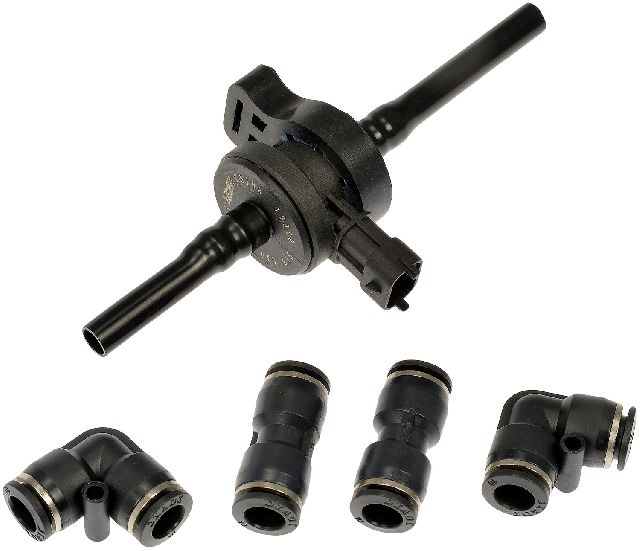
- Vapor Canister Purge Valve / Solenoid
(OEM #BV6Z-9D289-E)— This is the most common failure point that causes the P2172 code on this specific vehicle, as documented by a manufacturer recall. The original part number BV6Z-9D289-D has been superseded by BV6Z-9D289-E and other revisions like BV6Z-9D289-R.
Trusted brands: Motorcraft, Dorman
OEM price range: $65-$80
Aftermarket price range: $40-$60
Related Codes That Often Appear With This One
- P1450 — Stands for 'Unable to Bleed Up Fuel Tank Vacuum.' This code is frequently seen with P2172 because the stuck-open purge valve creates a constant vacuum in the fuel tank that the system cannot overcome.
- P0171 — Stands for 'System Too Lean (Bank 1).' This is a direct result of the unmetered air from the vacuum leak, which causes the PCM to detect a lean air/fuel mixture.
Technical Service Bulletins (TSBs) & Recalls
- 18S32 - Safety Recall for malfunctioning Canister Purge Valve (CPV) leading to fuel tank deformation and potential stalling.
- 19S22 - A follow-up recall to 18S32 for some vehicles where the initial PCM software update was not properly performed.
Platform-Specific Known Issues
- Ford Safety Recall 18S32 / NHTSA 18V735 was issued for the canister purge valve sticking open. This defect can cause excessive vacuum in the fuel tank, leading to deformation of the tank, inaccurate fuel gauge readings, and potential engine stalling. The official remedy involves a PCM software update to better detect the fault, and if codes are present, replacement of the CPV and potentially the fuel tank itself.
Mechanic-Grade Diagnostic Values
- Canister Purge Valve (CPV) Solenoid Resistance — expected: 15-38 Ohms (some sources state a tighter range of 20-30 Ohms).. Failure: An open circuit (infinite resistance), a short (near zero Ohms), or a reading significantly outside the expected range (e.g., over 50 Ohms) indicates a failed coil.
- Fuel Tank Pressure (FTP) Sensor Voltage (Key On, Engine Off) — expected: Approximately 2.6V to 2.65V at atmospheric pressure.. Failure: A reading that drops immediately upon starting the engine (while the purge valve is commanded closed) indicates a stuck-open purge valve is already pulling vacuum.
- Canister Purge Valve Connector Voltage (Power Pin) — expected: ~12V (Battery Voltage) with Key On, Engine Off.. Failure: No voltage at the harness connector points to a wiring, fuse, or PCM driver issue upstream of the valve.
Scan Tool Commands That Help
- Ford IDS (or equivalent high-end scan tool): Vapor Management Valve (Purge Valve) Command — This bidirectional control allows a technician to command the purge valve open and closed while monitoring Fuel Tank Pressure (FTP) sensor data. With the engine running and the valve commanded closed (off), the FTP voltage should remain steady. If the voltage drops (indicating vacuum), it confirms the valve is mechanically stuck open and not sealing, even when electrically commanded to.
Wiring & Ground Locations
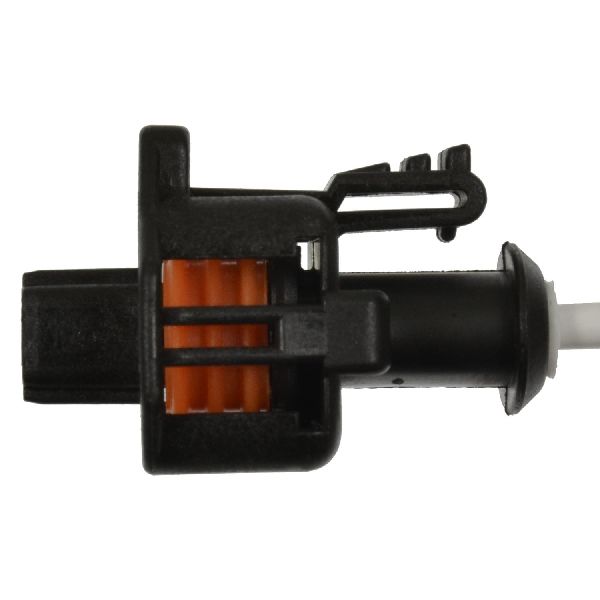
- Canister Purge Valve Connector — On the purge valve itself, located in the engine bay near the top of the engine, connected to the intake manifold.. This 2-pin connector provides power and the ground-side control signal from the PCM. One pin should have battery voltage (VPWR) with the key on, and the other is the control circuit. Damage or corrosion here can cause a P0443 (circuit code) but could also prevent a good valve from closing.
Real Owner Repair Stories
- AliExpress Product Review / Technical Write-up (2014 Ford Focus) — EVAP-related code (P0446)
❌ Tried (didn't work) Replacing the gas cap, Cleaning the charcoal canister (three times)
✅ What actually fixed it A mechanic tested the original purge valve's resistance and found it was 52 ohms, significantly higher than the 20-30 ohm spec. Replacing the purge valve with an OEM part permanently resolved the code. - Reddit user on r/FordFocus (2015 Ford Focus) — Check Engine Light for purge valve
❌ Tried (didn't work) Replacing the purge valve with a Ford OEM part under recall.
✅ What actually fixed it The issue returned after 6 months. The user replaced it a second time with an aftermarket part. This highlights that even new OEM parts can fail prematurely and this can be a recurring issue, not a one-time fix.
"I Checked Everything" — The Actual Cause
- A standard smoke test is often misapplied for this code on this vehicle. A smoke test is designed to find external leaks in the EVAP system (cracked hoses, bad seals). However, the P2172/P1450 codes on the Focus are typically caused by an *internal* leak where the purge valve is stuck open, allowing intake manifold vacuum to constantly pull on the fuel tank. A smoke test will not detect this internal fault. The correct definitive test is checking for vacuum at the valve's port when it should be closed (engine idling, connector unplugged).
OEM Part Supersession History
BV6Z-9D289-A, BV6Z-9D289-B→BV6Z-9D289-R— Revisions by the manufacturer to improve reliability and address the widespread failure.BV6Z-9D289-D→BV6Z-9D289-E— Manufacturer revision to improve part longevity.
Model Year Variations Within This Range
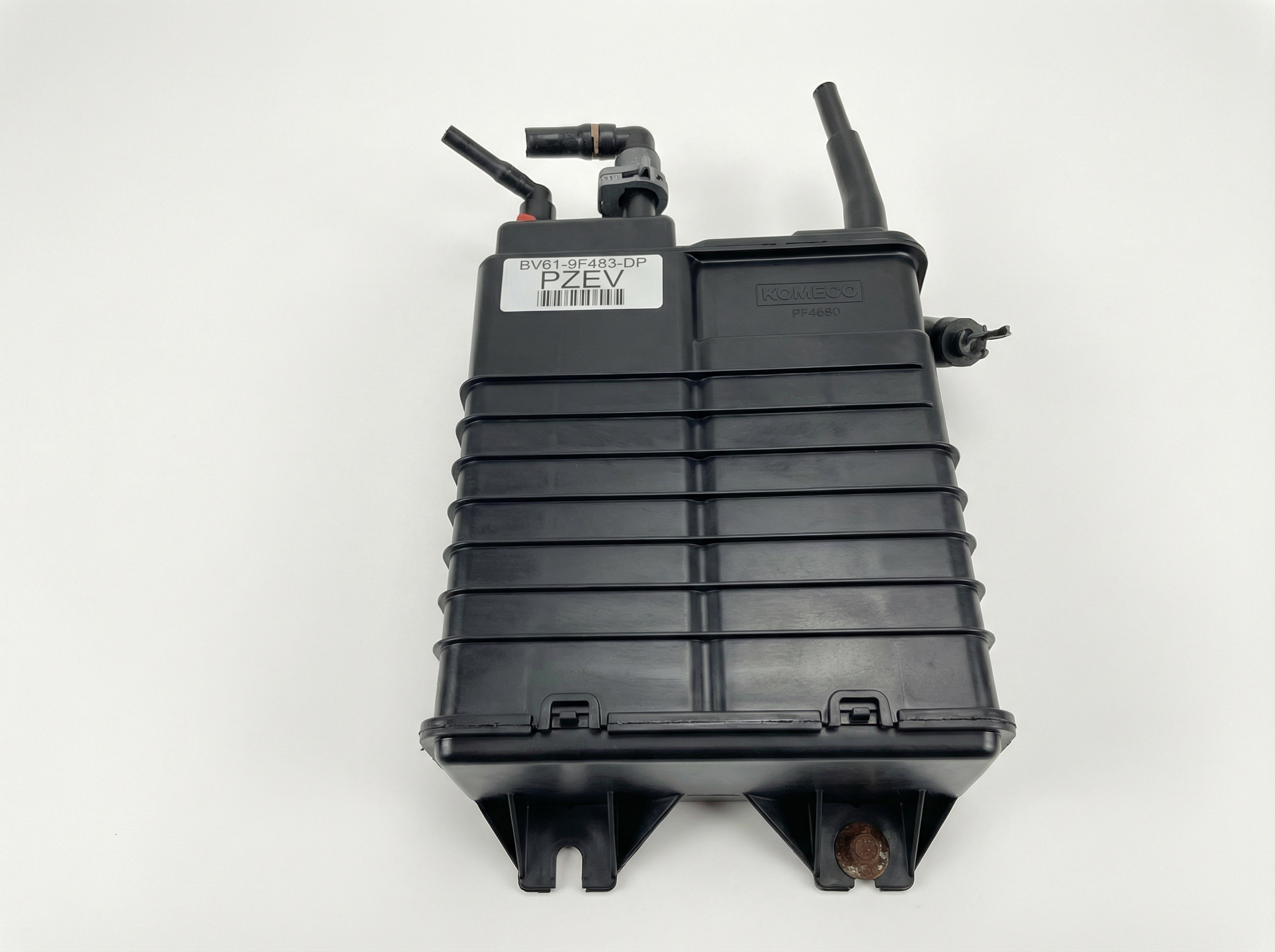
- 2012-2018: While the purge valve failure is common across all years, it is critical to distinguish between PZEV (Partial Zero Emission Vehicle) and Federal emissions systems if replacing other EVAP components like the charcoal canister. The canisters are not interchangeable. The vehicle's emissions sticker under the hood must be checked before ordering.
Diagnostic Flowchart
Other Known Issues on This Vehicle
Issues unrelated to this code that are worth knowing about as an owner of this generation:
- DPS6 PowerShift Transmission Failure 🔴 High — Extremely common across all model years (2012-2018). Issues include shuddering, hesitation, slipping, and complete transmission failure, often within 30,000-60,000 miles. (Ref: Multiple TSBs, warranty extensions, and class-action lawsuits.)
- Collapsing Passenger-Side Engine Mount 🟠 Medium — Very common failure. The hydraulic mount collapses, causing severe vibration at idle and clunking noises when shifting gears.
- Electronic Power Steering Rack Failure 🔴 High — A significant number of owners report a sudden and complete loss of power steering, often accompanied by a 'Power Steering Fault' message. This can occur at any mileage. (Ref: Common fault codes include U3000.)
Used vs. New Parts: Buying Guide for This Vehicle
When a used part is the smart pick: Never. Given the extremely high failure rate of this specific part, the low cost of a new aftermarket or OEM unit (typically $40-$70), and the safety risk of stalling, installing a used purge valve is strongly discouraged. The risk of getting a part that has already failed or is near failure is too high.
What to inspect on the donor part:
- Not applicable, do not buy this part used.
OEM-only on this vehicle (don't cheap out):
- While not strictly required, using an OEM Motorcraft part is often recommended by forum members due to potential quality control issues with some cheaper aftermarket brands. However, even OEM parts have been reported to fail.
Aftermarket brands forum-validated for this vehicle:
- Dorman is a widely available aftermarket alternative that is generally considered acceptable.
Brands owners have reported issues with on this vehicle:
- No-name, unbranded parts from online marketplaces may have a higher premature failure rate.
Real Owner Stories
Aggregated from forums and TSBs cited above. Mileages and costs reflect what owners reported in those sources.
2012-2018 Ford Focus
Symptoms: Check engine light came on with code P1450.
What fixed it: The owner took the vehicle to a dealer for the Ford purge valve recall service.
Cost: $0
Source hint: r/FordFocus post 'Ford Focus 2012-2018 purge valve recall. : r/FordFocus'
2013 Ford Focus — 110000 miles
Symptoms: Car failed to start repeatedly and would not idle after refilling the gas tank; check engine light was on.
What fixed it: Replacement of the canister purge valve (noted that the previous 19S22 recall work had already been performed but the valve failed again).
Source hint: CarComplaints.com report '2013 Ford Focus Fuel/Propulsion System Problems'
2012 Ford Focus
Symptoms: Hard start (cranks more than usual) and stalling, but with no check engine light present.
What fixed it: Replaced the vapor canister purge valve (Duralast PV965).
Cost: $50
Source hint: AutoZone Customer Review for '2012 Ford Focus Dorman OE FIX Vapor Canister Purge Valve'
2012 Ford Focus
Symptoms: Check engine light with code P144a and the gas tank appeared to be slightly caved in.
What fixed it: Replacing the purge valve; the light eventually turned off and the tank returned to its normal shape.
Source hint: r/MechanicAdvice post '2012 Ford Focus code P144a changed purge valve but light is still on. - Reddit'
Related OBD-II Codes
Frequently Asked Questions
Is my 2012-2018 Ford Focus covered under a recall for the P2172 code issues?
Why does my Ford Focus stall specifically after I fill up the gas tank?
I hear a 'whoosh' sound when I open my gas cap; is this related to P2172?
Can I test the purge valve myself before taking it to a dealer?
What specific part number do I need to fix the purge valve issue on my Focus?
Will the recall fix my inaccurate fuel gauge?
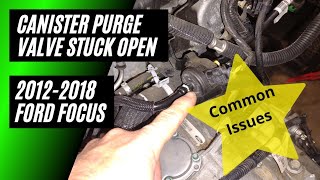
Helpful Videos


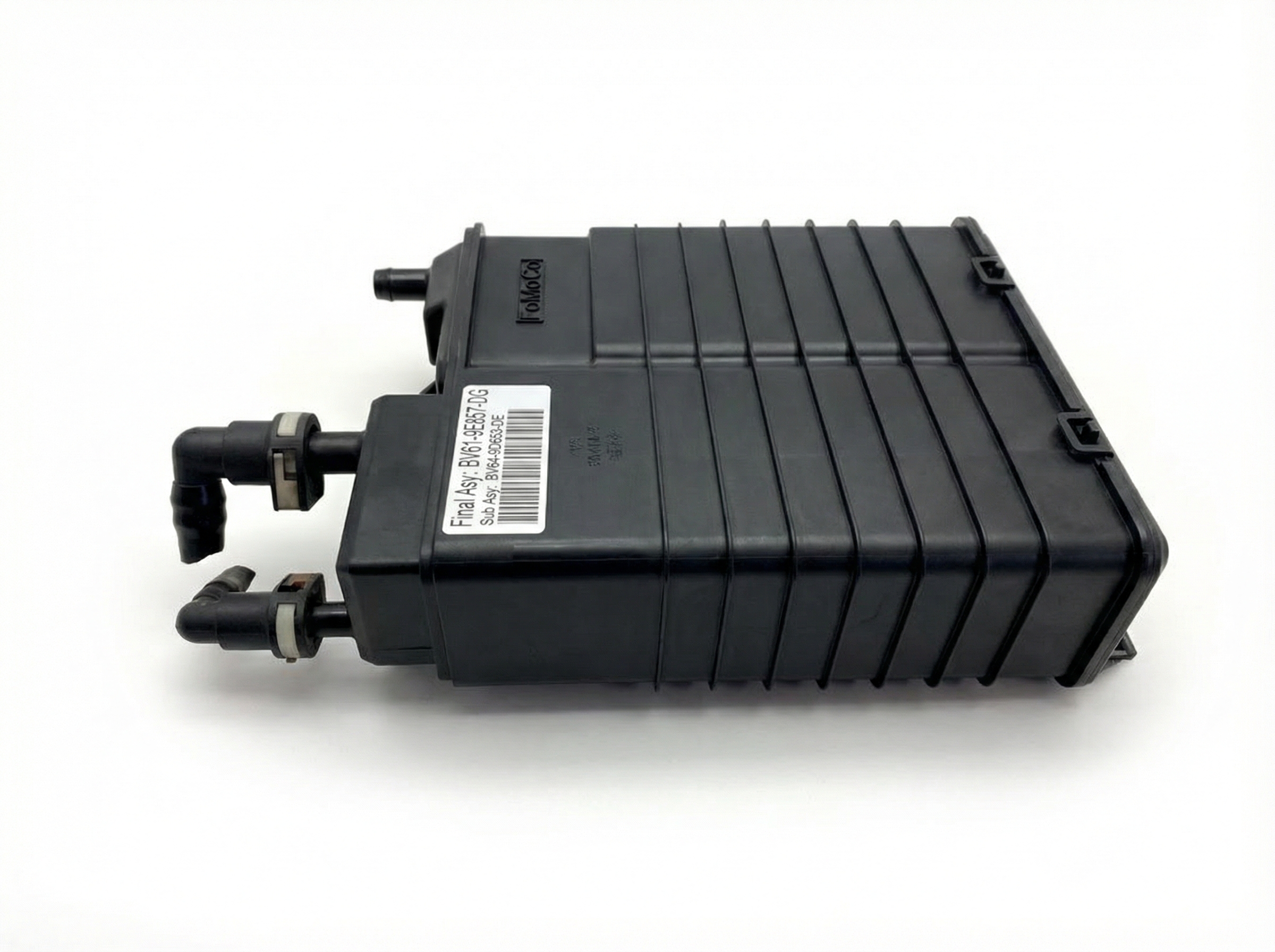
Used OEM Parts in Stock
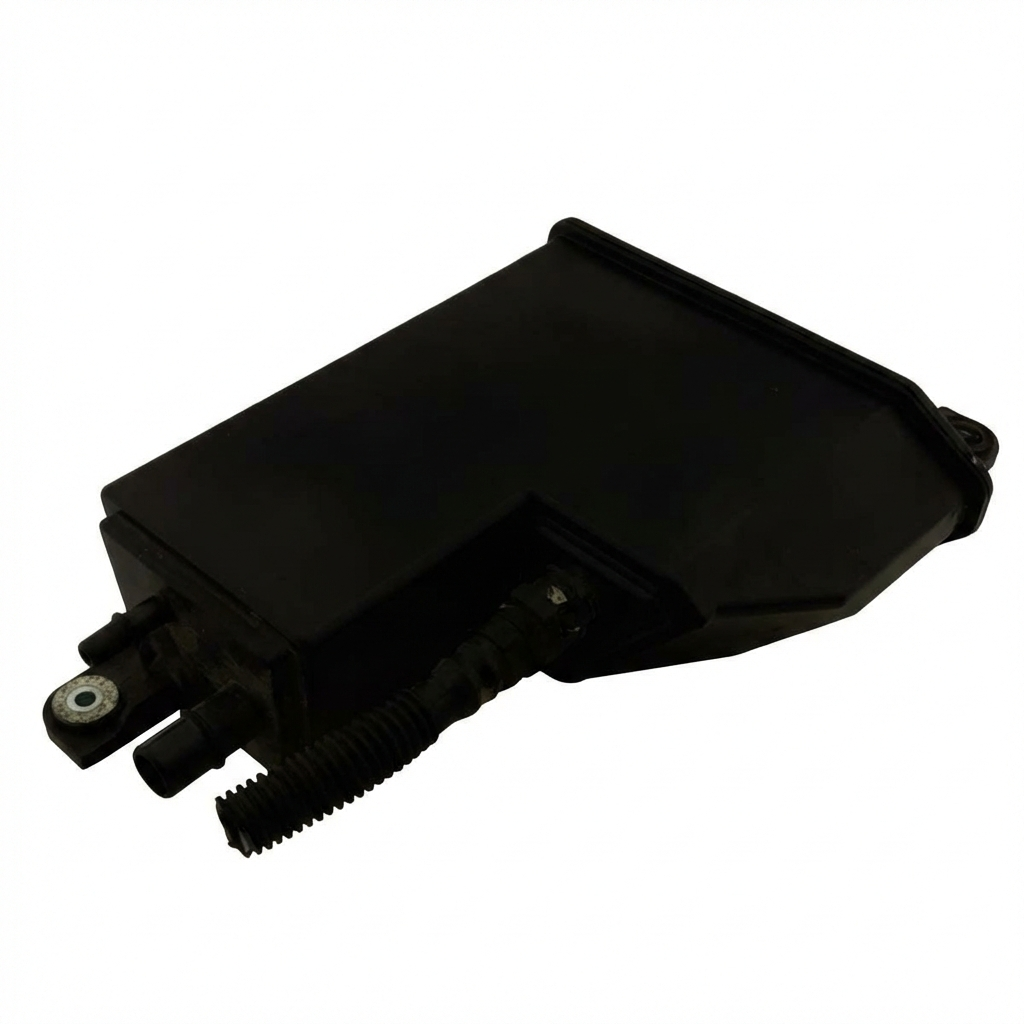
New Aftermarket Parts Available


The information in this article is provided for general reference and educational purposes only. Vehicle specifications, procedures, and part compatibility can vary by production date, trim level, and region. Always consult your vehicle's factory service manual and verify part numbers before purchasing or performing repairs. Safety-critical components such as airbags, seat belts, and braking systems should be installed by a qualified professional.
- Ford Focus:
- 🧭 Diagnostic Flowchart
- 🎬 Helpful Videos
- 🛍️ Shop This Part
- What's Unique About the 2012-2018 Ford Focus
- Symptoms You May Notice
- Most Likely Causes
- Rare But Worth Checking
- Diagnosis Steps
- Parts You'll Likely Need
- Related Codes That Often Appear With This One
- Technical Service Bulletins (TSBs) & Recalls
- Platform-Specific Known Issues
- Mechanic-Grade Diagnostic Values
- Scan Tool Commands That Help
- Wiring & Ground Locations
- Real Owner Repair Stories
- "I Checked Everything" — The Actual Cause
- OEM Part Supersession History
- Model Year Variations Within This Range
- Other Known Issues on This Vehicle
- Used vs. New Parts: Buying Guide for This Vehicle
- Real Owner Stories
- 2012-2018 Ford Focus
- 2013 Ford Focus — 110000 miles
- 2012 Ford Focus
- 2012 Ford Focus
- Related OBD-II Codes
- Frequently Asked Questions
- 🎟️ Get 5% Off