

P2172 on 2007-2021 Jeep Compass: High Airflow / Vacuum Leak Causes and Fixes
P2172 on a Jeep Compass most often indicates a vacuum leak from a cracked hose or failed intake manifold gasket, or a faulty electronic throttle body. A professional smoke test is the fastest way to find a leak. On some earlier models, particularly 2014-2015, a PCM software update is a very common and required fix, so TSBs should be checked first.
- P2172 means your engine is getting a large amount of unmetered air, most likely from a vacuum leak or a faulty throttle body.
- Before replacing parts, check if your Compass (especially 2014-2015 models) has an open TSB for a PCM software update, as this can be a simple fix.
- A smoke test is the fastest and most accurate way to locate hard-to-find vacuum leaks from cracked hoses or gaskets.
- Do not drive the vehicle extensively with this code, as it can stall unexpectedly, creating a safety hazard.
- Cleaning a dirty throttle body is a good first step, but if the internal electronics have failed, the entire unit will need to be replaced.
What's Unique About the 2007-2021 Jeep Compass
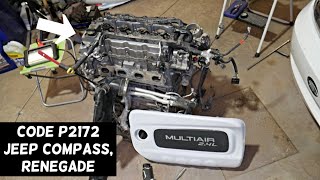
The 2.4L engines in the Jeep Compass, particularly the MultiAir variant in the second generation (2017-2021), are known for setting this code. While vacuum leaks are a common cause on most vehicles, these Jeep engines are also susceptible to issues with the electronic throttle body and, on earlier models, software glitches that can falsely trigger the P2172 code. It's crucial to check for applicable Technical Service Bulletins (TSBs) regarding a PCM software update before replacing any parts, especially on models from around 2014-2015, as this is a well-documented issue.
Generation note: This guide covers two generations of the Jeep Compass: - MK (2007-2017) with the 2.4L World engine. - MP (2017-2021) with the 2.4L MultiAir engine. While the causes are similar, the MP generation's MultiAir engine is noted to be particularly prone to this code. Additionally, specific TSBs regarding software updates primarily apply to the 2014-2015 model years, which are late in the MK generation but share engine architecture with later models.
Symptoms You May Notice
- Check Engine Light is on
- Engine may stall, especially when coming to a stop
- Rough or unstable idle
- Reduced engine power (Limp Mode)
- Hesitation or surging on acceleration
- Electronic Throttle Control (lightning bolt) warning light may be illuminated
- Poor transmission shifting performance
- High engine idle RPM
- Replacing oxygen (O2) sensors. O2 sensors will often report lean conditions as a result of the unmetered air, but they are reacting to the problem, not causing it.
Most Likely Causes
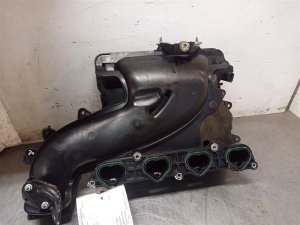
- Vacuum Leak 🔴 High Probability Plastic intake manifolds and various rubber/plastic vacuum hoses (PCV, brake booster) can become brittle and crack over time, leading to unmetered air entering the engine. The intake manifold gasket itself is a frequent failure point.
How to confirm: The most effective method is to have a professional perform a smoke test, which forces smoke into the intake system to reveal the source of any leaks. A visual inspection of all vacuum hoses (PCV, brake booster, etc.) and the air intake boot for cracks is also a good first step. Some mechanics will spray a flammable fluid like brake cleaner around suspected leak areas with the engine running; a change in engine idle indicates the leak's location.
Typical fix: Replace the cracked hose, leaking gasket (e.g., intake manifold gasket), or faulty component.
Est. part cost: $10 - $150 - Faulty or Dirty Electronic Throttle Body 🟡 Medium Probability → Shop Fuel Injection Throttle Body Carbon buildup can cause the throttle plate to stick open, or the internal electronic motor and position sensors can fail, leading to incorrect throttle plate movement. This is a known issue on these engines.
How to confirm: Remove the air intake tube and visually inspect the throttle body and plate for heavy carbon deposits. A scan tool can be used to monitor the commanded vs. actual throttle position to check for discrepancies. Often, P2172 will be accompanied by throttle position sensor codes like P0123 or P0222 when the throttle body has failed electronically.
Typical fix: First, try cleaning the throttle body thoroughly with a dedicated cleaner. If cleaning doesn't resolve the issue, or if other TPS codes are present, the entire throttle body assembly must be replaced. 🎬 Watch: How to replace and clean the throttle body After replacement, an "ETC Relearn" procedure may be required.
Est. part cost: $150 - $450 - Outdated Powertrain Control Module (PCM) Software ⚪ Low Probability → Shop Engine Control Module (ECM) Specifically for 2014-2015 models, Jeep issued TSBs (e.g., 18-004-16, 18-005-15) because the original software was too sensitive and could falsely trigger P2172, often along with other codes like P219A. This issue is well-documented across multiple FCA vehicles using this engine.
How to confirm: A Jeep dealership or a qualified shop with a wiTECH scan tool can check your vehicle's current software version against the latest available updates mentioned in the TSBs. This should be the first step for any 2014-2015 model.
Typical fix: The PCM must be reprogrammed (flashed) with the updated software by a dealer or properly equipped independent shop.
Est. part cost: $0 - $200 - Failed Manifold Absolute Pressure (MAP) Sensor ⚪ Low Probability → Shop Manifold Absolute Pressure Sensor
How to confirm: A scan tool can monitor the MAP sensor's live data to see if its readings are erratic or illogical for the given engine conditions. Also, check the sensor's wiring and connector for damage or a loose connection.
Typical fix: Replace the MAP sensor and ensure the wiring connector is secure. 🎬 See this step-by-step MAP sensor replacement guide
Est. part cost: $30 - $80
Rare But Worth Checking
- Leaking Brake Booster: → Shop Power Brake Booster
- Low Engine Oil Level (MultiAir Engines):
Diagnosis Steps
- Check for Technical Service Bulletins (TSBs): Especially for 2014-2015 models, contact a dealer with your VIN to see if a PCM software update (like TSB 18-004-16 or 18-005-15) is available to fix a false P2172 code. This should always be the first step for these model years.
- Check Engine Oil Level: On MultiAir engines (2017+), verify the engine oil is at the proper level, as very low oil can cause erratic engine behavior.
- Visual Inspection: Carefully inspect the air intake boot between the air filter box and the throttle body for any cracks or tears. Check all visible vacuum hoses connected to the intake manifold for signs of cracking, disconnection, or brittleness.
- Perform a Smoke Test: This is the most reliable way to find a vacuum leak. A machine injects smoke into the intake system, and any leaks will be visible as smoke escapes from the faulty hose or gasket.
- Inspect and Clean Throttle Body: Remove the air intake hose and examine the throttle body for heavy carbon buildup. If dirty, clean it with throttle body cleaner and a soft brush.
- Check MAP Sensor: Inspect the MAP sensor's electrical connector for a secure fit and look for any damage to the wiring. Use a scan tool to monitor its readings to ensure they are logical.
- Test Throttle Body: If no vacuum leaks are found and cleaning the throttle body doesn't help, the throttle body itself may have an internal electronic failure and require replacement. The presence of other TPS-related codes strongly points to this.
Parts You'll Likely Need
- Electronic Throttle Body
(OEM #04891735AC (or superseding part 4891735AD))— Often the cause of P2172 if no vacuum leaks are found. The internal motor or sensors fail, or it becomes too clogged with carbon to function correctly.
Trusted brands: Mopar, Bosch, Hitachi, SKP
OEM price range: $350-$450
Aftermarket price range: $75-$250 - Intake Manifold Gasket — A common source of a significant vacuum leak that can trigger this code. The plastic intake manifold can warp, causing the gasket to fail. 🎬 Watch: Diagnosing a P2172 vacuum leak on a Jeep
Trusted brands: Mopar, Fel-Pro, Mahle
OEM price range: $20-$40
Aftermarket price range: $10-$25 - PCV Valve or Hose — A cracked PCV hose or a valve stuck open creates a direct vacuum leak into the intake manifold. On the 2.4L MultiAir, the PCV valve is threaded into the valve cover.
Trusted brands: Mopar, Standard Motor Products
OEM price range: $15-$30
Related Codes That Often Appear With This One
- P2173 — This code indicates 'High Airflow / Vacuum Leak Detected (Slow Accumulation)' and often points to the same root causes as P2172, just detected over a longer period.
- P0108 — This code for 'Manifold Absolute Pressure Sensor Circuit High' can appear if the MAP sensor itself has failed or its connector is loose, which can also trigger P2172.
- P0300-P0304 — Misfire codes can be triggered because the large vacuum leak creates a very lean air-fuel mixture that fails to ignite properly. A misfire on a specific cylinder (e.g., P0302) can point towards a leak in the intake manifold gasket near that cylinder's runner.
- P0123 / P0222 — These codes for Throttle Position Sensor (TPS) circuit high or low are a strong indication that the electronic throttle body itself has an internal failure and is the root cause of the P2172 code.
Technical Service Bulletins (TSBs) & Recalls
- 18-004-16 / 18-005-15: Addresses a PCM software update for 2014-2015 models with the 2.4L engine that can resolve a falsely triggered P2172 code. These TSBs were released to correct overly sensitive diagnostic logic in the original PCM software.
- 18-023-16 REV. C: This TSB also addresses a PCM reflash to correct a false P2172, but applies to the Dodge Dart and Chrysler 200 with the same 2.4L engine, confirming the issue is platform-wide.
Platform-Specific Known Issues
- Owner Experience: Stalling and Multiple Codes: A user on Reddit with a 2014 Jeep Patriot (same platform) experienced a flashing check engine light, erratic RPMs, and a P2172 code. Despite having recently replaced the throttle body, MAP sensor, plugs, and coils, the issue persisted. Forum members immediately suggested the throttle body was the likely culprit again, highlighting its common failure rate.
- Real-World Repair Story: Uncapped Port on Aftermarket Throttle Body: → Shop Fuel Injection Throttle Body A YouTube video by 'Online Mechanic Tips' documented a Chrysler 200 (shared engine) with a P2172 code and a high idle. The cause was found to be an uncapped vacuum nipple on a recently installed aftermarket throttle body, creating a massive vacuum leak. This highlights the importance of careful installation when replacing parts.
- Forum Discussion: Low Oil Causing Stalling: On a Dodge Dart forum (another platform mate), a user with a 2.4L engine reported stalling at low RPMs and a P2172 code. They noted the engine was low on oil. Another user confirmed that the 2.4L MultiAir engines are known for oil consumption and that low oil levels can cause stalling issues, potentially triggering this code.
Mechanic-Grade Diagnostic Values
- MAP Sensor Signal Voltage (Key On, Engine Off) — expected: ~4.5 Volts (at sea level). Failure: A voltage significantly different from the Barometric Pressure (BARO) sensor reading, or stuck high when the engine is running, indicates a faulty sensor.
- MAP Sensor Signal Voltage (Engine Idling) — expected: 1.0 to 2.0 Volts. Failure: Voltage remains high (near 4.5V) and does not drop when the engine is running, indicating a failed sensor or a very large vacuum leak.
- MAP Sensor Ground Circuit Voltage — expected: Less than 100 millivolts (0.1V). Failure: Voltage higher than 0.1V indicates a poor ground connection, which can skew sensor readings and contribute to false codes.
Scan Tool Commands That Help
- Professional Scan Tool (e.g., Autel, wiTECH): Electronic Throttle Control (ETC) Relearn / Throttle Body Relearn — This procedure is required after cleaning or replacing the electronic throttle body to reset its learned idle and off-idle positions. Failure to perform the relearn can cause continued idle issues or codes.
- Professional Scan Tool (e.g., Autel, wiTECH): Throttle Actuator Command Test — This bidirectional test allows a technician to command the throttle plate to open and close, verifying the electronic motor's function and checking for any binding or slow response that would indicate a failing throttle body.
Wiring & Ground Locations
- G104 — On the right front of the engine compartment.. This is a primary ground point for multiple engine components, including the ABS module and various engine sensors. A poor connection at G104 can cause erratic sensor readings, potentially leading to incorrect diagnostic codes.
- MAP Sensor Connector — On the rear of the intake manifold, often accessed from underneath the vehicle.. The MAP sensor is critical for detecting the high airflow condition of P2172. Technicians may need to back-probe this connector to verify the 5V supply, ground, and signal voltage to diagnose a faulty sensor or wiring issue.
OEM Part Supersession History
04891735AC→4891735AD— Standard part revision and replacement by the manufacturer.
Heads up: 4891735AD is the direct replacement for 4891735AC. Aftermarket parts often list compatibility with both part numbers.
Model Year Variations Within This Range
- 2017: For the 2017 model year, Jeep sold both the first-generation (MK) "Compass Classic" and the fully redesigned second-generation (MP) Compass simultaneously. It is critical to identify the body style (older boxy vs. newer rounded) before ordering parts, as many components, including engine and emissions systems, are not interchangeable.
- 2007-2017 (MK) vs 2017-2021 (MP): The first generation (MK) used the 2.4L "World" engine, while the second generation (MP) introduced the 2.4L "Tigershark" MultiAir engine. While the root causes of P2172 are similar, the MultiAir engine's reliance on oil pressure for valve actuation makes checking the engine oil level a more critical first step for the later models.
- 2010+: The PCV valve design and location may differ slightly across the model years. On many 2.4L engines in this range, the PCV valve is a threaded component located in the valve cover (rocker cover). A stuck-open PCV valve is a common cause of a significant vacuum leak that can trigger P2172.
Diagnostic Flowchart
Other Known Issues on This Vehicle
Issues unrelated to this code that are worth knowing about as an owner of this generation:
- Excessive Oil Consumption (2.4L MultiAir) 🔴 High — Widespread issue, particularly on 2014+ models. Can start at any mileage. Owners report consuming a quart of oil every 1,000-2,000 miles. (Ref: A class-action lawsuit was filed alleging a defect in the piston rings.)
- Engine Stalling / Shutting Down While Driving 🔴 High — Commonly reported across multiple model years, often linked to the oil consumption issue or faulty TIPM.
- Premature Suspension Component Wear 🟠 Medium — Owners of first-generation (MK) models frequently report failure of control arms, bushings, and tie rods at relatively low mileage.
- TIPM (Totally Integrated Power Module) Failure 🔴 High — Primarily affects the first generation (2007-2017). A faulty TIPM can cause a wide range of bizarre electrical issues, including no-start conditions, fuel pump failure, and random stalling.
- CVT Transmission Unreliability (First Generation) 🟠 Medium — The Jatco CVT used in the first-generation Compass is a common source of complaints, including overheating, whining noises, and premature failure.
- Water Leaks into Cabin 🟡 Low — Some owners report water leaking into the interior, often from a clogged sunroof drain or improperly sealed windshield.
Used vs. New Parts: Buying Guide for This Vehicle
When a used part is the smart pick: Used parts can be a cost-effective option for major mechanical components like the intake manifold if it has been cracked. A used electronic throttle body can also be considered, but it carries a higher risk of pre-existing wear.
Donor-vehicle mileage cap: roughly under 80000 miles for the part to have meaningful remaining life.
What to inspect on the donor part:
- For an intake manifold, ensure there are no visible cracks, especially around the gasket surfaces and mounting points.
- For a throttle body, check that the throttle plate moves smoothly without sticking and that the electrical connector pins are clean and not corroded.
- Verify the donor vehicle's year and engine match yours exactly, paying close attention to the 2017 model year overlap between MK and MP generations.
OEM-only on this vehicle (don't cheap out):
- Manifold Absolute Pressure (MAP) Sensor
Aftermarket brands forum-validated for this vehicle:
- Fel-Pro (Intake Manifold Gaskets)
- Bosch (Throttle Body)
- Standard Motor Products (PCV Valve)
Brands owners have reported issues with on this vehicle:
- Unbranded, no-name electronic throttle bodies from online marketplaces are a significant gamble and often have high failure rates or cause compatibility issues.
Real Owner Stories
Aggregated from forums and TSBs cited above. Mileages and costs reflect what owners reported in those sources.
2014 Jeep Patriot 2.4L World
Symptoms: Flashing check engine light, erratic RPMs, and a P2172 code. The owner had already replaced the throttle body, MAP sensor, plugs, and coils, but the issue persisted.
What fixed it: Forum members suggested the throttle body was likely faulty again due to high failure rates, though the context notes the importance of checking for TSB software updates for this specific year.
Source hint: Reddit (r/JeepPatriot) thread titled 'code_p2172'
2015 Chrysler 200 2.4L MultiAir
Symptoms: P2172 code and high idle.
What fixed it: Found an uncapped vacuum nipple on a recently installed aftermarket throttle body, which was creating a massive vacuum leak.
Source hint: YouTube video by 'Online Mechanic Tips'
2016 Dodge Dart 2.4L MultiAir
Symptoms: Stalling at low RPMs and a P2172 code.
What fixed it: Correcting the engine oil level; the 2.4L MultiAir engines are known for oil consumption which can trigger stalling and this code.
Source hint: Reddit (r/dodgedart) discussion
Related OBD-II Codes
Frequently Asked Questions
I have a 2014 Jeep Compass with a P2172 code; is there a specific software update I should ask the dealer about?
My 2018 Compass with the 2.4L MultiAir is stalling and showing P2172. Could this be related to my oil level?
Can a dirty throttle body cause the lightning bolt warning light and P2172 on my Jeep?
Is it possible for a vacuum leak to cause a high idle and P2172 on a 2.4L World engine?
I just replaced my throttle body but still have a high idle and P2172. What should I check?
Will cleaning the throttle body always fix the P2172 code on my Compass?
Helpful Videos
We Have This Part in Stock

The information in this article is provided for general reference and educational purposes only. Vehicle specifications, procedures, and part compatibility can vary by production date, trim level, and region. Always consult your vehicle's factory service manual and verify part numbers before purchasing or performing repairs. Safety-critical components such as airbags, seat belts, and braking systems should be installed by a qualified professional.
- Jeep Compass:
- 🧭 Diagnostic Flowchart
- 🎬 Helpful Videos
- 🛍️ Shop This Part
- What's Unique About the 2007-2021 Jeep Compass
- Symptoms You May Notice
- Most Likely Causes
- Rare But Worth Checking
- Diagnosis Steps
- Parts You'll Likely Need
- Related Codes That Often Appear With This One
- Technical Service Bulletins (TSBs) & Recalls
- Platform-Specific Known Issues
- Mechanic-Grade Diagnostic Values
- Scan Tool Commands That Help
- Wiring & Ground Locations
- OEM Part Supersession History
- Model Year Variations Within This Range
- Other Known Issues on This Vehicle
- Used vs. New Parts: Buying Guide for This Vehicle
- Real Owner Stories
- 2014 Jeep Patriot 2.4L World
- 2015 Chrysler 200 2.4L MultiAir
- 2016 Dodge Dart 2.4L MultiAir
- Related OBD-II Codes
- Frequently Asked Questions
- 🎟️ Get 5% Off