

P2172 on 2019-2020 Jeep Wrangler: High Airflow/Vacuum Leak Causes & Fixes
This code indicates a vacuum leak. On the 2019-2020 Wrangler, this is often caused by a disconnected crankcase ventilation (PCV) hose, a bad intake manifold gasket, or a faulty throttle body. A software update may also be required for the 2.0L Turbo engine, as noted in several Technical Service Bulletins which bundle P2172 with other codes.
- P2172 on a 2019-2020 Wrangler almost always means there is a vacuum leak.
- Before buying any parts, carefully inspect all vacuum hoses, especially the crankcase ventilation (PCV) hoses.
- A smoke test is the most effective diagnostic tool to find the source of the leak.
- Check for Jeep Technical Service Bulletins (TSBs), as a simple software update at the dealership might be the required fix, particularly for the 2.0L Turbo engine.
- Do not replace O2 sensors; they are reporting the symptom, not the cause.
What's Unique About the 2019-2020 Jeep WRANGLER
For the 2019-2020 Jeep Wrangler (JL), this code is frequently not an isolated issue. Manufacturer TSBs repeatedly bundle P2172 with other codes, particularly P2C90 ("Crankcase Ventilation System - Hose... Disconnected"), pointing to a known issue with the PCV system. Additionally, TSBs for the 2.0L Turbo engine (both with and without eTorque) specifically call for a PCM software update to address this and other related diagnostic trouble codes, indicating that the problem can sometimes be software-related rather than a physical part failure.
Diagnostic Flowchart
Tap your situation to follow the diagnostic path that matches what you're seeing on this vehicle.
Symptoms You May Notice
- Check Engine Light is on
- Engine may stall, especially at idle or when coming to a stop
- Rough or unstable idle
- Vehicle enters 'limp mode' with reduced engine power
- Hesitation or poor acceleration
- Hissing noise from the engine bay
- Electronic Throttle Control (red lightning bolt) light is illuminated or flashing.
- Engine revving to 2000+ RPM on startup.
- Replacing oxygen (O2) sensors. O2 sensors will report the lean condition caused by the vacuum leak, but they are not the cause of the problem.
- Replacing the Mass Airflow (MAF) sensor without confirming a vacuum leak first. The Wrangler JL does not use a MAF sensor; it uses a MAP sensor system.
Most Likely Causes
- Vacuum Leak (Cracked or Disconnected Hose) 🔴 High Probability Multiple TSBs specifically mention a disconnected crankcase ventilation hose (related to code P2C90) as a common problem that occurs alongside P2172. Forum users report this hose can become disconnected or the PCV valve itself can fail.
How to confirm: Visually inspect all vacuum lines, especially the PCV/crankcase ventilation hoses connected to the intake manifold and valve cover. A smoke test is the most effective way to find hidden leaks.
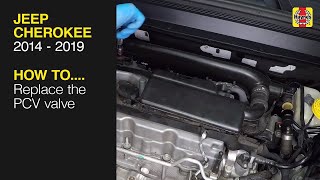
Typical fix: Reconnect or replace the damaged hose or PCV valve. The PCV hose on the 2.0L engine has a quick-release fitting that can be squeezed to remove.
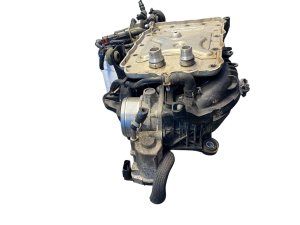
Est. part cost: $15-$75 - Leaking Intake Manifold Gasket 🟡 Medium Probability → Shop Engine Intake Manifold Forum discussions and mechanic reports show that the intake manifold gaskets can fail, leading to a vacuum leak. In some cases, the plastic intake manifold itself can crack or warp. This is a known issue across many Chrysler/Dodge/Jeep vehicles with plastic intake manifolds.
How to confirm: A smoke test will show smoke escaping from the area where the intake manifold meets the cylinder head. You can also sometimes hear a hissing sound or notice a change in idle when spraying carb cleaner near the gasket (use caution, as this is flammable).
Typical fix: Replace the intake manifold gaskets. If the manifold is warped or cracked, it will also need to be replaced.
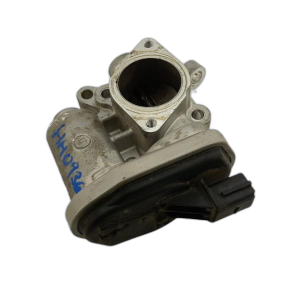
Est. part cost: $40-$150 for gaskets, $200+ for a new manifold - Faulty or Dirty Electronic Throttle Body 🟡 Medium Probability → Shop Fuel Injection Throttle Body
How to confirm: Remove the air intake tube and inspect the throttle body for heavy carbon buildup that could cause the plate to stick.
Typical fix: First, attempt to clean the throttle body plate and bore with a dedicated cleaner. If the problem persists, the entire throttle body assembly needs to be replaced. An ETC Relearn procedure may be required after replacement using a capable scan tool.
Est. part cost: $150-$400 - Outdated Powertrain Control Module (PCM) Software ⚪ Low Probability → Shop Engine Control Module (ECM) Jeep has issued multiple TSBs for the 2.0L Turbo engine (both EC1 and EC3 variants) that involve reprogramming the PCM to correct false positives for P2172 and other codes. This is a specific fix for a list of DTCs that can appear together.
How to confirm: A Jeep dealership or a qualified shop with access to OEM software (like wiTECH) can check if your vehicle's PCM has the latest software version installed by referencing your VIN against the TSBs.
Typical fix: Reprogram the PCM with the latest software. This often requires a battery charger to be connected to maintain voltage during the flash process.
Est. part cost: $0 if under warranty, otherwise $100-$250 for labor
Rare But Worth Checking
- Leaking Brake Booster: → Shop Power Brake Booster A leak in the brake booster or its vacuum line can create a significant vacuum leak, triggering P2172. This may be accompanied by a hissing sound when the brake pedal is pressed or a hard brake pedal feel.
- Faulty MAP Sensor: → Shop Manifold Absolute Pressure Sensor A failing Manifold Absolute Pressure (MAP) sensor can send incorrect data to the PCM, causing it to misinterpret the airflow and set the code. However, it's more common for the MAP sensor to be correctly reporting a leak from another source. Do not clean the MAP sensor with compressed shop air, as this can damage it.
- Intake Manifold Runner/Rocker Arm Failure (3.6L V6): → Shop Engine Intake Manifold On the 3.6L Pentastar, failure of the intake rocker arms can cause misfires and potentially lead to related airflow codes like P2172. This is often accompanied by ticking noises and misfire codes (e.g., P030x).
Diagnosis Steps
- Read all stored DTCs with an OBD-II scanner. Pay close attention to related codes like P2C90, P0441, or P0506, as they provide strong clues and are mentioned in official TSBs.
- Perform a thorough visual inspection of the engine bay. Look for any obviously disconnected, cracked, or brittle vacuum hoses, especially around the PCV system on the passenger-side rear of the engine and the intake manifold.
- Listen for an audible hissing sound at idle, which can help pinpoint the location of a large leak.
- Perform a smoke test. This is the most reliable method. Introduce smoke into the intake system via a vacuum port (like the brake booster line) and watch for where it escapes. Check around the intake manifold gasket, throttle body gasket, and all vacuum hose connections.
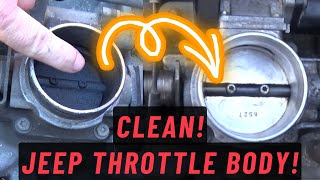
- Inspect and clean the electronic throttle body. Remove the intake duct and check for carbon buildup that could prevent the throttle plate from closing properly.
- If no leaks are found and the throttle body is clean on a 2.0L model, check for any available PCM software updates by contacting a dealership, as specified in TSBs #18-114-22, #18-053-22, and #18-019-22.
Parts You'll Likely Need
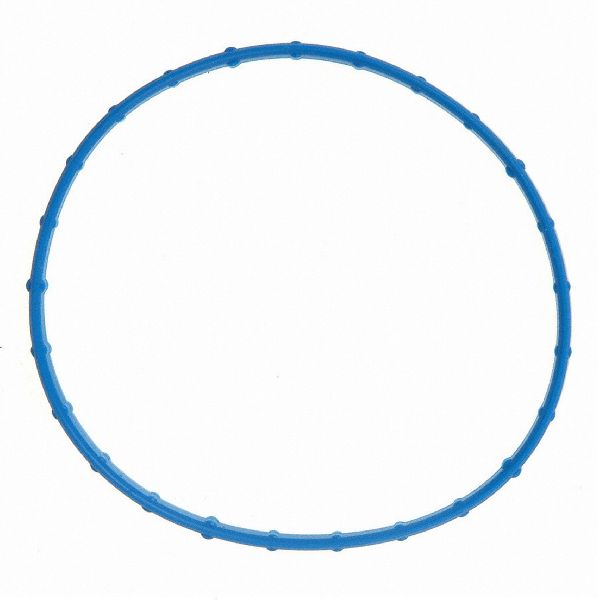
- Intake Manifold Gasket Set
(OEM #68232614AA (3.6L V6, Lower, sold as a set of 6), 68428453AA (2.0L I4))— A common failure point that creates a vacuum leak directly at the engine cylinders.
Trusted brands: Mopar, Fel-Pro, Mahle
OEM price range: $40-$70
Aftermarket price range: $30-$60 - PCV / Crankcase Ventilation Hose
(OEM #4893612AA (2.0L I4, Intake Manifold to Cylinder Head Cover), 68306127AA (Lower PCV Hose))— These hoses can become brittle and crack or simply become disconnected, which is a known issue cited in TSBs.
Trusted brands: Mopar
OEM price range: $18-$75
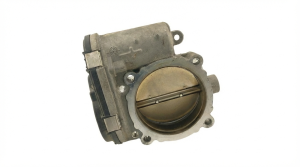
Aftermarket price range: $15-$50 - Electronic Throttle Body — Can fail internally or become too dirty to operate correctly, causing airflow calculation errors.
Trusted brands: Mopar, Bosch
OEM price range: $250-$400
Aftermarket price range: $150-$250
Related Codes That Often Appear With This One
- P2C90 — This code specifically indicates a disconnected crankcase ventilation hose, which is a direct cause of the vacuum leak that triggers P2172. TSBs confirm they are frequently found together.
- P0441 — Indicates a problem with the EVAP purge system. A stuck-open purge valve acts as a vacuum leak, often triggering P2172 simultaneously. This is also mentioned in TSBs alongside P2172.
- P0506 — This code for 'Idle Speed Performance Lower Than Expected' is often a symptom of the same vacuum leak that causes P2172. It is also listed in TSBs for the 2.0L engine.
- P061A — This 'Level 2 Torque Performance' code can be triggered when the PCM detects a mismatch between expected and actual engine torque, which can be caused by a large vacuum leak. It is also listed in TSBs.
Technical Service Bulletins (TSBs) & Recalls
- 1807023: Lists P2172 with other codes like P2C90 (Crankcase Ventilation System - Hose Disconnected).
- 1811422: For the 2019 2.0L eTorque engine, recommends a PCM software update for a list of DTCs including P2172, P2C90, and P061A.
- 1801922REVA: For the 2020 2.0L (non-eTorque), groups P2172 with crankcase ventilation (P2C90) and injector circuit codes, recommending a PCM flash.
- 1805322: For the 2020 2.0L eTorque engine, recommends a PCM flash for P2172 when seen with EVAP (P0441) and other performance codes.
Platform-Specific Known Issues
- TSB #18-114-22 and #18-053-22 for the 2.0L Turbo engine note that P2172 can be set along with a host of other codes, and the recommended fix is a PCM software update.
- TSBs #1807023 and #1801922REVA specifically link P2172 with P2C90, which points to a disconnected crankcase ventilation hose as a known fault pattern.
- A user on jlwranglerforums.com with an '18 2.0L eTorque experienced limp mode with P2172 after the dealer had previously replaced the intake manifold gasket for an oil leak.
Mechanic-Grade Diagnostic Values
- MAP Sensor Voltage (Key-On, Engine-Off) — expected: ~4.5 Volts (at sea level). Failure: Significantly lower or higher voltage indicates a sensor or wiring issue.
- MAP Sensor Voltage (Engine Idling) — expected: ~1.0 - 2.0 Volts. Failure: Voltage higher than expected for a given vacuum level can indicate a leak. For example, at 21 inHg of vacuum, voltage should be around 1.1V.
- MAP Sensor 5V Reference Circuit — expected: Constant 5.0 Volts. Failure: Voltage outside of a tight range around 5.0V indicates a problem with the PCM or wiring.
- MAP Sensor Ground Circuit — expected: Less than 0.1 Volts (100 millivolts). Failure: Higher voltage indicates a poor ground connection, which can skew sensor readings.
- Long-Term Fuel Trim (LTFT) at Idle — expected: Close to 0% (+/- 5%). Failure: High positive values (e.g., +15% or higher) indicate the PCM is adding fuel to compensate for excess unmetered air, a classic sign of a vacuum leak.
Scan Tool Commands That Help
- wiTECH or equivalent (JScan): ETC Relearn / Throttle Body Relearn — This procedure is required after cleaning or replacing the electronic throttle body, or replacing the PCM, to recalibrate the throttle plate's closed, open, and idle positions.
- wiTECH or equivalent: Throttle Actuator Self-Test — To command the throttle body through its range of motion and verify its response. A failure during this test points to an internal issue with the throttle body assembly.
- wiTECH or equivalent: Powertrain Verification Test — This is a generic procedure run after a repair is completed to allow the PCM to re-run its monitors and confirm that the fault condition has been resolved.
Real Owner Repair Stories
- Reddit user in /r/JeepWrangler (2019 Jeep Wrangler Sahara) — Used remote start in the cold, found the vehicle had turned itself off. Upon manual start, the check engine light was on with code P2172. Vehicle drove fine.
❌ Tried (didn't work) The user was planning to take it to a mechanic.
✅ What actually fixed it The check engine light turned off by itself. The consensus from other users was that it was likely a temporary glitch caused by extreme cold affecting the vehicle's electronic or EVAP systems, and to wait and see if the code returned before pursuing a repair.
"I Checked Everything" — The Actual Cause
- A leaking brake booster diaphragm can cause a massive vacuum leak when the brake pedal is pressed, but may not show up in a smoke test because the check valve in the booster's vacuum line can prevent smoke from entering the unit.
- An incorrect aftermarket throttle body was installed that had an open, unused vacuum port. This acts as a direct vacuum leak that could be missed if the smoke test is performed by connecting the machine to the intake boot upstream of the throttle body.
Model Year Variations Within This Range
- 2019 vs. 2020: For the 2.0L Turbo engine, the eTorque mild-hybrid system was more widely available in 2019, including on the Rubicon trim. For 2020, the 2.0L engine with eTorque was primarily restricted to Sahara models, while other trims like the Rubicon received a 2.0L Turbo without the eTorque system. Both versions share the same horsepower and torque ratings.
Helpful Videos

Used OEM Parts in Stock
New Aftermarket Parts Available


The information in this article is provided for general reference and educational purposes only. Vehicle specifications, procedures, and part compatibility can vary by production date, trim level, and region. Always consult your vehicle's factory service manual and verify part numbers before purchasing or performing repairs. Safety-critical components such as airbags, seat belts, and braking systems should be installed by a qualified professional.
- Jeep WRANGLER:
- 🧭 Diagnostic Flowchart
- 🎬 Helpful Videos
- 🛍️ Shop This Part
- What's Unique About the 2019-2020 Jeep WRANGLER
- Symptoms You May Notice
- Most Likely Causes
- Rare But Worth Checking
- Diagnosis Steps
- Parts You'll Likely Need
- Related Codes That Often Appear With This One
- Technical Service Bulletins (TSBs) & Recalls
- Platform-Specific Known Issues
- Mechanic-Grade Diagnostic Values
- Scan Tool Commands That Help
- Real Owner Repair Stories
- "I Checked Everything" — The Actual Cause
- Model Year Variations Within This Range
- 🎟️ Get 5% Off