

P2176 on 2004-2007 Buick Rainier: Throttle Position Not Learned, Causes and Fixes
P2176 on a Buick Rainier almost always points to a dirty or failing electronic throttle body. Carbon buildup physically prevents the throttle plate from closing to its base idle position, causing the learning process to fail. Cleaning the throttle body and performing a manual idle relearn procedure is the most common and effective first step. If cleaning doesn't resolve the issue, the throttle body assembly, which contains the motor and sensors, likely needs replacement.
- P2176 means the engine's computer can't learn the throttle's base idle position.
- The most likely cause is a dirty throttle body. Start by cleaning it and performing an idle relearn.
- If cleaning doesn't work, the entire throttle body assembly probably needs to be replaced.
- In very cold weather, this code can be caused by a frozen PCV system.
- Driving is not recommended as the vehicle will likely enter a 'Reduced Engine Power' mode with very limited speed.
What's Unique About the 2004-2007 Buick RAINIER
The Buick Rainier, as part of the GMT360 platform, is known for throttle body issues. This problem is particularly noted in high-mileage vehicles where carbon buildup becomes significant, as highlighted in TSB #PIP4578B. Additionally, TSB #PIP4573B points out that these throttle-related codes, including P2176, can be triggered by a frozen PCV system in extremely cold temperatures (around -10°F / -23°C), which is a unique diagnostic path to consider for this vehicle and its platform mates. This can cause excessive crankcase pressure, which can affect idle and trigger throttle codes.
Diagnostic Flowchart
Tap your situation to follow the diagnostic path that matches what you're seeing on this vehicle.
Symptoms You May Notice
- Reduced Engine Power warning light illuminated.
- Check Engine Light is on.
- Unstable, rough, or surging idle, sometimes fluctuating between 600-1200 RPM.
- Engine stalling, especially when coming to a stop or after a cold start.
- Hesitation or poor acceleration.
- No-start or crank-no-start condition in some cases.
- A complete lack of throttle response.
- Replacing the accelerator pedal position (APP) sensor. While part of the electronic throttle system, the APP sensor has its own specific codes (like P1221 or P1271) and is less likely to be the sole cause of P2176.
- Replacing only the throttle position sensor (TPS). On the GM throttle bodies for this platform, the TPS is integrated into the assembly and is not sold or serviced separately. The entire unit must be replaced.
Most Likely Causes
- Dirty or Coked Throttle Body 🔴 High Probability → Shop Fuel Injection Throttle Body As mentioned in TSB #PIP4578B, high-mileage GMT360 vehicles are prone to carbon buildup around the throttle plate, which physically blocks it from closing to the true idle position. The PCV system routes oil vapors into the intake, which contributes to this buildup.
How to confirm: Remove the intake air duct and visually inspect the throttle body bore and plate for a thick, black layer of carbon. The plate may be stuck partially open.
Typical fix: Thoroughly clean the throttle body bore and plate with a dedicated throttle body cleaner and a soft brush or rag. Do not manually force the throttle plate open, as this can damage the internal gears; have a helper turn the key to 'ON' and press the accelerator pedal to open it electronically. A throttle idle relearn procedure must be performed afterward.
Est. part cost: $5-$15 for cleaner and a brush. - Failing Throttle Body Assembly 🟡 Medium Probability → Shop Fuel Injection Throttle Body The electronic motor or the internal plastic gears can wear out or break over time, a common issue on the GMT360 platform. Old, hardened grease inside the throttle body's sealed gearbox can also prevent movement in cold weather.
How to confirm: If cleaning the throttle body does not resolve the code, and the relearn procedure fails repeatedly, the issue is likely internal to the unit. A grinding noise when the throttle plate moves can indicate stripped gears. A scan tool can monitor commanded vs. actual throttle position; a discrepancy points to a faulty unit.
Typical fix: Replace the entire throttle body assembly. An idle relearn procedure is mandatory after replacement.
Est. part cost: $150-$400 - Frozen PCV System ⚪ Low Probability TSB #PIP4573B specifically calls this out for the Rainier and its platform mates in very cold climates. Moisture in the crankcase from short-trip driving can freeze, blocking the PCV system and causing erratic crankcase pressure, which can affect idle and trigger throttle codes.
How to confirm: In temperatures below -10°F (-23°C), inspect the PCV hoses (between intake runners #3 and #4 on the I6 engine) and oil cap for milky, icy sludge.
Typical fix: Thaw and clean the PCV hoses and throttle body. Change the engine oil and filter to remove moisture. Allowing the engine to fully warm up during short trips in winter can help prevent this.
Est. part cost: $30-$70 for an oil change. - Wiring or Connector Issues ⚪ Low Probability
How to confirm: Visually inspect the wiring harness and connector going to the throttle body for any signs of corrosion, damage, or loose pins. Wiggle the harness with the engine running to see if the idle changes or if the code appears.
Typical fix: Repair the damaged section of the wire or clean/replace the connector. Some owners have had success by slightly twisting the male pins in the connector to ensure a tighter fit. Applying dielectric grease to the connector can prevent future fretting corrosion.
Est. part cost: $10-$50
Rare But Worth Checking
- Weak Battery: As noted in a GM document, low battery voltage during cranking can sometimes cause a cluster of throttle-related codes, including P2176, to set. Before replacing expensive parts, ensure the battery and charging system are healthy.
- Powertrain Control Module (PCM) Fault: → Shop Engine Control Module (ECM) While rare, an internal PCM fault can cause this code. This should only be considered after all other possibilities, especially the throttle body itself, have been ruled out.
Diagnosis Steps
- Scan for all DTCs. Note any other codes that appear with P2176, as they can provide clues (e.g., P1516, P2101).
- Inspect the air intake system between the MAF sensor and the throttle body for any cracks or loose clamps that could cause a vacuum leak.
- Inspect the throttle body electrical connector and wiring for any visible damage, corrosion, or looseness. Wiggle the connector with the engine running to check for changes in idle.
- Remove the intake duct from the throttle body. Inspect the throttle bore and plate for heavy carbon buildup.
- If carbon is present, clean it thoroughly using throttle body cleaner and a soft, lint-free rag. Avoid using abrasive tools. To open the plate for cleaning, turn the ignition to 'ON' (engine off) and have a helper press the gas pedal.
- After cleaning or replacement, perform a throttle idle relearn procedure. This is a critical step. 🎬 Watch: Four ways to perform a throttle idle relearn procedure.
- Manual Idle Relearn Procedure (No Scan Tool): Start the engine and let it idle in Park for 3 minutes. The idle may be high or rough. Turn the engine off and wait for at least 60 seconds. Start the engine again and let it idle in Park for another 3 minutes. The idle should normalize and learn the new position.
- If the idle does not improve, a drive cycle may be needed: drive the vehicle for at least 10 minutes at speeds over 44 mph, including several decelerations and extended idles.
- If the code returns after cleaning and relearning, the throttle body assembly is likely faulty and requires replacement.
- If the issue occurs only in extreme cold, investigate the PCV system for freezing as per TSB #PIP4573B.
Parts You'll Likely Need
- Electronic Throttle Body Assembly
(OEM #ACDelco 217-2296 (for 4.2L I6), ACDelco 12679525 (for 5.3L V8))— This is the most common point of failure, either due to heavy carbon buildup that can't be cleaned or internal electronic/mechanical failure of the motor, gears, or sensors.
Trusted brands: ACDelco, Bosch, Standard Motor Products, Hitachi, Dorman
OEM price range: $250-$400
Aftermarket price range: $150-$250 - Throttle Body Gasket
(OEM #ACDelco 217-1592 (for 4.2L I6), Fel-Pro 61070 (for 5.3L V8))— The gasket should always be replaced when the throttle body is removed to prevent vacuum leaks.
Trusted brands: Fel-Pro, ACDelco
OEM price range: $10-$20
Aftermarket price range: $5-$15
Related Codes That Often Appear With This One
- P1516 — This code relates to Throttle Actuator Control (TAC) performance and is frequently triggered alongside P2176, as they both point to a problem in the electronic throttle system. It is mentioned in both TSBs PIP4578B and PIP4573B.
- P2101 — This indicates a fault in the throttle actuator control motor circuit, often appearing with P2176 when the throttle body has an internal electronic or mechanical failure.
- P2119 — This code for 'Throttle Actuator Control Throttle Body Range/Performance' is also commonly seen with P2176, as noted in TSBs, indicating the throttle plate is not moving as expected.
- P0068 — This code indicates a mismatch between the MAP/MAF sensor and the throttle position, which can be a consequence of the throttle not being at its expected idle position due to carbon buildup.
Technical Service Bulletins (TSBs) & Recalls
- PIP4578B: Mentions updating information for DTCs including P2176 on high mileage vehicles experiencing idle surge and reduced power, recommending throttle body cleaning and an idle learn reset.
- PIP4573B: Links DTC P2176 with other throttle codes to a frozen PCV system in extreme cold, affecting a wide range of GMT360 and related vehicles.
Platform-Specific Known Issues
- TSB #PIP4578B notes that P2176 and related codes are common on high-mileage vehicles, pointing towards issues like carbon buildup requiring cleaning and an idle learn reset.
- TSB #PIP4573B describes a scenario where P2176 can be set in extremely cold weather (-10°F / -23°C) due to a frozen PCV system causing excessive, un-metered air and crankcase pressure.
- Forum reports indicate that the wiring connector to the throttle body can be a failure point, with the locking tab breaking or pins developing fretting corrosion, leading to intermittent connections.
Mechanic-Grade Diagnostic Values
- Throttle Position Sensor (TPS) 1 Resistance (4.2L I6) — expected: Approximately 3.0 kΩ. Failure: An open circuit (OL) or a short circuit (less than 1 Ohm) indicates a faulty sensor.
- Throttle Position Sensor (TPS) Voltage at Idle — expected: Approximately 0.5V - 0.7V with throttle closed.. Failure: A reading outside the 0.4V-0.6V range at idle, or a reading of 16% open at idle as seen in one diagnostic case, points to a problem. The voltage should increase smoothly to around 4.5V at wide-open throttle.
- Scan Tool Live Data: Desired vs. Indicated Throttle Angle — expected: The 'Desired' and 'Indicated' throttle position percentages should match closely.. Failure: A significant difference between the desired angle commanded by the PCM and the indicated angle reported by the sensor points to a faulty throttle body. For example, a desired angle of 13% with an indicated angle of 23% at key-on, engine-off suggests a problem.
Scan Tool Commands That Help
- Tech2 / GDS2 / Professional Scan Tool: Idle Learn Reset / Throttle Relearn — This function should be used after cleaning or replacing the throttle body to command the PCM to reset its learned idle values. The command is typically found under 'Module Setup' or 'Special Functions' for the Engine Control Module. The scan tool will guide the user, often displaying 'Reset Idle Learn Complete' upon success.
- Tech2 / GDS2 / Professional Scan Tool: Throttle Actuator Control (TAC) Test — This bidirectional test allows the technician to command the throttle plate to specific percentages (e.g., 10%, 20%, 30%) and verify that the indicated throttle angle matches the command. It is used to confirm if the throttle body motor and sensors are responding correctly to PCM commands, helping to isolate a faulty throttle body from a wiring or PCM issue.
Wiring & Ground Locations
- Powertrain Control Module (PCM/ECM) — For the 4.2L I6, the PCM is on the upper left side of the engine. For the 5.3L V8, the ECM is near the lower left front of the engine.. The PCM/ECM is what commands the throttle body and interprets its sensor data. All wiring for the throttle control system originates from or terminates at this module.
- Throttle Body Connector (8-pin) — Directly on the electronic throttle body assembly.. This is the primary connection point for all power, ground, and signal wires for the throttle motor and position sensors. It is a known point of failure due to broken locking tabs or fretting corrosion on the pins. The replacement pigtail connector is often part number PT2628.
- G302 Ground — Located on the lower left 'B' pillar.. This is a major body ground point. While not directly for the engine sensors, poor body grounds can cause unpredictable electrical issues in various modules, including the BCM, which communicates with the PCM.
Real Owner Repair Stories
- GMTNation forum user (Buick Rainier (specific year not mentioned, but GMT360 platform)) — P0332 (Knock Sensor code) initially, then after reassembly, the throttle body connector would not stay secured.
❌ Tried (didn't work) A temporary fix using safety wire to hold the connector on was used, but this was not a permanent solution.
✅ What actually fixed it The clip that secures the main wiring harness connector to the throttle body had broken during other repairs. The final fix required replacing the entire connector pigtail (ACDelco PT2628) by splicing it into the main harness.
When the Usual Fixes Don't Work
- In one documented case involving a similar GM vehicle, a technician was unable to clear code P2176 with the engine off. The code would return immediately upon starting. The only way to successfully clear the code and take the vehicle out of 'Reduced Power' mode was to issue the 'clear codes' command with the engine running. While this allowed the vehicle to be driven temporarily, the ultimate fix was still the replacement of the faulty throttle body.
OEM Part Supersession History
ACDelco 12574326 (for 4.2L I6)→ACDelco 217-2296 (also listed as GM 12568580)— Part has been updated or consolidated by the manufacturer.ACDelco 12580760 / 12572658 / 12679525 (for 5.3L V8)→ACDelco 19420713— Part has been updated by the manufacturer to a new design or number.
Heads up: Some replacement parts for the 5.3L V8 explicitly state that programming or special setup procedures are required after installation.
Model Year Variations Within This Range
- 2004-2007: The throttle body electrical connector can have either 6 or 8 pins depending on the specific engine and model year. It is critical to visually inspect the pin count on the original part before ordering a replacement to avoid purchasing an incompatible part.
Helpful Videos

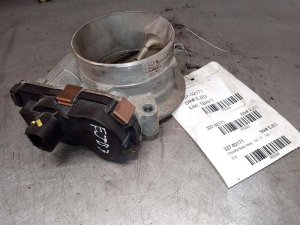
Used OEM Parts in Stock
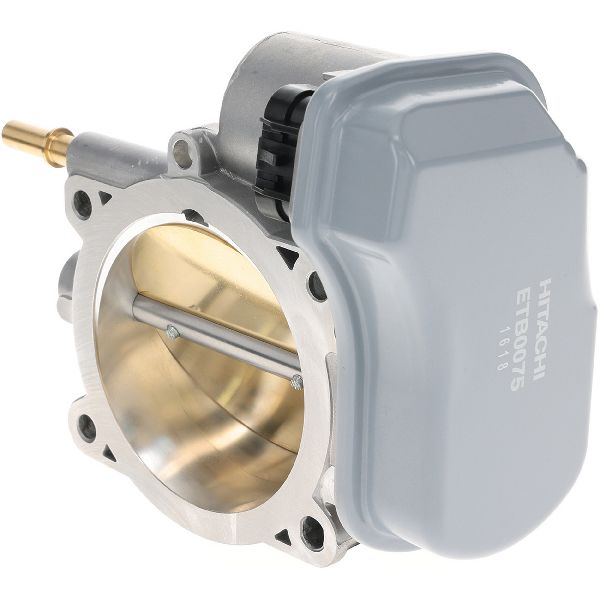
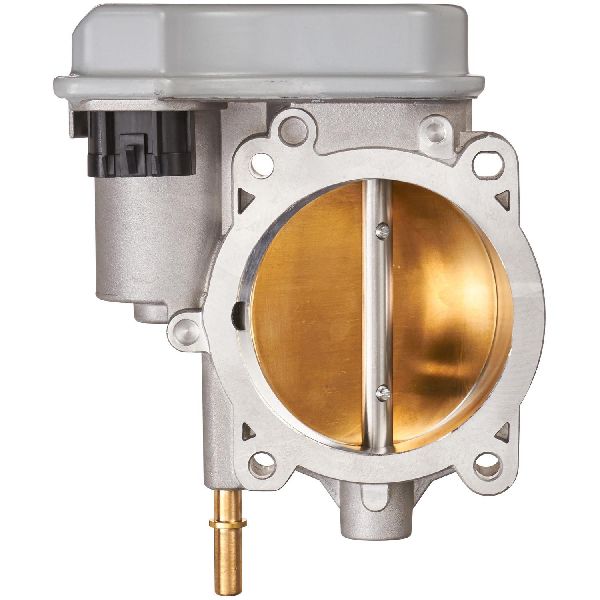
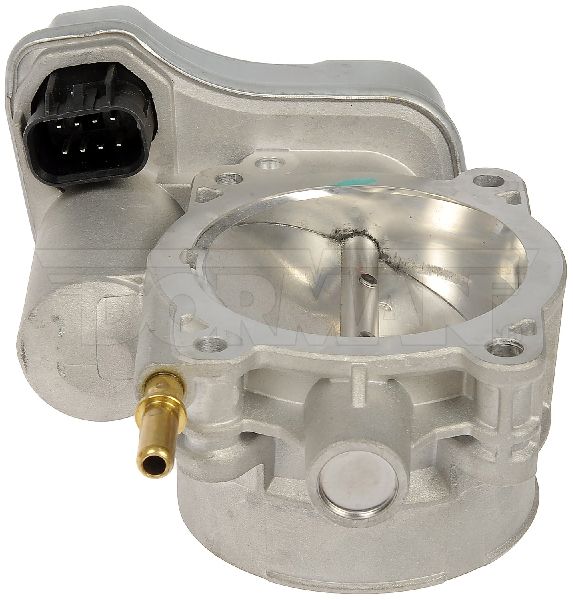
New Aftermarket Parts Available




The information in this article is provided for general reference and educational purposes only. Vehicle specifications, procedures, and part compatibility can vary by production date, trim level, and region. Always consult your vehicle's factory service manual and verify part numbers before purchasing or performing repairs. Safety-critical components such as airbags, seat belts, and braking systems should be installed by a qualified professional.
- Buick RAINIER:
- 🧭 Diagnostic Flowchart
- 🎬 Helpful Videos
- 🛍️ Shop This Part
- What's Unique About the 2004-2007 Buick RAINIER
- Symptoms You May Notice
- Most Likely Causes
- Rare But Worth Checking
- Diagnosis Steps
- Parts You'll Likely Need
- Related Codes That Often Appear With This One
- Technical Service Bulletins (TSBs) & Recalls
- Platform-Specific Known Issues
- Mechanic-Grade Diagnostic Values
- Scan Tool Commands That Help
- Wiring & Ground Locations
- Real Owner Repair Stories
- When the Usual Fixes Don't Work
- OEM Part Supersession History
- Model Year Variations Within This Range
- 🎟️ Get 5% Off