

P2176 on 2007-2013 Chevrolet Avalanche: Throttle Idle Position Not Learned Fixes
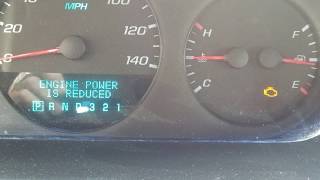
On a 2007-2013 Avalanche, code P2176 is almost always caused by carbon buildup inside the throttle body. This prevents the engine's computer from learning the correct idle position, triggering 'Reduced Engine Power' mode. A thorough cleaning of the throttle body and performing an idle relearn procedure usually fixes it.
- P2176 on your Avalanche almost always points to a problem with the throttle body.
- Before buying any parts, your first step should be to thoroughly clean the throttle body and perform an idle relearn procedure.
- This code will put your truck in 'Reduced Engine Power' mode, making it unsafe for highway driving.
- Always replace the throttle body gasket when you remove it to prevent future vacuum leaks.
- The idle relearn procedure is mandatory after cleaning, replacing, or even just disconnecting the throttle body or battery.
What's Unique About the 2007-2013 Chevrolet AVALANCHE
This generation of GM trucks and SUVs is well-known for this issue, primarily due to carbon buildup in the throttle body over time. As the engine's PCV (Positive Crankcase Ventilation) system routes oil vapors and combustion byproducts back into the intake, a sticky layer of carbon forms around the throttle plate and bore. The issue is so common that GM issued Technical Service Bulletin PIP4578B, which explicitly states that on high-mileage vehicles, this carbon buildup can cause P2176 along with idle surges and Reduced Engine Power mode.
🎬 Watch this video to fix the Reduced Engine Power messageDiagnostic Flowchart
Tap your situation to follow the diagnostic path that matches what you're seeing on this vehicle.
Symptoms You May Notice
- "Reduced Engine Power" message on the dashboard
- Check Engine Light is on
- Engine stalls when coming to a stop or at idle
- Rough, surging, or unusually high idle
- Poor or delayed throttle response
- Harsh shifting into gear from Park
- Vehicle may not accelerate past a very low speed (e.g., 5 mph).
- Replacing the Accelerator Pedal Position (APP) sensor. While part of the throttle control system, the APP sensor rarely causes the P2176 code, which is specific to the throttle body's idle position at the engine.
Most Likely Causes
- Dirty Throttle Body 🔴 High Probability → Shop Fuel Injection Throttle Body The PCV system design on these V8 engines routes oil vapor and crankcase gases into the intake, which bake onto the throttle bore and plate over time, restricting movement. The ECM adapts to this buildup, but eventually, the carbon ridge prevents the plate from closing enough to complete the learn procedure.
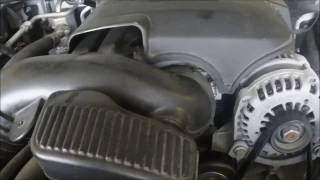
How to confirm: Remove the intake air duct from the throttle body. Visually inspect the throttle plate and the inside of the throttle bore for a thick, black layer of carbon buildup. A scan tool may show the throttle position percentage at 10-16% when it should be around 3-5% at idle, indicating it's being held open.
Typical fix: Remove the throttle body from the intake manifold for a thorough cleaning with a dedicated throttle body cleaner and a soft brush. Reinstall with a new gasket and perform an Idle Relearn Procedure.
Est. part cost: $5-$15 for cleaner and a gasket - Failed Throttle Body Assembly 🟡 Medium Probability → Shop Fuel Injection Throttle Body The internal electric motor or position sensor can fail over time. The plastic gears inside can also wear out, strip, or become stiff from old grease, preventing proper movement, especially in cold weather.
How to confirm: If a thorough cleaning and relearn procedure do not resolve the code, and the wiring is confirmed to be good, the throttle body assembly itself is the likely culprit. This is a common replacement on high-mileage vehicles.
Typical fix: Replace the entire throttle body assembly with a new unit. An OEM unit (ACDelco) is strongly recommended. An idle relearn procedure is required after replacement.
Est. part cost: $150-$400 - Lost Calibration Data / Incomplete Relearn ⚪ Low Probability This can happen after disconnecting the battery, clearing codes, or cleaning/replacing the throttle body without performing the relearn procedure. The computer's learned values are erased and it cannot establish a new baseline idle position.
How to confirm: This is the diagnosis if the code P2176 appears immediately after a battery replacement, throttle body service, or clearing codes with a scan tool.
Typical fix: Perform the manufacturer's specified Idle Relearn Procedure. This allows the ECM to recalibrate the new closed-throttle position.
Est. part cost: $0
Rare But Worth Checking
- Wiring or Connector Issue: The wiring harness to the throttle body can become damaged from engine heat and vibration over time, causing intermittent signals. Check for corrosion on the connector pins or any frayed/chafed wires near the throttle body.
- Large Vacuum Leak: A significant vacuum leak from a cracked hose or bad intake manifold gasket can introduce too much unmetered air, making it impossible for the ECM to achieve the target idle speed and complete the learn procedure.
- Faulty ECM: This is extremely rare. The Engine Control Module itself could fail, but all other possibilities, including wiring and other sensors, should be exhausted before considering ECM replacement.
Diagnosis Steps
- Scan for any other stored trouble codes. Address other throttle, MAP, or MAF sensor codes first. Note that P2176 often appears with codes like P1516 and P2101.
- Inspect the wiring harness and connector at the throttle body for any signs of damage, corrosion, or loose connections.
- Remove the intake ducting connected to the throttle body.
- Visually inspect the throttle bore and plate for heavy carbon buildup. This is the most common cause.
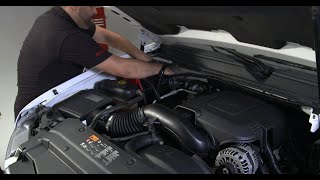
- If carbon is present, remove the four 10mm bolts holding the throttle body and clean it thoroughly off the vehicle using throttle body cleaner and a soft brush or rag. 🎬 Watch: How to clean a throttle body on GM trucks Do not use aggressive solvents like brake cleaner. Do not manually force the throttle plate open or closed aggressively, as this can damage the internal gears.
- Reinstall the throttle body with a new gasket to prevent vacuum leaks.
- Perform the Idle Relearn Procedure. This is a critical, non-negotiable step. 🎬 See how to reset high or low idle after cleaning
- If the code returns after cleaning and relearning, the throttle body assembly (motor or sensor) is likely faulty and should be replaced.
- If the issue persists, check for significant vacuum leaks or consider a very rare ECM fault.
Parts You'll Likely Need
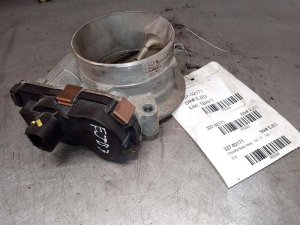
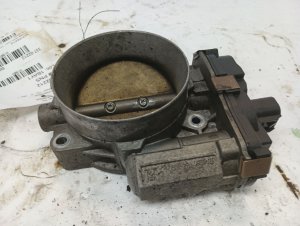
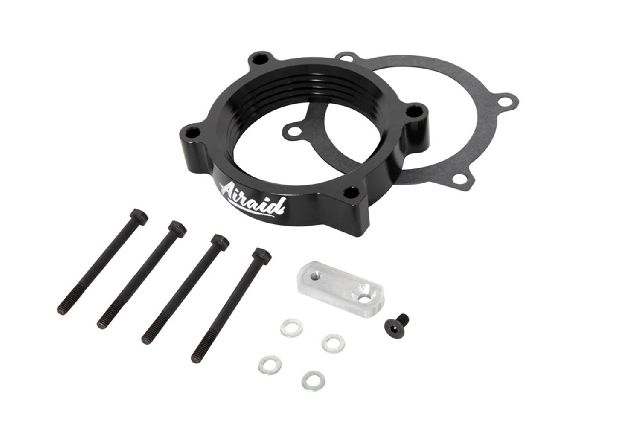
- Throttle Body Assembly
(OEM #12678223)— If a thorough cleaning does not fix the issue, the internal electronic motor or position sensor has likely failed, requiring replacement of the complete assembly. OEM parts are highly recommended for this component.
Trusted brands: ACDelco (GM Genuine), Hitachi, Bosch
OEM price range: $250-$400
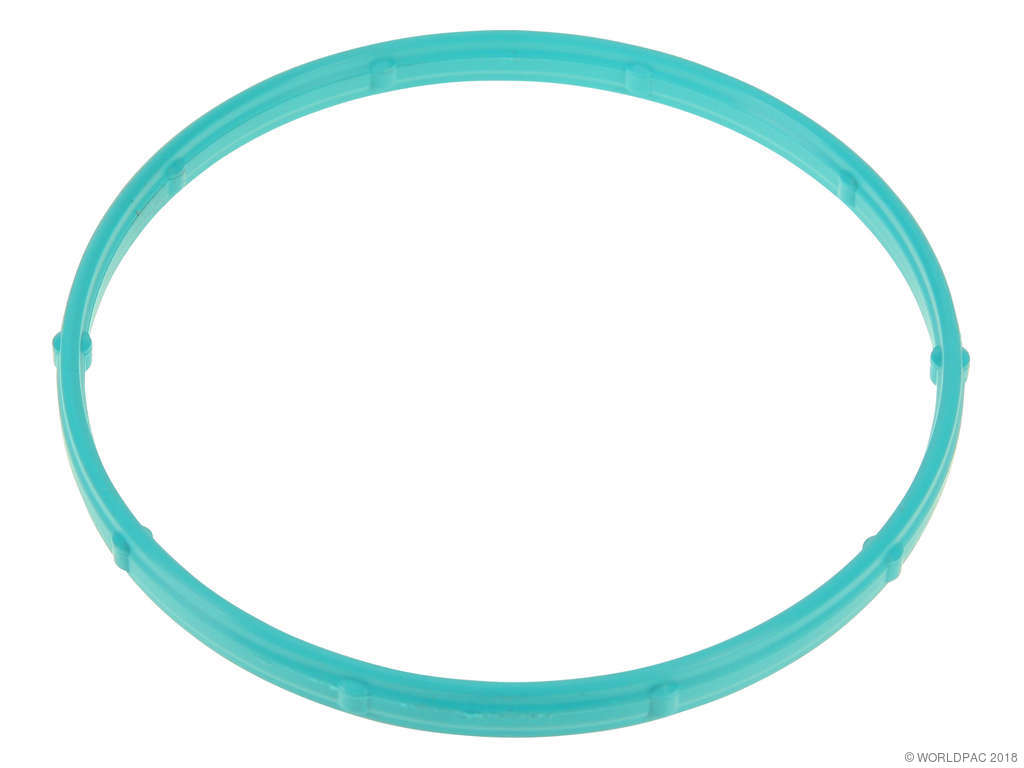
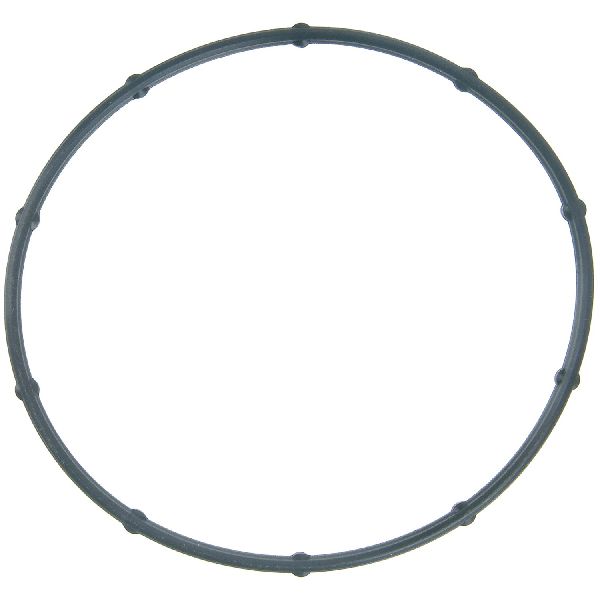
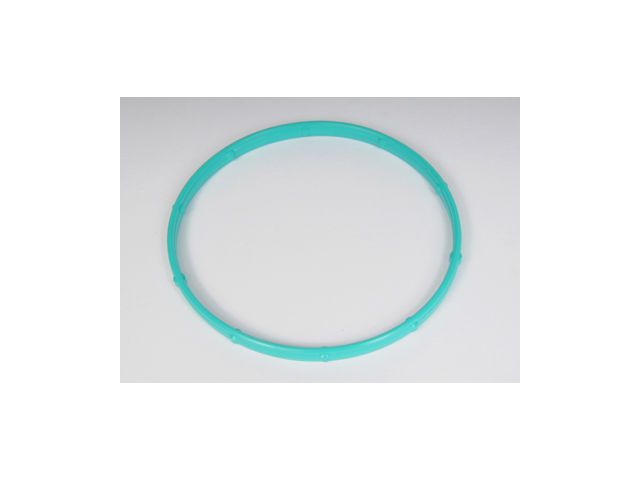
Aftermarket price range: $150-$250 - Throttle Body Gasket
(OEM #12589235)— This gasket should always be replaced when the throttle body is removed for cleaning or replacement to prevent vacuum leaks. The replacement throttle body assembly often does not include a new gasket.
Trusted brands: ACDelco, Fel-Pro, Mahle
OEM price range: $10-$20
Aftermarket price range: $5-$15 - Throttle Body Cleaner — Required for the most common fix, which is cleaning the carbon buildup from the throttle plate and bore. Ensure it is safe for electronic throttle bodies.
Trusted brands: CRC, Berryman, Gumout
Aftermarket price range: $5-$10
Related Codes That Often Appear With This One
- P1516 — This code indicates a mismatch between the commanded throttle position and the actual throttle position, often set alongside P2176 when the throttle is sticking. It is explicitly mentioned in TSB PIP4578B.
- P2101 — Relates to a performance problem with the throttle actuator control motor, which can be triggered by the same carbon buildup or internal failure causing P2176. Also mentioned in TSB PIP4578B.
- P0068 — Indicates a correlation error between the MAP sensor, MAF sensor, and throttle position. A sticking throttle can cause this disagreement in sensor readings. Also mentioned in TSB PIP4578B.
- P0506 / P0507 — These codes for 'Idle Air Control System RPM Lower/Higher Than Expected' can appear after cleaning the throttle body if an idle relearn is not performed, as the computer is still compensating for the old carbon buildup.
Technical Service Bulletins (TSBs) & Recalls
- PIP4578B: Explicitly links DTC P2176 to carbon buildup in the throttle body on high-mileage V8 GM trucks and SUVs. It recommends cleaning the throttle body and performing an 'Idle Learn Reset' with a scan tool.
Platform-Specific Known Issues
- A Technical Service Bulletin (TSB #PIP4578B) was issued for these vehicles, noting that P2176 can occur on high-mileage vehicles in conjunction with an idle surge or Reduced Engine Power mode, reinforcing that this is a known wear-and-tear issue.
- The bulletin clarifies that as carbon builds, the ECM learns to open the throttle plate more at idle to compensate. If the throttle is cleaned but the learned values aren't reset, the idle will be too high, potentially setting codes P0506 or P0507.
Mechanic-Grade Diagnostic Values
- Throttle Position (TP) Sensor 1 Voltage at rest — expected: Not between 4.12-4.55 V. Failure: The ECM detects a voltage within this range after a learn procedure with the throttle at rest, indicating a fault.
- Throttle Position (TP) Sensor 2 Voltage at rest — expected: Not between 0.34-0.99 V. Failure: The ECM detects a voltage within this range after a learn procedure with the throttle at rest, indicating a fault.
- Throttle Position Sensor (TPS) Percentage at idle (before cleaning) — expected: 3-5%. Failure: A reading of 10-16% or higher indicates the throttle plate is being held open by carbon buildup.
- Throttle Position Sensor Voltage (general) — expected: ~0.5 V (closed) to ~4.5 V (wide open). Failure: Values outside the 0.4–0.6 V range at idle can indicate a faulty sensor or a plate that cannot close properly.
- Scan Tool 'Throttle Body Idle Airflow Compensation' Parameter — expected: Less than 90%. Failure: A value of 90% or greater indicates excessive carbon buildup, requiring throttle body cleaning.
Scan Tool Commands That Help
- GM Tech2 / GDS2 or equivalent (e.g., Autel, Foxwell): Idle Learn Reset / Throttle/Idle Relearn — This function is used to force the ECM to find the new minimum throttle plate position after cleaning or replacing the throttle body. It is the most reliable method to resolve P2176.
- GM Tech2 / GDS2 or equivalent: Throttle Sweep Test — This bidirectional test commands the throttle through its full range of motion while monitoring sensor data. It helps verify if the TAC motor is responding correctly and if the TP sensor readings are smooth, without dropouts.
- Manual Procedure (No Scan Tool): Manual Idle Relearn Procedure — If a scan tool is not available, a manual relearn can be performed. Start the engine and idle in Park for 3 minutes. Turn the engine off for at least 60 seconds. Restart and idle in Park for another 3 minutes. A drive cycle above 44 mph with decelerations may be needed to finalize the learn.
Wiring & Ground Locations
- G103 — On the front of the passenger side (right) cylinder head.. This is a primary engine ground for the ECM. Some service information incorrectly identifies G104 as the TAC module ground, but field reports state G103 is the correct one to check for looseness or corrosion, which can cause erratic throttle behavior.
- G102 — On the lower left front of the engine block.. This is another critical engine ground point. A poor connection here can affect the ECM and its sensor readings, including those from the throttle body.
- G104 — On the rear of the driver's side (left) cylinder head, often difficult to access.. While some documents incorrectly point to this as the primary TAC ground, it is still an important engine ground. Field reports suggest checking it if issues persist after confirming G103 is clean and tight.
- Throttle Body Connector — Plugged directly into the throttle body assembly on the front of the intake manifold.. This connector carries the 5-volt reference, ground, and two TP sensor signals, plus the two wires for the TAC motor. Corrosion or loose pins in this connector will directly cause throttle performance codes like P2176.
OEM Part Supersession History
12620263→12678223— Part has been updated by the manufacturer.
Heads up: The newer part number 12678223 is the correct service replacement. Some sources indicate 12678223 has itself been superseded by 12740727. Always verify the latest part number with a dealer based on the vehicle's VIN.N/A→N/A— The throttle body gasket is a separate part and is not included with the new throttle body assembly.
Heads up: The throttle body gasket, OEM part number 12589235, must be purchased separately and replaced any time the throttle body is removed to prevent vacuum leaks.
Model Year Variations Within This Range
- 2008-2011: GM issued a Special Coverage Adjustment (TSB 11273A, later updated to 14582A) that extended the warranty on the throttle position sensor to 10 years or 120,000 miles for these model years due to a high failure rate. While this program has likely expired, it confirms a known weakness in the component for this period.
Helpful Videos

Used OEM Parts in Stock
New Aftermarket Parts Available


The information in this article is provided for general reference and educational purposes only. Vehicle specifications, procedures, and part compatibility can vary by production date, trim level, and region. Always consult your vehicle's factory service manual and verify part numbers before purchasing or performing repairs. Safety-critical components such as airbags, seat belts, and braking systems should be installed by a qualified professional.
- Chevrolet AVALANCHE:
- 🧭 Diagnostic Flowchart
- 🎬 Helpful Videos
- 🛍️ Shop This Part
- What's Unique About the 2007-2013 Chevrolet AVALANCHE
- Symptoms You May Notice
- Most Likely Causes
- Rare But Worth Checking
- Diagnosis Steps
- Parts You'll Likely Need
- Related Codes That Often Appear With This One
- Technical Service Bulletins (TSBs) & Recalls
- Platform-Specific Known Issues
- Mechanic-Grade Diagnostic Values
- Scan Tool Commands That Help
- Wiring & Ground Locations
- OEM Part Supersession History
- Model Year Variations Within This Range
- 🎟️ Get 5% Off