

P2176 on 2011-2018 Chevrolet Camaro: Causes and Fixes for Idle Position Not Learned
On a 2011-2018 Camaro, P2176 almost always means the throttle body is dirty with carbon buildup, preventing the computer from from learning the correct idle position. The most common fix is cleaning the throttle body and performing an idle relearn procedure. If cleaning doesn't work, the throttle body assembly may need replacement.
- P2176 on a Camaro is most likely caused by a dirty throttle body.
- The first and cheapest step is to clean the throttle body and perform an idle relearn procedure.
- Do not immediately replace the throttle body; cleaning it resolves the issue in a majority of cases.
- An idle relearn procedure is mandatory after cleaning, replacing, or disconnecting the battery to prevent the code from returning.
- If the car enters 'Reduced Engine Power' mode, it will have very limited power and should be serviced soon.
What's Unique About the 2011-2018 Chevrolet CAMARO
On the 5th and 6th generation Camaro, particularly on high-mileage vehicles, the throttle body is known to accumulate significant carbon and oil deposits from the PCV (Positive Crankcase Ventilation) system. This buildup creates a physical restriction, causing the throttle plate to stick or not close properly, which directly triggers the P2176 code. A GM Technical Service Bulletin (PIP4578B) specifically addresses this issue, linking P2176 to throttle body contamination and noting that as carbon builds, the ECM learns to compensate by increasing the throttle plate angle.
Diagnostic Flowchart
Tap your situation to follow the diagnostic path that matches what you're seeing on this vehicle.
Generation note: This guide covers the end of the fifth generation (2011-2015) and the beginning of the sixth generation (2016-2018) Camaro. The primary cause—throttle body coking—is common to the V6 (LFX) and V8 (LS3, L99, LT1) engines used across these years. While the fundamental issue is the same, specific throttle body part numbers differ between engine types. For example, the V6 LFX, V8 LS3/L99, and V8 LT1 all use different throttle bodies.
Symptoms You May Notice
- Check Engine Light is on
- "Reduced Engine Power" message disp 🎬 Watch: How to fix the Reduced Engine Power message on GM vehicles.layed
- Unstable, surging, or high idle
- Engine stalling when coming to a stop
- Hesitation or poor acceleration
- Vehicle may not start
- Rough running on a hot restart.
- Replacing the accelerator pedal position (APP) sensor. While related to the throttle control system, the APP sensor has its own specific codes (like P2138) and is rarely the cause of P2176.
Most Likely Causes
- Dirty or Coked Throttle Body 🔴 High Probability → Shop Fuel Injection Throttle Body As noted in TSB #PIP4578B, these engines are susceptible to carbon and oil buildup in the throttle body, which restricts the movement of the throttle plate. This is the most common cause reported by owners.
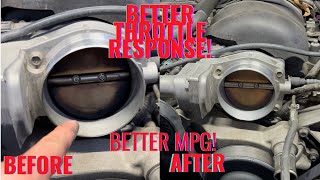
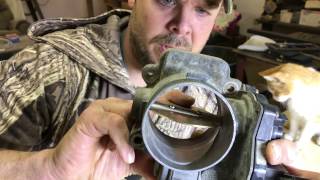
How to confirm: Remove the air intake tube connected to the throttle body and visually inspect the throttle plate and bore for a black, sticky film of carbon. The buildup is often heaviest on the back side of the plate and where the plate edges meet the bore.
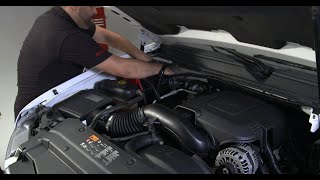
Typical fix: Clean the throttle body thoroughly with a dedicated throttle body cleaner and a soft cloth or brush. 🎬 Watch: Step-by-step guide to cleaning your Gen 5 Camaro throttle body. Do not use harsh carburetor cleaners or abrasive tools. After cleaning, an idle relearn procedure must be performed.
Est. part cost: $5-$15 for cleaner - Failed Idle Relearn After Maintenance 🟡 Medium Probability If the battery was disconnected or the throttle body was cleaned/replaced, the ECM's memory of the idle position is lost. If the relearn procedure isn't performed correctly or fails, this code will set. TSB PIP4578B explicitly warns that cleaning the throttle body without performing an idle learn reset can cause the code to return.
How to confirm: This is the likely cause if the code appeared immediately after disconnecting the battery, replacing the ECM, or servicing the throttle body.
Typical fix: Perform the GM idle relearn procedure. A reliable manual method is to start the engine, let it idle in Park for 3 minutes, turn the engine off for 60 seconds, then restart and idle for another 3 minutes. A scan tool offers a more direct reset. 🎬 See this video for a detailed walkthrough of GM relearn procedures.
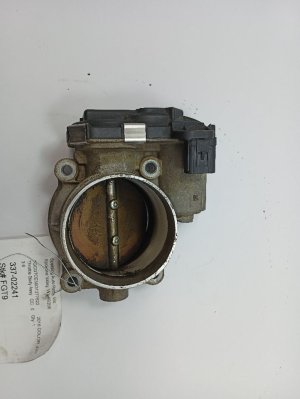
Est. part cost: $0 - Failing Throttle Body Assembly ⚪ Low Probability → Shop Fuel Injection Throttle Body The internal electric motor or dual position sensors within the throttle body can fail over time, though it's less common than simple carbon buildup. Some owners on forums report going through multiple aftermarket throttle bodies before an OEM unit solved the problem.
How to confirm: If cleaning the throttle body thoroughly and correctly performing a relearn does not resolve the code, and the wiring is confirmed to be good, the throttle body assembly itself is the likely culprit.
Typical fix: Replace the entire throttle body assembly. This part requires a subsequent idle relearn procedure.
Est. part cost: $150-$400
Rare But Worth Checking
- Vacuum Leak: A significant vacuum leak from a cracked hose or bad intake manifold gasket can introduce unmetered air, confusing the ECM's idle calculations and potentially triggering P2176. On a related platform (Cadillac CTS with the same 3.6L engine), foreign debris like leaves getting past the air filter caused similar codes.
- Wiring or Connector Issue: A poor connection or damaged wire at the throttle body connector can interrupt the signal between the ECM and the throttle actuator, causing this code. One owner on a Reddit forum reported a parasitic battery drain associated with this code, pointing to a potential electrical fault within the throttle body circuit. Another user on Camaro5 forums fixed similar codes by addressing a bent pin in the throttle body connector. Wires can also break inside the insulation near the connector.
- Faulty Engine Control Module (ECM): → Shop Engine Control Module (ECM) This is extremely rare. The ECM should only be considered after all other possibilities, including the throttle body and its wiring, have been exhaustively ruled out. One owner was told by a dealer to replace the ECM, but a new throttle body fixed the issue, highlighting the rarity of ECM failure for this code.
Diagnosis Steps
- Read the codes: Use an OBD-II scanner to confirm P2176 is present and check for any other related codes like P0068, P1516, or P2101.
- Visual Inspection: Remove the air intake hose from the throttle body. Inspect the throttle bore and plate for heavy carbon buildup. A dirty throttle body is the most likely cause.
- Clean the Throttle Body: If dirty, disconnect the negative battery terminal. Remove the four 10mm bolts holding the throttle body. Clean it thoroughly off the car using dedicated throttle body cleaner and a soft rag. Do not spray cleaner directly into the intake manifold. Manually open the plate to clean the edges. Replace the gasket if it is damaged.
- Inspect Wiring: While the throttle body is accessible, check the electrical connector and wiring harness for any signs of damage, corrosion, or loose/bent pins. Pay attention to potential chafe points, such as where the harness crosses the front corner of the left-hand cylinder head.
- Reinstall and Perform Idle Relearn: Reinstall the throttle body, reconnect the battery, and perform the Idle Relearn Procedure. A common non-scan tool method is: Start the engine and let it idle in Park for 3 minutes. The idle may be high but should start to decrease. Turn the ignition OFF for 60 seconds. Start the engine again and let it idle in Park for another 3 minutes. The idle should now be stable. If this fails, a drive cycle with varied speeds and stops may be required.
- Test Drive: Drive the vehicle to see if the code returns. If it does, the issue may be a failing throttle body unit itself.
- Test/Replace Throttle Body: If cleaning and relearning fail, the next logical step is to replace the throttle body assembly and perform the relearn procedure again.
Parts You'll Likely Need
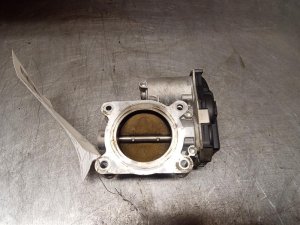
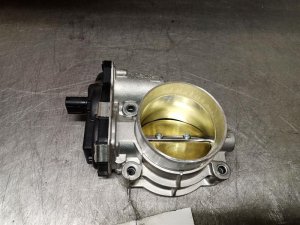
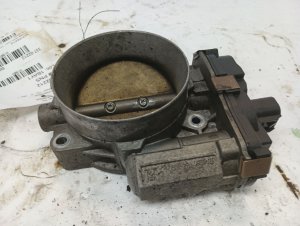
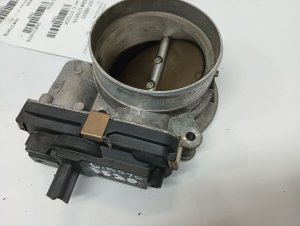
- Throttle Body Assembly
(OEM #Varies by engine. V6 (LFX): 12670981. V8 (LS3/L99, 2011-2015): 19420707 (supersedes 12605109). V8 (LT1, 2016-2018): 12740727.)— This is the most common part to replace if cleaning fails. It contains the throttle plate, motor, and position sensors. Always verify the correct part for your specific engine and year.
Trusted brands: ACDelco, Dorman
OEM price range: $170-$320
Aftermarket price range: $100-$180 - Throttle Body Cleaner — This is required for the most common and first-step fix: cleaning the carbon buildup from the throttle plate and bore.
Trusted brands: CRC, Berryman, Gunk
OEM price range: $10-$15
Aftermarket price range: $5-$10
Related Codes That Often Appear With This One
- P0068 — MAP/MAF - Throttle Position Correlation. This code often appears with P2176 because if the throttle plate is stuck, its actual position won't match what the MAP and MAF sensors are reporting. It is explicitly mentioned in TSB PIP4578B.
- P1516 — Throttle Actuator Control (TAC) Module Performance. This is a GM-specific code indicating a problem between the ECM's command and the throttle's response, often due to the same binding/sticking issue.
- P2101 — Control Module Throttle Actuator Control Motor Circuit Range/Performance. This code points more directly to an electrical issue with the throttle motor, which can be triggered by the physical resistance from carbon buildup.
Technical Service Bulletins (TSBs) & Recalls
- PIP4578B: Mentions DTC P2176 in relation to idle surge and reduced engine power on high-mileage vehicles, corroborating that throttle body issues are a known problem. It instructs technicians to inspect for carbon buildup and perform an idle learn reset after cleaning.
Platform-Specific Known Issues
- A Technical Service Bulletin (TSB #PIP4578B) was issued by GM for multiple vehicles, including the Camaro, for experiencing idle surge, reduced power, and setting DTCs including P2176, especially on high-mileage vehicles. The bulletin explicitly states that as carbon builds up, the ECM learns to compensate, and cleaning the throttle body without an idle learn reset can cause new problems.
- A user on LS1Tech.com with an LS3 swap experienced P2176 only during hot restarts (e.g., stopping for gas), suggesting a potential heat-soak issue with the throttle body electronics.
Mechanic-Grade Diagnostic Values
- Throttle Position Sensor (TPS) Voltage — expected: Approximately 0.5V at closed throttle and up to ~4.5V at wide-open throttle.. Failure: Values outside the 0.4V–0.6V range at idle can indicate a faulty sensor or a mechanical obstruction.
- Battery System Voltage — expected: Should be around 12.6V with the engine off and greater than 13.5V with the engine running.. Failure: Low or unstable voltage during the learn procedure can cause it to fail and set P2176.
- 5-Volt Reference at Throttle Body Connector — expected: A steady 5.0V should be present on the reference circuit from the ECM.. Failure: A missing or incorrect voltage points to a wiring issue or a problem with the ECM. A user on a GMTNation forum checked for this when diagnosing P2176 among other codes.
Scan Tool Commands That Help
- GDS2 / Tech2 / other professional scan tools: Idle Learn Reset / Throttle/Idle Learn — This function should be used after cleaning or replacing the throttle body. It resets all learned airflow values back to zero, which can accelerate the relearn process, especially if the throttle body was heavily coked. The tool can also be used to monitor desired vs. actual RPM during the procedure.
- GDS2 / Tech2 / other professional scan tools: Throttle Actuator Control (TAC) Motor Test — A scan tool can be used to command the throttle motor to open and close. This helps verify if the motor is responding correctly to ECM commands and can help differentiate between a faulty motor and a wiring issue.
Wiring & Ground Locations
- G110 (V8) — Attached to the rear of the driver's side cylinder head.. A loose or corroded ground on the back of the cylinder head is known to cause various PCM-related issues, including rough idle and other electrical problems that could mimic throttle body faults.
- G101 — In the engine compartment, attached to the front of the left wheelhouse.. This ground point is critical as it serves the Engine Control Module (ECM) and Transmission Control Module (TCM). A poor connection here can directly impact the ECM's ability to control and learn the throttle body position.
- Engine Harness Chafe Point — The engine wiring harness may chafe on the front corner of the left-hand cylinder head, the drive belt idler pulley bracket, or the oil dipstick bracket.. Chafing in these areas can cause a short to ground in any of the circuits within the harness, including those for the throttle body, leading to intermittent and difficult-to-diagnose codes like P2176.
Real Owner Repair Stories
- Camaro5 Forums user (Year/Engine not specified, but on Camaro5 platform (2010-2015)) — Reduced engine power message, with codes P2135 (Throttle/pedal position sensor/switch a/b voltage correlation) and P2176.
❌ Tried (didn't work) Checking all electrical connections, which appeared to be okay.
✅ What actually fixed it The user replaced the aftermarket VMax throttle body. The immediate advice from another user was to clear the codes and install a known-good throttle body to see if the problem resolved, implying the throttle body itself was the failure point. - Camaro5 Forums user hesster (Whipple Supercharged LS3) — No Start, Stabilitrac Reduced Power mode, and multiple throttle-related codes including P2176, P2135, P0122, and P0223.
❌ Tried (didn't work) The user noted that simply meddling with the throttle body could cause these issues. A dealer reprogrammed the ECM which did not fix the problem initially.
✅ What actually fixed it The user found the Throttle Position Sensor (TPS) to be extremely sensitive to the integrity of the wire harness connection. The final fix involved ensuring the wiring harness connection at the TPS was secure and not disconnecting it while the battery was connected. The user now carries a scan tool to clear codes on the fly if they reappear.
OEM Part Supersession History
12605109→19420707— Standard part lifecycle update by GM.
Heads up: The new part number (19420707) is a direct replacement for the old one (12605109) for applications like the LS3, LS7, and L99 engines and is a popular 90mm upgrade.
Model Year Variations Within This Range
- 1990s LT1 (relevant for swaps/context): The PCV system routing on early LT1 engines (pre-1995) was different from later models. Early models had a short, curved tube from the PCV valve directly to the intake manifold, while later models used a longer line from the front of the intake. This difference in plumbing can affect where oil vapors and carbon are introduced relative to the throttle body, potentially influencing the rate of coking.
Helpful Videos

We Have This Part in Stock

The information in this article is provided for general reference and educational purposes only. Vehicle specifications, procedures, and part compatibility can vary by production date, trim level, and region. Always consult your vehicle's factory service manual and verify part numbers before purchasing or performing repairs. Safety-critical components such as airbags, seat belts, and braking systems should be installed by a qualified professional.
- Chevrolet CAMARO:
- 🧭 Diagnostic Flowchart
- 🎬 Helpful Videos
- 🛍️ Shop This Part
- What's Unique About the 2011-2018 Chevrolet CAMARO
- Symptoms You May Notice
- Most Likely Causes
- Rare But Worth Checking
- Diagnosis Steps
- Parts You'll Likely Need
- Related Codes That Often Appear With This One
- Technical Service Bulletins (TSBs) & Recalls
- Platform-Specific Known Issues
- Mechanic-Grade Diagnostic Values
- Scan Tool Commands That Help
- Wiring & Ground Locations
- Real Owner Repair Stories
- OEM Part Supersession History
- Model Year Variations Within This Range
- 🎟️ Get 5% Off