

P2176 on 2004-2011 Chevrolet Colorado: Causes and Fixes for Idle Position Errors
This code usually means the throttle body is dirty with carbon buildup, preventing the engine's computer from learning the correct idle position. A thorough cleaning of the throttle body and performing an idle relearn procedure is the most common fix. In some cases, the entire throttle body assembly has failed or a wiring issue is present.
- P2176 on your Colorado is almost always a throttle body problem, not a more complex engine issue.
- Before buying any parts, your first step should be to thoroughly clean the throttle body of all carbon buildup.
- After cleaning or replacing the throttle body, you must perform an idle relearn procedure for the computer to recognize the new 'home' position.
- The vehicle will likely enter a 'Reduced Engine Power' mode, making it sluggish and potentially unsafe in traffic; address this issue promptly.
What's Unique About the 2004-2011 Chevrolet COLORADO
The first-generation Chevrolet Colorado and its platform mates are particularly susceptible to this code due to two main issues documented in Technical Service Bulletins (TSBs). On high-mileage vehicles, significant carbon buildup inside the throttle body is common, physically blocking the throttle plate from closing properly (TSB PIP4578B). This buildup is often from the Positive Crankcase Ventilation (PCV) system venting oil vapors into the intake. Additionally, in extremely cold weather (around -10°F / -23°C), moisture in the PCV system can freeze, causing excessive crankcase pressure and affecting throttle operation, triggering this code along with others (TSB PIP4573B).
Diagnostic Flowchart
Tap your situation to follow the diagnostic path that matches what you're seeing on this vehicle.
Symptoms You May Notice
- Reduced Engine Power warning message on the dashboard.
- Check Engine Light is on.
- Vehicle has very limited acceleration (limp mode).
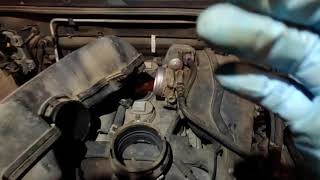
- Engine idles roughly, surges, or stalls when you come to a stop. 🎬 Watch: How to fix a rough idle on your Colorado.
- Harsh clunk when shifting from Park to Drive or Reverse due to high idle.
- Engine RPMs surge to 1500-2000+ RPM in Park immediately after cleaning the throttle body.
- Replacing the accelerator pedal position (APP) sensor. While part of the throttle control system, it is less likely to cause this specific 'not learned' code than a throttle body issue. A faulty APP sensor usually has its own set of codes.
- Replacing the Mass Airflow (MAF) sensor. A faulty MAF sensor will typically set its own specific codes (like P0101) and cleaning it is often done alongside the throttle body, but it is not the primary cause for P2176.
Most Likely Causes
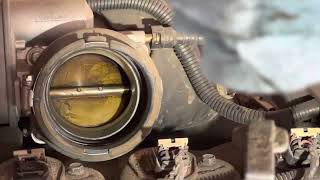
- Dirty or Coked Throttle Body 🔴 High Probability → Shop Fuel Injection Throttle Body As noted in TSB PIP4578B, carbon buildup is a known issue on these trucks, especially with higher mileage. The PCV system routes oil vapors into the intake, which bake onto the throttle plate and bore, preventing it from closing to its true minimum position.
How to confirm: Visually inspect the throttle body bore and plate for a thick, black, sticky layer of carbon. The engine side is often dirtier than the intake side.
Typical fix: Remove the throttle body and clean it thoroughly with a dedicated throttle body cleaner and a soft brush or microfiber towel. A new gasket is required upon reinstallation.
Est. part cost: $5-$20 - Needs Idle Relearn Procedure 🔴 High Probability This is required after cleaning the throttle body, disconnecting the battery, or replacing the ECM. The ECM's stored values for the 'dirty' throttle no longer match the clean throttle body's airflow characteristics, causing a high or surging idle and triggering P2176.
How to confirm: The code appears immediately after cleaning the throttle body or replacing the battery, often accompanied by a very high or surging idle.
Typical fix: Perform a manual idle relearn procedure. A scan tool provides the most reliable reset, but a manual procedure often works.
Est. part cost: $0 - Failed Throttle Body Assembly 🟡 Medium Probability → Shop Fuel Injection Throttle Body The internal electric motor or position sensor can fail over time. TSB PIP4573B also notes that in extreme cold, the internal mechanism can struggle to operate correctly, potentially due to a weak battery.
How to confirm: If cleaning the throttle body and performing multiple relearn attempts doesn't fix the code, and the wiring is intact, the throttle body assembly itself is likely faulty. 🎬 Watch: Step-by-step Chevy Colorado throttle body replacement walkthrough.
Typical fix: Replace the entire throttle body assembly. This part contains the motor and sensors as a single unit.
Est. part cost: $100-$250
Rare But Worth Checking
- Wiring or Connector Issue: The wiring harness to the throttle body can become damaged, corroded, or develop a loose pin. Wiggling the harness at the throttle body connector with the engine running might trigger the fault or cause a change in idle, indicating a wiring problem.
- Large Vacuum Leak: A significant vacuum leak from a cracked hose (especially PCV hoses) or bad intake gasket can introduce unmetered air, confusing the ECM during the idle learn process and potentially triggering the code.
- Weak or Failing Battery: TSB PIP4573B explicitly mentions that a weak battery may affect throttle plate operation, especially in cold conditions, contributing to this code. Low voltage can cause various electronic modules to behave erratically.
Diagnosis Steps
- Scan for any other trouble codes. Codes like P1516, P2101, or P0068 strongly point to the throttle body.
- Check battery voltage. A weak battery can cause electronic issues. Ensure it's above 12.4V with the engine off.
- Remove the intake duct and visually inspect the throttle body plate and bore for heavy carbon buildup.
- If dirty, remove the throttle body (typically four 10mm bolts). Clean it thoroughly off the vehicle using throttle body cleaner and a soft brush or rag. Do not use a wire brush on the bore.
- Reinstall the throttle body with a new gasket to prevent vacuum leaks.
- Perform the Idle Relearn Procedure. A professional scan tool is best. The manual method is: 1. With the key on, engine off, clear the codes. 2. Turn ignition off for 90 seconds. 3. Start the engine and let it idle in Park for 3 minutes. The idle may be high or surge. 4. After 3 minutes, turn the engine off for 90 seconds. 5. Restart the engine. It should now idle normally. A few drive cycles may be needed for the computer to fully adjust.
- If the code returns, inspect the wiring harness and connector at the throttle body for any damage, corrosion, or loose pins. Wiggle the connector with the engine running to see if the idle changes.
- If wiring is good and the relearn repeatedly fails, the throttle body assembly is the most likely cause and should be replaced.
Parts You'll Likely Need
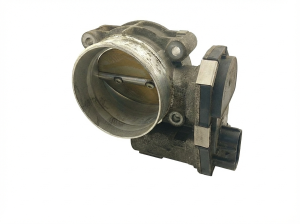
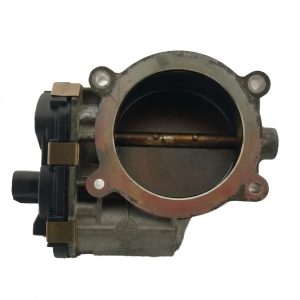
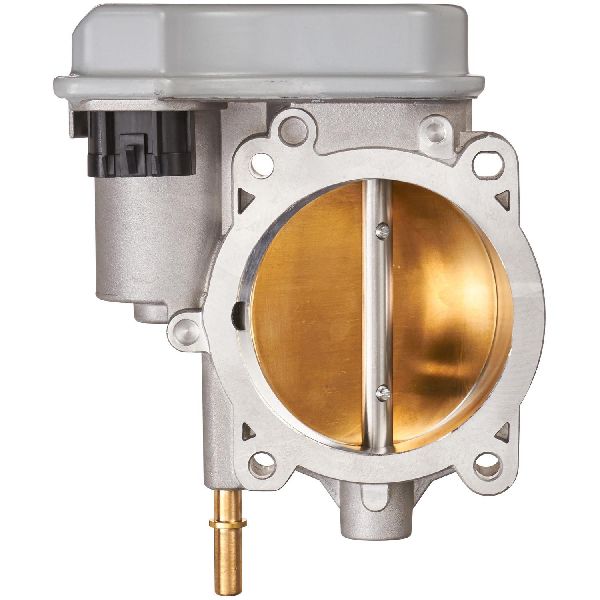
- Throttle Body Assembly
(OEM #GM 12616439 (For 2.9L/3.7L, check VIN to confirm))— This is the primary cause of the fault when cleaning doesn't resolve the issue. The internal motor or sensor fails.
Trusted brands: ACDelco (OEM), Hitachi, Dorman
OEM price range: $180-$250
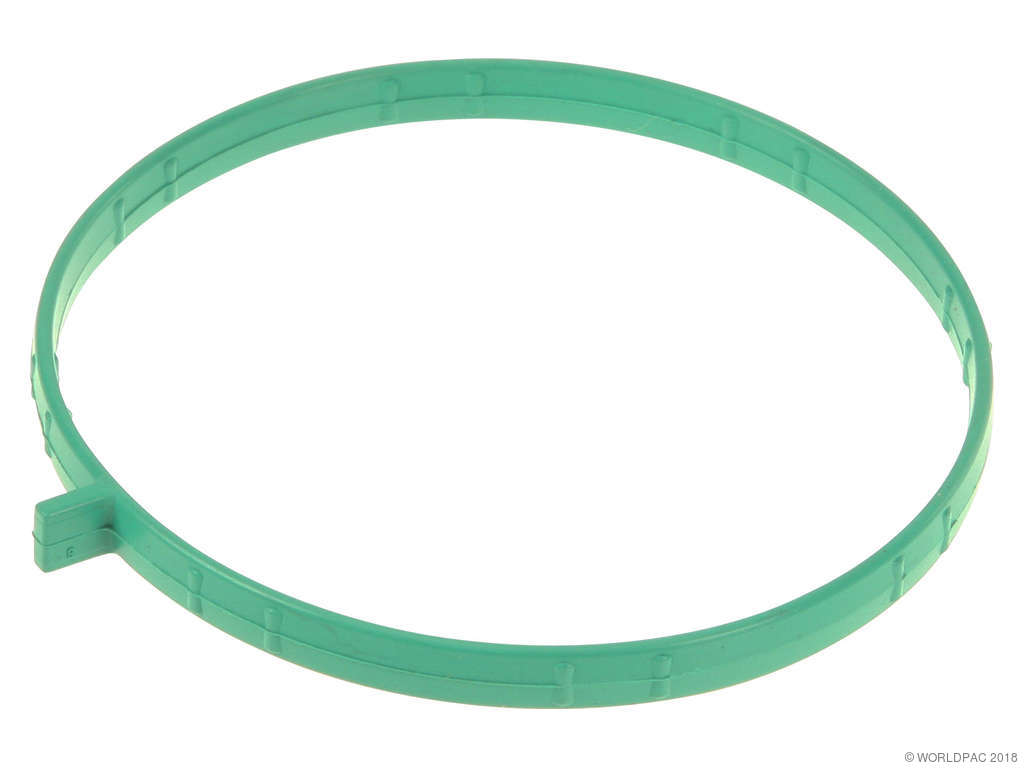
Aftermarket price range: $100-$180 - Throttle Body Gasket
(OEM #GM 12601387)— Should always be replaced when the throttle body is removed for cleaning or replacement to prevent vacuum leaks.
Trusted brands: ACDelco (OEM), Fel-Pro, Mahle
OEM price range: $10-$20
Aftermarket price range: $5-$15 - Throttle Body Cleaner — Required for the most common fix, which is cleaning the carbon buildup from the original throttle body.
Trusted brands: CRC, Berryman, Gumout
OEM price range: $5-$10
Aftermarket price range: $5-$10
Related Codes That Often Appear With This One
- P1516 — This code is also related to the Throttle Actuator Control (TAC) module performance and is frequently cited alongside P2176 in GM TSBs and forum posts.
- P2101 — This code indicates a performance problem with the throttle actuator control motor circuit, pointing directly to a failing, sticking, or struggling throttle body.
- P0068 — Indicates a correlation error between the MAP/MAF sensor and the throttle position, which can be triggered by a throttle body that isn't where the ECM expects it to be due to carbon or a fault.
- P2119 — Relates to the throttle body's ability to close properly, directly linked to carbon buildup or a mechanical fault as described in TSB PIP4578B. 🎬 See this guide on troubleshooting GM throttle control codes.
Technical Service Bulletins (TSBs) & Recalls
- PIP4578B: Addresses idle surge, reduced power, and DTC P2176 on high-mileage vehicles.
- PIP4573B: Notes that extreme cold can affect throttle operation and trigger P2176.
Platform-Specific Known Issues
- High-Mileage Carbon Buildup: High-mileage vehicles are prone to heavy carbon buildup causing the throttle plate to stick, as documented in TSB PIP4578B. This is considered a routine maintenance issue for many owners.
- Extreme Cold Weather Operation: Operation in extremely cold temperatures (approx. -10°F / -23°C) can cause moisture in the PCV system to freeze. This can lead to excessive crankcase pressure, oil leaks, and erratic throttle operation, triggering P2176 and other codes, as noted in TSB PIP4573B.
- Real-World Repair Story: Wiring Harness Failure: In a documented case on a Hummer H3, a user experienced persistent P2176, P2101, and P1516 codes even after replacing the throttle body, accelerator pedal, and PCM. The final fix was repairing the wiring harness leading to the PCM, where a short was causing the Reduced Power Mode. Wiggling the harness could replicate the fault.
Mechanic-Grade Diagnostic Values
- Throttle Position (TP) Sensor 1 Voltage — expected: 0.27V - 4.67V (sweeps smoothly with pedal press). Failure: Voltage is stuck, jumps, or falls outside the range. A reading < 0.32V or > 4.75V for over 0.4 seconds can set a fault.
- Throttle Position (TP) Sensor 2 Voltage — expected: 0.31V - 4.7V (sweeps smoothly with pedal press). Failure: Voltage is stuck, jumps, or falls outside the range. A reading < 0.25V or > 4.59V for over 0.5 seconds can set a fault.
- 5-Volt Reference Circuit Voltage (at TB connector) — expected: 4.8V - 5.2V (Key On, Engine Off). Failure: Voltage is below 4.8V or above 5.2V, indicating a short or open in the circuit or a faulty ECM.
- Low Reference Circuit Resistance (at TB connector) — expected: < 5.0 Ohms (to a known good chassis ground). Failure: Resistance is greater than 5.0 Ohms, indicating high resistance or an open in the ground circuit.
- Throttle Position Percentage at Idle (Scan Tool) — expected: 3% - 5%. Failure: A reading significantly higher, such as 16%, indicates the throttle plate is being held open by carbon or a fault and cannot learn its minimum position.
Hidden / Shadow Codes Worth Checking
- Freeze Frame / Failure Records: While not a 'hidden code,' dealer-level diagnostics for P2176 emphasize reviewing the Freeze Frame and Failure Records. This data provides a snapshot of all sensor values (like engine temp, RPM, vehicle speed, and crucially, ignition voltage) at the exact moment the fault was triggered. A low ignition voltage in the freeze frame, for example, strongly points towards a battery or charging system issue rather than a primary throttle body failure. (see via Any quality OBD-II scan tool with live data and freeze frame capabilities.)
Scan Tool Commands That Help
- GM Tech2 / Snap-on Solus / similar professional scanner: Idle Learn Reset (or Reset Idle Learn) — This function is used after cleaning or replacing the throttle body to erase the old learned idle values from the ECM. It is typically found in the 'Module Setup' or 'Special Functions/TAC System' menu. Forcing a reset with a scan tool is the most reliable method to resolve the P2176 code after a repair.
Wiring & Ground Locations
- Throttle Body Connector — The 6-pin electrical connector on the throttle body assembly itself.. This is the primary connection point. Wires can break internally near the connector, or pins can become loose or corroded, causing intermittent signals that trigger P2176 and other TAC codes. A 'tug test' on each wire can sometimes reveal a broken wire inside the insulation.
- SP105 (Ground Splice Pack) — Driver's side of the engine compartment, near the battery and underhood fuse block. You may need to remove the battery and tray to access it.. This is a known problematic ground point on 1st Gen Colorados. It serves as a common ground for many critical components, including the Electronic Brake Control Module (EBCM) and Run/Crank relay. Corrosion here can cause widespread, erratic electrical issues that can affect the TAC system.
- SP106 (Ground Splice Pack) — Passenger side of the engine compartment, behind the engine airbox.. This is the other major problematic ground splice pack. It grounds the HVAC module, Data Link Connector, and Automatic Transmission Shift-Lock. While less directly tied to the engine controls than SP105, a poor ground here can contribute to overall vehicle electrical instability.
- G103 / G104 — On the left (driver's) side of the engine block.. These are primary engine-to-chassis grounds. The ECM and its sensors rely on a solid ground path through the engine block. High resistance at these points can cause sensor readings to be skewed, potentially leading to various engine codes, including those related to the throttle body.
Real Owner Repair Stories
- Hummer4x4Offroad.com forum user (Hummer H3 (direct platform-mate)) — After cleaning the dusty engine bay with compressed air, the truck threw P2176, P2101, P0030, P0036 and went into 'limp' mode. The codes would sometimes clear but return when the engine was warm.
❌ Tried (didn't work) Clearing codes with a scanner (only worked temporarily)., Checking fuses and relays.
✅ What actually fixed it The user went through and checked every electrical sensor connection they could reach. After reseating all connectors, the codes did not return, indicating that the compressed air had likely blown a connector partially loose. - YouTube channel 'Backroad Automotive & Farm' (2006 Hummer H3 3.5L) — Code P1516 and 'Reduced Engine Power' message. Vehicle had already had a new throttle body installed by another shop without fixing the issue.
❌ Tried (didn't work) Replacing the throttle body assembly.
✅ What actually fixed it While performing a voltage check at the throttle body connector, the technician did a 'tug test' on the wires and found that one wire pulled completely out of the connector pin. The final fix was to repair the terminal inside the connector. - Tahoe Yukon Forum user (GM SUV (similar drive-by-wire system)) — Persistent 'Reduced Engine Power' message and P1516 code, especially after hitting bumps. Issue remained after replacing multiple parts.
❌ Tried (didn't work) Replacing throttle body., Replacing accelerator pedal., Replacing TAC module.
✅ What actually fixed it The problem was finally solved by addressing insufficient factory grounds. The owner added several new 10-gauge ground wires: one from the firewall to the engine block, and another from the TAC module body to the firewall. This provided a stable ground for the throttle control system, resolving the code.
"I Checked Everything" — The Actual Cause
- In many cases where P2176 persists after cleaning the throttle body, the root cause is not a vacuum leak that a smoke test would find. Instead, the problem is often electrical. Technicians have found the final fix to be a broken wire inside the insulation near the throttle body connector (found via a 'tug test'), or high resistance in a corroded factory ground splice pack (like SP105 under the battery tray), which requires voltage drop testing or direct inspection to identify.
When the Usual Fixes Don't Work
- While cleaning the throttle body is the most common fix, there are many documented cases where the code immediately returns. In one instance on a platform-mate Hummer H3, a shop had already replaced the throttle body, but the P1516 code (often seen with P2176) persisted. The actual cause was a wire that had broken internally and pulled out of the throttle body connector, a fault only found by physically tugging on the wires. In another case, the final solution was to add new, redundant ground straps from the engine and TAC module to the firewall, as the factory grounds were deemed insufficient. These cases show that when cleaning fails, a thorough investigation of the wiring harness and vehicle grounding system is the next critical step before replacing the throttle body a second time.
OEM Part Supersession History
12616439→12631018— This is a common supersession for the throttle body on 2008-2012 models with the 2.9L and 3.7L engines. While GM does not officially state the reason, aftermarket manufacturers note that their replacements for this part often feature upgraded components like non-contact Hall effect sensors and improved shaft seals to prevent common failures from moisture and oil intrusion.
Model Year Variations Within This Range
- 2004-2006 vs 2007-2012: The standard engines were updated for the 2007 model year. Pre-facelift models used the 2.8L I4 and 3.5L I5 engines, while 2007+ models received the upgraded 2.9L I4 and 3.7L I5. The throttle bodies may differ between these engine families, so confirming the correct part for your specific engine is critical.
- 2008-2012: GM issued a Special Coverage Adjustment (GM Bulletin No. 11273) specifically for the Throttle Position Sensor (TPS) on these model years, extending the warranty coverage to 10 years or 120,000 miles. The symptoms of a failing TPS are identical to those of a failing throttle body, including P2176. Owners of trucks within this range may have been eligible for a dealer repair.
Helpful Videos

Used OEM Parts in Stock
New Aftermarket Parts Available




The information in this article is provided for general reference and educational purposes only. Vehicle specifications, procedures, and part compatibility can vary by production date, trim level, and region. Always consult your vehicle's factory service manual and verify part numbers before purchasing or performing repairs. Safety-critical components such as airbags, seat belts, and braking systems should be installed by a qualified professional.
- Chevrolet COLORADO:
- 🧭 Diagnostic Flowchart
- 🎬 Helpful Videos
- 🛍️ Shop This Part
- What's Unique About the 2004-2011 Chevrolet COLORADO
- Symptoms You May Notice
- Most Likely Causes
- Rare But Worth Checking
- Diagnosis Steps
- Parts You'll Likely Need
- Related Codes That Often Appear With This One
- Technical Service Bulletins (TSBs) & Recalls
- Platform-Specific Known Issues
- Mechanic-Grade Diagnostic Values
- Hidden / Shadow Codes Worth Checking
- Scan Tool Commands That Help
- Wiring & Ground Locations
- Real Owner Repair Stories
- "I Checked Everything" — The Actual Cause
- When the Usual Fixes Don't Work
- OEM Part Supersession History
- Model Year Variations Within This Range
- 🎟️ Get 5% Off