

P2176 on 2006-2013 Chevrolet Silverado 1500: Causes and Fixes for Idle Position Not Learned
On a 2006-2013 Silverado, code P2176 almost always points to a dirty throttle body causing idle problems and a 'Reduced Engine Power' warning. Cleaning the throttle body and performing an idle relearn procedure is the most common fix and can often be done at home.
- P2176 on your Silverado is a strong indicator of a problem with the electronic throttle body, most often just heavy carbon buildup.
- The first and most effective step is to remove and thoroughly clean the throttle body and then perform an idle relearn procedure.
- Driving with this code is risky as the truck can enter 'Limp Mode' or stall unexpectedly.
- If cleaning doesn't fix it, the entire throttle body assembly usually needs to be replaced. This is a manageable DIY job for many owners.
- Always use a new gasket when reinstalling the throttle body to prevent future vacuum leaks.
What's Unique About the 2006-2013 Chevrolet SILVERADO 1500
On these Silverado models, especially at higher mileage, the V8 engines are known for accumulating significant carbon deposits inside the throttle body. This buildup physically blocks the throttle plate from closing to its intended minimum position, directly causing the 'idle position not learned' error. The issue is so common that a Technical Service Bulletin (TSB #PIP4578B) was issued, linking this code to idle surge and reduced power mode on high-mileage vehicles. The PCM learns to compensate for this buildup over time, but after a battery disconnect or code clear, it loses this adaptation and cannot reconcile the throttle's actual resting position with its expected baseline, triggering the code.
Diagnostic Flowchart
Tap your situation to follow the diagnostic path that matches what you're seeing on this vehicle.
Generation note: This year range covers the end of the GMT800 generation (sold as the 'Classic' in 2007) and the entire GMT900 generation (2007-2013). Both generations use drive-by-wire throttle systems on their V8 engines and are susceptible to the carbon buildup that causes code P2176. The 2007 'Classic' is mechanically similar to the 2006 model, while the 'New Body Style' 2007 was a complete redesign. It is crucial to identify which 2007 model you have, as some parts may differ.
Symptoms You May Notice
- "Reduced Engine Power" message on the dashboard.
- Check Engine Light is on.
- Engine stalls when coming to a stop or at idle.
- Unstable, rough, or surging idle RPM.
- Poor or delayed throttle response.
- In some cases, the vehicle may not start.
- High idle that is slow to return to normal after revving.
- Replacing the accelerator pedal position (APP) sensor. While the APP sensor is part of the throttle control system, it has its own set of diagnostic codes (e.g., P2120, P2125) and is not the typical cause for P2176.
- Replacing the Mass Airflow (MAF) sensor. A dirty MAF sensor can cause performance issues but will typically set different codes related to air metering.
Most Likely Causes
- Dirty or Carbon-Clogged Throttle Body 🔴 High Probability → Shop Fuel Injection Throttle Body The PCV (Positive Crankcase Ventilation) system routes oil vapors and combustion byproducts back into the intake, which can bake onto the throttle body over time, especially on higher-mileage V8 engines. This buildup forms a physical ridge that the throttle plate cannot close past.
How to confirm: Remove the air intake hose from the throttle body. Visually inspect the throttle plate and the inside of the throttle bore for a thick, black layer of carbon buildup. The plate may feel sticky or difficult to move. A scan tool may show a high throttle position percentage at idle (e.g., 16% when it should be under 9%).
Typical fix: Remove the throttle body from the intake manifold. Thoroughly clean the bore and both sides of the throttle plate using a dedicated throttle body cleaner and a soft, lint-free cloth or soft brush. Reinstall with a new gasket and perform an idle relearn procedure.
Est. part cost: $10-$25 for cleaner and a new gasket. - Needs Idle Relearn Procedure 🟡 Medium Probability The PCM's learned values can be lost after a battery replacement, after clearing codes with a scan tool, or after servicing the throttle body. Without the relearn, the PCM doesn't know the new, cleaner baseline idle position and sets the code.
How to confirm: This is a procedural step rather than a part failure. If the code appeared immediately after a battery disconnect or throttle body service, this is the likely cause.
Typical fix: Perform a throttle/idle relearn procedure. This can be done with a specific sequence of ignition cycles and idling, but a capable OBD-II scan tool provides the most reliable method.
Est. part cost: $0 if performed at home; may be part of a shop's diagnostic fee ($50-$100). - Failed Throttle Body Assembly 🟡 Medium Probability → Shop Fuel Injection Throttle Body The internal electronic motor or the integrated throttle position sensors (TPS) can wear out over time, leading to an inability to control or report the throttle plate's position accurately. This can also happen if the internal plastic gears get stripped.
How to confirm: If cleaning the throttle body and performing a relearn does not resolve the code, the issue is likely internal to the unit. A scan tool can monitor the commanded vs. actual throttle position; a discrepancy points to a faulty unit.
Typical fix: Replace the entire throttle body assembly. It is a complete unit with integrated sensors and motor.
Est. part cost: $150-$350 - Vacuum Leak ⚪ Low Probability Intake manifold gaskets and various vacuum hoses can become brittle and crack with age and heat cycles, allowing unmetered air to enter the engine. A cracked PCV hose is a common culprit.
How to confirm: With the engine running, listen for hissing sounds around the intake manifold. You can also carefully spray short bursts of brake cleaner or a propane torch (unlit) around gasket surfaces and vacuum lines; a change in idle RPM indicates a leak.
Typical fix: Replace the leaking gasket or hose.
Est. part cost: $10-$100 depending on the specific gasket or hose.
Rare But Worth Checking
- Wiring or Connector Issue: The wiring harness to the throttle body can become damaged or corroded, especially the connector pins. A visual inspection for frayed wires, loose pins, or green corrosion is worthwhile if other steps fail. In some cases, a broken wire inside the insulation can be the cause. On some GM trucks, the engine harness can chafe against the corner of the cylinder head or other brackets, causing shorts.
- Faulty Powertrain Control Module (PCM): → Shop Engine Control Module (ECM) This is extremely rare. Before condemning the PCM, all other possibilities, including the throttle body, wiring, and vacuum leaks, must be exhaustively ruled out.
Diagnosis Steps
- Scan for all DTCs. Note any other codes that appear with P2176, as they can provide valuable clues.
- Visually inspect the air intake system for any loose clamps or cracked hoses between the air filter and the throttle body.
- Remove the intake duct from the throttle body. Inspect the throttle plate and bore for heavy carbon buildup.
- If carbon is present, remove the four bolts holding the throttle body, unplug the connector, and clean it thoroughly off the vehicle using throttle body cleaner and a soft brush. Do not spray cleaner directly into the electronic components.
- Replace the throttle body gasket with a new one to prevent vacuum leaks. A common aftermarket part is Fel-Pro 61469.
- Reinstall the cleaned throttle body and reconnect all hoses and electrical connectors.
- Perform the Idle Learn Procedure. A common manual method is: Start the engine and let it idle in Park for 3 minutes. Turn the engine OFF for 60 seconds. Restart the engine and let it idle for another 3 minutes. During this time, the idle may be high but should settle down.
- If the code returns after cleaning and relearning, the throttle body assembly itself is likely faulty and should be replaced.
- If the problem persists, check for vacuum leaks and inspect the throttle body wiring harness and connector for damage or corrosion.
Parts You'll Likely Need
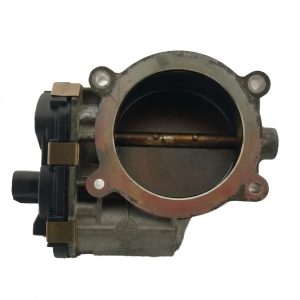
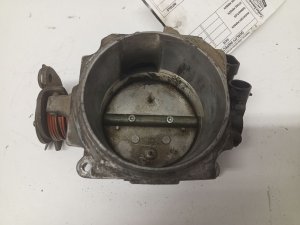
- Throttle Body Assembly
(OEM #19420707 (supersedes 12605109, 217-3153))— This is the primary fix if cleaning the original unit and performing a relearn does not solve the problem. The internal motor or sensors fail. The original part 12605109 has been superseded by 19420707.
Trusted brands: ACDelco (GM Genuine), Delphi, Hitachi
OEM price range: $250-$350
Aftermarket price range: $150-$250 - Throttle Body Gasket
(OEM #12576549)— This should be replaced anytime the throttle body is removed for cleaning or replacement to prevent vacuum leaks.
Trusted brands: ACDelco, Fel-Pro (Part #61469 or #61507 depending on specific engine/year), Mahle
OEM price range: $15-$25
Aftermarket price range: $5-$15 - Throttle Body Cleaner — Required for the most common fix, which is cleaning the carbon buildup from the throttle plate and bore.
Trusted brands: CRC, Gumout, Berryman
Aftermarket price range: $5-$10
Related Codes That Often Appear With This One
- P1516 — This code specifically refers to 'Throttle Actuator Control (TAC) Module Throttle Actuator Position Performance'. It often appears with P2176 as it indicates a problem between what the module is commanding and what the throttle is actually doing.
- P2101 — This code means 'Throttle Actuator Control Motor Circuit Range/Performance', pointing directly to an issue with the electric motor inside the throttle body, which can be a root cause of the P2176 learning failure.
- P0507 — This code indicates 'Idle Air Control System RPM Higher Than Expected'. This can be set alongside P2176 if the throttle plate is stuck slightly open due to carbon, causing a high idle that the PCM cannot correct.
- P2135 — This code, 'Throttle/Pedal Position Sensor/Switch A/B Voltage Correlation', indicates a mismatch between the two throttle position sensors. While it can mean a bad sensor, it's often triggered by the same carbon buildup preventing the throttle from closing properly.
Technical Service Bulletins (TSBs) & Recalls
- PIP4578B
Platform-Specific Known Issues
- Cold Weather Exacerbates Issue: Many owners report that the P2176 code and 'Reduced Engine Power' mode appear most frequently during cold weather or on the first cold start of the day. The cold can cause the grease in the throttle body's internal gears to stiffen and make the carbon buildup more effective at sticking the throttle plate, preventing the motor from overcoming the resistance.
- High Mileage Trigger: This issue is strongly correlated with mileage, often appearing for the first time on vehicles with over 100,000 miles as sufficient carbon has had time to accumulate. TSB PIP4578B specifically calls out 'high mileage vehicles' as being prone to this fault.
Mechanic-Grade Diagnostic Values
- Throttle Position Sensor (TPS) Voltage at Closed Throttle — expected: ~0.5 V (0.4V - 0.6V is an acceptable range). Failure: Voltage significantly outside the expected range at idle, or voltage that does not increase smoothly to ~4.5V at wide-open throttle. A minimum value below 0.35V can also indicate a fault.
- Scan Tool Throttle Position Percentage at Idle — expected: Under 9%. Failure: A high reading, such as 16%, indicates the throttle plate is not closing properly, likely due to carbon buildup.
- System Voltage during Relearn Procedure — expected: >13.5 V with engine running. Failure: Low system voltage during the learn procedure can cause it to fail.
Scan Tool Commands That Help
- Tech2 / GDS2 / Professional Scan Tool: Idle Learn Reset — This function, typically found under 'Engine Control Module' > 'Hot Function' or 'Module Setup', is the most reliable way to force the PCM to relearn the throttle's idle position after cleaning or replacing the throttle body. It is used when manual relearn procedures fail or to ensure a correct reset on the first attempt.
Wiring & Ground Locations
- G103 — On the front of the right (passenger side) cylinder head.. This is a critical engine ground. A poor connection here can cause various sensor and module communication issues, including problems with the electronic throttle control system. A TSB for other issues mentions checking this ground.
- G104 — On the front of the left (driver side) cylinder head.. Similar to G103, this is another main engine ground. Ensuring all engine grounds are clean and tight is a key step when diagnosing elusive electronic issues.
- Engine Harness Chafe Point — On some GM trucks, the engine wiring harness can rub against the front corner of the left cylinder head or the ECM/TCM bracket in the driver's side wheel well.. Although more commonly documented on slightly newer models, harness chafing can damage wires related to the throttle control system, causing intermittent shorts and various DTCs, including P2176. This is a rare but possible cause if direct throttle body fixes fail.
Real Owner Repair Stories
- YouTube channel 'TheMechanicOC' (2011 Buick Enclave (Uses a similar GM electronic throttle control system)) — Check Engine Light with code P2176 that would return immediately after being cleared.
❌ Tried (didn't work) Clearing the code (it came back instantly)., Performing an idle relearn reset with a Snap-on Solus Pro scan tool (code still returned).
✅ What actually fixed it The technician noticed the throttle position on the scan tool was at 16% at idle, which was too high. He inspected the throttle body and found it was extremely dirty with oil and carbon. He cleaned the throttle body with a rag (without solvents), allowing the plate to close fully. After cleaning, he performed the idle relearn procedure again, which successfully cleared the code.
OEM Part Supersession History
12601387→12629992— Part was updated by the manufacturer for improved reliability or design change.12570800→19420713, 12679525— Part was updated by the manufacturer. This part number is often associated with the GMT800 'Classic' models.
Heads up: Always verify the correct part number for your specific VIN, especially for the 2007 model year, as 'Classic' and 'New Body Style' trucks use different parts.
Model Year Variations Within This Range
- 2006-2007 ('Classic' only): These models are part of the GMT800 platform. When ordering parts for a 2007, it is critical to specify if it is a 'Classic' (GMT800) or 'New Body Style' (GMT900), as the throttle bodies and other components are not interchangeable.
- 2007 ('New Body Style') - 2013: These models are part of the GMT900 platform. They feature a completely redesigned frame, body, and interior compared to the GMT800 'Classic' models.
Helpful Videos

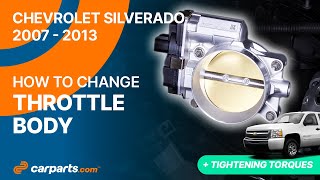
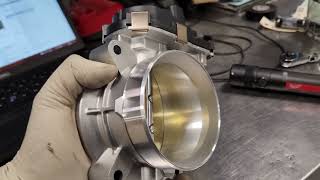
We Have This Part in Stock
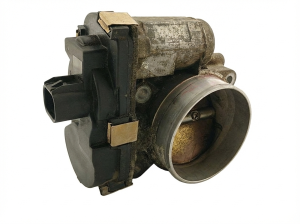
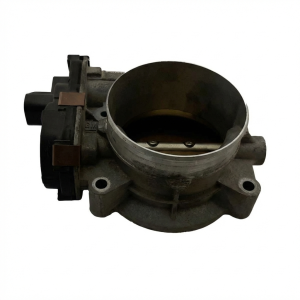

The information in this article is provided for general reference and educational purposes only. Vehicle specifications, procedures, and part compatibility can vary by production date, trim level, and region. Always consult your vehicle's factory service manual and verify part numbers before purchasing or performing repairs. Safety-critical components such as airbags, seat belts, and braking systems should be installed by a qualified professional.
- Chevrolet SILVERADO 1500:
- 🧭 Diagnostic Flowchart
- 🎬 Helpful Videos
- 🛍️ Shop This Part
- What's Unique About the 2006-2013 Chevrolet SILVERADO 1500
- Symptoms You May Notice
- Most Likely Causes
- Rare But Worth Checking
- Diagnosis Steps
- Parts You'll Likely Need
- Related Codes That Often Appear With This One
- Technical Service Bulletins (TSBs) & Recalls
- Platform-Specific Known Issues
- Mechanic-Grade Diagnostic Values
- Scan Tool Commands That Help
- Wiring & Ground Locations
- Real Owner Repair Stories
- OEM Part Supersession History
- Model Year Variations Within This Range
- 🎟️ Get 5% Off