

P2176 on 2014-2018 Chevrolet Suburban: Throttle Idle Learn Failure Causes and Fixes
On a 2014-2018 Suburban, P2176 almost always means the throttle body is clogged with carbon. The fix is to clean the throttle body and perform an idle relearn procedure. If cleaning doesn't work, the throttle body assembly needs replacement (~$120 aftermarket, ~$180+ OEM).
- P2176 on your Suburban is a strong indicator of a dirty throttle body causing a 'Reduced Engine Power' event.
- The most likely and cheapest fix is to remove and thoroughly clean the throttle body and bore.
- Always perform an idle relearn procedure after cleaning or replacing the throttle body to allow the ECM to calibrate to the clean part.
- If cleaning doesn't fix it, a complete throttle body replacement is the next step.
- Always replace the throttle body gasket when removing the unit to prevent future vacuum leaks.
What's Unique About the 2014-2018 Chevrolet SUBURBAN
On this generation of Chevrolet Suburban and its platform mates (Tahoe, Silverado, Sierra, Yukon, Escalade), the EcoTec3 direct-injection engines (5.3L L83 and 6.2L L86) are known for creating significant carbon buildup on the intake valves and throttle body. This buildup physically obstructs the throttle plate, preventing it from closing completely. The ECM attempts to compensate for this blockage by adjusting the throttle angle until it reaches its programming limit and can no longer learn a valid idle position, setting the P2176 code. The issue is so common that GM issued Technical Service Bulletin #PIP4578B, which explicitly lists P2176 for high-mileage vehicles and recommends throttle body cleaning as the primary fix.
Diagnostic Flowchart
Tap your situation to follow the diagnostic path that matches what you're seeing on this vehicle.
Generation note: This range covers two Suburban generations: the 2014 model year, which was the last of the GMT900 platform, and the 2015-2018 models, which are part of the K2XX platform. The primary cause (throttle body carbon buildup) and the fix are common to both generations in this year range, as confirmed by TSB #PIP4578B which applies to 2014 and newer models.
Symptoms You May Notice
- "Reduced Engine Power" message displayed on the dashboard
- Check Engine Light is on
- Unstable, rough, or surging idle
- Engine stalling when coming to a stop
- Hesitation or poor throttle response when accelerating
- No-start or no-crank condition in some instances
- Increased fuel consumption
- Replacing the accelerator pedal position (APP) sensor. The APP sensor tells the computer what the driver wants, but P2176 relates to the throttle body itself not achieving the commanded position at idle.
Most Likely Causes
- Dirty Throttle Body 🔴 High Probability → Shop Fuel Injection Throttle Body Direct injection engines in these trucks are prone to carbon deposits in the intake tract. Over time, this builds up in the throttle body bore and on the throttle plate, physically blocking it.
How to confirm: Remove the air intake duct from the throttle body and visually inspect for a thick, black layer of carbon, especially around the edges of the throttle plate.
Typical fix: Remove the throttle body, clean it thoroughly with dedicated throttle body cleaner and a soft brush, reinstall with a new gasket, and perform an idle relearn procedure.
Est. part cost: $5-$15 for cleaner and a new gasket. - Failed Throttle Body Assembly 🟡 Medium Probability → Shop Fuel Injection Throttle Body If cleaning does not resolve the code, the internal electronics of the throttle position sensor (TPS) or the actuator motor may have failed. This is a non-serviceable part of the assembly.
How to confirm: After a thorough cleaning and a successful idle relearn, the code returns quickly. A scan tool can monitor TPS voltage; erratic readings or a failure to respond to commands indicate a bad sensor or motor.
Typical fix: Replace the entire throttle body assembly with a new unit and perform the idle relearn procedure.
Est. part cost: $90-$200 - Wiring or Connector Issue ⚪ Low Probability Vibrations and heat can cause wires to chafe or pins in the connector to become loose or corroded over time, especially right at the throttle body connector.
How to confirm: Inspect the wiring harness leading to the throttle body for any signs of damage, chafing, or melting. Unplug the connector and check for corroded or bent pins. Gently tug on each wire at the back of the connector to check for internal breaks.
Typical fix: Repair the damaged section of wire or clean/replace the connector pigtail.
Est. part cost: $10-$30
Rare But Worth Checking
- Large Vacuum Leak: A significant unmetered air leak from a cracked hose or bad intake manifold gasket can sometimes prevent the engine from achieving a stable idle, which may interfere with the throttle learn process.
- Faulty Powertrain Control Module (PCM): → Shop Engine Control Module (ECM) This is extremely rare, but a failing PCM can be unable to store learned values or properly control the throttle actuator. This should only be considered after all other possibilities have been exhausted.
Diagnosis Steps
- Scan for any other accompanying trouble codes. Codes like P1516 or P2101 strongly point to the throttle body.
- Remove the air intake tube connected to the throttle body.
- Visually inspect the throttle body bore and plate for heavy carbon buildup. This is the most likely cause.
- If carbon is present, remove the four 10mm bolts holding the throttle body.
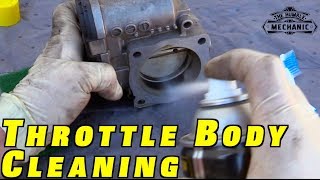
- Disconnect the electrical connector and clean the throttle body thoroughly on a workbench using a dedicated throttle body cleaner and a soft brush or microfiber cloth. 🎬 Watch: How to clean your throttle body the right way. Do not use a wire brush or scratch the bore.
- Reinstall the throttle body with a new gasket. Torque the bolts to specification (typically around 89 lb-in or 10 Nm).
- Perform the Idle Relearn Procedure. This can be done with a scan tool or manually.
- Manual Relearn: Start the engine and let it idle in Park for 3 minutes. You may notice a high idle. After 3 minutes, the idle RPM should begin to drop. Turn the engine OFF for at least 60 seconds. Restart the engine and let it idle in Park for another 3 minutes. The idle should now be normal. If this fails, a drive cycle with speeds over 44 MPH and several decelerations may be needed.
- If the code returns after cleaning and relearn, the throttle body assembly is likely faulty and needs to be replaced.
- Note: Some owners report that only a scan tool-initiated relearn will work. If the manual procedure fails, using a capable scan tool to perform the 'Idle Learn Reset' is the next step.
Parts You'll Likely Need
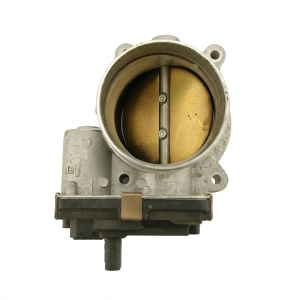
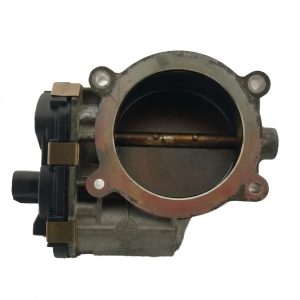
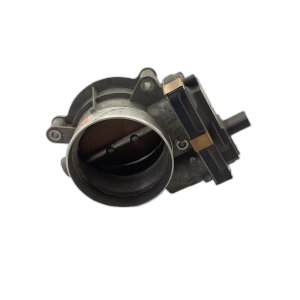
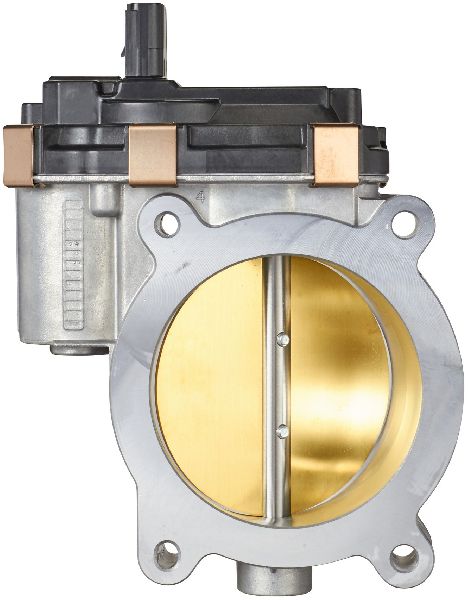
- Throttle Body Assembly
(OEM #12678224)— This is the required fix if a thorough cleaning does not solve the problem, as the internal sensors or motor have failed.
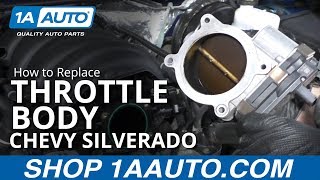
Trusted brands: ACDelco (OEM), Hitachi, Dorman, Standard Motor Products 🎬 See this walkthrough on how to replace the throttle body.
OEM price range: $170-$220
Aftermarket price range: $90-$160 - Throttle Body Gasket
(OEM #12632900)— This gasket should always be replaced whenever the throttle body is removed to prevent vacuum leaks.
Trusted brands: ACDelco, Fel-Pro
OEM price range: $10-$15
Aftermarket price range: $5-$10 - Throttle Body Cleaner — Required for the most common fix, which is cleaning the carbon buildup from the throttle plate and bore.
Trusted brands: CRC, Berryman, Gumout
Aftermarket price range: $5-$10
Related Codes That Often Appear With This One
- P1516 — This code indicates a mismatch between the commanded throttle position and the actual throttle position, often appearing with P2176 as they both relate to TAC performance.
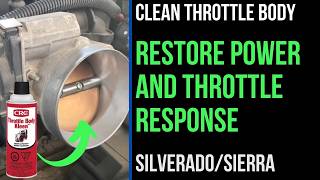
- P2101 — Relates to a performance problem with the throttle actuator control motor circuit, which can be triggered by the same binding/carbon issue. 🎬 Watch: Troubleshooting reduced power mode and related throttle codes.
- P0068 — Indicates a correlation error between the MAP sensor, MAF sensor, and throttle position. A stuck throttle plate can cause this disagreement.
- P0507 — Indicates 'Idle Air Control System RPM Higher Than Expected.' This can occur after cleaning the throttle body if an idle relearn is not performed, as the ECM is still compensating for the old carbon buildup.
Technical Service Bulletins (TSBs) & Recalls
- PIP4578B: Addresses idle surge, reduced engine power mode, and DTCs including P2176 on high mileage vehicles. Recommends cleaning the throttle body and performing an idle learn reset.
Platform-Specific Known Issues
- A Technical Service Bulletin (TSB #PIP4578B) was issued by GM for multiple vehicles, including the 2014-2018 Suburban, for conditions including idle surge, reduced engine power, and DTC P2176 on high-mileage vehicles. The bulletin explicitly states that as carbon builds up, the ECM compensates by increasing the throttle plate angle until it can no longer learn, and recommends cleaning the throttle body and performing an 'idle learn reset' with a scan tool.
Mechanic-Grade Diagnostic Values
- Throttle Position Sensor (TPS) Percentage at Idle — expected: Under 9%. Failure: A reading significantly higher than 9%, such as 16% or more, indicates the throttle plate is being held open by carbon buildup, preventing the idle from being learned correctly.
- Throttle Position Sensor (TPS) 1 and 2 Voltage Sweep — expected: Approximately 0.5V at closed throttle, sweeping smoothly and linearly up to approximately 4.5V at wide-open throttle. The two sensors should have inverse or corresponding smooth sweeps.. Failure: Voltage that is jumpy, erratic, or does not return to the correct closed-throttle voltage indicates a failed sensor within the throttle body assembly.
- Scan Tool Desired vs. Actual Throttle Angle — expected: The 'Desired' and 'Actual' throttle angle percentages should match closely (within 1-2%) as you command the throttle open with a bidirectional scan tool.. Failure: A large discrepancy between the commanded (desired) angle and the reported (actual) angle points to a failing throttle actuator motor or a binding throttle plate.
Scan Tool Commands That Help
- GDS2, Autel, Snap-on, or other professional scan tool: Idle Learn Reset — This function is critical after cleaning or replacing the throttle body. It forces the ECM to erase its previously learned (and now incorrect) idle values and relearn the new, true closed-throttle position. It is often found under 'Module Setup' or 'Special Functions'.
- Professional scan tool with bidirectional controls: Throttle Position Control — This allows a technician to command the throttle plate to a specific percentage (e.g., 10%, 25%, 50%) and verify that the TPS data reflects that exact position. This is used to confirm if the actuator motor is functioning correctly and the sensor is reporting accurately before replacing the part.
Wiring & Ground Locations
- Throttle Body Connector (L83 Engine) — The 6-pin electrical connector on the electronic throttle body assembly.. Testing for correct voltage and ground at this connector is a key diagnostic step. Pin G (Dark Green) is TP Sensor 1 Signal, Pin F (Purple) is TP Sensor 2 Signal, Pin E (Light Blue/Black) is 5V Reference, and Pin B (Black/White) is the Low Reference/Ground.
- G103 — On GMT900 (2014) models, this ground is often located on the front of the passenger side cylinder head. On K2XX (2015+) models, a key body ground designated G103 is on the cowl in the engine compartment, above the brake booster.. Poor engine or body grounds can cause erratic behavior in the ECM and other modules, potentially interfering with the storage of learned values like the throttle idle position. Cleaning these grounds is a good practice when diagnosing elusive electronic issues.
Real Owner Repair Stories
- YouTube channel 'The Mechanic OC' (2011 Buick Enclave (similar GM electronic throttle system)) — Check engine light with code P2176 that came back instantly after being cleared. Scan tool showed throttle position at 16% during idle.
❌ Tried (didn't work) Clearing the code, performing a scan-tool initiated 'Idle Relearn Reset' before cleaning.
✅ What actually fixed it The throttle body was found to be full of oil and carbon. After thoroughly cleaning the throttle plate and bore, the idle position returned to a normal range (under 9%), and the idle relearn procedure then worked successfully. - YouTube channel 'SuperMarioDiagnostics' (2007 GMC Yukon 5.3L) — Very high idle at over 2,000 RPM after the throttle body was replaced.
❌ Tried (didn't work) Starting the vehicle without performing a relearn.
✅ What actually fixed it Using an Autel scan tool, the technician accessed the 'Special Functions' -> 'Module Setup' -> 'Idle Learn Reset' command. The reset was performed, and upon restarting the engine, the idle immediately returned to a normal ~650 RPM. - YouTube channel 'That's a G Thing' (2008 GMC Sierra (similar GM truck platform)) — Engine idling at 3,000 RPM after cleaning the throttle body.
❌ Tried (didn't work) Multiple manual relearn procedures found online, such as 'let the truck idle for 3 minutes, shut it off for 60 seconds, restart'. The user called these methods 'a bunch of crap' that did not work.
✅ What actually fixed it The only successful fix was using a scan tool (Autel) to perform the specific 'Idle Learn Reset' function found under the 'Service' -> 'Throttle' menu. This immediately corrected the high idle.
"I Checked Everything" — The Actual Cause
- This diagnostic pattern is generally not applicable to code P2176. The fault is almost always related to the throttle body's physical state (carbon buildup) or its electronic calibration (learned values), neither of which would be identified by a smoke test for vacuum leaks.
When the Usual Fixes Don't Work
- While many service manuals and online guides describe a 'manual' idle relearn procedure (e.g., idling the engine for set periods of time), real-world experience from mechanics and owners frequently shows this method is ineffective for this specific code, especially after a thorough throttle body cleaning. The significant change in airflow often requires a forced reset using a scan tool's 'Idle Learn Reset' function to resolve the P2176 code and the associated high idle. Relying solely on the manual procedure may lead to the incorrect conclusion that the throttle body is faulty when it only needs a proper, tool-commanded reset.
OEM Part Supersession History
12678224→12740725— Standard part revision and update by the manufacturer.
Heads up: Applies to 2015-2018 K2XX platform Suburbans with the 5.3L L83 or 6.2L L86 engines.12572658, 12580760→12679524— Standard part revision and update by the manufacturer.
Heads up: This part is for the 2014 GMT900 platform Suburban with the 5.3L LMG engine, and is NOT interchangeable with the 2015+ models.
Model Year Variations Within This Range
- 2014 only: The 2014 Suburban is a GMT900 platform vehicle, typically equipped with the 5.3L LMG V8 engine. It uses a different throttle body (e.g., PN 12679524) than later models. While it suffers from the same carbon buildup issue, the physical part is not interchangeable with 2015+ models.
- 2015-2018: These Suburbans are K2XX platform vehicles equipped with the 5.3L L83 or 6.2L L86 EcoTec3 direct-injection engines. They use throttle body PN 12678224 (or its successor 12740725).
Helpful Videos

Used OEM Parts in Stock
New Aftermarket Parts Available

The information in this article is provided for general reference and educational purposes only. Vehicle specifications, procedures, and part compatibility can vary by production date, trim level, and region. Always consult your vehicle's factory service manual and verify part numbers before purchasing or performing repairs. Safety-critical components such as airbags, seat belts, and braking systems should be installed by a qualified professional.
- Chevrolet SUBURBAN:
- 🧭 Diagnostic Flowchart
- 🎬 Helpful Videos
- 🛍️ Shop This Part
- What's Unique About the 2014-2018 Chevrolet SUBURBAN
- Symptoms You May Notice
- Most Likely Causes
- Rare But Worth Checking
- Diagnosis Steps
- Parts You'll Likely Need
- Related Codes That Often Appear With This One
- Technical Service Bulletins (TSBs) & Recalls
- Platform-Specific Known Issues
- Mechanic-Grade Diagnostic Values
- Scan Tool Commands That Help
- Wiring & Ground Locations
- Real Owner Repair Stories
- "I Checked Everything" — The Actual Cause
- When the Usual Fixes Don't Work
- OEM Part Supersession History
- Model Year Variations Within This Range
- 🎟️ Get 5% Off