

P2176 on 2005-2009 Chevrolet Trailblazer: Causes, Fixes & Idle Relearn
On a 2005-2009 Trailblazer, P2176 almost always points to a dirty throttle body. The fix is often a simple cleaning and performing an idle relearn procedure. This is a very common, low-cost DIY repair that can resolve unstable idle and 'Reduced Engine Power' mode.
- P2176 on a Trailblazer is most often caused by a dirty throttle body, not a failed part.
- The fix is typically a DIY-friendly cleaning of the throttle body and performing an idle relearn procedure.
- Always replace the throttle body gasket after cleaning to prevent vacuum leaks.
- If cleaning and relearning fail, inspect wiring before replacing the entire throttle body assembly.
What's Unique About the 2005-2009 Chevrolet TRAILBLAZER
The GMT360 platform, which includes the Trailblazer and its siblings, is well-known for accumulating carbon and oil deposits in the throttle body over time. This is especially true for higher-mileage vehicles, as noted by GM's own Technical Service Bulletin PIP4578B. This buildup physically restricts the throttle plate from closing fully, which is a direct cause for the P2176 code as the computer can no longer find the true 'closed' position it needs for a stable idle. The issue is so prevalent that it affects nearly all vehicles on this platform.
Diagnostic Flowchart
Tap your situation to follow the diagnostic path that matches what you're seeing on this vehicle.
Symptoms You May Notice
- Check Engine Light is on
- "Reduced Engine Power" message on the dash
- Unstable, surging, or high idle speed, sometimes fluctuating between 600-1200 RPM
- Engine may stall when coming to a stop
- Poor, delayed, or completely unresponsive acceleration
- Engine may not start
- Replacing the accelerator pedal position (APP) sensor. While part of the electronic throttle system, the APP sensor rarely causes this specific 'idle not learned' code. The issue is almost always at the throttle body itself.
Most Likely Causes
- Dirty Throttle Body 🔴 High Probability → Shop Fuel Injection Throttle Body As documented in TSB PIP4578B, carbon and oil deposits are common on high-mileage GMT360s, restricting the throttle plate's movement and causing the PCM to lose its idle calibration.
How to confirm: Remove the air intake duct from the throttle body and visually inspect the throttle plate and bore for a black, sticky film of carbon. The carbon ring will be most evident where the plate meets the bore.
Typical fix: Remove the throttle body (typically four 10mm bolts), clean it thoroughly with a dedicated throttle body cleaner and a soft brush or rag, and reinstall with a new gasket. This is the most common and successful repair.
Est. part cost: $5 - $20 for cleaner and a gasket. - Idle Relearn Procedure Not Performed 🟡 Medium Probability This occurs after cleaning the throttle body, replacing it, or disconnecting the battery for an extended period. The computer retains its old 'dirty' settings and gets confused by the new, clean airflow, requiring a manual reset to learn the new baseline.
How to confirm: This is the diagnosis if the code P2176 appears immediately after cleaning the throttle body, replacing the battery, or clearing codes with a scan tool.
Typical fix: Perform a throttle idle relearn procedure. This can often be done without a scan tool, though a scan tool provides a more certain reset.
Est. part cost: $0 - Failing Throttle Body Assembly ⚪ Low Probability → Shop Fuel Injection Throttle Body The internal electric motor or position sensors can fail over time, though it's much less common than just being dirty. A user on GMTNation described how replacing the throttle body was the ultimate fix after cleaning failed.
How to confirm: If a thorough cleaning and multiple, correctly-performed relearn procedures do not fix the code, and the wiring is intact, the unit itself is likely faulty. A scan tool may show erratic TPS voltage readings.
Typical fix: Replace the entire throttle body assembly.
Est. part cost: $150 - $300 for an aftermarket part, $250-$400 for OEM. - Vacuum Leak ⚪ Low Probability
How to confirm: Listen for hissing sounds around the engine bay, particularly around the intake manifold and vacuum hoses. A mechanic can perform a smoke test to precisely find the source of the leak.
Typical fix: Replace the cracked vacuum hose or faulty gasket (e.g., intake manifold gasket).
Est. part cost: $10 - $100 depending on the source of the leak.
Rare But Worth Checking
- PCM (Powertrain Control Module) Fault: This is very rare. All other possibilities, especially the dirty throttle body, wiring, and relearn procedure, should be exhausted before considering PCM replacement.
- Wiring or Connector Issues: A damaged wire or corroded pins in the connector to the throttle body can cause intermittent signals, triggering the code. One owner on a forum traced the issue to a loose connection in the fuse box. Wiggling the harness while the engine is running can sometimes expose a bad connection.
Diagnosis Steps
- Scan for any other trouble codes. Address those first if they are not related to the throttle system (P1516, P2101, P0506, etc.).
- Visually inspect the throttle body. Remove the intake hose and look for heavy carbon buildup around the throttle plate and bore.
- If dirty, remove the throttle body from the intake manifold. It is typically held by four 10mm bolts. Disconnect the electrical connector first.
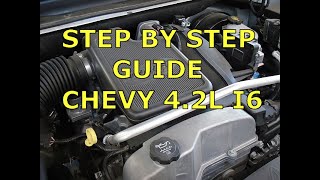
- Clean the throttle body thoroughly using a dedicated throttle body cleaner and a soft cloth or non-metallic brush (an old toothbrush works well). 🎬 Watch: Step-by-step guide to cleaning your Trailblazer throttle body. Do not use harsh tools that could scratch the bore. Manually moving the plate to clean behind it is necessary, but do not force it against its stops.
- Clean the gasket mating surfaces on both the throttle body and the intake manifold.
- Reinstall the throttle body with a new gasket to prevent future vacuum leaks. Torque bolts in a criss-cross pattern, but do not overtighten as the intake is plastic.
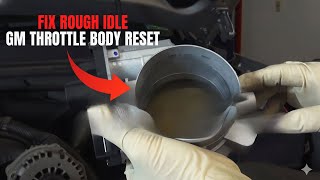
- Perform the Idle Relearn Procedure. A widely cited non-scan tool method is: 1) Start the engine and let it idle in Park for 3 minutes. The idle may be high. 2) Turn the engine OFF for at least 60 seconds. 3) Start the engine again and let it idle in Park for another 3 minutes. The idle should now be stable and normal. 🎬 See how to manually reset and relearn your throttle body. Note: Some forum users and mechanics insist this can only be properly done with a scan tool's 'Idle Learn Reset' function.
- If the code returns, inspect the wiring harness and connector at the throttle body for damage, corrosion, or loose pins.
- If all other steps fail, the throttle body assembly itself has likely failed and needs to be replaced.
Parts You'll Likely Need
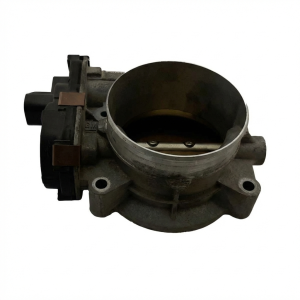
- Throttle Body Assembly
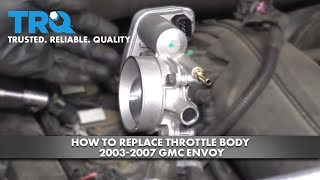
(OEM #12568580)— If a thorough cleaning doesn't resolve the issue, the internal electronics or motor of the throttle body has likely failed, requiring complete replacement. 🎬 Watch this walkthrough on how to replace the throttle body. This part number is widely cited for the 4.2L I6 engine. The V8 engines may use a different part number.
Trusted brands: ACDelco (OEM), Standard Motor Products, Dorman, Hitachi
OEM price range: $250-$400
Aftermarket price range: $150-$250 - Throttle Body Gasket
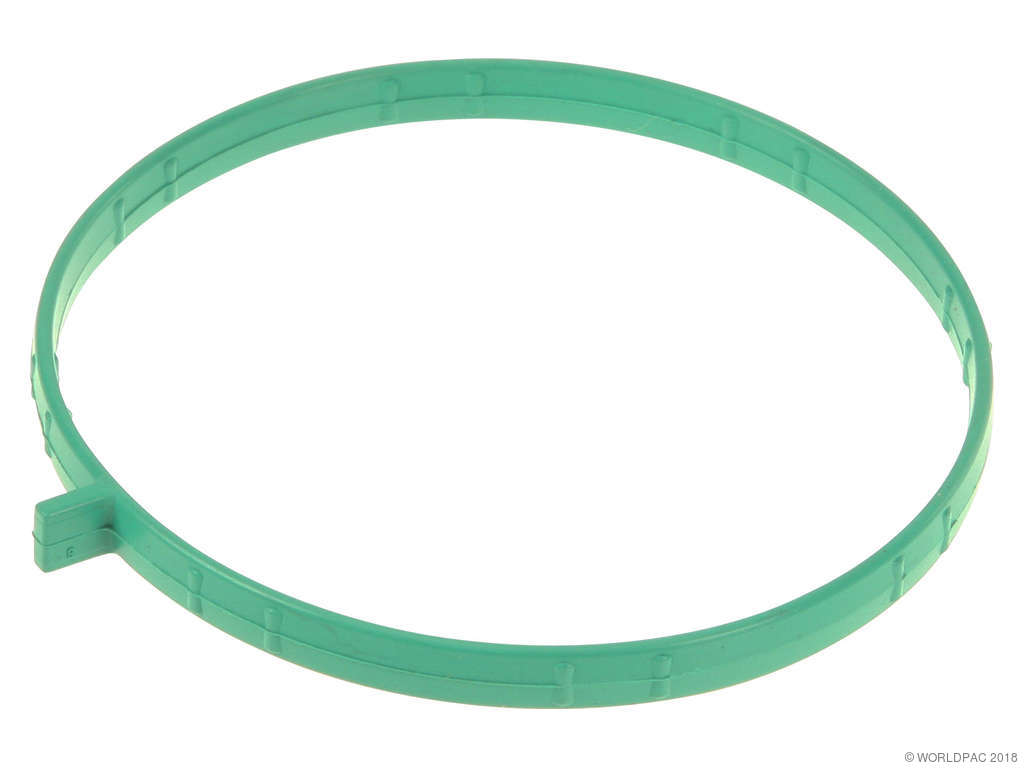
(OEM #217-1592)— This gasket should always be replaced whenever the throttle body is removed for cleaning or replacement to prevent vacuum leaks. It is an inexpensive but critical part for a proper seal.
Trusted brands: ACDelco (OEM), Fel-Pro, Mahle
OEM price range: $10-$20
Aftermarket price range: $5-$10 - Throttle Body Cleaner — A specialized solvent is required to break down the carbon and oil deposits without damaging sensors or coatings inside the throttle body.
Trusted brands: CRC, Gumout, ACDelco
OEM price range: $5-$15
Aftermarket price range: $5-$15
Related Codes That Often Appear With This One
- P1516 — This code indicates a mismatch between the predicted and actual throttle position, often appearing with P2176 due to the same throttle body issues. It is mentioned in TSBs PIP4578B and PIP4573B.
- P2101 — Relates to a throttle actuator control motor circuit range/performance issue, which can be triggered by a dirty or failing throttle body. It is also mentioned in TSBs PIP4578B and PIP4573B.
- P0506 — Indicates 'Idle Air Control System RPM Lower Than Expected,' which can be caused by a carbon-choked throttle body that isn't allowing the computer to properly manage idle. TSB PIP4578B also lists this as a related code.
- P0121 — Indicates a 'Throttle/Pedal Position Sensor 'A' Circuit Range/Performance' problem. This can be triggered if the carbon buildup prevents the sensor from reading the expected closed-throttle voltage.
Technical Service Bulletins (TSBs) & Recalls
- PIP4578B: Mentions P2176 in relation to idle surge and reduced power on high-mileage vehicles, suggesting throttle body issues.
- PIP4573B: Connects P2176 to operation in very cold temperatures.
Platform-Specific Known Issues
- TSB #PIP4578B: Explicitly links P2176 with high-mileage vehicles experiencing idle surge or reduced power mode due to throttle body coking. It recommends cleaning the throttle body and performing an 'idle learn reset' with a Tech 2 scan tool.
- TSB #PIP4573B: Indicates this code can appear in extremely cold ambient temperatures (around -10°F / -23°C), possibly due to stiff grease or ice/deposits in the throttle body preventing proper movement.
Mechanic-Grade Diagnostic Values
- Throttle Position Sensor (TPS) Voltage at Idle — expected: ~0.5 V (closed throttle). Failure: Values outside the 0.4–0.6 V range at idle can indicate a sensor or calibration issue. A scan tool reading of over 9% at idle before cleaning is a strong indicator of heavy carbon buildup.
- Throttle Position Sensor (TPS) Voltage at Wide Open Throttle (WOT) — expected: ~4.5 V. Failure: Voltage that doesn't reach near 4.5V or doesn't change smoothly from idle indicates a faulty sensor.
- Throttle Actuator Control (TAC) Motor Resistance (4.2L I6) — expected: 2 to 13 Ohms. Failure: A reading below 1 Ohm suggests an internal short circuit in the motor. This test is performed between pins E and F on the throttle body.
- TPS 1 Sensor Resistance (4.2L I6) — expected: Approximately 3 kOhms. Failure: A reading of 0 Ohms (short) or OL (open circuit) indicates a failed sensor. This test is performed between pins C and G on the throttle body.
- Battery Voltage during Relearn — expected: Stable and above 12.6V (engine off), >13.5V (engine running). Failure: Low or unstable voltage can cause the idle learn procedure to fail and set the P2176 code.
Scan Tool Commands That Help
- Tech 2 / GDS2 (or equivalent professional scanner): Idle Learn Reset — This function should be used after cleaning or replacing the throttle body to force the PCM to immediately find the new zero-point for the throttle plate. While a manual relearn may work, a scan tool reset is the GM-recommended and most reliable method, especially if the code persists.
Wiring & Ground Locations
- Throttle Body Connector (4.2L I6) — The 8-pin electrical connector on the throttle body assembly.. Provides power, ground, and signal lines for the two internal TPS sensors and the actuator motor. Corrosion or damage to these pins is a potential cause. Pin E (Yellow) and Pin F (Brown) control the motor. Pins A, C, D, G, and H are for the TPS sensors and their 5V reference/ground circuits.
- G101 — On the lower front of the engine block.. This is a primary ground location for the Engine Control Module (ECM) and Transmission Control Module (TCM). A poor connection here can cause a wide range of erratic sensor readings and control module behavior, including issues with the throttle control system.
- G103 — At the left rear of the engine compartment on the cowl, above the brake booster.. This ground serves the Body Control Module (BCM), Instrument Panel Cluster (IPC), and the Data Link Connector (DLC). While not a direct engine ground, a fault here can cause communication issues that may interfere with diagnostics.
- Underhood Fuse Block (UBEC) — The main fuse box in the engine bay.. A real-world repair showed that a poor internal connection within the fuse block caused a loss of voltage to the ECM (related to code P1682), which in turn triggered P2176 because the throttle body was not responding correctly due to the power issue.
Real Owner Repair Stories
- GMTNation forum user (Year not specified, 4.2L I6) — Intermittent 'Reduced Engine Power' (REP) and SES light, with codes P2101, P2176, P1516. Eventually, the REP mode became persistent and would not clear on restart.
❌ Tried (didn't work) Clearing codes with scanner (codes returned immediately), Disconnecting fan clutch harness, Replacing ignition switch
✅ What actually fixed it Replacing the entire throttle body assembly with a salvaged unit. The owner suspected the internal TPS sensor had completely failed, which was preventing the PCM from learning the idle position. - YouTube video by Sergio Velazquez (Chevrolet Trailblazer, year/engine not specified) — Reduced power light on, engine won't rev past 2000 RPM, codes P2176 and P1682 (Ignition Switch Circuit 2).
❌ Tried (didn't work) Replacing the throttle body, Replacing the throttle body connector
✅ What actually fixed it The root cause was a lack of voltage to the ECM. The technician traced the problem to a loose internal connection in the underhood fuse block. Wiggling the fuse block caused the voltage to cut out. Securing the internal connections of the fuse block restored proper voltage to the ECM and resolved all codes.
OEM Part Supersession History
12570800→19420713— Standard part lifecycle update by GM.
Heads up: This part number is for the V8 engines (5.3L/6.0L) and is not compatible with the 4.2L I6 engine.
Model Year Variations Within This Range
- 2005-2009: The 4.2L I6 engine uses a different throttle body (e.g., OEM PN 12568580) than the 5.3L and 6.0L V8 engines (e.g., OEM PN 12570800). The parts are not interchangeable. While the P2176 code can occur on all engines for the same reasons (dirty throttle body), the specific part needed for replacement is engine-dependent.
- 2008-2009 (V8 Models): GM issued a Special Coverage Adjustment (11273A) for the throttle position sensor on some V8 models, indicating a known weakness in the electronics for those specific years/engines.
Helpful Videos

Used OEM Parts in Stock
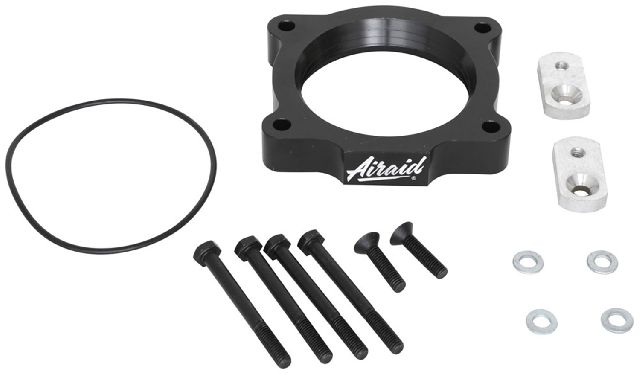
New Aftermarket Parts Available




The information in this article is provided for general reference and educational purposes only. Vehicle specifications, procedures, and part compatibility can vary by production date, trim level, and region. Always consult your vehicle's factory service manual and verify part numbers before purchasing or performing repairs. Safety-critical components such as airbags, seat belts, and braking systems should be installed by a qualified professional.
- Chevrolet TRAILBLAZER:
- 🧭 Diagnostic Flowchart
- 🎬 Helpful Videos
- 🛍️ Shop This Part
- What's Unique About the 2005-2009 Chevrolet TRAILBLAZER
- Symptoms You May Notice
- Most Likely Causes
- Rare But Worth Checking
- Diagnosis Steps
- Parts You'll Likely Need
- Related Codes That Often Appear With This One
- Technical Service Bulletins (TSBs) & Recalls
- Platform-Specific Known Issues
- Mechanic-Grade Diagnostic Values
- Scan Tool Commands That Help
- Wiring & Ground Locations
- Real Owner Repair Stories
- OEM Part Supersession History
- Model Year Variations Within This Range
- 🎟️ Get 5% Off