

P2176 on 2004-2011 GMC Canyon: Throttle Position Not Learned Causes & Fixes
On a 2004-2011 GMC Canyon, code P2176 is most often caused by a dirty throttle body restricting the throttle plate's movement. Cleaning the throttle body and performing an idle relearn procedure usually fixes the issue. If that fails, the throttle body assembly likely needs replacement. In very cold weather, the issue can be triggered by a frozen PCV system.
- P2176 on your GMC Canyon almost always points to a problem with the throttle body.
- The most likely and cheapest first step is to thoroughly clean the throttle body of all carbon buildup.
- After cleaning or replacing the throttle body, you MUST perform an idle relearn procedure.
- If cleaning doesn't work, the entire throttle body assembly needs to be replaced; the sensors are built-in and cannot be replaced separately.
What's Unique About the 2004-2011 Gmc CANYON
The first-generation GMC Canyon and its platform mates (Chevy Colorado, Hummer H3) are known for carbon and oil sludge buildup in the throttle body at high mileage. This buildup, originating from the PCV system, physically obstructs the throttle blade, preventing it from closing properly and triggering P2176 when the ECM tries to perform its idle learning routine. This problem is exacerbated in very cold weather (around -10°F / -23°C), where a frozen PCV system can cause multiple throttle-related codes, including P2176, as noted in TSB PIP4573B.
Diagnostic Flowchart
Tap your situation to follow the diagnostic path that matches what you're seeing on this vehicle.
Symptoms You May Notice
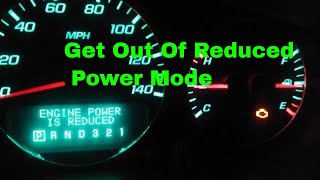
- Reduced Engine Power message and limited acceleration
- Engine stalling when coming to a stop or at idle
- Rough, surging, or unstable idle
- Poor acceleration or hesitation
- Check Engine Light is on
- Traction Control or Stability System warning lights may also illuminate.
- Replacing the accelerator pedal position (APP) sensor. While part of the electronic throttle system, the APP sensor has its own set of codes and is not the cause of P2176.
- Replacing the Mass Airflow (MAF) sensor. A dirty MAF sensor can cause performance issues but will not directly cause a failure to learn the throttle idle position.
Most Likely Causes
- Dirty or Coked Throttle Body 🔴 High Probability → Shop Fuel Injection Throttle Body As noted in TSB PIP4578B, carbon and oil sludge from the PCV system accumulates in the throttle body, especially on high-mileage vehicles. This buildup physically blocks the throttle plate from closing to its intended idle position, preventing the learn procedure from completing.
How to confirm: Remove the intake air duct and visually inspect the throttle plate and bore for a thick, black layer of carbon buildup. With a scan tool, observe the throttle position percentage at idle; a high reading (e.g., over 9-10%) can indicate the plate is being held open by debris.
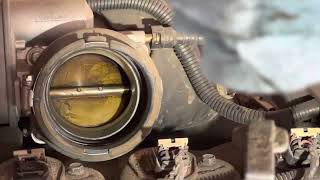
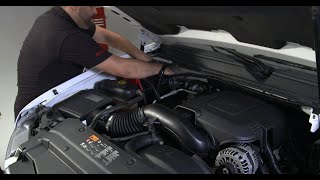
Typical fix: Thoroughly clean the throttle body bore and both sides of the throttle plate using a dedicated throttle body cleaner and a soft brush or cloth. 🎬 Watch: Step-by-step guide to cleaning your Canyon's throttle body. Do not force the butterfly valve by hand. An idle relearn procedure must be performed after cleaning.
Est. part cost: $5-$15 for cleaner - Failed Idle Relearn Procedure 🟡 Medium Probability
How to confirm: This occurs if the battery was recently disconnected or replaced, or if the throttle body was cleaned/replaced and the relearn was not performed correctly. The code P2176 appears immediately after the service.
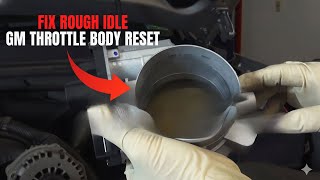
Typical fix: Perform the specific GM idle relearn procedure. Several methods exist. The most common is: 1) Start engine and idle in Park for 3 minutes. 2) Turn engine off for 60 seconds. 3) Restart engine and idle for another 3 minutes. Another method involves key cycles: 1) Ignition ON (engine off) for 60 seconds. 2) Ignition OFF for 30 seconds. 3) Clear codes. It may take a few drive cycles for the computer to fully adapt. 🎬 See this video for a detailed breakdown of GM relearn methods.
Est. part cost: $0 - Failed Throttle Body Assembly 🟡 Medium Probability → Shop Fuel Injection Throttle Body The internal electronic components of the throttle position sensor (TPS) or the actuator motor can fail over time. A user on the GMTNation forum reported the internal sensor had likely disintegrated, causing rattling inside the housing and preventing the idle learn. The TPS is integrated into the throttle body and is not serviced separately.
How to confirm: If cleaning the throttle body and performing a relearn does not clear the code, and the wiring is confirmed to be good, the throttle body assembly is the likely culprit. A scan tool can monitor throttle position sensor voltage for erratic readings or a complete lack of response.
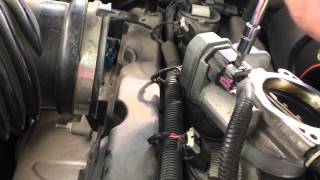
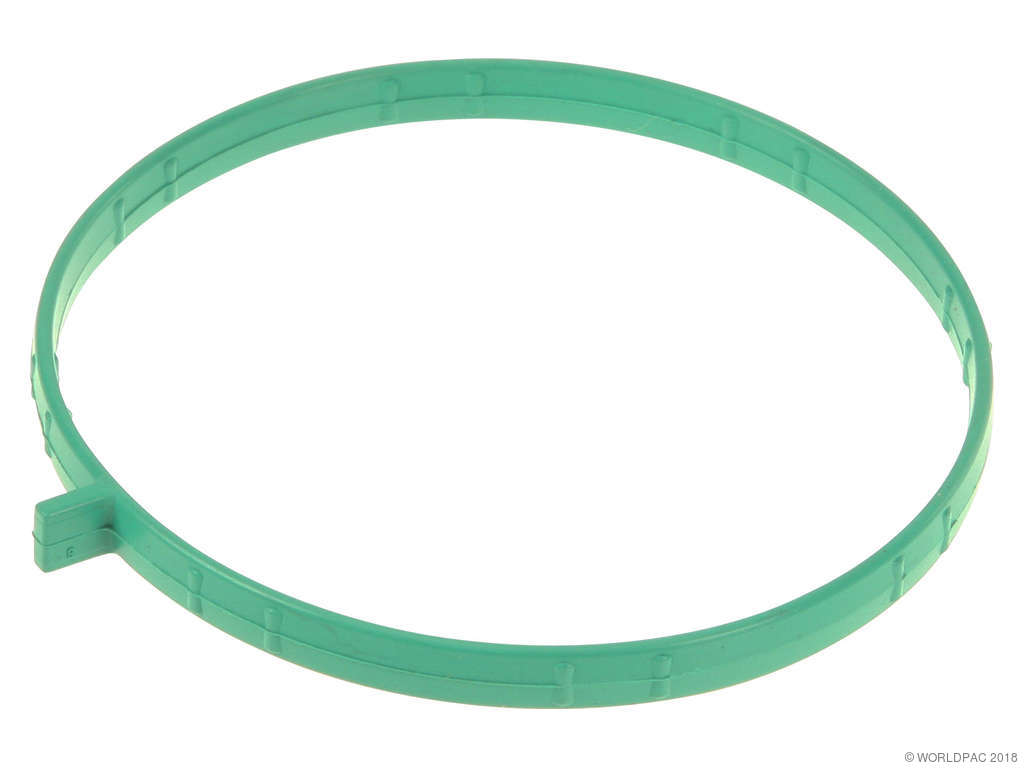
Typical fix: Replace the entire throttle body assembly. A new gasket should be used, and an idle relearn procedure is required after installation. 🎬 Watch this walkthrough for replacing the throttle body assembly.
Est. part cost: $150-$300 - Wiring or Connector Issue ⚪ Low Probability
How to confirm: Visually inspect the wiring harness and connector at the throttle body for any signs of damage, corrosion, or loose pins. Wiggle the connector and harness with the engine running to see if it affects the idle or triggers the fault.
Typical fix: Repair the damaged section of the harness or clean/replace the connector. A Hummer H3 owner with identical codes traced the final fault to a short in the wiring to the PCM after replacing both the throttle body and PCM failed to provide a permanent fix.
Est. part cost: $10-$50
Rare But Worth Checking
- Frozen PCV System: TSB PIP4573B specifically identifies this as a cause during very cold weather (-10°F / -23°C). A frozen PCV system can cause excessive crankcase pressure, leading to oil leaks and affecting throttle body operation, triggering P2176 and other codes. The fix involves inspecting and clearing the PCV lines of ice/sludge.
- Engine Control Module (ECM) Fault: → Shop Engine Control Module (ECM) This is very rare. Before condemning the ECM, all other possibilities, especially the throttle body and its wiring, must be exhaustively ruled out. In one documented case, the ECM was replaced, but the root cause was later found to be a wiring short.
- Large Vacuum Leak: A significant vacuum leak near the throttle body could theoretically introduce enough unmetered air to prevent the system from learning a stable idle, but this would typically be accompanied by other lean codes.
Diagnosis Steps
- Check for other stored DTCs. Codes like P1516, P2101, or P2119 strongly point to a throttle body issue.
- Inspect the intake air duct for any obstructions or loose connections.
- Remove the intake duct from the throttle body. Visually inspect the throttle bore and plate for heavy carbon buildup.
- If significant buildup is present, thoroughly clean the throttle body with a dedicated cleaner and a soft brush. Ensure you clean the back of the plate and the entire bore surface without forcing the plate open manually.
- Reconnect everything and perform the GM idle relearn procedure. Start with the 3-minute idle / 60-second off / 3-minute idle method.
- If the code returns immediately, try to clear the code with the engine running, as this has been reported to work when clearing with the engine off fails.
- If the code persists, inspect the throttle body electrical connector and wiring harness for any visible damage, corrosion, or loose pins. Wiggle the harness to check for intermittent shorts.
- Using a scan tool, monitor live data for the Throttle Position Sensors. Look for smooth, linear voltage changes as the pedal is pressed and released. A high idle percentage (>9%) can also point to an issue.
- If cleaning and relearning fail and the wiring is intact, the throttle body assembly itself is likely faulty and requires replacement.
- After replacing the throttle body, perform the idle relearn procedure again.
Parts You'll Likely Need
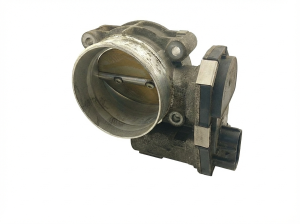
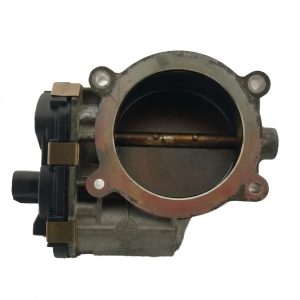
- Throttle Body Assembly
(OEM #12609500 (For 3.7L I5), 12616439 / 12631018 (For 2.9L I4))— This is the most common fix if cleaning the original part does not resolve the code. The internal sensors and motor are not serviceable separately. Ensure you get the correct part for your specific engine.
Trusted brands: ACDelco, GM Genuine Parts, Bosch
OEM price range: $210-$490
Aftermarket price range: $90-$250 - Throttle Body Cleaner — Required for the most probable first step in fixing the issue: cleaning carbon buildup from the throttle plate and bore.
Trusted brands: CRC, Berryman, Gumout
Aftermarket price range: $5-$15
Related Codes That Often Appear With This One
- P1516 — This is a related GM-specific code for Throttle Actuator Control (TAC) Module Performance, often set together with P2176 when the throttle plate's actual position doesn't match what the ECM has commanded.
- P2101 — This code indicates a Throttle Actuator Position Performance issue, pointing to a problem within the throttle body assembly itself, such as a sticking plate or failing motor.
- P0068 — Indicates a correlation problem between the MAP sensor, MAF sensor, and throttle position. A stuck throttle plate can cause this disagreement between airflow and throttle angle.
- P2119 — This code for Throttle Closed Position Performance directly relates to the throttle plate not returning to its rest position correctly, which is the core issue of the P2176 fault.
Technical Service Bulletins (TSBs) & Recalls
- PIP4578B: Mentions P2176 in relation to idle surge and reduced power on high-mileage vehicles due to carbon buildup in the throttle body.
- PIP4573B: Connects P2176 with other throttle codes during very cold weather conditions, potentially caused by a frozen PCV system.
Platform-Specific Known Issues
- TSB #PIP4578B notes that P2176 can occur on high-mileage vehicles, leading to idle surge and reduced engine power mode due to carbon buildup.
- TSB #PIP4573B specifically links the occurrence of P2176 to very cold ambient temperatures (around -10°F / -23°C). This can be caused by a frozen PCV system creating excessive
Mechanic-Grade Diagnostic Values
- Throttle Position Percentage at Idle (Scan Tool) — expected: < 9%. Failure: A reading of 10% or higher, such as 16%, indicates the throttle plate is not closing properly, likely due to carbon buildup.
- Throttle Position Sensor (TPS) Voltage at Closed Throttle — expected: 0.4V - 0.6V. Failure: A voltage reading outside this range indicates a potential fault in the TPS.
- Throttle Position Sensor (TPS) Voltage at Wide Open Throttle (WOT) — expected: ~4.5V. Failure: A voltage reading significantly different from 4.5V at WOT can indicate a sensor or wiring issue.
- TPS 1 Resistance (for 2004-2006 2.8L) — expected: 2kΩ - 4kΩ. Failure: An open circuit (infinite resistance) or a short (zero resistance) indicates a failed sensor.
Scan Tool Commands That Help
- Tech 2 / GDS2 / Professional Scan Tool: Idle Relearn Reset / Reset Idle Learn — This function, typically found under 'Module Set Up' or 'Special Functions -> TAC System', must be used after cleaning or replacing the throttle body to erase the old learned throttle angle values from the ECM and force it to learn the new, correct idle position.
Wiring & Ground Locations
- Throttle Body Connector — Connected directly to the electronic throttle body, on the driver's side of the intake manifold.. This 8-pin connector provides power, ground, and signal lines for the throttle actuator motor and the dual throttle position sensors. Wires can break internally at the connector from vibration, causing intermittent or total loss of throttle control and triggering P2176.
- G104 — Rear of the cylinder bank.. This is a primary ground point for the Engine Control Module (ECM). A poor connection here can cause a wide range of erratic engine control behavior, including issues with the throttle control system.
- SP-105 / SP-106 — SP-105 is on the driver's side inner fender near the battery; SP-106 is on the passenger side inner fender behind the engine airbox.. These are major under-hood ground splice packs. Corrosion or looseness at these points is a known issue on 1st Gen Colorado/Canyons and can cause seemingly unrelated electrical problems, including issues with modules and sensors that are critical for engine and throttle control.
Real Owner Repair Stories
- YouTube channel 'Adam's Corner' (GMC Canyon (year not specified, but 1st generation)) — Reduced engine power, P2176 code, throttle position stuck at 33% on scan tool, no response to gas pedal.
❌ Tried (didn't work) Initial diagnosis pointed to a bad throttle body, but further testing was needed.
✅ What actually fixed it A broken wire for the TAC Motor Control 1 (yellow/light blue wire) was found inside the wiring harness right at the throttle body connector. Replacing the connector pigtail resolved the issue. - YouTube channel 'Budget Mechanic' (2011 Buick Enclave (GM vehicle with similar electronic throttle control system)) — Check Engine Light with code P2176 that would return instantly after being cleared.
❌ Tried (didn't work) Clearing the code without diagnosis., Performing a scan tool idle relearn procedure before cleaning.
✅ What actually fixed it The throttle body was found to be extremely dirty with carbon, causing the throttle plate position to read 16% at idle on a scan tool (where <9% is expected). Thoroughly cleaning the throttle body and then performing the 'Idle Relearn Reset' with a scan tool fixed the problem.
OEM Part Supersession History
12577029→12609500— Standard part evolution, likely for improved reliability or manufacturing process.
Model Year Variations Within This Range
- 2004-2006 vs 2007-2012: In 2007, the base engines were upgraded. The 2.8L I-4 was replaced by the 2.9L I-4, and the 3.5L I-5 was replaced by the 3.7L I-5. These new engines featured a larger bore and improved airflow.
- 2004-2011: The throttle body used on the 2.9L 4-cylinder engine is a different part than the throttle body used on the 3.7L 5-cylinder and 5.3L V8 engines. It is critical to verify the correct part for your specific engine when ordering a replacement.
Helpful Videos
Used OEM Parts in Stock
New Aftermarket Parts Available





The information in this article is provided for general reference and educational purposes only. Vehicle specifications, procedures, and part compatibility can vary by production date, trim level, and region. Always consult your vehicle's factory service manual and verify part numbers before purchasing or performing repairs. Safety-critical components such as airbags, seat belts, and braking systems should be installed by a qualified professional.
- Gmc CANYON:
- 🧭 Diagnostic Flowchart
- 🎬 Helpful Videos
- 🛍️ Shop This Part
- What's Unique About the 2004-2011 Gmc CANYON
- Symptoms You May Notice
- Most Likely Causes
- Rare But Worth Checking
- Diagnosis Steps
- Parts You'll Likely Need
- Related Codes That Often Appear With This One
- Technical Service Bulletins (TSBs) & Recalls
- Platform-Specific Known Issues
- Mechanic-Grade Diagnostic Values
- Scan Tool Commands That Help
- Wiring & Ground Locations
- Real Owner Repair Stories
- OEM Part Supersession History
- Model Year Variations Within This Range
- 🎟️ Get 5% Off