

P2176 on 2007-2014 GMC Sierra 1500: Throttle Body Idle Position Fixes
On a 2007-2014 GMC Sierra, P2176 is almost always caused by carbon buildup in the throttle body. The fix is typically to clean the throttle body and perform an idle relearn procedure, which is a 1/5 DIY difficulty job. This issue is extremely common across GM trucks and SUVs of this era.
- P2176 on your Sierra most likely means the throttle body is dirty.
- Do not replace any parts until you have thoroughly cleaned the throttle body.
- An idle relearn procedure is required after cleaning the throttle body or disconnecting the battery.
- This is a common issue on high-mileage GM trucks and is often a simple fix.
- Ignoring this code can lead to the truck entering a 'Reduced Engine Power' limp mode, which is unsafe.
What's Unique About the 2007-2014 Gmc SIERRA 1500
On these GMC Sierra trucks and their platform mates, especially as they accumulate miles, P2176 is a very common issue directly linked to carbon buildup inside the throttle body. A GM Technical Service Bulletin (TSB PIP4578B) specifically addresses this code in relation to high-mileage vehicles experiencing idle problems. The engine's crankcase ventilation (PCV) system deposits oil vapor and gunk into the intake, which bakes onto the throttle bore and plate. This buildup physically prevents the throttle plate from fully closing, causing the computer to read a higher-than-expected throttle angle (e.g., 16% instead of a normal 3-5% at idle) and fail its learning procedure.
Diagnostic Flowchart
Tap your situation to follow the diagnostic path that matches what you're seeing on this vehicle.
Generation note: This range covers two Sierra 1500 generations: the GMT900 (2007-2013) and the first year of the K2XX (2014). The throttle body design and the root cause of carbon buildup from the PCV system are common to both generations and many other GM vehicles from this era.
Symptoms You May Notice
- Check Engine Light is on
- "Reduced Engine Power" message on the dash
- Unstable, surging, or high idle RPM.
- Engine stalling when coming to a stop.
- Poor acceleration or throttle response.
- Harsh shifting from Park into Drive or Reverse.
- Engine is slow to return to idle after revving.
- In rare cases, a no-start condition.
- Replacing the throttle body when it only needed cleaning.
- Replacing the accelerator pedal position (APP) sensor, which is a different part of the system and typically throws different codes (like P2138).
- Assuming the new throttle body is defective when an idle relearn procedure was not performed.
Most Likely Causes
- Dirty Throttle Body 🔴 High Probability → Shop Fuel Injection Throttle Body As noted in TSB #PIP4578B, these trucks are known for carbon and oil buildup in the throttle body on high-mileage vehicles, which physically blocks the throttle plate from closing to its proper idle position. The PCV system routing contributes directly to this.
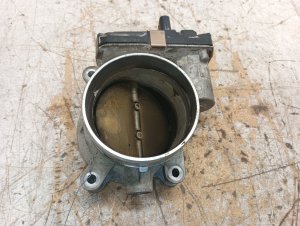
How to confirm: Remove the air intake tube from the throttle body. Visually inspect the throttle plate and bore for a thick, black ring of carbon buildup. The plate may be visibly stuck slightly open.
Typical fix: Remove the throttle body, clean it thoroughly with throttle body cleaner and a soft brush or rag, reinstall it with a new gasket, 🎬 See this walkthrough on how to clean a GM truck throttle body. and perform an idle relearn procedure.
Est. part cost: $5-$20 for cleaner and a gasket - Failed Idle Relearn Procedure 🟡 Medium Probability This often happens after the battery has been disconnected, replaced, or died, which erases the ECM's memory. It also occurs if the throttle body was cleaned or replaced but the relearn procedure was not performed correctly or at all. The ECM is still trying to compensate for carbon that is no longer there, causing idle issues.
How to confirm: If the code appeared immediately after a battery disconnect or throttle body service, this is the likely cause.
Typical fix: Perform the idle relearn procedure. This can be done with a capable scan tool or by following a specific manual sequence of key cycles and idling periods.
Est. part cost: $0 - Failing Throttle Body Assembly ⚪ Low Probability → Shop Fuel Injection Throttle Body The internal electric motor, plastic gears, or position sensors can wear out or fail over time, though it's far less common than a simple cleaning being needed. Extreme cold can sometimes cause the old grease in the internal gears to stiffen, preventing movement and triggering the code.
How to confirm: If the throttle body has been thoroughly cleaned, the relearn procedure fails to resolve the code, and wiring is confirmed to be good, the assembly itself is suspect. A scan tool can monitor throttle position sensor voltage for erratic readings.
Typical fix: Replace the entire throttle body assembly.
Est. part cost: $150-$350
Rare But Worth Checking
- Wiring or Connector Issue: The harness connecting to the throttle body can become damaged or corroded, causing intermittent signals. Check for frayed wires or bent/loose pins at the connector before replacing the throttle body. A broken wire at the connector is a known, though less common, failure point.
- Vacuum Leak: A significant vacuum leak from a cracked hose or bad intake manifold gasket can cause a high idle that the ECM might misinterpret as a throttle position issue, triggering P2176.
- Incorrect Part Installed: A user on a forum reported that a new, aftermarket throttle body with the wrong part number caused a persistent P2176 code because it could not be learned by the ECM. The issue was resolved by reinstalling the original part after cleaning it.
Diagnosis Steps
- Check for other DTCs. Address any other throttle, sensor, or voltage-related codes first. Do not attempt the idle learn procedure if other TAC system DTCs are present.
- Visually inspect the throttle body. Remove the intake duct and look for heavy carbon buildup around the throttle plate and bore. A dirty throttle plate is the most common culprit.
- If dirty, remove and clean the throttle body. Use a dedicated throttle body cleaner and a soft brush or rag. Do not use a wire brush or scrape the bore, as it can damage the surface. Do not force the throttle plate open manually, as this can damage the internal gears. Replace the gasket upon reinstallation.
- Reinstall the throttle body and perform an Idle Relearn Procedure. A scan tool is the most reliable method, 🎬 Watch: How to perform a throttle body clean and relearn procedure. but a manual procedure can also work.
- A common manual relearn procedure for GM trucks: Start and idle the engine in PARK for 3 minutes. The idle may be high or unstable. Turn the ignition OFF for 60 seconds. Start and idle the engine in PARK for another 3 minutes. The idle should now be stable. A drive cycle above 40 MPH with several stops may also be required.
- Clear the codes and test drive the vehicle. Some owners report needing to clear the code with the engine running for it to be effective. Drive with several stops to see if the idle is stable and the code does not return.
- If the code returns after cleaning, inspect the wiring harness and connector at the throttle body for damage, corrosion, or loose pins.
- If wiring is okay and the problem persists, the throttle body assembly itself is likely faulty and should be replaced.
Parts You'll Likely Need
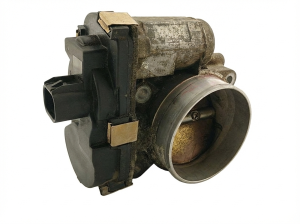
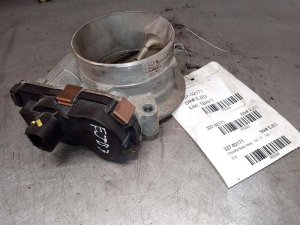
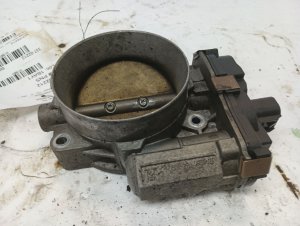
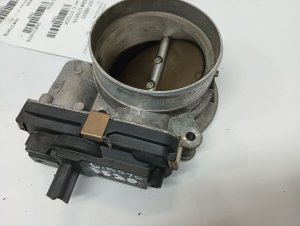
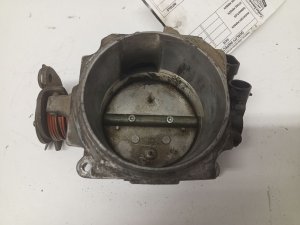
- Throttle Body Assembly
(OEM #217-3151 (ACDelco), 12629992 (GM))— This is the part to replace if cleaning doesn't fix the issue. It contains the throttle plate, motor, and position sensors as one unit. Note that this part requires a relearn procedure after installation.
Trusted brands: ACDelco, Hitachi, Bosch
OEM price range: $250-$350
Aftermarket price range: $150-$250 - Throttle Body Gasket — This should always be replaced when the throttle body is removed for cleaning or replacement to prevent vacuum leaks. Some throttle body kits do not include a new gasket.
Trusted brands: ACDelco, Fel-Pro
OEM price range: $10-$20
Aftermarket price range: $5-$15
Related Codes That Often Appear With This One
- P1516 — Both relate to throttle actuator control (TAC) performance and are often triggered by the same root cause, as listed in TSB PIP4578B.
- P2101 — This code also indicates a throttle actuator performance issue and is listed in the same TSB as P2176.
- P0507 — This code for 'Idle Air Control System RPM Higher Than Expected' can be set after cleaning a throttle body if the idle relearn is not performed, as the computer is still commanding the throttle open to compensate for the old carbon buildup.
- P0068 — Indicates a discrepancy between the MAP/MAF sensor and the throttle position, which can be caused by a malfunctioning or carbon-fouled throttle body. It is also listed in TSB PIP4578B.
Technical Service Bulletins (TSBs) & Recalls
- PIP4578B: Addresses idle surge, reduced engine power, and DTCs including P2176 on high-mileage vehicles. It confirms the cause is often carbon buildup and the fix is to clean the throttle body and perform an 'idle learn reset' with a scan tool.
Platform-Specific Known Issues
- A Technical Service Bulletin (PIP4578B) was issued by GM for multiple models, including the Sierra, for this code on high-mileage vehicles. It explicitly states that as carbon builds up, the ECM learns to compensate, but if it builds up too much, it can trigger P2176 and Reduced Engine Power mode.
- Owner experiences confirm that this issue is particularly noticeable in very cold weather, where the thickened grease inside the throttle body motor combined with carbon buildup can prevent the throttle plate from moving, triggering the code on a cold start.
Mechanic-Grade Diagnostic Values
- Throttle Position Percentage (at idle, via scan tool) — expected: 3-5%. Failure: A reading significantly higher than 5%, such as 16%, indicates the throttle plate is being held open by carbon buildup.
- Throttle Position Sensor (TPS) Voltage (at closed throttle) — expected: ~0.5V (typically between 0.4V and 0.6V). Failure: A voltage reading outside of the expected range at idle can indicate a faulty sensor or a mechanical blockage.
- Throttle Position Sensor (TPS) Voltage (at wide-open throttle) — expected: ~4.5V. Failure: Voltage does not increase smoothly or fails to reach the expected maximum voltage, indicating a sensor failure.
- System Voltage During Learn Procedure — expected: Greater than 11V (ignition on, engine off). Failure: Low battery voltage can interrupt the ECM's ability to learn the idle position, causing the procedure to fail.
Scan Tool Commands That Help
- GM Tech 2 / GDS2 or equivalent professional scanner: Idle Learn Reset / Throttle Learn — This command must be used after cleaning or replacing the throttle body to erase the old learned idle values from the ECM's memory. It is typically found in the 'Module Setup' or 'Special Functions/TAC System' menu.
Wiring & Ground Locations
- G103 — On the front of the passenger side (right) cylinder head.. This is a critical ECM and TAC system ground. High resistance or a poor connection here can cause a variety of unpredictable electronic faults, including throttle-related DTCs. A GM service document advises performing a voltage drop test on this ground when diagnosing these codes.
- G104 — On the rear of the driver's side (left) cylinder head.. Like G103, this is a critical engine ground. A poor connection can lead to intermittent and hard-to-diagnose electronic issues affecting the throttle control system.
- Q38 (Throttle Body Connector) — The main electrical harness connector on the throttle body assembly.. This is the single point of connection for the throttle motor and both throttle position sensors. Corrosion, spread pins, or broken wires directly at this connector will cause throttle codes. A replacement pigtail connector is available for repairs.
Real Owner Repair Stories
- Chevy HHR Network forum user (2008 Chevrolet HHR 2.2L (similar GM electronic throttle system)) — P2176 code, Reduced Engine Power mode.
❌ Tried (didn't work) Replacing the throttle body with a new AC-Delco unit.
✅ What actually fixed it The user reported that after installing a new throttle body, the code would clear but immediately return upon the next ignition cycle. The final resolution was not posted in the thread, but the experience highlights that simply replacing the part is not a guaranteed fix and points toward either a failed relearn procedure or an underlying wiring/connector issue as the next logical step. - Summit Racing customer review (2011 Chevy 2500 HD) — P2135 code (Throttle/Pedal Position Sensor/Switch 'A'/'B' Voltage Correlation), engine in 'limp mode'.
❌ Tried (didn't work) Dealer replaced the throttle body three times., Dealer replaced the wiring pigtail at least once.
✅ What actually fixed it The owner resolved the persistent intermittent failures by replacing the throttle body, the throttle body wire harness (pigtail), and the electronic accelerator pedal assembly all at once. This suggests that in some cases, multiple components in the throttle control system may be compromised, or an intermittent fault in the pedal or wiring can mimic a throttle body failure.
OEM Part Supersession History
12601387→12629992— Standard part revision and update by the manufacturer.
Heads up: The new part number (12629992) is the correct direct replacement for most 2009-2014 applications and is also used as an upgrade for earlier 2007-2008 trucks.
Model Year Variations Within This Range
- 2014: The 2014 model year marked the transition to the K2XX platform with new EcoTec3 engines (L83 5.3L, L86 6.2L). While the P2176 fault's root cause (carbon buildup and learn procedure) is the same, the specific throttle body part number and wiring communication protocol (e.g., SENT protocol) may differ from the earlier GMT900 trucks. However, part number 12629992 is listed as compatible with many 2014 models.
Helpful Videos
We Have This Part in Stock

The information in this article is provided for general reference and educational purposes only. Vehicle specifications, procedures, and part compatibility can vary by production date, trim level, and region. Always consult your vehicle's factory service manual and verify part numbers before purchasing or performing repairs. Safety-critical components such as airbags, seat belts, and braking systems should be installed by a qualified professional.
- Gmc SIERRA 1500:
- 🧭 Diagnostic Flowchart
- 🎬 Helpful Videos
- 🛍️ Shop This Part
- What's Unique About the 2007-2014 Gmc SIERRA 1500
- Symptoms You May Notice
- Most Likely Causes
- Rare But Worth Checking
- Diagnosis Steps
- Parts You'll Likely Need
- Related Codes That Often Appear With This One
- Technical Service Bulletins (TSBs) & Recalls
- Platform-Specific Known Issues
- Mechanic-Grade Diagnostic Values
- Scan Tool Commands That Help
- Wiring & Ground Locations
- Real Owner Repair Stories
- OEM Part Supersession History
- Model Year Variations Within This Range
- 🎟️ Get 5% Off