

P2176 on 2014-2018 GMC Yukon: Throttle Actuator Idle Position Not Learned Causes + Fixes
On a 2014-2018 GMC Yukon, code P2176 almost always means the throttle body is dirty with carbon buildup. The fix is to clean the throttle body thoroughly and then perform an idle relearn procedure. This is a common issue, especially on higher mileage vehicles, and is often preceded by a battery disconnect or replacement.
- P2176 on your Yukon is most likely due to a dirty throttle body, not a major mechanical failure.
- Do not replace any parts until you have thoroughly cleaned the throttle body.
- An idle relearn procedure is NOT optional after cleaning or replacing the throttle body; it is a required step to fix the problem.
- Driving with this code can be unsafe, as the vehicle may unexpectedly enter 'limp mode' and lose power.
- Always replace the throttle body gasket when removing the throttle body to prevent future vacuum leaks.
What's Unique About the 2014-2018 Gmc YUKON
The V8 engines (5.3L L83 and 6.2L L86) in this generation of GMC Yukon are known for accumulating significant carbon deposits on the throttle body plate and bore over time. The engine computer (ECM) gradually adapts to this buildup by learning a new, slightly more open, idle position. When the battery is disconnected, the throttle body is cleaned, or the ECM is reprogrammed, the computer's old, adapted settings no longer match the new, clean reality. This mismatch causes the idle relearn process to fail and triggers the P2176 code, often accompanied by a "Reduced Engine Power" message and an unstable idle.
Diagnostic Flowchart
Tap your situation to follow the diagnostic path that matches what you're seeing on this vehicle.
Symptoms You May Notice
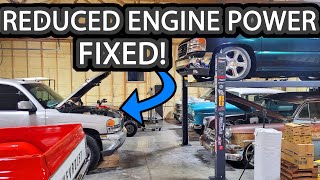
- Reduced Engine Power warning message 🎬 Watch: How to fix the reduced engine power message
- Check Engine Light is on
- Unstable or rough idle, with RPMs fluctuating or surging
- Engine stalling when coming to a stop
- Poor or delayed acceleration
- In some cases, the vehicle may not start
- Harsh shifting, especially when putting the transmission into Drive or Reverse
- Replacing the accelerator pedal position (APP) sensor. While part of the throttle control system, the APP sensor has its own specific codes (like P2135) and is rarely the cause of P2176.
- Assuming the new throttle body is defective. More often than not, a P2176 code after replacement is due to a skipped or failed idle relearn procedure, not a faulty part.
Most Likely Causes
- Dirty Throttle Body 🔴 High Probability → Shop Fuel Injection Throttle Body Crankcase ventilation systems can deposit oil vapor and carbon inside the throttle body over many miles, restricting the throttle plate's movement. The ECM adapts to this, but a sudden change (like cleaning) or excessive buildup can cause the relearn to fail.
How to confirm: Remove the air intake hose from the throttle body. Visually inspect the throttle plate and bore for a thick, black layer of carbon, especially around the edges where the plate seats. A mechanic noted that when the idle TPS percentage reads high (e.g., 16% instead of under 9%), it's a strong indicator of carbon buildup preventing the plate from closing fully.
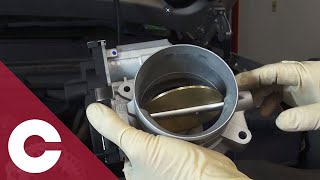
Typical fix: Remove the throttle body from the intake manifold for a thorough cleaning with a dedicated throttle body cleaner 🎬 See this guide on cleaning your throttle body properly and a soft brush or rag. Clean both sides of the throttle plate and the entire bore.
Est. part cost: $5-$15 for cleaner - Failed or Incomplete Idle Relearn Procedure 🔴 High Probability This is a necessary step after cleaning the throttle body, replacing the battery, or clearing codes. If not performed, the ECM retains incorrect idle values from the previously carbon-caked throttle body.
How to confirm: This is the default assumption if P2176 appears immediately after servicing the throttle body, disconnecting the battery, or replacing the ECM.
Typical fix: Perform the throttle body relearn procedure. The most reliable method is with a capable bi-directional scan tool. 🎬 Watch: How to perform the electronic throttle body relearn procedure A manual procedure can also be attempted, but may require several tries.
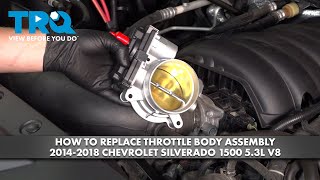
Est. part cost: $0 - Faulty Throttle Body Assembly 🟡 Medium Probability → Shop Fuel Injection Throttle Body The internal electronic motor or position sensors can wear out over time, preventing the unit from responding correctly to the ECM's commands. This is more common on higher mileage vehicles.
How to confirm: If the code returns immediately after a thorough cleaning and multiple successful relearn attempts, the throttle body itself is likely the culprit. A scan tool can monitor the commanded vs. actual throttle position to detect discrepancies or erratic sensor readings.
Typical fix: Replace the entire throttle body assembly. It is a single, non-serviceable unit.
Est. part cost: $150-$400
Rare But Worth Checking
- Wiring or Connector Issues: Check the wiring harness leading to the throttle body for any signs of fraying, corrosion, or loose pins at the connector. Wires can break internally near the connector from engine vibration, even if the insulation looks intact.
- Powertrain Control Module (PCM) Failure: → Shop Engine Control Module (ECM) This is extremely rare. Before condemning the PCM, all other possibilities, especially the throttle body, its wiring, and ground connections, must be exhaustively ruled out.
- Poor Ground Connections: A mechanic on a popular forum noted that on similar GM trucks, a bad ground connection is a common underlying cause for various electronic issues, including 'Reduced Engine Power' mode. Checking and cleaning main engine and body grounds can sometimes resolve persistent, difficult-to-diagnose throttle-related codes.
Diagnosis Steps
- Verify the P2176 code with an OBD-II scanner. Note any other codes present.
- Visually inspect the throttle body for heavy carbon buildup. This is the most likely cause, especially on engines over 75,000 miles.
- If dirty, remove the throttle body and clean it thoroughly using throttle body cleaner and a soft cloth/brush. Do not manually force the throttle plate open on an electronic throttle body; this can damage the internal gears.
- Reinstall the clean throttle body with a new gasket to prevent vacuum leaks.
- Perform the Idle Relearn Procedure. The most reliable method is with a bi-directional scan tool under 'Module Setup' or 'Special Functions' for 'Idle Learn Reset'.
- Alternatively, try the manual relearn: Start and idle the engine in PARK for 3 minutes. The idle may be high initially. Turn the engine OFF for at least 60 seconds. Start the engine again and let it idle in PARK for another 3 minutes. The idle should now be normal. If not, a drive cycle above 45 MPH with several decelerations and extended idles may be required.
- If the code returns, use a scan tool to monitor the throttle position sensor voltages (TP1 and TP2). They should move smoothly as the throttle is commanded open and closed.
- If sensor readings are erratic or the relearn fails repeatedly with a clean throttle body, replace the throttle body assembly.
- If the problem persists, inspect the wiring harness and connector between the ECM and the throttle body for damage or corrosion. Pay close attention to the wires within a few inches of the connector, as they can break internally.
Parts You'll Likely Need
- Throttle Body Assembly
(OEM #12670839)— If cleaning and relearning do not resolve the issue, the internal electronics of the throttle body have likely failed. This is the definitive fix when the original part is faulty. This part number has superseded previous versions 12627217 and 12669073.
Trusted brands: ACDelco, Bosch, Hitachi
OEM price range: $250-$400
Aftermarket price range: $150-$250 - Throttle Body Gasket
(OEM #12629992)— This should always be replaced when the throttle body is removed for cleaning or replacement to prevent vacuum leaks.
Trusted brands: ACDelco, Fel-Pro
OEM price range: $10-$20
Aftermarket price range: $5-$15
Related Codes That Often Appear With This One
- P1516 — This code relates to the Throttle Actuator Control (TAC) module performance and often appears with P2176 when the ECM is struggling to control the throttle, as noted in TSB PIP4578B.
- P2101 — This code indicates a performance problem with the throttle actuator control motor, which can be triggered when the motor is working against heavy carbon buildup or has internal faults.
- P0068 — This code signifies a mismatch between the MAP sensor, MAF sensor, and throttle position. It can be set when the throttle isn't where the ECM expects it to be, a core issue of P2176.
Technical Service Bulletins (TSBs) & Recalls
- PIP4578B: Mentions DTC P2176 in a list of codes related to idle surge and reduced engine power on high mileage vehicles, pointing towards a common throttle body issue that requires cleaning and an idle learn reset.
Platform-Specific Known Issues
- As noted in Technical Service Bulletin (TSB) #PIP4578B, P2176 can be experienced on high mileage vehicles in conjunction with an idle surge and the vehicle entering reduced engine power mode. The bulletin explicitly states that as carbon builds up, the ECM learns to compensate, and if the throttle body is cleaned or replaced without an 'idle learn reset' using a scan tool, the issue may persist or return with other codes.
- Owners on forums frequently report that this code appears immediately after disconnecting the battery for other service, reinforcing that the loss of learned adaptations is a primary trigger.
Mechanic-Grade Diagnostic Values
- Throttle Position Sensor (TPS) Voltage at Closed Throttle — expected: ~0.5 V. Failure: Values outside the 0.4–0.6 V range at idle can indicate a faulty sensor or a throttle plate that isn't closing properly.
- Throttle Position Sensor (TPS) Voltage at Wide-Open Throttle (WOT) — expected: ~4.5 V. Failure: Voltage that doesn't reach near 4.5V or has dead spots during sweep indicates a failed sensor.
- Scan Tool - Throttle Position Percentage at Idle — expected: Under 9%. Failure: A reading of 16% or higher at idle strongly suggests heavy carbon buildup is preventing the throttle plate from closing fully.
- Throttle Actuator Motor Resistance — expected: 2 to 15 Ohms. Failure: A reading over the limit indicates an open circuit, while a reading under 1 Ohm indicates a short circuit within the motor.
- GM Service Data - TP Sensor 1 Voltage (Throttle at Rest) — expected: 4.12 - 4.55 V. Failure: If the ECM detects the voltage is outside this range after a learn procedure, it will set DTC P2176.
- GM Service Data - TP Sensor 2 Voltage (Throttle at Rest) — expected: 0.34 - 0.99 V. Failure: If the ECM detects the voltage is outside this range after a learn procedure, it will set DTC P2176.
Scan Tool Commands That Help
- GDS2 / Professional Scan Tool (e.g., Snap-on Solus): Idle Learn Reset — This function is found under 'Module Setup' or 'Special Functions' for the Engine Control Module. It must be performed after cleaning or replacing the throttle body to force the ECM to find the new minimum throttle position. Failure to perform this reset is the most common reason for P2176 to appear after service.
Wiring & Ground Locations
- G103 / G108 — Located on the back side of the cylinder heads. G103 is often on the front of the passenger side cylinder head, while G104/G108 are on the driver's side rear.. Technicians report that poor connections at these specific grounds are a common cause of difficult-to-diagnose drivability problems, including throttle control issues and 'Reduced Power' mode on GM trucks.
- G100 / G101 — G100 is on the lower left of the radiator core support. G101 is on the frame on the left side of the engine, near the generator/alternator.. These are primary chassis and engine grounds. Corrosion or looseness here can cause a variety of unpredictable electrical faults, including intermittent issues with the throttle control system.
- Throttle Body Connector (X125) — The 6-pin connector directly on the throttle body assembly.. This is the single point of connection for the throttle motor and both throttle position sensors. Wires can fray or break internally near the connector due to engine vibration, causing intermittent signal loss that triggers P2176. A wiring diagram shows pins for 5V reference, low reference, and signal wires for both TP sensors.
Real Owner Repair Stories
- Reddit user u/wenningtj in r/cruze (2015 Chevy Cruze LTZ (similar electronic throttle control system)) — Got 'Engine Power Reduced' message, check engine light, and code P2176. Vehicle would only move at ~5 mph with the pedal to the floor. Scan tool showed very low battery voltage initially.
❌ Tried (didn't work) Initially disconnected the negative battery cable for a minute, which temporarily restored normal operation.
✅ What actually fixed it The root cause was a dying original battery. Replacing the battery resolved the issue permanently, and the code did not return.
OEM Part Supersession History
12627217, 12669073→12670839— GM regularly updates part designs to integrate new materials and technologies for improved reliability and performance.
Heads up: While the part is a direct physical replacement, it requires programming and/or the 'Idle Learn Reset' special procedure with a scan tool to ensure proper operation in the vehicle.
Helpful Videos
Used OEM Parts in Stock
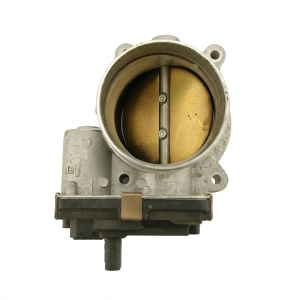
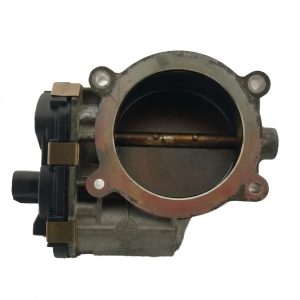
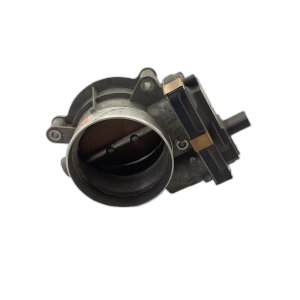
New Aftermarket Parts Available
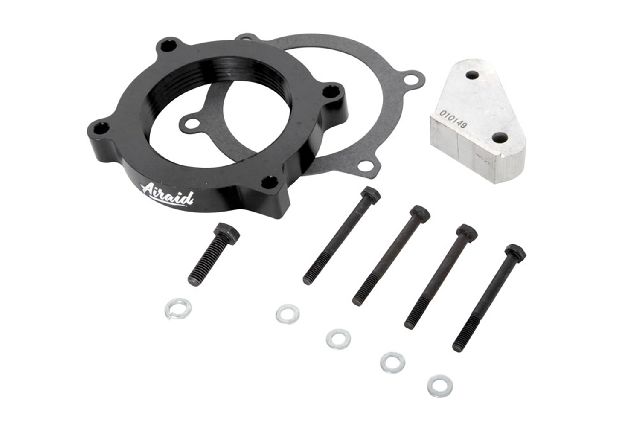

The information in this article is provided for general reference and educational purposes only. Vehicle specifications, procedures, and part compatibility can vary by production date, trim level, and region. Always consult your vehicle's factory service manual and verify part numbers before purchasing or performing repairs. Safety-critical components such as airbags, seat belts, and braking systems should be installed by a qualified professional.
- Gmc YUKON:
- 🧭 Diagnostic Flowchart
- 🎬 Helpful Videos
- 🛍️ Shop This Part
- What's Unique About the 2014-2018 Gmc YUKON
- Symptoms You May Notice
- Most Likely Causes
- Rare But Worth Checking
- Diagnosis Steps
- Parts You'll Likely Need
- Related Codes That Often Appear With This One
- Technical Service Bulletins (TSBs) & Recalls
- Platform-Specific Known Issues
- Mechanic-Grade Diagnostic Values
- Scan Tool Commands That Help
- Wiring & Ground Locations
- Real Owner Repair Stories
- OEM Part Supersession History
- 🎟️ Get 5% Off