

P2176 on 2003-2007 Honda Accord 2.4L: Idle Position Not Learned Causes and Fixes
On a 2003-2007 Accord 2.4L, code P2176 is almost always caused by carbon buildup in the throttle body. The fix is to thoroughly clean the throttle body and then perform a specific idle relearn procedure. This is a common DIY job with a very low parts cost. The code will also reliably appear after a battery disconnect if the relearn is not performed.
- Do not replace any parts before first cleaning the throttle body thoroughly.
- You MUST perform the PCM Idle Learn Procedure after cleaning the throttle body or disconnecting the battery.
- The idle learn procedure is free and requires no special tools.
- The procedure: Warm the engine fully (radiator fan cycles on at least once), turn off all accessories (A/C, radio, lights), and let the engine idle undisturbed for at least 5 minutes.
- If cleaning and relearning don't work, check wiring before considering replacement of the throttle body assembly.
What's Unique About the 2003-2007 Honda Accord
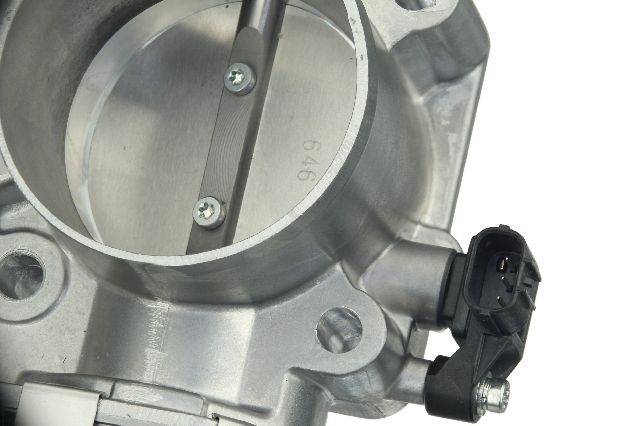
The 7th generation Honda Accord (2003-2007) uses an electronic Drive-by-Wire (DBW) throttle system that is sensitive to carbon buildup. Over many miles, oil vapors from the crankcase ventilation system and other contaminants can bake onto the inside of the throttle body bore, forming a hard ridge. This physical obstruction prevents the throttle plate from closing completely. This is the most common reason the PCM fails its learning procedure, triggering the P2176 code. The issue is so common that cleaning the throttle body and performing a manual idle relearn is considered a routine and necessary maintenance procedure for these vehicles.
Symptoms You May Notice
- Check Engine Light is on
- Rough, hunting, or unstable idle
- Engine stalling when coming to a stop or at low RPMs
- Poor or hesitant acceleration
- Engine may go into 'Limp Mode' with reduced power
- No response from the accelerator pedal
- Vehicle may not start
- Replacing the throttle body before cleaning it. Cleaning the existing part and performing a relearn fixes the issue in the vast majority of cases.
- Replacing the accelerator pedal position (APP) sensor. The APP sensor is on the gas pedal and is not related to the throttle body's idle position learning. A faulty APP sensor would typically set other codes.
Most Likely Causes
- Dirty Throttle Body 🔴 High Probability → Shop Fuel Injection Throttle Body The 2.4L engine's crankcase ventilation system can deposit oil vapor and carbon inside the throttle body over time, physically blocking the throttle plate from fully closing.
How to confirm: Visually inspect the throttle body bore and the edges of the throttle plate for a black, sticky layer of carbon buildup. If it's dirty, this is your likely cause.
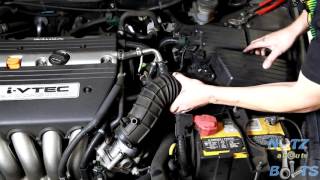
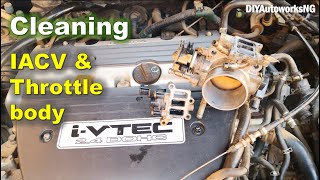
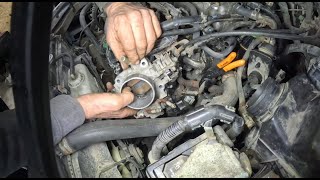
Typical fix: Remove the air intake duct, spray the throttle body and plate with a dedicated throttle body cleaner, and wipe away all carbon residue with a clean rag. A toothbrush can help scrub stubborn deposits. 🎬 Watch: A step-by-step guide to cleaning your Accord's throttle body. Manually push the plate open to clean the area where it rests.
Est. part cost: $5-$15 for a can of cleaner - Idle Relearn Procedure Not Performed 🔴 High Probability This code is guaranteed to appear if the battery is disconnected or replaced, or if the throttle body is cleaned/replaced, without performing the relearn procedure. The PCM's volatile memory is erased and it must be recalibrated to the new, clean throttle resting position.
How to confirm: If the code appeared immediately after a battery replacement, dead battery, jump start, or throttle body service, this is the cause.
Typical fix: Perform the 'PCM Idle Learn Procedure'. This recalibrates the PCM to the throttle's clean, correct closed position.
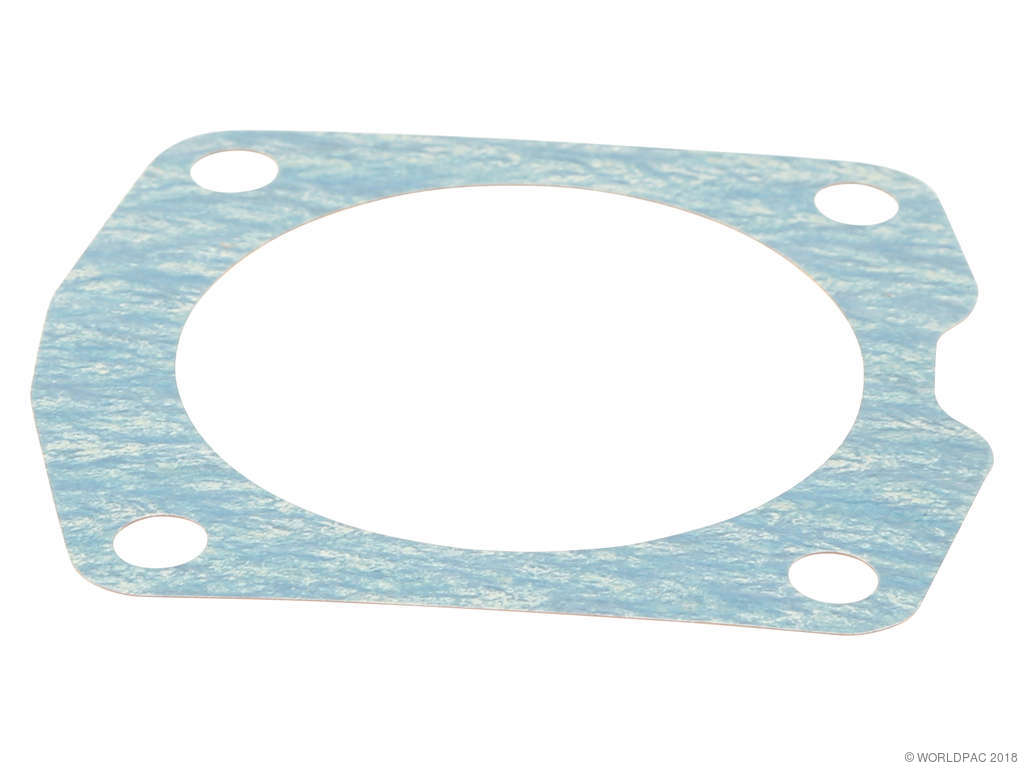
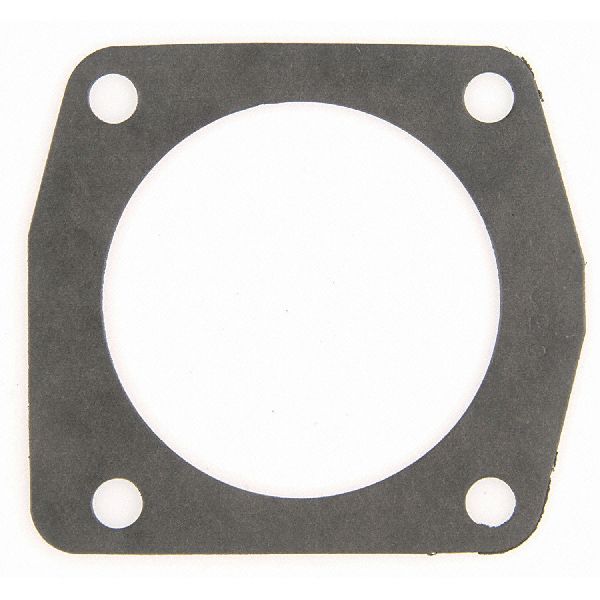
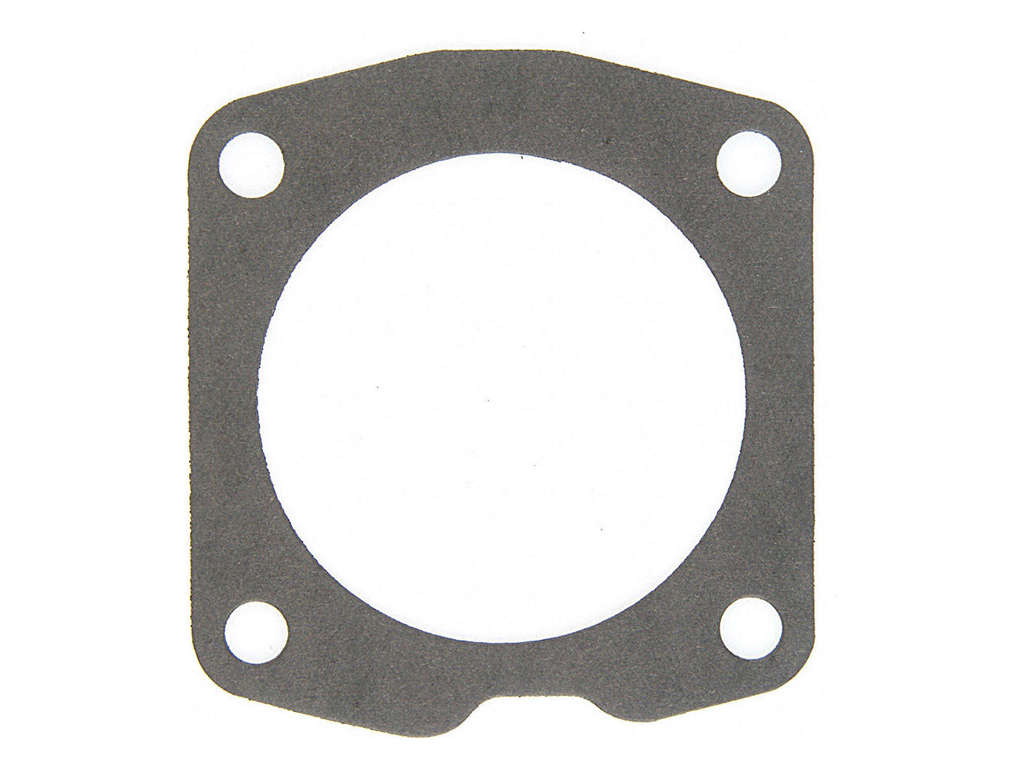
Est. part cost: $0 - Faulty Throttle Body Assembly ⚪ Low Probability → Shop Fuel Injection Throttle Body While the part is generally reliable, the internal electronic motor or the integrated throttle position sensor (TPS) can fail electrically or mechanically over many miles. This is rare compared to a simple dirty throttle body.
How to confirm: If the P2176 code returns immediately after a thorough cleaning and a correctly performed idle relearn procedure, the throttle body assembly itself is likely faulty. A diagnostic scan tool can also be used to observe the throttle plate angle and voltage to confirm it's not responding correctly.
Typical fix: Replace the entire throttle body assembly. The TPS is integrated and not typically sold separately for this vehicle.
Est. part cost: $150-$900
Rare But Worth Checking
- PCM Software Glitch: A Honda Technical Service Bulletin (TSB) for a later model year with the same code indicates that the PCM can sometimes misinterpret sensor data, requiring a software update from a dealer. While not common for the 2003-2007 models, it is a possibility if all other steps fail. Manufacturer TSB Bulletin #Service Bulletin (dated 2015-01-08) and TSB Bulletin #13-042 both confirm that the MIL may come on with DTC P2176 because the PCM misinterprets the throttle position sensor signals.
- Wiring or Connector Issue: A poor connection or damaged wire between the PCM and the throttle body can interrupt the signal, causing the learn procedure to fail. Check for corrosion or loose pins at the throttle body connector before replacing the part.
- Large Vacuum Leak: A significant vacuum leak, such as a cracked air intake hose between the mass air flow sensor and the throttle body, can allow unmetered air to enter the engine, confusing the PCM during the idle learn process and potentially setting a P2176 code.
Diagnosis Steps
- Read the trouble codes with an OBD-II scanner. Confirm P2176 is present. Note any other codes, like P2101 or P2135.
- Disconnect the negative battery terminal for at least 10 seconds to reset the ECU.
- Remove the air intake hose connected to the throttle body.
- Visually inspect the throttle body bore and plate for carbon buildup. Check the intake hose for cracks or tears.
- Using throttle body cleaner and a lint-free rag or soft brush, thoroughly clean the plate and bore until all black residue is gone. Manually open the plate to clean the edges and the resting point.
- Reassemble the air intake hose and reconnect the battery.
- Perform the PCM Idle Learn Procedure (see next section). This step is mandatory.
- Drive the vehicle to see if the Check Engine Light and code return. If it does, proceed to the next steps. 🎬 Watch: How to quickly remove the throttle body for deep cleaning.
- Inspect the wiring harness and connector at the throttle body for damage, corrosion, or loose pins.
- If the code still persists after cleaning, relearning, and a wiring check, the throttle body assembly is the most likely failure point and should be replaced.
Parts You'll Likely Need
- Throttle Body Cleaner — This is required to clean the carbon buildup, which is the most common cause of the code.
Trusted brands: CRC, Berryman, Gumout
Aftermarket price range: $5-$15 - Throttle Body Assembly
(OEM #16400-RAA-A63 (03-05 Auto), 16400-RAA-A13 (03-05 Manual), 16400-RAA-A21 (06-07))— This part is replaced only if cleaning and relearning do not resolve the code, indicating an internal failure of the actuator or sensor.
Trusted brands: Honda (Genuine OEM), Hitachi (OEM supplier), Standard Motor Products (SMP), Cardone (Remanufactured)
OEM price range: $650-$950
Aftermarket price range: $150-$400
Related Codes That Often Appear With This One
- P2101 — P2101 ('Throttle Actuator Control Motor Circuit Range/Performance') often appears with P2176. It indicates a problem with the throttle motor's performance, which can be caused by the same carbon buildup or debris that prevents the idle position from being learned.
- P2135 — P2135 ('Throttle/Pedal Position Sensor/Switch 'A'/'B' Voltage Correlation') indicates a conflict between the two throttle position sensors. Service manuals note that if P2135 is present with P2176, P2135 should be diagnosed first.
Platform-Specific Known Issues
- This code is extremely common after the vehicle's battery has been disconnected or has died, as this erases the PCM's memory, requiring an idle relearn.
- The idle relearn procedure for this specific model is: Warm the engine to normal operating temperature (radiator fan comes on). Turn off all electrical loads (A/C, radio, lights). Let the engine idle for 5 minutes (do not count time when the fan is running).
Mechanic-Grade Diagnostic Values
- Throttle Position Sensor (TPS) Voltage — expected: The two internal sensors work inversely. One should read approx. 0.5V at closed throttle and sweep smoothly to 4.5V at wide-open throttle. The other should read approx. 4.5V at closed and sweep to 0.5V at wide-open.. Failure: Voltage that is erratic, jumps, or has dead spots as the throttle plate is moved indicates a failed sensor.
- PCM Sensor Reference Voltage (VCC) — expected: Approximately 5.0V at the throttle body connector with the key on, engine off.. Failure: Significantly lower or no voltage indicates a problem with the PCM or the wiring.
- PCM Sensor Ground (SG) — expected: Less than 1.0V at all times.. Failure: Higher voltage indicates a bad ground connection, which can cause sensor readings to be skewed.
- Throttle Actuator Motor Resistance — expected: Approximately 1.0 Ohm or less between terminals 5 and 6 of the throttle body connector.. Failure: High resistance (OL) or resistance far outside the specification points to a failed internal motor.
Scan Tool Commands That Help
- Honda Diagnostic System (HDS) or equivalent: TP POSITION CHECK — To verify that the PCM is seeing the correct throttle plate angle percentage and that both TP sensors (A and B) are reading correctly and in agreement.
- Honda Diagnostic System (HDS) or equivalent: ETCS (TAC System) TEST — This is a bidirectional test that commands the throttle actuator motor to open and close the throttle plate, allowing a technician to verify the motor's function without the engine running.
- Honda Diagnostic System (HDS) or equivalent: RESET ECM/PCM — This function clears all learned values from the PCM, including the incorrect idle position. It is a mandatory step before performing the idle relearn procedure after a repair.
Wiring & Ground Locations
- Throttle Body 6-Pin Connector — Directly on the electronic throttle body assembly.. This is the single connection point for the dual throttle position sensors and the actuator motor. Corrosion or loose pins here will directly cause P2176 and related codes. The pinout for a 2006 2.4L is: Pin 1: RED/BLK (TPS1), Pin 2: BLU (VCC - 5V Reference), Pin 3: RED/BLU (TPS2), Pin 4: GRN (SG - Sensor Ground), Pin 5: GRN (Motor -), Pin 6: BLU (Motor +).
- G101 — On the 2.4L engine, this main engine ground is typically a ring terminal with multiple wires bolted to the thermostat housing or the intake manifold plenum on the driver's side of the engine.. G101 is the primary ground for the PCM and the throttle actuator control module. A loose or corroded G101 can cause erratic behavior and prevent the throttle system from functioning or learning correctly, mimicking a failed throttle body.
Real Owner Repair Stories
- YouTube Video Comment (2005 Honda Accord Euro 2.4L) — Check Engine Light, VSA light, and limp mode with no acceleration. OBD-II code was P2135 (often seen with P2176).
❌ Tried (didn't work) Clearing the code with a scanner (it came back immediately upon pressing the gas pedal).
✅ What actually fixed it The owner disconnected the battery, then unplugged the connectors for both the Accelerator Pedal Position (APP) sensor and the Throttle Position Sensor (TPS) on the throttle body. They cleaned both connectors thoroughly with CRC contact cleaner, let them dry, and reconnected everything securely. The code was cleared and did not return. - YouTube Video (Suzuki (demonstrating a universal P2176 issue)) — Check Engine Light with code P2176, 'Throttle Actuator position not Learned'. Car would not rev.
❌ Tried (didn't work) Installing a brand new throttle body. The relearn procedure failed and the code persisted.
✅ What actually fixed it The new throttle body that was installed was the incorrect part number for the vehicle. The mechanic re-installed the original throttle body (after cleaning it), and the P2176 code was resolved and the engine could rev normally. This highlights the importance of part number compatibility. - NHTSA ODI #10504876 — An owner reported that while a dealership could not find active codes for their vehicle's issues, they did find code DTC P2176 set for "throttle actuator control not learned" stored in the vehicle's history.
OEM Part Supersession History
16400-RAA-A61, 16400-RAA-A62→16400-RAA-A63— Standard part revision and consolidation by the manufacturer.
Heads up: These part numbers are for 2003-2005 Accord 2.4L with Automatic Transmission only. They are not compatible with Manual Transmission models (16400-RAA-A13) or 2006-2007 models (16400-RAA-A21).
Model Year Variations Within This Range
- 2003-2005: Uses different throttle body part numbers based on transmission type. Automatic transmission models use PNs like 16400-RAA-A61/A62/A63. Manual transmission models use 16400-RAA-A13.
- 2006-2007: Uses a single throttle body part number, 16400-RAA-A21, for both automatic and manual transmission models. This part is not backward compatible with 2003-2005 models.
Diagnostic Flowchart
Other Known Issues on This Vehicle
Issues unrelated to this code that are worth knowing about as an owner of this generation:
- Automatic Transmission Failure (Early Models) 🔴 High — Common on 2003-2004 models (both V6 and some 4-cyl). Issues include harsh shifting, slipping, or complete failure, often before 100,000 miles. (Ref: Honda issued service bulletins and extended warranties, but many vehicles may still have issues if not properly repaired.)
- VTC Actuator Rattle on Cold Start 🟠 Medium — Very common on the 2.4L K24 engine. A brief, loud rattle or grinding noise for 1-2 seconds upon starting the engine when cold. (Ref: Honda released an updated VTC actuator part to fix the issue. If left unaddressed, it can potentially lead to timing chain stretch.)
- Power Steering Hose Leak 🟠 Medium — The high-pressure power steering hose is known to develop leaks, especially at the crimped fittings. This can cause fluid loss and whining from the pump. (Ref: A recall was issued for some models related to the power steering hose.)
- Excessive Oil Consumption 🟠 Medium — Some 2.4L K24 engines can consume oil due to issues with oil control piston rings. Owners may need to top off oil between changes.
- Faulty Stereo/HVAC Display Backlight 🟡 Low — Common on 2003-2004 models where the backlight for the radio and climate control unit fails, making the display unreadable at night.
Used vs. New Parts: Buying Guide for This Vehicle
When a used part is the smart pick: A used OEM throttle body from a reputable salvage yard is an excellent, cost-effective choice for this repair. The most common failure cause is carbon buildup, which can be cleaned off a used part. A used OEM part is often more reliable than a new, non-OEM aftermarket part due to the sensitive integrated electronics.
Donor-vehicle mileage cap: roughly under 120000 miles for the part to have meaningful remaining life.
What to inspect on the donor part:
- Verify the part number on the donor part matches your vehicle's required number exactly (check by year and transmission type).
- Inspect the electrical connector pins to ensure they are straight, clean, and free of corrosion.
- Gently push the throttle plate open by hand; it should move smoothly without any sticking, binding, or gritty feeling.
- Avoid parts from vehicles with obvious signs of engine fire, flood damage, or a severe frontal collision.
OEM-only on this vehicle (don't cheap out):
- While not strictly 'OEM-only', a Genuine Honda or OEM-supplier (Hitachi) throttle body, whether new or used, is strongly recommended over generic aftermarket brands to avoid compatibility issues like those that cause P2176.
Aftermarket brands forum-validated for this vehicle:
- Hitachi (The original OEM supplier for Honda)
Brands owners have reported issues with on this vehicle:
- Unbranded, low-cost throttle bodies from online marketplaces are a significant risk. They may have incorrect electronic scaling or lower quality motors, leading to a repeat P2176 code even if the part is new.
Real Owner Stories
Aggregated from forums and TSBs cited above. Mileages and costs reflect what owners reported in those sources.
2007 Honda Accord LX Sedan 2.4L AT
Symptoms: The P2176 code was intermittent. After sitting for several hours, the engine would sometimes start with an erratic idle bouncing around 2000 RPMs. Shutting it off and restarting would help, but the idle would still be high at 1000-1500 RPM.
What fixed it: The owner performed the idle relearn procedure, which made the code go away temporarily, but it kept returning, indicating an underlying issue like a dirty throttle body was likely the root cause.
Source hint: Reddit r/MechanicAdvice
2003-2007 Honda Accord 2.4L
Symptoms: Check Engine Light with code P2176 was present. A mechanic suggested a costly replacement of the entire throttle body assembly.
What fixed it: The owner successfully resolved the code by cleaning the throttle body and then performing the idle relearn procedure.
Source hint: DriveAccord.net
2004-2008 Acura TSX
Symptoms: Vehicle displayed both P2176 and P2101 codes.
What fixed it: The owner was advised to thoroughly clean the throttle body first before considering the replacement of more expensive parts like the APP sensor or the throttle body assembly itself.
Source hint: Acurazine.com
Related OBD-II Codes
Frequently Asked Questions
I just replaced the battery on my 2005 Accord and now the check engine light is on with code P2176. What happened?
How do I perform the idle relearn procedure for my 2.4L Honda Accord?
My mechanic says I need a new throttle body for $900 to fix P2176. Is this always necessary?
Is it expensive to fix the P2176 code?
Does this P2176 throttle body issue affect other Hondas like the CR-V or Element?
I hear a loud rattle for a second when I start my Accord cold. Is this related to the P2176 code?
Helpful Videos
Used OEM Parts in Stock
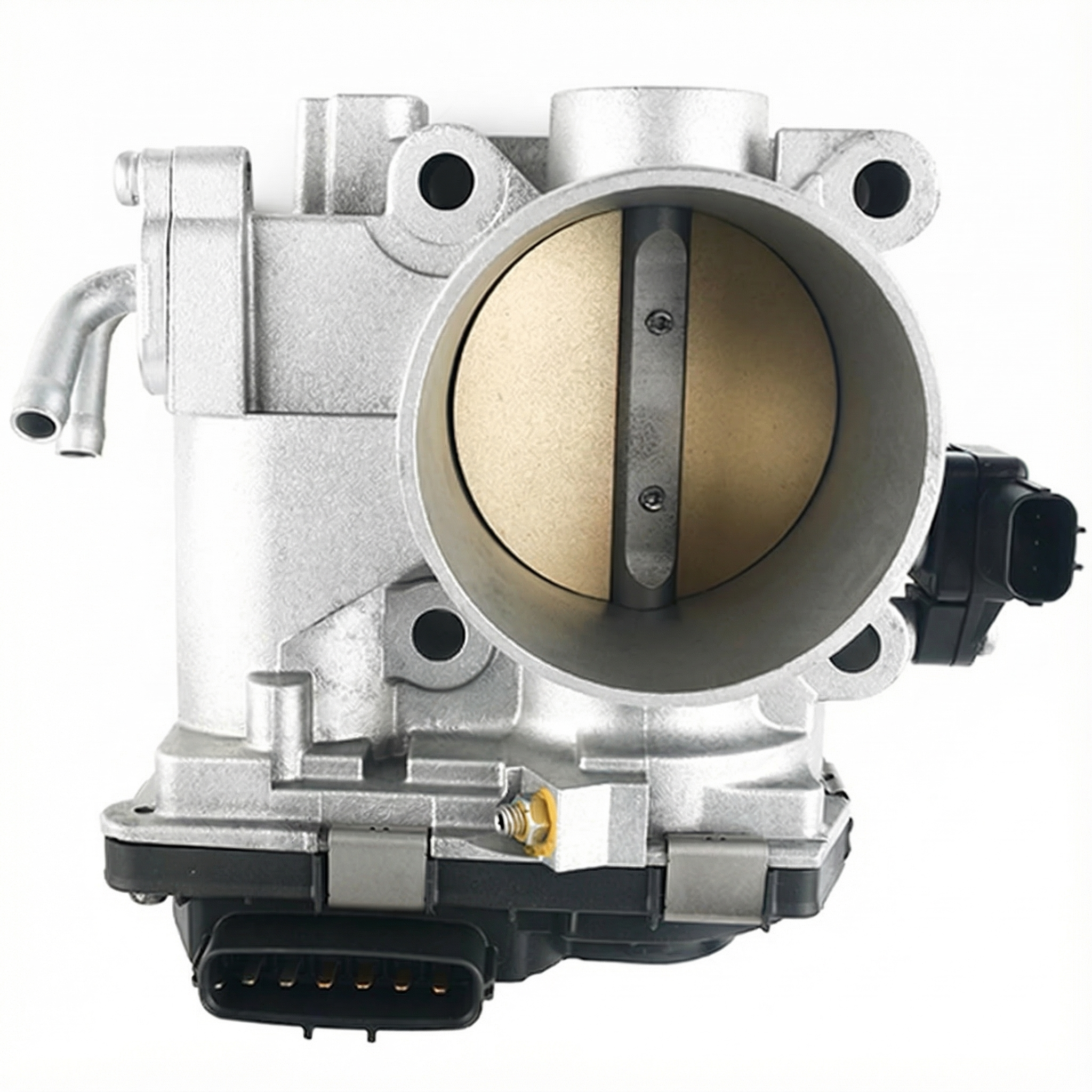
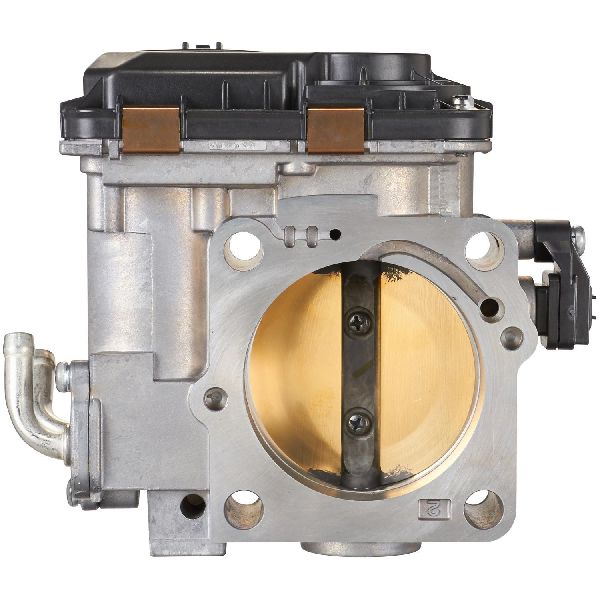
New Aftermarket Parts Available


The information in this article is provided for general reference and educational purposes only. Vehicle specifications, procedures, and part compatibility can vary by production date, trim level, and region. Always consult your vehicle's factory service manual and verify part numbers before purchasing or performing repairs. Safety-critical components such as airbags, seat belts, and braking systems should be installed by a qualified professional.
- Honda Accord:
- 🧭 Diagnostic Flowchart
- 🎬 Helpful Videos
- 🛍️ Shop This Part
- What's Unique About the 2003-2007 Honda Accord
- Symptoms You May Notice
- Most Likely Causes
- Rare But Worth Checking
- Diagnosis Steps
- Parts You'll Likely Need
- Related Codes That Often Appear With This One
- Platform-Specific Known Issues
- Mechanic-Grade Diagnostic Values
- Scan Tool Commands That Help
- Wiring & Ground Locations
- Real Owner Repair Stories
- OEM Part Supersession History
- Model Year Variations Within This Range
- Other Known Issues on This Vehicle
- Used vs. New Parts: Buying Guide for This Vehicle
- Real Owner Stories
- 2007 Honda Accord LX Sedan 2.4L AT
- 2003-2007 Honda Accord 2.4L
- 2004-2008 Acura TSX
- Related OBD-II Codes
- Frequently Asked Questions
- 🎟️ Get 5% Off