

P2178 on 2014-2018 Jaguar F-TYPE: 'System Too Rich Off Idle' Causes and Fixes
On a 2014-2018 Jaguar F-TYPE, code P2178 usually indicates a faulty upstream oxygen sensor or a dirty/failed Mass Airflow (MAF) sensor on Bank 1. A leaking fuel injector is another strong possibility, often complicated by water from the hood vents causing injectors to seize in the cylinder head. Expect to pay $150-$400 for a sensor replacement, but potentially thousands if an injector is seized.
- P2178 on your F-TYPE means Bank 1 (passenger side) is getting too much fuel when you're accelerating or cruising.
- The most likely culprits are a bad upstream oxygen sensor, a dirty MAF sensor, or a leaking fuel injector.
- Start your diagnosis by checking live data on a scanner, specifically the fuel trims and sensor readings for Bank 1.
- Do not ignore this code. Driving for too long with a rich condition can ruin your catalytic converter, a very expensive repair.
- Cleaning the MAF sensor is a cheap and easy first step, but replacement of the O2 sensor or a fuel injector is often required.
What's Unique About the 2014-2018 Jaguar F-TYPE
The supercharged V6 (AJ126) and V8 (AJ133) engines in the F-TYPE are high-performance, direct-injection powerplants that rely on precise sensor readings for fuel delivery. They can be particularly sensitive to issues with fuel pressure, airflow measurement, and oxygen sensor feedback. A critical, platform-specific issue is water ingress from the hood vents dripping onto the fuel injectors, causing corrosion that leads to injector failure and seizure within the cylinder head, vastly complicating repairs. A Jaguar Technical Service Bulletin (TSM73671) acknowledges this code in conjunction with others, suggesting it can be part of a more complex diagnostic picture involving intake and boost pressure sensors. [SSM73671] Some owners have also received extended warranty notifications for oxygen sensors on these models due to performance issues.
Diagnostic Flowchart
Tap your situation to follow the diagnostic path that matches what you're seeing on this vehicle.
Symptoms You May Notice
- Check Engine Light is on
- Reduced fuel economy
- Rough or unstable engine performance, especially at idle or light throttle
- Hesitation or jerking during acceleration
- Black smoke from the exhaust, especially on deceleration
- A noticeable smell of gasoline from the exhaust
- Hissing or whistling noise from the engine bay
- Replacing spark plugs alone. While fouled spark plugs can be a symptom of a rich condition, they are rarely the root cause of code P2178.
Most Likely Causes
- Faulty Upstream Oxygen Sensor (Bank 1, Sensor 1) 🔴 High Probability → Shop Oxygen Sensor Oxygen sensors are wear items that degrade over time, sending slow or biased signals. The ECU relies on this sensor for real-time fuel adjustments, and a faulty one can falsely report a lean condition (low voltage), causing the ECU to command more fuel and create an actual rich condition. Jaguar has issued an extended warranty on O2 sensors for some 2014-2017 F-TYPEs due to known performance issues.
How to confirm: Use a scan tool to monitor the live data for the Bank 1 upstream O2 sensor. A healthy sensor will show voltage fluctuating rapidly between approximately 0.1V and 0.9V. A sensor that is stuck, slow to respond, or biased toward a low voltage reading is likely faulty.
Typical fix: Replace the Bank 1 (passenger side, pre-catalytic converter) upstream oxygen sensor. A special slotted socket is often required for removal.
Est. part cost: $80-$200 - Leaking Fuel Injector 🔴 High Probability → Shop Fuel Injector The direct injection (GDI) injectors on the AJ126/AJ133 engines operate under high pressure and are a known failure point. A critical issue on the F-TYPE is that the hood vents can allow water to drip directly onto the engine, causing corrosion around the injectors. This can lead to electronic failure of the injector or cause it to physically seize in the cylinder head, making removal extremely difficult and costly.
How to confirm: This is difficult to confirm without specialized tools. A professional can perform an injector balance test. A key sign is a single spark plug on Bank 1 being significantly more black and sooty than the others. Visual inspection may reveal corrosion around the base of the injectors on the fuel rail. Long crank times after the car has been sitting can also indicate a leakdown.
Typical fix: Replace the faulty fuel injector and its seals. If an injector is seized, it may require special slide hammers or even cylinder head removal for extraction, dramatically increasing labor costs. It is highly recommended to replace all injectors on the affected bank at the same time.
Est. part cost: $150-$300 per injector - Dirty or Faulty Mass Airflow (MAF) Sensor 🟡 Medium Probability → Shop Fuel Injection Air Flow Meter The F-TYPE uses two MAF sensors, one for each bank. The sensor element can become contaminated with dirt, oil from aftermarket air filters, or other debris, causing it to under-report the amount of air entering the engine. The ECU then calculates a fuel delivery that is too rich for the actual amount of air.
How to confirm: Inspect the MAF sensor element for contamination. Try cleaning it with a dedicated MAF sensor cleaner; never touch the element. Monitor MAF readings on a scan tool; they should increase smoothly with RPM. Compare the g/s readings between Bank 1 and Bank 2 at various RPMs; a significant discrepancy points to a faulty sensor.
Typical fix: Clean the MAF sensor with dedicated cleaner. If cleaning doesn't resolve the issue, replace the Bank 1 MAF sensor.
Est. part cost: $100-$250 - High Fuel Pressure ⚪ Low Probability A failing fuel pressure regulator integrated into the high-pressure fuel pump (HPFP) can cause excessive fuel pressure, overpowering the injectors and creating a rich condition across both banks, though it may trigger a code on one bank first. The low-pressure system on supercharged models should be around 5.0 bar (72.5 PSI). The high-pressure system can reach up to 150 bar (2176 PSI) on startup.
How to confirm: Use a capable scan tool to monitor the live data for fuel rail pressure. Compare the desired pressure with the actual pressure. Readings that are consistently much higher than requested point to a regulation issue.
Typical fix: Replacement of the high-pressure fuel pump or associated fuel pressure sensor/regulator.
Est. part cost: $200-$800+
Rare But Worth Checking
- Stuck Open EVAP Purge Valve: → Shop Vapor Canister The EVAP purge valve is supposed to vent fuel vapors from the charcoal canister into the engine to be burned. If it gets stuck open, it can allow a constant flow of un-metered fuel vapors, creating a rich condition that is more apparent off-idle. This can be tested by unplugging the valve's vacuum hose and checking for suction at the valve port with the engine running.
- Intake Air Leak: While typically causing lean codes, a significant air leak between the MAF sensor and the throttle body can sometimes confuse the ECU and lead to incorrect fuel trims. A smoke test of the intake system is the best way to diagnose this.
- Faulty Positive Crankcase Ventilation (PCV) Valve: A PCV valve that is stuck open can create a vacuum leak, which usually causes a lean condition. However, if it fails in a way that allows excessive oil vapor into the intake, it can contaminate sensors and contribute to an incorrect air-fuel mixture, potentially leading to rich codes and smoke from the exhaust.
Diagnosis Steps
- Use an OBD-II scanner to confirm code P2178 and check for any other stored codes. Note freeze frame data.
- Analyze live data. Watch the short-term (STFT) and long-term (LTFT) fuel trims for Bank 1. For P2178, you should see significant negative numbers (e.g., -15% or more) as the ECU tries to remove fuel. Graphing the fuel trims while driving can confirm the 'Off Idle' nature of the problem, as the trims will dive negative during moderate acceleration.
- Inspect the air intake system from the filter to the throttle body for any blockages, loose connections, or cracks.
- Locate the Bank 1 MAF sensor (passenger side). Inspect its wiring and connector. Try cleaning it with dedicated MAF sensor cleaner. If possible, swap the Bank 1 and Bank 2 MAF sensors and see if the code follows to the other bank (P0175).
- Monitor the Bank 1 upstream oxygen sensor's voltage. It should switch rapidly between ~0.1V and ~0.9V. If it's stuck low or switching very slowly, it is a primary suspect.
- Visually inspect the fuel injectors on Bank 1. Look for signs of corrosion or moisture around the injector bodies, which is a known F-TYPE issue due to water from the hood vents.
- If sensors appear to be working, investigate the fuel system. Check fuel rail pressure using the scan tool to ensure it's within spec and not excessively high. Low-side pressure on supercharged models should be around 5.0 bar (72.5 PSI). High-side pressure can reach 150 bar (2176 PSI).
- If fuel pressure is normal, the focus shifts to a leaking fuel injector on Bank 1. This is a common but potentially very difficult repair and may require professional diagnosis and specialized tools for removal.
Parts You'll Likely Need
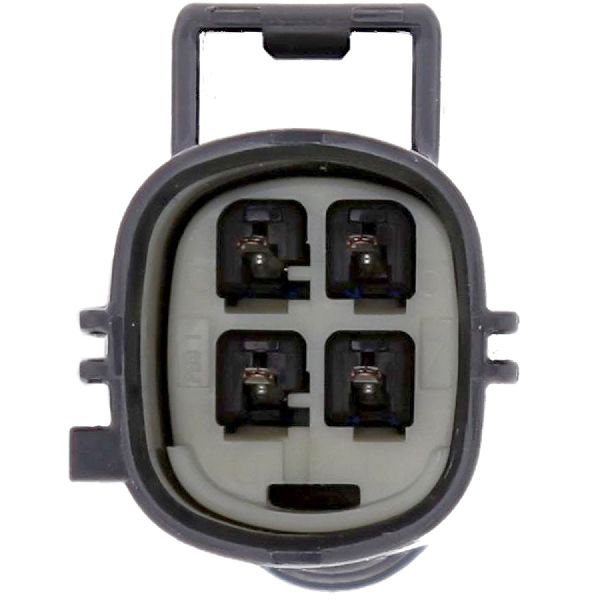
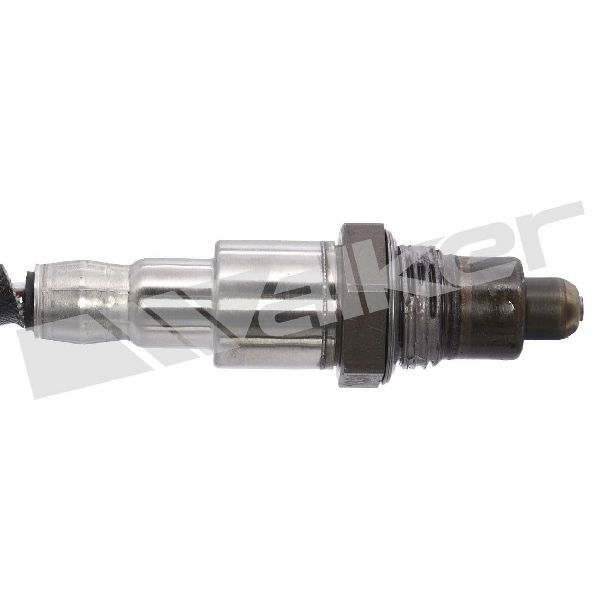
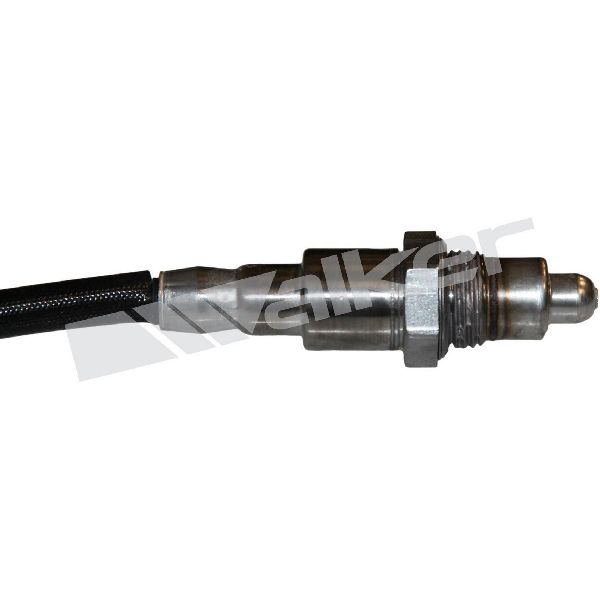
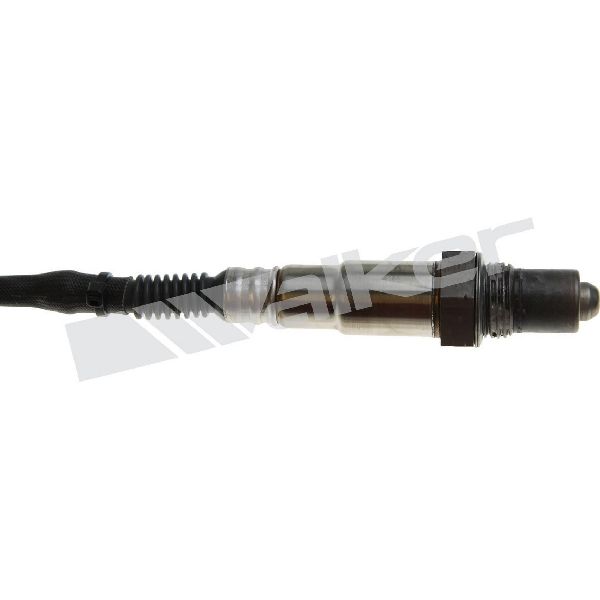
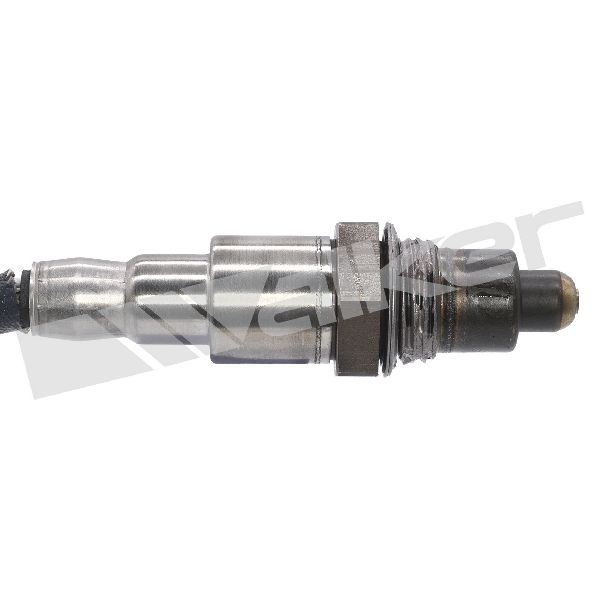
- Upstream Oxygen Sensor (Bank 1)
(OEM #T2R57039 (supersedes T2R26123, T2R54610))— This is the primary sensor the ECU uses to measure the air-fuel ratio. It's a common failure item that directly causes rich or lean conditions.
Trusted brands: Bosch (OEM supplier), Denso, NTK
OEM price range: $200-$300
Aftermarket price range: $75-$150 - Mass Airflow Sensor (Bank 1)
(OEM #T2H7707 (V8), T2R26101 (V6))— A dirty or failed MAF sensor provides incorrect airflow data to the ECU, leading to improper fueling calculations.
Trusted brands: Bosch (e.g., 0280218286 for V6)
OEM price range: $250-$400
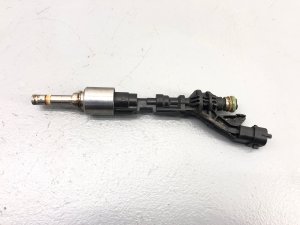
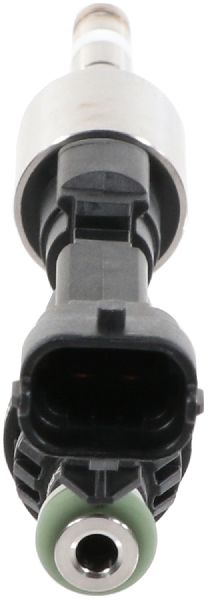
Aftermarket price range: $100-$200 - Fuel Injector (Bank 1)
(OEM #C2D45736 (Bosch))— A mechanically leaking injector is a common cause of a persistent rich condition on a single bank in direct-injection engines. Prone to seizure in the cylinder head on this vehicle.
Trusted brands: Bosch
OEM price range: $250-$350
Aftermarket price range: $95-$250
Related Codes That Often Appear With This One
- P0175 — System Too Rich Bank 2. If both P2178 (Bank 1) and P0175 (Bank 2) are present, it points towards a cause common to both banks, like a fuel pressure issue, a problem with the MAP sensor, or potentially an issue with a VAP tune if the vehicle is modified.
- P0299 — Turbocharger/Supercharger "A" Underboost Condition. This code was listed alongside P2178 in a Jaguar TSB, indicating a potential link between boost control issues (like a leak) and the fuel mixture problem. [SSM73671]
- P0113 — Intake Air Temperature Sensor 1 Circuit High. Also mentioned in the same TSB, a faulty IAT sensor can cause incorrect fuel calculations. [SSM73671]
- P0301-P0304 — Cylinder Misfire codes for Bank 1. An excessively rich condition can foul spark plugs and cause misfires on the cylinders of the affected bank.
Technical Service Bulletins (TSBs) & Recalls
- SSM73671 Attachm: While this TSB number is associated with a list of codes including P2178 for the F-TYPE in NHTSA data, the full TSB text describes a fix for an air intake elbow leak on the 2.0L Ingenium engine. The principle remains relevant: check for any and all intake system leaks when diagnosing fuel trim codes.
Platform-Specific Known Issues
- Fuel Injector Seizure Due to Water Ingress: → Shop Fuel Injector A well-documented design flaw on early F-TYPEs is that the hood vents can allow water to seep past the engine cover and drip directly onto the fuel injectors. This causes heavy corrosion on the injector body and the cylinder head, leading to electronic failure or, more problematically, causing the injector to seize in place. Removal often requires specialized slide hammer pullers (like JLR-310-197) and significant force, and in some cases, the injector breaks apart, requiring an extractor kit or even cylinder head removal for the remnants.
Mechanic-Grade Diagnostic Values
- Long-Term Fuel Trim (LTFT) under moderate acceleration — expected: Should stay near 0% (+/- 10%). Failure: Dives to -15%, -20%, or more, indicating the ECU is aggressively pulling fuel.
- Low-Pressure Fuel System (Supercharged models) — expected: 5.0 bar (approx. 72.5 PSI). Failure: Significantly higher pressure could indicate a regulation problem causing a rich condition.
- High-Pressure Fuel System (at startup) — expected: Up to 150 bar (approx. 2176 PSI). Failure: Consistently excessive pressure compared to ECU's request points to a high-pressure fuel pump or regulator issue.
- EVAP Purge Valve test — expected: No vacuum felt at the valve port with the engine running and valve unplugged.. Failure: Feeling vacuum suction indicates the valve is mechanically stuck open, allowing unmetered fuel vapor into the intake.
Scan Tool Commands That Help
- Jaguar SDD (Symptom Driven Diagnostics): Read and Clear DTCs, Live Data Monitoring (Datalogger) — This is the OEM diagnostic tool. It can provide more detailed sub-codes and manufacturer-specific data than generic scanners. It's used to read codes, view live sensor data (fuel trims, O2 sensor voltage, fuel pressure), and confirm repairs.
- Jaguar SDD (Symptom Driven Diagnostics): Actuator Activation / Component Tests — To command specific components like the EVAP purge valve or fuel pump to operate, verifying their function without having to remove them. This is part of the 'Recommendations' tab in an active session.
- Jaguar SDD (Symptom Driven Diagnostics): Module Programming / Service Functions — After replacing certain components, like the Powertrain Control Module (PCM) or sometimes injectors, the new module may need to be programmed or have adaptations reset to work correctly with the vehicle.
Wiring & Ground Locations
- Bank 1 O2 Sensor Ground — On modern 4-wire sensors, one wire is a dedicated sensor ground back to the ECU. On older single-wire sensors, the ground is through the sensor body into the exhaust pipe itself.. A poor ground connection for the O2 sensor can cause an incorrect voltage signal to be sent to the ECU, leading to faulty air-fuel ratio calculations and potentially causing a rich condition. While F-TYPEs use modern heated sensors with dedicated wiring, checking the connector for corrosion or damage is still a valid step.
- Bank 1 Upstream O2 Sensor Connector — The connector for the Bank 1 (passenger side) upstream sensor is located on the bottom side of the transmission. The sensor wire runs down the side of the transmission to this point.. This is a key connection point to inspect for corrosion, damage, or looseness when diagnosing a sensor-related P2178 code. A bad connection here will interrupt the signal to the ECU.
Real Owner Repair Stories
- Carly forum user (2014 Jaguar F-Type, 51,000 km) — Sluggish performance, excessive fuel consumption, Check Engine Light on, jerking during acceleration.
❌ Tried (didn't work) Initial diagnosis from a hesitant mechanic was unclear.
✅ What actually fixed it A proper diagnosis found two faulty fuel injectors. The mechanic cleaned the intake manifold, replaced the two bad injectors, and also replaced a clogged air filter. The total cost was 515€ and the fix was reported as successful with no recurring issues after 8 months.
OEM Part Supersession History
T2R26123, T2R54610, T2R7732→T2R57039— Component design and manufacturing process improvements to enhance system robustness.
Model Year Variations Within This Range
- 2018: For the 2018 model year, Jaguar introduced a new entry-level 2.0L turbocharged 4-cylinder Ingenium engine. This adds a different powertrain to the vehicle range which may have its own unique causes for P2178, although the code's meaning remains the same.
- 2014-2017: Jaguar North America offered an extended warranty (15 years / 150,000 miles) for oxygen sensors on F-TYPEs with V6 and V8 engines within this model year range due to performance issues.
- Post-2019 (facelift models): The V6 engine option was discontinued for most markets after 2019, simplifying the range to the 4-cylinder and V8 options. While outside the 2014-2018 range, this indicates a significant change in the platform's evolution.
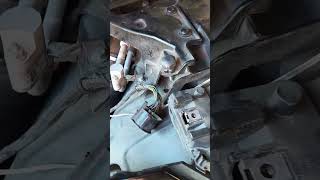
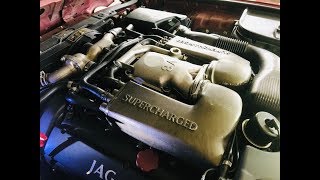
Helpful Videos
Used OEM Parts in Stock
New Aftermarket Parts Available

The information in this article is provided for general reference and educational purposes only. Vehicle specifications, procedures, and part compatibility can vary by production date, trim level, and region. Always consult your vehicle's factory service manual and verify part numbers before purchasing or performing repairs. Safety-critical components such as airbags, seat belts, and braking systems should be installed by a qualified professional.
- Jaguar F-TYPE:
- 🧭 Diagnostic Flowchart
- 🎬 Helpful Videos
- 🛍️ Shop This Part
- What's Unique About the 2014-2018 Jaguar F-TYPE
- Symptoms You May Notice
- Most Likely Causes
- Rare But Worth Checking
- Diagnosis Steps
- Parts You'll Likely Need
- Related Codes That Often Appear With This One
- Technical Service Bulletins (TSBs) & Recalls
- Platform-Specific Known Issues
- Mechanic-Grade Diagnostic Values
- Scan Tool Commands That Help
- Wiring & Ground Locations
- Real Owner Repair Stories
- OEM Part Supersession History
- Model Year Variations Within This Range
- 🎟️ Get 5% Off