

P2178 on 2013-2018 Jaguar XF: System Too Rich Off Idle Causes and Fixes
On a 2013-2018 Jaguar XF, code P2178 is most often caused by a cracked plastic air intake duct or outdated engine software. A smoke test is the best way to confirm an air leak. Inspect the intake for cracks and have a dealer check for software updates before replacing any sensors.
- P2178 on a Jaguar XF means the engine is running with too much fuel on Bank 1 when you are driving or revving the engine.
- Do not replace any sensors until you have thoroughly checked for cracked plastic air intake pipes. A smoke test is the best diagnostic method.
- Jaguar has issued service bulletins indicating a software update may be required to fix this code. Check with a dealer.
- This code is often accompanied by others related to the air intake system (P144C, P2282), which strongly points towards an air leak.
What's Unique About the 2013-2018 Jaguar XF
For this generation of Jaguar XF, particularly those with the 3.0L supercharged engine, the P2178 code is frequently linked to specific hardware and software issues. The plastic air intake ducts and resonators are known to become brittle from engine heat and develop cracks, creating unmetered air leaks that the system can't properly account for. These cracks often form on the underside or at the seams of the resonator boxes, making them difficult to spot without a smoke test. Additionally, Jaguar has issued multiple Technical Service Bulletins (TSBs) indicating that this code can be triggered by an engine management software error, requiring a dealer-installed update to resolve.
Diagnostic Flowchart
Tap your situation to follow the diagnostic path that matches what you're seeing on this vehicle.
Generation note: This range covers the late first-generation (X250, 2013-2015) and early second-generation (X260, 2016-2018) XF. The issue is well-documented on models with the 3.0L supercharged V6 and 2.0L turbocharged engines. The most common physical fault—cracked air intake components—is a known issue across these platforms due to the materials used becoming brittle from engine heat cycles. TSBs from Jaguar apply to vehicles in both generations, indicating shared software or hardware problems.
Symptoms You May Notice
- Check Engine Light (MIL) is on
- Reduced engine performance or 'limp mode'. [Bulletin #SSM73960.2]
- Rough or unstable idle.
- Decreased fuel economy.
- Hesitation during acceleration.
- Strong smell of fuel or black smoke from the exhaust.
- Hissing or whistling sound from the engine bay, especially on acceleration.
- Replacing oxygen sensors without first checking for intake air leaks. Air leaks are a far more common cause of fuel trim issues on this platform and can cause the O2 sensors to report incorrectly.
Most Likely Causes
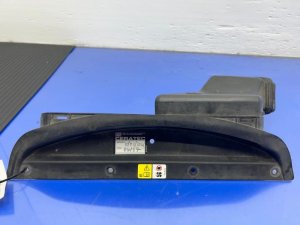
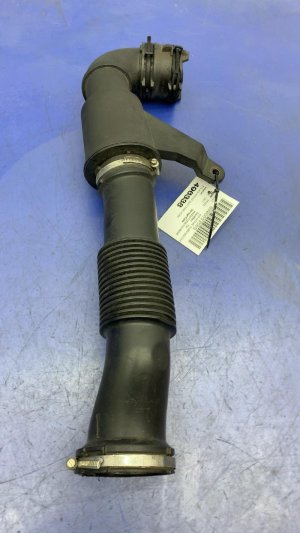
- Cracked Air Intake Duct or Resonator 🔴 High Probability → Shop Engine Air Intake Resonator The plastic used for the intake tubing and resonators becomes brittle over time due to engine heat cycles and can crack, especially at the seams or in the accordion sections. This is a widely reported failure on Jaguar forums, with many owners sharing stories of finding splits on the underside of the tubes.
How to confirm: Perform a thorough visual inspection of all intake components between the air filters and the engine's throttle body, paying close attention to the seams and underside. The most definitive method is to have a smoke test performed, which will force smoke through the intake system and reveal the exact location of any leaks.
Typical fix: Replacement of the cracked air intake duct or resonator assembly. Some owners on forums opt for more durable aftermarket aluminum pipes to prevent recurrence.
Est. part cost: $150-$400 - Outdated Engine Management System (EMS) Software 🔴 High Probability Jaguar has explicitly stated in TSBs JTB00407NAS2 and JTB00429NAS1 that a software error can cause this code, sometimes even without a hardware fault. [Bulletin #JTB00407NAS2, Bulletin #JTB00429NAS1, 24]
How to confirm: This can only be confirmed by a Jaguar dealership or a qualified independent shop with access to Jaguar's diagnostic software (SDD) to check the current software version against available updates.
Typical fix: The ECM must be reprogrammed with the latest software version. This procedure must be performed by a dealer or authorized shop. Owners on forums report dealer labor charges for this service can range from $60 to over $250 if not covered by a warranty or service action.
Est. part cost: $0 (if covered by a service action) - $250 (for labor) - Faulty Mass Air Flow (MAF) Sensor 🟡 Medium Probability → Shop Fuel Injection Air Flow Meter
How to confirm: Inspect the sensor for contamination. Cleaning it with a dedicated MAF sensor cleaner may resolve the issue. If the problem persists, monitor the sensor's output in grams/second (g/s) with a scan tool to see if the readings are erratic or out of specification for the given RPM. The voltage should increase smoothly with RPM.
Typical fix: Clean or replace the MAF sensor.
Est. part cost: $150-$400 - Leaking Fuel Injector ⚪ Low Probability → Shop Fuel Injector
How to confirm: Monitor fuel trims with a scan tool; a significantly negative number on Bank 1 (e.g., -20% or more) points to a rich condition. An injector balance test or leak-down test can confirm if an injector is stuck open or dripping fuel.
Typical fix: Replace the faulty fuel injector. It is often recommended to replace them as a set on the affected bank.
Est. part cost: $150-$450 per injector
Rare But Worth Checking
- Faulty Upstream Oxygen Sensor: → Shop Oxygen Sensor An O2 sensor can fail by sending a false 'lean' signal, causing the ECM to add too much fuel, resulting in a rich condition. While possible, it's less common than intake leaks or software issues for this specific code on this car.
- Failing High-Pressure Fuel Pump (HPFP): → Shop Fuel Pump On direct injection engines, a failing high-pressure fuel pump can leak fuel into the crankcase. This fuel contaminates the engine oil, and the fuel vapors are then recirculated through the Positive Crankcase Ventilation (PCV) system into the intake, causing a rich mixture. A strong smell of gasoline on the oil dipstick is a key indicator.
- Stuck Open EVAP Purge Valve: → Shop Vapor Canister The EVAP purge valve controls the flow of fuel vapors from the charcoal canister to the engine intake. If it gets stuck open, it can allow a constant flow of fuel vapors, creating a rich condition, especially off idle. A faulty purge valve was the confirmed fix for a 2013 XF that had P2187 along with other codes.
Diagnosis Steps
- Scan the ECM for all stored trouble codes and review freeze-frame data to understand the conditions when the code was set.
- Visually inspect the entire air intake system, from the air filter boxes to the throttle body. Pay close attention to the plastic seams on the large intake ducts and resonators for any visible cracks or damage, especially on the underside.
- Perform a smoke test on the intake system. This is the most reliable way to find small cracks that are not visible to the naked eye. 🎬 See this guide on how to perform a DIY smoke test. A YouTube video by 'Jaguar Audi Land Rover rough idle Code P2178 P2187 (FIXED)' shows finding a leak with this method.
- If no leaks are found, contact a Jaguar dealer or qualified shop to determine if your vehicle's ECM software is up to date, referencing TSBs JTB00407NAS2 and JTB00429NAS1.
- If software is current and no leaks are present, inspect and clean the Mass Air Flow (MAF) sensors using a dedicated cleaner.
- Monitor live data for Bank 1 fuel trims using a scan tool. Large negative values (e.g., Long Term Fuel Trim below -15%) confirm the ECM is subtracting fuel to correct a rich condition.
- Check the engine oil for a strong smell of gasoline, which could indicate a leaking high-pressure fuel pump.
- Test the EVAP purge valve to ensure it is not stuck open. 🎬 Watch: Diagnosing lean codes and purge valve issues on a Jaguar. With the engine running, disconnect the hose and feel for vacuum at the valve port.
- If the issue persists, investigate the fuel system by checking fuel pressure and testing the fuel injectors for leaks.
Parts You'll Likely Need
- Air Intake Duct / Resonator (3.0L V6)
(OEM #C2Z21611, DX23-9R504-BA)— This is the most common hardware failure leading to code P2178 on the 3.0L V6 models. The original plastic becomes brittle and cracks, causing unmetered air to disrupt the air-fuel ratio.
Trusted brands: Jaguar (OEM)
OEM price range: $250-$450
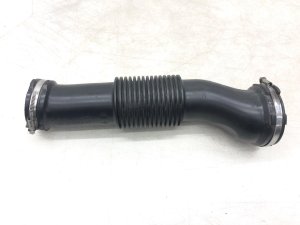
Aftermarket price range: $150-$250 - Air Intake Hose (2.0L I4)
(OEM #C2Z28982 (replaces C2Z13678), CX23-9C623-BA)— The intake hose on the 2.0L turbocharged engine is also prone to cracking and causing air leaks, leading to this code.
Trusted brands: Jaguar (OEM)
OEM price range: $200-$350
Aftermarket price range: $100-$200
Related Codes That Often Appear With This One
- P144C — This code is frequently cited alongside P2178 in Jaguar TSBs related to air intake system and software issues. [Bulletin #JTB00429NAS1, Bulletin #JTB00407NAS2, 24]
- P2282 — Also mentioned in TSBs with P2178, this code relates to air leaks between the throttle and MAF sensor, reinforcing the likelihood of a cracked intake pipe. [Bulletin #JTB00429NAS1, Bulletin #JTB00407NAS2, 24]
- P0191 — A Jaguar TSB links this fuel rail pressure sensor code with P2178, suggesting a potential fuel delivery issue could also be a cause. [Bulletin #SSM73960.2]
- P0299 — This code for turbo/supercharger underboost can be triggered by a significant air leak before the supercharger, which is a primary cause of P2178. [Bulletin #SSM73671 Attachm]
- P2187 / P2189 — These are 'System Too Lean at Idle' codes. While seemingly contradictory, a vacuum leak can cause a lean condition at idle (P2187/P2189) and a rich condition off-idle (P2178) as the ECM overcompensates. Seeing these together strongly points to an unmetered air leak.
Technical Service Bulletins (TSBs) & Recalls
- SSM73960.2: Notes P2178 may be stored with P0191-85 (Fuel Rail Pressure Sensor) during reduced performance events.
- JTB00429NAS1: Cites P2178 in relation to the engine air intake system and requires a service instruction (software update) after hardware faults are fixed.
- JTB00407NAS2: States the cause may be an Engine Management System (EMS) software error or a hardware fault (like an air leak) and provides instructions for a software update.
- SSM73671 Attachm: Lists P2178 along with an underboost code (P0299-00), which can be caused by a significant pre-supercharger air leak.
Platform-Specific Known Issues
- TSB JTB00407NAS2 and JTB00429NAS1 confirm that P2178 can be caused by an engine management software error, requiring a dealer update.
Mechanic-Grade Diagnostic Values
- High-Pressure Fuel System (3.0L SC) — expected: Approximately 500 psi at idle, rising to around 2900 psi under load.. Failure: Pressure that is significantly out of this range or does not respond to engine load could indicate a pump or sensor issue.
- Mass Air Flow (MAF) Sensor (3.0L SC) — expected: A forum user with a 2015 3.0L SC reported readings of 1.8 g/s and 1.59 g/s at warm idle, which were considered likely within spec.. Failure: Readings that are wildly different from these, or that do not increase smoothly with RPM, suggest a faulty sensor or an air leak.
- Long Term Fuel Trim (LTFT) — expected: Ideally, values should be close to 0%, within a range of +/- 10%.. Failure: For a P2178 rich code, a large negative LTFT value (e.g., -15% or more) indicates the ECM is consistently removing fuel to compensate for an overly rich mixture.
Hidden / Shadow Codes Worth Checking
- P2178-00: The '-00' suffix is a sub-type provided by the manufacturer's diagnostic equipment. In this case, it means 'no sub type information' is available, but its presence confirms the code was read by a more advanced scanner. [Bulletin #SSM73960.2, Bulletin #SSM73671 Attachm] (see via Jaguar's Symptom Driven Diagnostics (SDD) or a similarly capable professional scan tool.)
Scan Tool Commands That Help
- Jaguar SDD (Symptom Driven Diagnostics): Configure new module - Engine Control Module — This function is required to update the ECM software as specified in TSBs JTB00407NAS2 and JTB00429NAS1 to resolve software-induced P2178 codes.
- Generic OBD-II Scanner or Manual Procedure: Reset Fuel Trim Adaptations / Hard Reset — After replacing a component like an air intake tube or MAF sensor, resetting the fuel trims forces the ECM to relearn the air/fuel mixture from a baseline of zero. This can be done with a scan tool or by performing a 'hard reset': disconnecting the negative battery terminal and touching it to the positive terminal for a moment to discharge the capacitors.
Wiring & Ground Locations
- G1D132 — Located behind the right headlight assembly in the engine compartment.. This is a primary ground point for the Engine Control Module (ECM). A poor connection here can cause erratic ECM behavior and phantom codes, including fuel system faults.
- G1D123 — Located on the left rear of the engine compartment.. This is another ground point used by the ECM. Verifying its integrity is a key step in diagnosing electrical faults that could trigger P2178.
Real Owner Repair Stories
- YouTube video from user 'fsteddie98' (2013 Jaguar XJ with 3.0L Supercharged V6 (same engine as XF)) — Check engine light with lean codes P2187 and P2189, and a noticeable hissing sound from the right side of the valve cover.
❌ Tried (didn't work) Initial visual inspection did not immediately reveal the source of the hissing.
✅ What actually fixed it The cause was a ruptured diaphragm in the PCV valve located on the valve cover. The technician diagnosed it by plugging the hose from the valve, which stopped the hissing and improved fuel trim readings on the scan tool. Replacing the PCV valve diaphragm kit (which came in Land Rover packaging) resolved the codes. - Reddit user in r/Jaguar (2013 Jaguar XF) — Recurring check engine light with codes P0137 (O2 sensor), P0420 (catalyst), and P2187 (lean at idle). Engine sounded like it was lagging.
❌ Tried (didn't work) Clearing the codes repeatedly.
✅ What actually fixed it The fix was replacing a faulty purge valve regulator. The owner noticed the part was loose and causing an audible change in engine sound. Instead of replacing the entire expensive assembly, a repair kit for the valve was installed, which cleared all three codes and allowed the car to pass a smog test.
"I Checked Everything" — The Actual Cause
- In cases where a smoke test reveals no leaks in the main intake ducts, a hidden vacuum leak can still exist in the PCV system. On the 3.0L V6, the PCV valve diaphragms are integrated into the valve covers and are known to fail, creating a significant unmetered air leak. This can be diagnosed by listening for a hissing sound near the valve cover or by temporarily plugging the PCV hose to see if the engine idle and fuel trims stabilize.
OEM Part Supersession History
C2Z13678→C2Z28982— This is the air intake hose for the 2.0L I4 engine. The original part was superseded by an updated version, likely to improve durability and prevent the cracking that leads to air leaks.
Helpful Videos
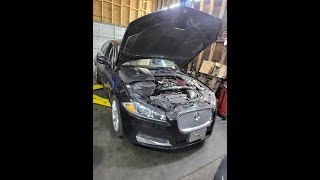
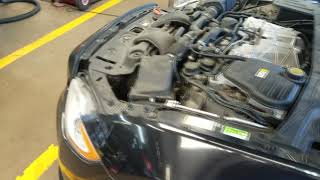
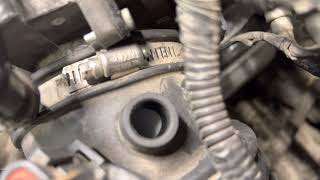
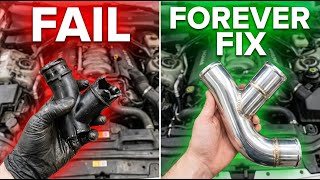
We Have This Part in Stock

The information in this article is provided for general reference and educational purposes only. Vehicle specifications, procedures, and part compatibility can vary by production date, trim level, and region. Always consult your vehicle's factory service manual and verify part numbers before purchasing or performing repairs. Safety-critical components such as airbags, seat belts, and braking systems should be installed by a qualified professional.
- Jaguar XF:
- 🧭 Diagnostic Flowchart
- 🎬 Helpful Videos
- 🛍️ Shop This Part
- What's Unique About the 2013-2018 Jaguar XF
- Symptoms You May Notice
- Most Likely Causes
- Rare But Worth Checking
- Diagnosis Steps
- Parts You'll Likely Need
- Related Codes That Often Appear With This One
- Technical Service Bulletins (TSBs) & Recalls
- Platform-Specific Known Issues
- Mechanic-Grade Diagnostic Values
- Hidden / Shadow Codes Worth Checking
- Scan Tool Commands That Help
- Wiring & Ground Locations
- Real Owner Repair Stories
- "I Checked Everything" — The Actual Cause
- OEM Part Supersession History
- 🎟️ Get 5% Off