

P2181 on 2014-2015 Buick Regal: Causes and Fixes for Cooling System Performance
This code means your engine isn't reaching the correct operating temperature, usually due to running too cool. The most common cause on a 2014-2015 Regal is a faulty thermostat that is stuck open. A known issue, documented in a GM TSB, is manufacturing debris inside the coolant water outlet blocking the thermostat. Replacing the thermostat assembly is the typical fix, with parts costing between $50 and $150.
- P2181 on a 2014-2015 Regal means the engine is running too cool.
- The most probable cause is a thermostat stuck open, but a known GM issue involves debris in the water outlet housing that must be inspected during the repair.
- Replacing the thermostat assembly with an OEM part is the recommended fix.
- Check for other codes like P0128 or P00B7, which can confirm the diagnosis.
What's Unique About the 2014-2015 Buick REGAL
For this generation of Buick Regal and its platform mates (like the Chevy Malibu), the P2181 code is frequently tied to a stuck-open thermostat. However, a notable vehicle-specific issue is documented in Technical Service Bulletin #PIP5300C, which points to plastic manufacturing debris or 'flashing' inside the coolant water outlet assembly. This debris can physically restrict the thermostat's movement, causing temperature regulation problems. This makes a visual inspection of the water outlet crucial during diagnosis, beyond just testing the thermostat itself.
Diagnostic Flowchart
Tap your situation to follow the diagnostic path that matches what you're seeing on this vehicle.
Symptoms You May Notice
- Check Engine Light is on
- Engine temperature gauge reads lower than normal or is slow to warm up
- Poor or no heat from the cabin heater.
- "AC off" message displayed on the instrument cluster. [⭐ MANUFACTURER TSB — highest authority] Bulletin #PIP5300
- Decreased fuel economy.
- Cooling fans running constantly, even when the engine is cold.
- Replacing the ECT sensor when the actual problem is a stuck-open thermostat.
- Replacing the thermostat without inspecting the water outlet housing for the debris mentioned in TSB #PIP5300.
Most Likely Causes
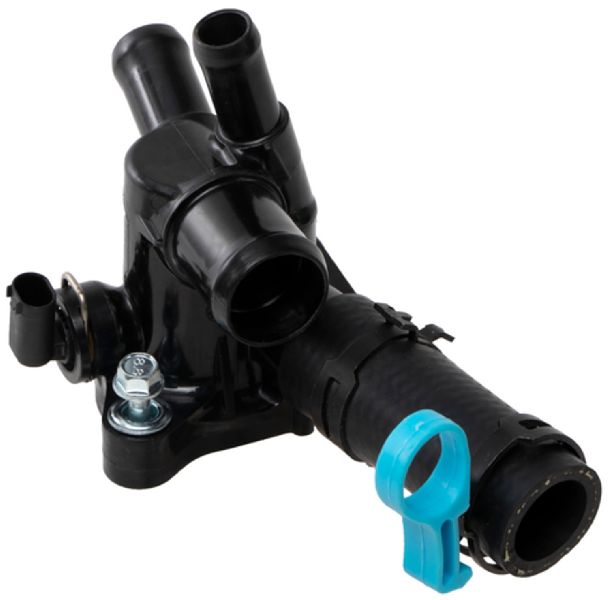
- Thermostat stuck open 🔴 High Probability → Shop Integrated Thermostat Housing Assembly Thermostats are wear items often designed to fail in the open position to prevent overheating. This is the most common reason for an engine running too cool and is a frequent failure on these Ecotec engines.
How to confirm: Monitor live coolant temperature data with a scan tool. If the engine warms up very slowly and the temperature drops at highway speeds, the thermostat is likely stuck open. You can also physically remove it and test it in hot water. On many GM vehicles, the dashboard temperature gauge is programmed to read 'normal' (e.g., 190°F) across a wide range of actual temperatures, so a scan tool provides a more accurate reading.
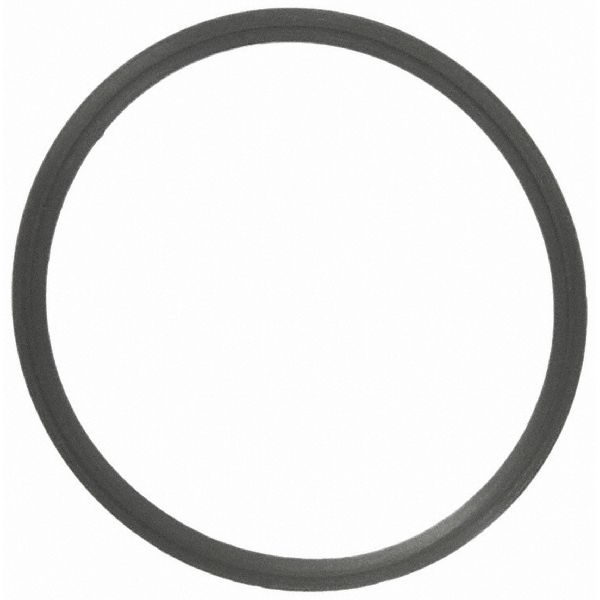
Typical fix: Replace the thermostat and its housing, which often come as a single assembly. Always use a new gasket and refill with DEX-COOL coolant.
Est. part cost: $50-$150 - Debris in Water Outlet Assembly 🟡 Medium Probability A specific TSB (#PIP5300) for 2014-2015 Regals and other GM models notes that flashing or debris from the manufacturing process can be present in the water outlet assembly, causing this code.
How to confirm: During thermostat replacement, remove the water outlet assembly (the plastic housing the thermostat sits in, typically on the back or side of the cylinder head) and perform a close visual inspection for any foreign material or plastic flashing that could impede thermostat operation.
Typical fix: Remove the debris from the water outlet assembly. Per the TSB, if flashing or debris is found, the official recommendation is to replace the entire water outlet assembly and ensure the connected hoses are also clear.
Est. part cost: $40-$80 - Faulty Engine Coolant Temperature (ECT) Sensor ⚪ Low Probability → Shop Engine Coolant Temperature Sensor While less common than a thermostat failure, the ECT sensor can send inaccurate readings to the ECM, making it think the engine is colder than it is.
How to confirm: Compare the ECT sensor reading on a scan tool to the reading from an infrared thermometer pointed at the thermostat housing. If the readings differ significantly (e.g., scan tool shows 140°F while the IR gun shows 185°F), the sensor is likely faulty.
Typical fix: Replace the Engine Coolant Temperature sensor.
Est. part cost: $20-$50 - Low Engine Coolant Level ⚪ Low Probability → Shop Engine Coolant / Antifreeze While more likely to cause overheating, a very low coolant level can cause erratic temperature readings and potentially trigger a performance code if air pockets affect the ECT sensor.
How to confirm: Visually check the coolant level in the reservoir when the engine is cold. If it's below the 'MIN' line, there is a leak that needs to be found and repaired.
Typical fix: Top off the coolant with a 50/50 mix of DEX-COOL and distilled water, then pressure test the system to find and repair any leaks.
Est. part cost: $20-$40 for coolant, plus repair costs for any leaks.
Diagnosis Steps
- Check for any other stored DTCs that could provide more clues, such as ECT sensor circuit codes.
- With the engine cold, check the engine coolant level in the overflow reservoir and top it off if necessary with the correct type of coolant (DEX-COOL).
- Connect a scan tool and monitor the Engine Coolant Temperature (ECT) sensor reading as the engine warms up from a cold start. The temperature should rise steadily to around 180-195°F and then stabilize.
- If the temperature rises very slowly, never reaches the target, or drops significantly when driving at highway speeds, a stuck-open thermostat is the most likely cause.
- If the thermostat is the suspected cause, proceed with replacement. For the 2.4L engine, the thermostat is located on the right (passenger) side of the engine. For the 2.0L Turbo, it is on the side of the head, accessible after removing some components.
- Crucially, when the thermostat is removed, inspect the water outlet assembly it sits in. Look for any plastic flashing or debris as described in TSB #PIP5300. If found, replace the water outlet assembly.
- If the thermostat and water outlet appear fine, test the ECT sensor. Compare its reading to a known good temperature source (like an infrared thermometer). If the readings are skewed, replace the sensor. 🎬 See this walkthrough on replacing the Ecotec engine temperature sensor.
- If no other cause is found, pressure test the cooling system to check for small, intermittent leaks that could be introducing air into the system.
Parts You'll Likely Need
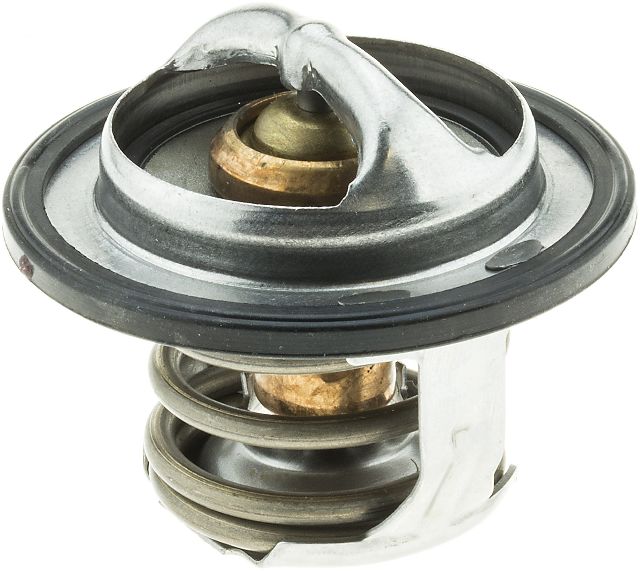
- Engine Coolant Thermostat and Housing Assembly
(OEM #12657134)— This is the most frequent failure point for a P2181 code, as the thermostat gets stuck open. It is typically replaced as a complete assembly with the housing. Owner forums strongly recommend using the OEM ACDelco part for reliability.
Trusted brands: ACDelco (OEM), Motorad, Gates
OEM price range: $80-$150
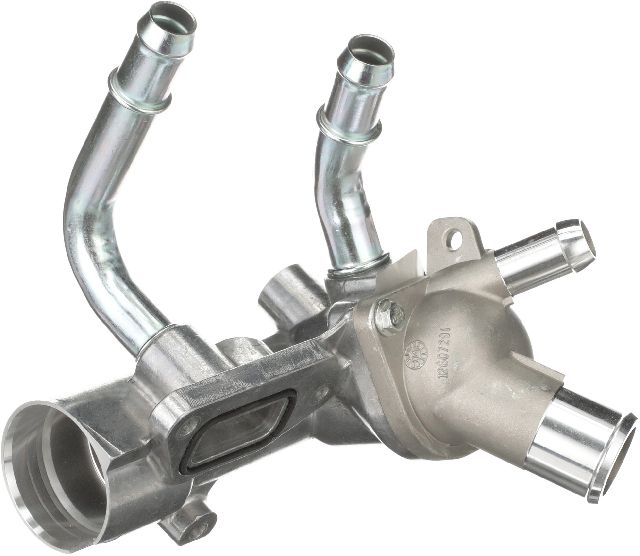
Aftermarket price range: $50-$100 - Engine Coolant Water Outlet
(OEM #12633468 (for 2.4L, verify with VIN))— May need to be cleaned or, more likely, replaced if debris is found, as per TSB #PIP5300. This is a critical inspection step.
Trusted brands: ACDelco, Dorman
OEM price range: $40-$80
Aftermarket price range: $20-$50 - Engine Coolant (DEX-COOL) — The cooling system will need to be drained and refilled during the repair. Use a 50/50 mix with distilled water.
Trusted brands: ACDelco, Prestone
OEM price range: $25-$40
Aftermarket price range: $20-$35
Related Codes That Often Appear With This One
- P00B7 — This code for 'Engine Coolant Flow Low/Performance' is mentioned in the same TSB as P2181 and relates to the same underlying cooling system issues, often caused by the same water outlet debris. [⭐ MANUFACTURER TSB — highest authority] Bulletin #PIP5300
- P0128 — This code for 'Coolant Thermostat (Coolant Temperature Below Thermostat Regulating Temperature)' is very similar and often points directly to a stuck-open thermostat. P2181 is a more general performance code, while P0128 is more specific to the thermostat's function.
Technical Service Bulletins (TSBs) & Recalls
- PIP5300: Notes that P2181 can be caused by flashing or debris in the water outlet assembly, resulting in poor heater performance or an AC off message.
Platform-Specific Known Issues
- TSB #PIP5300 documents an issue where manufacturing flashing or debris can be found in the water outlet assembly, leading to DTC P2181 and/or P00B7, along with symptoms like poor heater performance and an 'AC off' message. The official fix is to replace the water outlet assembly if debris is found.
Mechanic-Grade Diagnostic Values
- ECT Sensor Resistance (Cold) — expected: 2000 - 3000 Ω at 20°C (68°F).. Failure: No reading (open circuit) or very low resistance indicates a faulty sensor.
- ECT Sensor Voltage (Cold Start) — expected: ~2.0V - 3.0V.. Failure: A significantly lower voltage on a cold engine (e.g., 1.5V) can indicate a skewed sensor.
- ECT Sensor Voltage (Operating Temp) — expected: ~0.5V - 1.0V.. Failure: Voltage staying high (e.g., above 1.25V) when the engine is fully warmed up points to a sensor or circuit issue.
- ECT Sensor Circuit Input Voltage — expected: 5V reference from the PCM.. Failure: No voltage indicates a wiring or PCM problem, not a sensor failure.
- ECM/PCM Ground Resistance — expected: < 0.1 Ω.. Failure: High resistance can cause the module to misinterpret sensor inputs, potentially triggering P2181.
Scan Tool Commands That Help
- GDS2 (GM Dealer Tool): Cooling Fan Relay test / Actuation Test — To verify the cooling fan and its control circuit are working independently of the ECT sensor input. This helps rule out a fan failure if overheating is a symptom.
- GDS2 (GM Dealer Tool): Compare Data: Heater Core Inlet Temp vs. Heater Core Outlet Temp — To diagnose poor heater performance, a key symptom of P2181. A large discrepancy can indicate a coolant flow problem through the heater core.
- GDS2 (GM Dealer Tool): Engine Control Module (ECM) Reprogramming — As a potential fix if the P2181 code is caused by a software or calibration error within the ECM, rather than a mechanical part failure.
Wiring & Ground Locations
- ECT Sensor (2.4L Engine) — Typically located in the thermostat housing on the side of the engine.. This is the primary sensor providing the temperature data that triggers the P2181 code. Checking its connector and wiring for corrosion or damage is a key diagnostic step.
- ECT Sensor (2.0L Turbo Engine) — Often found at the rear of the cylinder head on the driver's side.. This sensor provides the temperature data to the ECM. Its location on the 2.0L Turbo can make it harder to access, but its wiring and connection are just as critical to inspect.
- ECM/PCM Grounds — Typically located on the engine block, inner fender, or firewall. Specific locations like G102 (rear of engine) or G105 (behind cooling fan relays) are common on GM platforms.. A poor ground connection for the Engine Control Module can cause incorrect interpretation of the ECT sensor's voltage signal, leading to a false P2181 code.
Real Owner Repair Stories
- Reddit r/Cartalk user ka36 (08 VW Rabbit 2.5L (similar P2181 logic)) — P2181 code tripped during cold weather. Dashboard temperature gauge showed a steady 190°F.
❌ Tried (didn't work) Initially trusting the dashboard temperature gauge, which was misleading.
✅ What actually fixed it After checking the actual temperature with a scan tool, it was clear the engine was struggling to warm up. A new thermostat resolved the issue completely.
When the Usual Fixes Don't Work
- While the thermostat is the most common cause, it is not the only one. If a thermostat replacement does not fix the P2181 code, the next most likely culprits are related to the sensor circuit or the Engine Control Module (ECM) itself. One source notes that primary culprits can be module-level processing, software calibration issues, or communication failures, rather than the thermostat. Another common failure point, especially on vehicles that see harsh weather, is the ECT sensor connector becoming corroded, or the sensor itself failing electrically. Before assuming the thermostat is bad, it's wise to check live data and test the sensor circuit to avoid replacing a good part.
Helpful Videos
We Have This Part in Stock


The information in this article is provided for general reference and educational purposes only. Vehicle specifications, procedures, and part compatibility can vary by production date, trim level, and region. Always consult your vehicle's factory service manual and verify part numbers before purchasing or performing repairs. Safety-critical components such as airbags, seat belts, and braking systems should be installed by a qualified professional.
- Buick REGAL:
- 🧭 Diagnostic Flowchart
- 🎬 Helpful Videos
- 🛍️ Shop This Part
- What's Unique About the 2014-2015 Buick REGAL
- Symptoms You May Notice
- Most Likely Causes
- Diagnosis Steps
- Parts You'll Likely Need
- Related Codes That Often Appear With This One
- Technical Service Bulletins (TSBs) & Recalls
- Platform-Specific Known Issues
- Mechanic-Grade Diagnostic Values
- Scan Tool Commands That Help
- Wiring & Ground Locations
- Real Owner Repair Stories
- When the Usual Fixes Don't Work
- 🎟️ Get 5% Off