

P2181 on 2014-2015 Cadillac CTS: Cooling System Performance Causes and Fixes
For a 2014-2015 Cadillac CTS, code P2181 usually means the engine isn't warming up correctly, most often due to a stuck-open thermostat. A specific TSB also points to debris in the water outlet assembly on both 3.6L and 2.0L engines. Replacing the thermostat is the most common fix, though inspection for debris is a critical first step.
- P2181 means your CTS engine is running too cold, most likely due to a thermostat that is stuck open.
- Before buying parts, check for the specific issue noted in TSB #PIP5300A: debris in the water outlet assembly, which affects both the 3.6L and 2.0L engines.
- Symptoms to watch for include a low-reading temperature gauge, a heater that doesn't get warm, and potentially a cooling fan that runs excessively.
- This code is often paired with P00B7 or P0128, which also point to a coolant flow or temperature problem.
- While you can drive the car, fixing the issue promptly will restore fuel economy and proper heater function. Be aware that on the 3.6L V6, the repair is labor-intensive.
What's Unique About the 2014-2015 Cadillac CTS
On this specific generation of Cadillac CTS, a known issue documented in Technical Service Bulletin (TSB) #PIP5300A can cause this code. Debris or manufacturing flashing inside the water outlet assembly can restrict coolant flow or interfere with sensor readings, triggering P2181. 🎬 Watch: Why you shouldn't just swap parts for P2181 [⭐ MANUFACTURER TSB — highest authority] This is a unique factory-related issue beyond the usual wear-and-tear causes like a failing thermostat. The TSB applies to both the 2.0L LTG and 3.6L LFX engines available in these model years.
Diagnostic Flowchart
Tap your situation to follow the diagnostic path that matches what you're seeing on this vehicle.
Symptoms You May Notice
- Check Engine Light is on
- Engine temperature gauge reads lower than normal or takes a very long time to warm up
- Poor heater performance or blows cold air [⭐ MANUFACTURER TSB — highest authority]
- "AC off" message displayed on the dashboard [⭐ MANUFACTURER TSB — highest authority]
- Reduced fuel economy
- Cooling fan runs continuously or for a long time after the engine is shut off
- Replacing the ECT sensor when the actual problem is a stuck-open thermostat. Always diagnose the thermostat's performance by monitoring warmup time before replacing sensors.
- Assuming the thermostat is bad without first checking for debris in the water outlet per TSB #PIP5300A, which could lead to a repeat failure or unnecessary part replacement.
Most Likely Causes
- Stuck-Open Thermostat 🔴 High Probability → Shop Integrated Thermostat Housing Assembly Thermostats are a common wear item designed to fail in the open position to prevent overheating. This allows coolant to circulate constantly, preventing the engine from reaching operating temperature. The 3.6L LFX engine, in particular, is known for thermostat failures.
How to confirm: Monitor the engine coolant temperature with a scan tool. If it rises very slowly and struggles to reach the normal operating range (typically 180-210°F), the thermostat is likely stuck open. A user on the BobIsTheOilGuy forum noted their car with a similar issue was running at only 170°F.
Typical fix: Replace the engine coolant thermostat and gasket/housing assembly. It is recommended to use an OEM-spec part like ACDelco. The thermostat on the 3.6L V6 is located at the rear of the engine and can be difficult to access, often requiring removal of the cowl.
Est. part cost: $110-$270 for a thermostat assembly. - Debris in Water Outlet Assembly 🟡 Medium Probability Manufacturer TSB #PIP5300A specifically calls out finding plastic flashing or debris in the water outlet assembly on 2014-2015 CTS models with both 2.0L and 3.6L engines. [⭐ MANUFACTURER TSB — highest authority]
How to confirm: Visually inspect the water outlet assembly after gaining access to it. The TSB instructs technicians to check the outlet, which is made of black plastic, and the connected heater hoses for any obstructions. [⭐ MANUFACTURER TSB — highest authority]
Typical fix: Remove the debris from the water outlet assembly. If the assembly is damaged or the source of the debris cannot be cleared, it must be replaced. Ensure heater hoses are also cleared of debris. [⭐ MANUFACTURER TSB — highest authority]
Est. part cost: $90-$160 for a water outlet/thermostat housing. - Faulty Engine Coolant Temperature (ECT) Sensor ⚪ Low Probability → Shop Engine Coolant Temperature Sensor While not as common as the thermostat, ECT sensors can fail and send incorrect data to the ECM. Some owners choose to replace the sensor proactively when replacing the thermostat due to its location and low part cost.
How to confirm: Compare the ECT sensor reading on a scan tool to the ambient temperature on a cold engine; they should be very close. If the reading is erratic, illogical, or doesn't change as the engine warms up, the sensor is likely faulty.
Typical fix: Replace the ECT sensor. It is often located in or near the thermostat housing.
Est. part cost: $20-$50 - Low Engine Coolant Level ⚪ Low Probability → Shop Engine Coolant / Antifreeze
How to confirm: Visually check the coolant reservoir. If the level is below the 'minimum' line, there is a leak in the system that needs to be found and repaired. An air pocket in the system from a low level can cause erratic temperature readings.
Typical fix: Top off the coolant with the correct type (e.g., DEX-COOL) and pressure test the system to find and repair any leaks in hoses, the radiator, or the water pump.
Est. part cost: $20-$30 for coolant.
Diagnosis Steps
- Check for other DTCs: Use an OBD-II scanner to see if any other codes, like P00B7 or P0128, are present. [⭐ MANUFACTURER TSB — highest authority]
- Inspect Coolant Level: Ensure the engine coolant is at the proper level in the reservoir. A low level indicates a leak that must be addressed first.
- Monitor Live Data: With a scan tool, watch the Engine Coolant Temperature (ECT) reading as the engine warms up from a cold start. The temperature should rise steadily to around 180-210°F and then stabilize. If it warms up extremely slowly, never reaches this range, or fluctuates wildly, a stuck-open thermostat is the most likely cause.
- Inspect Water Outlet Assembly: Following TSB #PIP5300A, gain access to the water outlet assembly and inspect for any plastic flashing or debris that could be causing a blockage or incorrect reading. This is a known issue on these specific models. [⭐ MANUFACTURER TSB — highest authority]
- Test the ECT Sensor: If the thermostat appears to be working correctly, test the ECT sensor. You can check its resistance with a multimeter against a temperature/resistance chart or compare its cold reading to the ambient air temperature.
- Check for Coolant Leaks: If the coolant level was low, perform a cooling system pressure test to find the source of the leak.
Parts You'll Likely Need
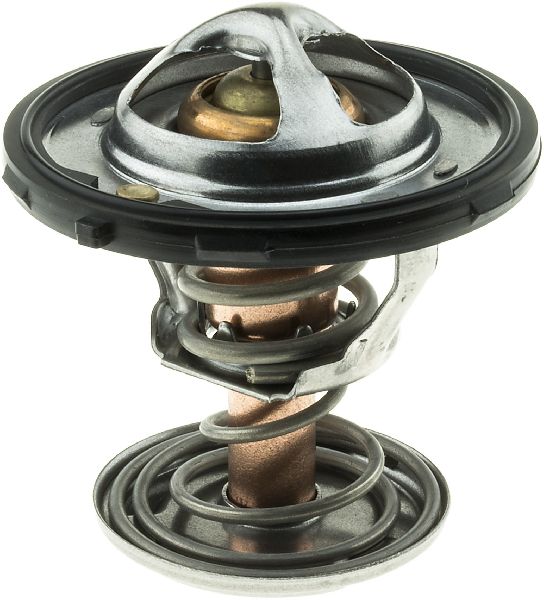
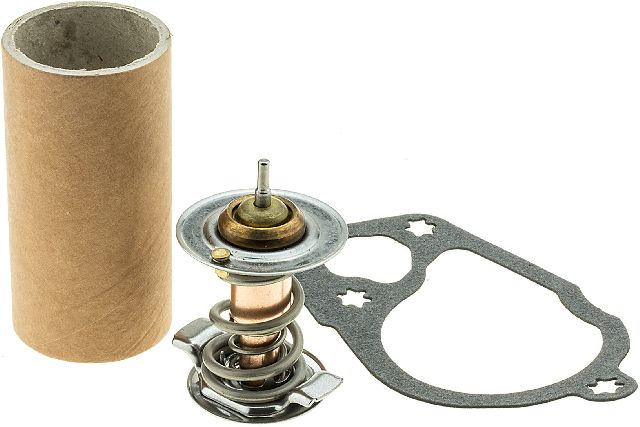
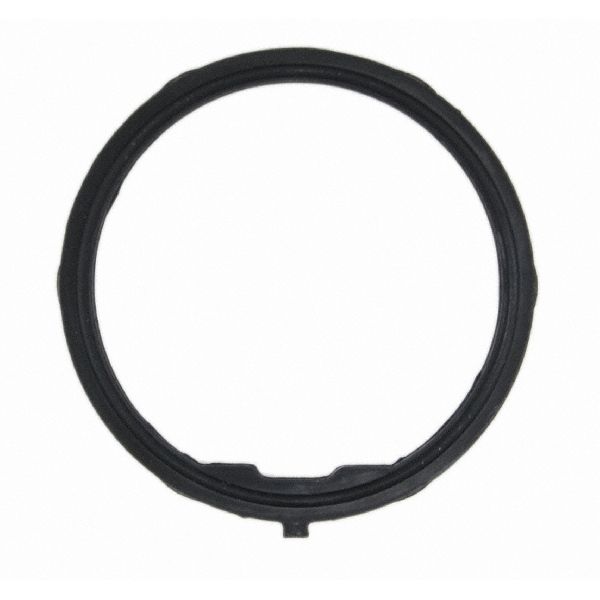
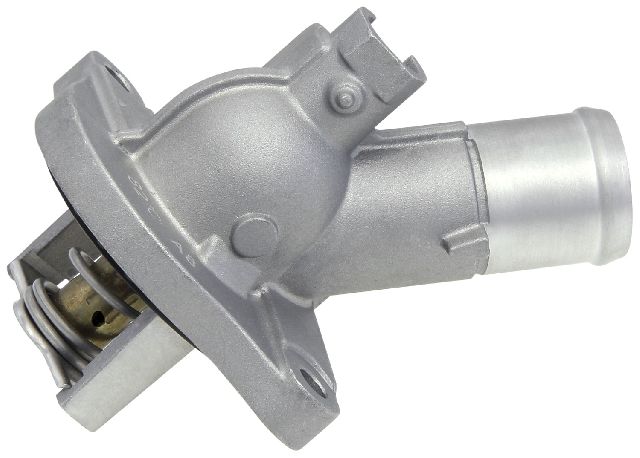
- Engine Coolant Thermostat Assembly
(OEM #ACDelco 131-158 (or GM 12657134))— This is the most common cause of P2181, as thermostats can get stuck open with age, preventing the engine from warming up properly.
Trusted brands: ACDelco, Dorman, Gates
OEM price range: $150-$270
Aftermarket price range: $110-$180 - Engine Coolant Water Outlet
(OEM #ACDelco 12654328 (for 3.6L LFX))— A specific TSB for the 2014-2015 CTS points to debris in this housing, which may require cleaning or replacement of the housing itself. [⭐ MANUFACTURER TSB — highest authority]
Trusted brands: ACDelco, Dorman
OEM price range: $100-$180
Aftermarket price range: $80-$150
Related Codes That Often Appear With This One
- P00B7 — This code for 'Engine Coolant Flow Low/Performance' is often triggered by the same underlying issues, such as a faulty thermostat or coolant flow restrictions. TSB #PIP5300A explicitly states that P2181 may appear with P00B7. [⭐ MANUFACTURER TSB — highest authority]
- P0128 — This code means 'Coolant Thermostat (Coolant Temperature Below Thermostat Regulating Temperature)'. It is a more specific code for the engine running too cold and is functionally very similar to P2181. A stuck-open thermostat is the primary cause for both.
Technical Service Bulletins (TSBs) & Recalls
- PIP5300A: An update to the original TSB, this bulletin covers 2014-2015 CTS models (among others) with 2.0L or 3.6L engines. It addresses complaints of poor heater performance, an 'AC off' message, and MIL illumination with DTC P00B7 and/or P2181. The cause is identified as potential flashing or debris in the water outlet assembly. The fix is to inspect and clean or replace the assembly and associated hoses. [⭐ MANUFACTURER TSB — highest authority]
Platform-Specific Known Issues
- TSB #PIP5300A documents an issue where manufacturing debris or flashing can be found in the water outlet assembly, leading to codes P2181 and/or P00B7, poor heater performance, and an 'AC off' message. This applies to both the 2.0L LTG and 3.6L LFX engines. [⭐ MANUFACTURER TSB — highest authority]
- The thermostat on the 3.6L LFX V6 engine is located at the rear of the engine block, making replacement significantly more labor-intensive than on many other vehicles. Access often requires removing the windshield wipers and the entire cowl assembly.
Mechanic-Grade Diagnostic Values
- Engine Coolant Temperature (ECT) Sensor Resistance — expected: Approximately 2000-3000 Ω at 20°C (68°F) and 200-300 Ω at 90°C (194°F).. Failure: Readings significantly outside this range, or an open/short circuit, indicate a faulty sensor.
- Live Data Temperature Sensor Comparison (Cold Engine) — expected: On a scan tool, the Engine Coolant Temperature (ECT), Intake Air Temperature (IAT), and Ambient Air Temperature sensor readings should all be within a few degrees of each other before starting a cold engine.. Failure: If the ECT reading is drastically different from the other two (e.g., showing -40°F or 250°F on a 70°F day), the sensor or its circuit is faulty.
Scan Tool Commands That Help
- GM GDS2 (Global Diagnostic System 2): Data Display > Engine Data — This is the factory-level tool for 2014+ GM vehicles. Use this function to monitor and graph the ECT, IAT, and Ambient Air Temperature readings simultaneously from a cold start to verify sensor accuracy and thermostat warm-up performance.
Wiring & Ground Locations
- G1xx Series Grounds — Typically located in the engine bay, on the engine block, firewall, or frame rails.. The ECM and its sensors, including the ECT sensor, rely on clean ground connections. On similar GM LFX engines, key grounds (like G101 or G102) are located on the lower or rear of the engine block. A corroded or loose engine ground can cause erratic sensor readings, potentially triggering P2181.
- ECT Sensor Circuit — The ECT sensor is a two-wire thermistor. One wire is a 5-volt reference from the ECM, and the other is the signal return wire.. A short to ground or voltage on the signal wire, or an open/high resistance in the circuit, will cause the ECM to receive an incorrect temperature reading, leading to codes like P2181, P0117, or P0118.
Real Owner Repair Stories
- YouTube channel 'The Car Care Nut' (2014 Cadillac ATS 2.0L Turbo (shares platform and 2.0L engine with CTS)) — Coolant leak from the back of the engine, between the engine and firewall.
❌ Tried (didn't work) Initial attempts to access the leaking hose were nearly impossible due to snap-ring style clamps in a tight space.
✅ What actually fixed it The owner removed the hood, cowl, and vacuum pump for access. The leak was from a small rubber hose connected to the plastic coolant water outlet, which is the same assembly mentioned in TSB PIP5300. He replaced the plastic outlet, the faulty hose section, and the ECT sensor as a preventative measure while access was available. This resolved the leak and potential for related codes. - YourMechanic Q&A (2007 Audi A4) — Code P2181 present, temperature gauge never reaches the center, and heater blows warm but not hot air.
❌ Tried (didn't work) Replacing the Engine Coolant Temperature (ECT) sensor did not fix the problem.
✅ What actually fixed it The confirmed fix was replacing the engine thermostat. This story, though on a different vehicle brand, highlights the most common diagnostic trap: replacing the sensor when the mechanical thermostat is the actual cause of the slow warm-up condition.
Helpful Videos
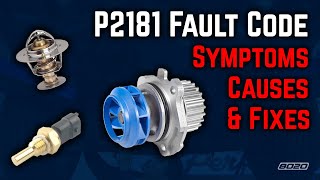
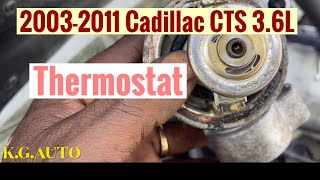
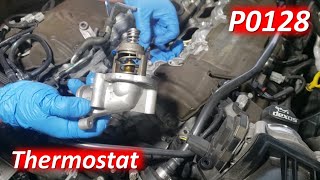
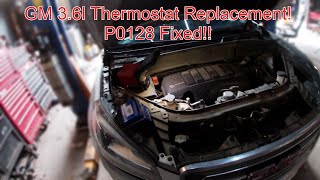
We Have This Part in Stock



The information in this article is provided for general reference and educational purposes only. Vehicle specifications, procedures, and part compatibility can vary by production date, trim level, and region. Always consult your vehicle's factory service manual and verify part numbers before purchasing or performing repairs. Safety-critical components such as airbags, seat belts, and braking systems should be installed by a qualified professional.
- Cadillac CTS:
- 🧭 Diagnostic Flowchart
- 🎬 Helpful Videos
- 🛍️ Shop This Part
- What's Unique About the 2014-2015 Cadillac CTS
- Symptoms You May Notice
- Most Likely Causes
- Diagnosis Steps
- Parts You'll Likely Need
- Related Codes That Often Appear With This One
- Technical Service Bulletins (TSBs) & Recalls
- Platform-Specific Known Issues
- Mechanic-Grade Diagnostic Values
- Scan Tool Commands That Help
- Wiring & Ground Locations
- Real Owner Repair Stories
- 🎟️ Get 5% Off