

P2181 on 2010-2013 GMC Savana: Cooling System Performance Causes and Fixes
This code means your van's engine isn't reaching the correct operating temperature in the expected time. The most common causes are a stuck-open thermostat or a faulty engine coolant temperature (ECT) sensor. For Savana models with rear heat, a specific TSB also points to incorrectly installed rear heater hoses as a key cause.
- P2181 on a GMC Savana means the engine is running too cool.
- The most likely causes are a stuck-open thermostat or a bad coolant temperature sensor.
- If your van is a Cutaway model with rear heat, you MUST check for reversed heater hoses as specified in TSB #PIP4775B.
- This is a DIY-friendly repair for those with basic tools.
- Driving with this code on will hurt your fuel mileage and heater performance.
What's Unique About the 2010-2013 Gmc SAVANA
For the GMC Savana, especially Cutaway models equipped with rear heat (RPO ENC), this code has a very specific and documented cause. A Technical Service Bulletin (TSB #PIP4775B) was issued because reversed or improperly installed rear heater hoses can trigger a P2181 shortly after a cold start. This TSB also applies to its platform-mate, the Chevrolet Express. This is a unique diagnostic path that must be considered in addition to the more universal causes like thermostats or sensors.
Diagnostic Flowchart
Tap your situation to follow the diagnostic path that matches what you're seeing on this vehicle.
Symptoms You May Notice
- Check Engine Light is on
- Engine temperature gauge reads lower than normal or takes a very long time to reach the middle
- Cabin heater blows cool or only lukewarm air
- Reduced fuel economy
- Engine may run rough or have an unstable idle when cold
- On some GM vehicles, a cooling system performance code can cause the radiator fans to run at full speed continuously as a fail-safe measure.
- Replacing the ECT sensor when the thermostat is actually the problem. It's common to suspect the sensor, but a mechanical thermostat failure is a very frequent cause for this code.
- On Cutaway models, overlooking the rear heater hose TSB and proceeding directly to replacing parts like the thermostat or sensor. 🎬 Watch: Why you shouldn't replace parts before watching this diagnostic guide.
Most Likely Causes
- Thermostat stuck open 🔴 High Probability → Shop Integrated Thermostat Housing Assembly Thermostats are a common wear item on most vehicles. They are designed to fail in the open position as a safety measure to prevent overheating, which directly causes the engine to run too cool.
How to confirm: Monitor the engine coolant temperature with a scan tool. If the temperature rises very slowly and struggles to reach the normal operating range (typically 195-215°F or 90-102°C), the thermostat is likely stuck open. You can also feel the upper radiator hose; it will get warm almost immediately after starting if the thermostat is open, instead of staying cool until the engine warms up. An infrared thermometer can also be used to watch the temperature of the thermostat housing and radiator hoses to see if coolant is flowing prematurely.
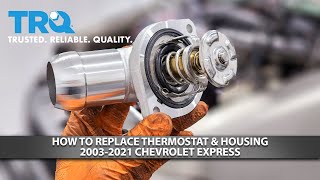
Typical fix: Replace the thermostat and gasket/housing. It is recommended to also replace the coolant at the same time. On many GM V8s, the thermostat is sold as an assembly with the housing. 🎬 See this step-by-step walkthrough for replacing the thermostat and housing.
Est. part cost: $25-$75 - Improperly installed rear heater hoses 🟡 Medium Probability Specific to models with rear heat provisions (RPO ENC), as documented in TSB #PIP4775B. The supply and return hoses can be accidentally reversed during service, causing a large volume of coolant to circulate outside the engine block, slowing warm-up.
How to confirm: Inspect the rear heater hose connections at the firewall. According to the TSB, the shorter, inboard pipe is the supply (hot), and the longer, outboard pipe is the return. If they are reversed, this is the likely cause. The TSB also notes that simply running the rear heater on high during warm-up can trigger the code, even with correct hose routing.
Typical fix: Correctly install the rear heater hoses. Drain some coolant, swap the hoses to their correct positions, and refill/bleed the system. Advise the operator to let the engine warm up before turning the rear heat on high.
Est. part cost: $0 (labor only) - Faulty Engine Coolant Temperature (ECT) Sensor 🟡 Medium Probability → Shop Engine Coolant Temperature Sensor Sensors can fail over time, sending inaccurate readings to the ECM. On the V8 engines in these vans, the ECT sensor is located on the driver's side cylinder head, near the exhaust manifold, making it subject to extreme heat cycles.
How to confirm: Use a scan tool to watch the live data from the ECT sensor. If the reading is erratic, stuck on a cold temperature even when the engine is warm, or doesn't match the ambient temperature after sitting overnight, the sensor is likely faulty. A broken sensor may also cause the cooling fans to run constantly.
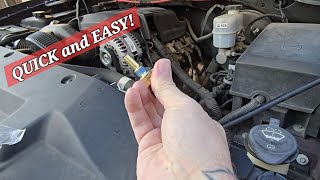
Typical fix: Replace the engine coolant temperature sensor. This is often located in the cylinder head on the driver's side. Be prepared to swap the new sensor in quickly to minimize coolant loss. 🎬 Watch: A quick way to replace the coolant temperature sensor.
Est. part cost: $20-$60 - Low engine coolant level ⚪ Low Probability → Shop Engine Coolant / Antifreeze Leaks can develop in hoses, the radiator, water pump, or the plastic heater hose connectors common on these vans over time.
How to confirm: Visually check the coolant level in the overflow reservoir when the engine is cold. If it's low, inspect the entire cooling system for visible leaks, especially around the quick-connect heater hose fittings at the firewall. A cooling system pressure test can help find small leaks.
Typical fix: Find and repair the source of the leak, then top off and bleed the cooling system.
Est. part cost: $10-$500+, depending on the source of the leak
Rare But Worth Checking
- Wiring issues to the ECT sensor (chafed or broken wires). TSB 18-NA-102 notes that wiring harnesses in the engine bay can chafe against brackets, causing various electrical issues.
- Malfunctioning cooling fan clutch (if equipped) or electric cooling fans that run constantly.
- Internal engine problems, though this is very rare for this specific code.
Diagnosis Steps
- Verify the Check Engine Light is on and code P2181 is present using an OBD-II scanner.
- Check the engine coolant level in the reservoir when the engine is cold. Top up if necessary and inspect for obvious leaks.
- If the vehicle is a Cutaway model with rear heat (RPO ENC), inspect the rear heater hose connections per TSB #PIP4775B to ensure they are not reversed. The shorter, inboard pipe should be the supply.
- Use a scan tool to monitor live ECT sensor data from a cold start. Compare the ECT reading to the Intake Air Temperature (IAT) sensor; they should be within a few degrees of each other after the vehicle has sat overnight.
- Start the engine and watch how the ECT temperature climbs. If the temperature climbs very slowly, struggles to reach ~195°F (90°C), or drops significantly at highway speeds, the thermostat is the most likely cause.
- If the temperature reading is erratic, jumps around, or is clearly incorrect (e.g., reads -40°F on a warm day), the ECT sensor or its wiring is the likely culprit.
- If the coolant level was low, perform a cooling system pressure test to identify any leaks in hoses, the radiator, water pump, or heater hose connectors.
- After any repair, clear the code and perform a drive cycle, including a full warm-up, to ensure the problem is resolved.
Parts You'll Likely Need
- Engine Coolant Thermostat
(OEM #12674639)— This is the most common cause of the engine failing to reach operating temperature. They are designed to fail open, which directly causes the P2181 code. This part number is often an assembly including the housing.
Trusted brands: ACDelco, Dorman, Motorad
OEM price range: $40-$70
Aftermarket price range: $25-$50 - Engine Coolant Temperature (ECT) Sensor
(OEM #19236568)— This sensor provides the temperature reading to the computer. If it fails and reads colder than reality, it will trigger this code. A failure can also cause the cooling fans to run constantly.
Trusted brands: ACDelco, Delphi, NTK
OEM price range: $30-$50
Aftermarket price range: $15-$35 - DEX-COOL Engine Coolant — You will lose coolant when replacing the thermostat or sensor, and the system will need to be topped off and bled. These vehicles use DEX-COOL (orange) coolant.
Trusted brands: ACDelco, Prestone
OEM price range: $20-$30 per gallon
Aftermarket price range: $18-$25 per gallon
Related Codes That Often Appear With This One
- P0128 — P0128 (Coolant Temperature Below Thermostat Regulating Temperature) is a very similar code and is often used by other manufacturers for the same condition. On GM vehicles, P2181 is sometimes used instead, but the root causes are identical.
Technical Service Bulletins (TSBs) & Recalls
- PIP4775B: SES Light Due To P2181 DTC - Inspect Rear Heater Operation And Hose Installation.
- 18-NA-102: Notes potential for chafed wiring harnesses in the engine bay, which could affect the ECT sensor circuit.
Platform-Specific Known Issues
- TSB #PIP4775B: On 2010-2013 Savana and Express Cutaway models with a V8 gas engine and rear heat (RPO ENC), a P2181 code shortly after a cold start can be caused by reversed rear heater hoses or running the rear heater on high during engine warm-up. The TSB specifies the longer, outboard pipe is the return and the shorter, inboard pipe is the supply.
Mechanic-Grade Diagnostic Values
- Engine Coolant Temperature (ECT) Sensor Resistance — expected: Approximately 102,000 Ω at -40°C (-40°F), 2,830 Ω at 25°C (77°F), and 245 Ω at 90°C (194°F).. Failure: Readings that are infinite (open circuit), near zero (short circuit), or do not correspond with the actual coolant temperature indicate a faulty sensor. As temperature increases, resistance should decrease smoothly.
- ECT Sensor Voltage (Scan Tool) — expected: Around 3.5-4.5V on a cold engine (matching ambient temp), dropping to approximately 0.5-1.0V at full operating temperature.. Failure: Voltage stuck high (e.g., 5V) suggests an open circuit or bad ground. Voltage stuck low suggests a short circuit. Erratic or jumping values indicate a failing sensor or wiring issue.
Wiring & Ground Locations
- G103 — On the rear of the cylinder head. For V8 engines, it's typically on the rear of the right cylinder head; for V6 engines, it's near the generator bracket.. This is a primary engine ground. A poor connection at G103 can cause erratic sensor readings for multiple components, including the ECT sensor, leading to incorrect data being sent to the ECM.
- G104 / G105 — G104 is on the back of the left cylinder head. G105 is at the left front of the engine compartment, often near the cooling fan relays.. These are critical engine and chassis grounds. TSB PI0690A (related to transmission codes but relevant for grounding) specifically calls out checking G103, G104, G105, and G106 for clean and tight connections to resolve electrical issues. A bad ground here can affect the ECM and its sensor inputs.
- ECT Sensor Connector — Plugs into the ECT sensor on the driver's side cylinder head.. It is a 2-wire female connector, typically using 18-gauge wire. The pins are for the 5V reference signal from the ECM and the sensor signal return. Corrosion or damage to this connector or its pigtail is a common point of failure, causing an open or high-resistance circuit.
OEM Part Supersession History
12666569, 12657137, 12671393→12674639 (later superseded by 19474058)— Revisions to the thermostat and housing assembly for improved performance or manufacturing.
Heads up: These parts are generally interchangeable for the specified V8 engines, but it is always best to use the latest revision (19474058 or 12674639) for repairs.19236563→19236568— Updated part revision for the ECT sensor.
Heads up: The newer part number 19236568 is the correct replacement for the original. Using the old number is not advised.
Model Year Variations Within This Range
- 2010-2013: While the primary causes are consistent, the ECT sensor location is slightly different depending on the engine. On V8 models (4.8L, 5.3L, 6.0L), it is on the driver's side cylinder head toward the front. On the 4.3L V6, it is also on the driver's side but located near the generator (alternator) bracket.
Helpful Videos

We Have This Part in Stock


The information in this article is provided for general reference and educational purposes only. Vehicle specifications, procedures, and part compatibility can vary by production date, trim level, and region. Always consult your vehicle's factory service manual and verify part numbers before purchasing or performing repairs. Safety-critical components such as airbags, seat belts, and braking systems should be installed by a qualified professional.
- Gmc SAVANA:
- 🧭 Diagnostic Flowchart
- 🎬 Helpful Videos
- 🛍️ Shop This Part
- What's Unique About the 2010-2013 Gmc SAVANA
- Symptoms You May Notice
- Most Likely Causes
- Rare But Worth Checking
- Diagnosis Steps
- Parts You'll Likely Need
- Related Codes That Often Appear With This One
- Technical Service Bulletins (TSBs) & Recalls
- Platform-Specific Known Issues
- Mechanic-Grade Diagnostic Values
- Wiring & Ground Locations
- OEM Part Supersession History
- Model Year Variations Within This Range
- 🎟️ Get 5% Off