

P2181 on 2007-2015 Volkswagen Eos 2.0T: Cooling System Performance Causes and Fixes
On a VW Eos with the 2.0T engine, code P2181 almost always means the thermostat is stuck open, preventing the engine from reaching operating temperature. The fix is to replace the entire integrated thermostat and water pump assembly. This is a labor-intensive job due to the component's location under the intake manifold. It is highly recommended to use a high-quality OEM or OES part and replace the water pump at the same time. Expect a parts cost of $150-$500 and a total repair cost of $800-$160
- P2181 on your Eos means the engine is running too cool, not too hot.
- The cause is almost always a thermostat that has failed in the 'stuck open' position.
- The correct repair is to replace the entire thermostat housing assembly, and it's best practice to also replace the water pump and ECT sensor at the same time.
- This is not a simple DIY job for beginners; it is labor-intensive and may require removing the intake manifold.
- Always use VW-specific G13 (or compatible) coolant when refilling the system to prevent damage.
What's Unique About the 2007-2015 Volkswagen Eos
The 2.0T engine in the Eos, across both the early EA113 (FSI) and later EA888 (TSI) versions, does not use a simple, standalone thermostat. Instead, the thermostat is part of a larger, more complex assembly. On the widely used EA888 engine, this assembly also includes the water pump and is made of a plastic that is a well-documented failure point, known for cracking and leaking over time due to heat cycles and oil contamination. Because of this integrated design, a thermostat failure typically requires replacing the entire water pump and thermostat assembly, making the job more labor-intensive and costly than on many other vehicles. Some aftermarket suppliers offer upgraded replacements with an aluminum housing to address the cracking issue of the OEM plastic part.
Generation note: While the Eos is a single generation, the 2.0T engine changed significantly. Models from 2007-2008.5 typically have the EA113 ('BPY' code, FSI) engine with a timing belt. Models from mid-2008 onward have the EA888 ('CCTA'/'CBFA' code, TSI) engine with a timing chain. Both engines are prone to thermostat issues causing P2181, but the specific 🎬 Watch: How the 2.0T BPY thermostat fails and causes code P2181. part design and replacement procedure can differ slightly. The integrated water pump/thermostat housing is a particularly common failure on the later EA888 engine, which is known to crack and leak.
Symptoms You May Notice
- Check Engine Light is illuminated
- Engine temperature gauge stays low (below the center 90°C/194°F mark) or drops at highway speeds
- Heater blows lukewarm air or no hot air at all
- Noticeable decrease in fuel economy
- Cooling fans running constantly at high speed as a fail-safe measure
- In some tuned vehicles, a loss of full power as the ECU stays in a warm-up enrichment mode
- Replacing only the ECT sensor when the thermostat is the actual problem. A common owner experience is replacing the cheap sensor first, only to have the code return, necessitating the full thermostat assembly replacement later.
- Using a low-quality aftermarket water pump/thermostat assembly. Some forum users report the P2181 code returning shortly after a repair until a high-quality OES or OEM part was used.
Most Likely Causes
- Failed Thermostat (Stuck Open) 🔴 High Probability → Shop Integrated Thermostat Housing Assembly The thermostat is part of a complex plastic housing that is a known failure point on 2.0T engines. It often fails in the open position, allowing constant coolant circulation and over-cooling the engine. The plastic can become brittle from heat cycles and oil leaks dripping from above, leading to cracks or internal failure.
How to confirm: Use a scan tool (like VCDS) to monitor live coolant temperature from sensors G62 (engine outlet) and G83 (radiator outlet). Start the engine from cold. G62 should rise steadily while G83 remains near ambient temperature. If both G62 and G83 rise together almost immediately, the thermostat is stuck open. A visual confirmation is watching the temperature gauge drop at highway speeds.
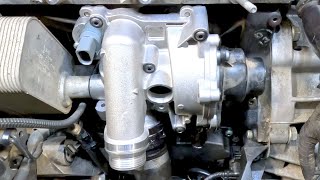
Typical fix: Replace the entire thermostat and water pump housing assembly. It is strongly recommended to replace the water pump at the same time, as they are an integrated unit on EA888 engines and share the same labor. Many owners and shops opt for an upgraded assembly with an aluminum housing for better durability. 🎬 See this DIY walkthrough for replacing the EA888 water pump assembly.
Est. part cost: $100-$500 - Faulty Engine Coolant Temperature (ECT) Sensor (G62) 🟡 Medium Probability → Shop Engine Coolant Temperature Sensor The sensor can fail and send incorrect temperature readings to the ECM, tricking it into thinking the engine isn't warming up. While less common than a thermostat failure for P2181, it's a known issue and an inexpensive part.
How to confirm: With a scan tool, check the live data from the ECT sensor with the engine cold. The reading should be very close to the ambient air temperature. If it reads an illogical value (like -40°F or 280°F), the sensor or its wiring is bad. 🎬 Watch: Diagnosing and fixing the ECT sensor on a 2.0 engine. Resistance should be approx. 2000-3000 Ω at 20°C (68°F).
Typical fix: Replace the ECT sensor. This is often done as a preventative measure when replacing the thermostat, as it is located in the same area and the labor overlaps.
Est. part cost: $20-$50 - Low Engine Coolant Level ⚪ Low Probability → Shop Engine Coolant / Antifreeze The plastic water pump/thermostat housing is prone to developing hairline cracks and leaking coolant over time, which can eventually lead to a low coolant level. A low level can introduce air pockets into the system, causing erratic sensor readings and triggering the code.
How to confirm: Visually inspect the coolant reservoir. If the level is below the 'MIN' line, there is a leak in the system. Check for pink/violet crusty residue around the water pump area (under the intake manifold), radiator, and hoses.
Typical fix: Find and repair the source of the leak, which is often the water pump/thermostat housing itself. Then, top off and bleed the cooling system with the correct VW-spec G13 (or compatible G12/G12evo) coolant.
Est. part cost: $20-$40 for coolant, plus the cost of the leaking part.
Rare But Worth Checking
- Wiring or Connector Issue to ECT Sensor: → Shop Engine Coolant Temperature Sensor An open, short, or corroded connector in the ECT sensor circuit can cause the same symptoms as a failed sensor. It's worth inspecting the wiring harness before replacing parts, especially if a new sensor doesn't fix the code.
- Air in the Cooling System: If the cooling system was recently serviced, trapped air can cause erratic temperature readings and trigger a P2181 code. The system may need to be properly bled, often with a vacuum tool, to ensure all air is removed.
Diagnosis Steps
- Check the coolant level in the expansion tank. Ensure it is between the MIN and MAX marks when the engine is cold. If it's low, you have a leak that must be found and fixed first.
- Use an OBD-II scanner to confirm P2181 is the primary code. Note any other codes, such as those for specific sensors (e.g., P0115, P0116), which can help pinpoint the issue.
- Access live data on the scanner. Monitor the Engine Coolant Temperature (ECT) sensor reading (G62) and, if available, the Radiator Outlet Temp Sensor (G83).
- Start the engine from cold. The G62 temperature should climb steadily. If G62 and G83 rise at the same rate, the thermostat is stuck open. If the G62 reading is erratic or illogical (e.g., stuck at -40°C), the sensor or its wiring is the likely culprit.
- Drive the vehicle at highway speeds. If the temperature gauge reaches the middle (90°C/194°F) but then drops noticeably, this is a classic symptom of a thermostat stuck open.
- If the temperature reading is stable and logical but the engine is slow to warm up, the thermostat is the most probable cause.
- If a leak is suspected, visually inspect the water pump housing (under the intake manifold) for pink/purple crusty residue, a tell-tale sign of a leaking VW water pump.
Parts You'll Likely Need
- Thermostat & Water Pump Assembly
(OEM #06F121111F (for EA113 FSI), 06H121026DD / 06H121026DR (common for EA888 TSI, many revisions exist))— This is the most common failure causing a P2181 code. The thermostat fails stuck-open, and it is integrated into a plastic housing that often includes the water pump. Replacing the entire assembly is the standard, reliable fix.
Trusted brands: INA, Graf (offers aluminum version), Continental, Bremmen Parts, Mahle
OEM price range: $250-$500
Aftermarket price range: $150-$350 - Engine Coolant Temperature (ECT) Sensor
(OEM #06A919501A)— This is the second most likely cause and is an inexpensive part. It's often replaced during the thermostat job due to overlapping labor and its potential to cause the code.
Trusted brands: Bosch, Delphi, Febi Bilstein, Hella
OEM price range: $30-$50
Aftermarket price range: $15-$30 - G13 Spec Coolant
(OEM #G013A8J1G (or superseding G12evo))— The cooling system must be drained and refilled for this repair. Using the correct VW-specific violet coolant is critical to prevent damage to system components.
Trusted brands: Volkswagen OE, Pentofrost E, Rowe
OEM price range: $25-$35 per gallon
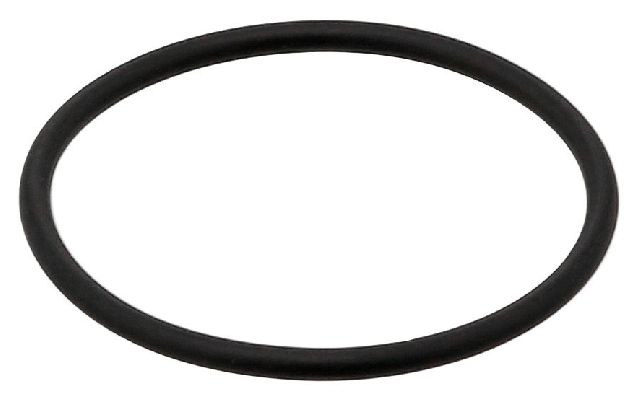
Aftermarket price range: $20-$30 per gallon - Water Pump to Oil Cooler Union Seal
Technical Service Bulletins (TSBs) & Recalls
- VW TSB 20-14-03: While for a Passat, this TSB addresses DTC P2181 and directly advises technicians to replace the coolant thermostat, showing the manufacturer's recommended fix for this code.
Platform-Specific Known Issues
- The plastic housing for the integrated thermostat and water pump assembly on the EA888 engine is a widely known failure point, prone to cracking and causing coolant leaks which can also contribute to cooling system performance issues. Oil leaks from components above the water pump can drip onto the plastic, accelerating its degradation.
- A common repair narrative found on forums is the 'Thermostat vs. Sensor Dilemma,' where an owner first replaces the inexpensive ECT sensor, which temporarily resolves the code, only for it to return, confirming the actual issue was the thermostat assembly.
Mechanic-Grade Diagnostic Values
- Engine Coolant Temperature Sensor (G62/G83) Resistance — expected: Approx. 2000-3000 Ω at 20°C (68°F); Approx. 275-375 Ω at 80°C (176°F).. Failure: Readings significantly outside the expected range for a given temperature, or an open/short circuit, indicate a faulty sensor.
- Engine Coolant Temperature Sensor (G62) Signal Voltage — expected: Approximately 2.0V - 3.0V on a cold engine, dropping to around 0.5V when fully warmed up.. Failure: Voltage that is stuck at 0V or 5V, or does not change smoothly as the engine warms, points to a sensor or wiring issue.
- Wiring Harness Resistance (G62/G83 sensor connector to ECM connector) — expected: 1.5 Ω Maximum.. Failure: Resistance higher than 1.5 Ω indicates excessive resistance in the wiring that needs to be traced and repaired.
- VCDS Freeze Frame Data Temperature — expected: Should be within the normal operating range (e.g., 80-110°C) if the fault occurred after warm-up.. Failure: Data stored at -40°C or +140°C strongly suggests a faulty ECT sensor or its wiring. Data stored in the 68°C - 80°C range points towards a mechanical cooling system issue, like a stuck-open thermostat.
Hidden / Shadow Codes Worth Checking
- 18613: This is the VAG-specific fault code that corresponds directly to the generic OBD-II code P2181, meaning "Performance Malfunction in Cooling System". (see via VAG-specific diagnostic tools like VCDS (Vag-Com), OBDeleven, or ODIS will display this code.)
Scan Tool Commands That Help
- VCDS (VAG-COM): Graphing Measuring Value Block (MVB) group 130 — This is the definitive test for a stuck-open thermostat. From a cold start, graph the G62 (engine outlet) and G83 (radiator outlet) temperatures. If both sensors show a temperature rise at the same time, it confirms the thermostat is stuck open. Normally, G83 should only start to rise after G62 reaches ~80-90°C.
- VCDS (VAG-COM): Basic Settings - Bleed Cooling Circuit — After replacing the water pump/thermostat assembly and refilling the coolant, this function runs the auxiliary coolant pumps in a specific sequence to purge air from the system. This is critical on EA888 engines to prevent air pockets that can cause cooling issues or trigger the P2181 code again.
Wiring & Ground Locations
- G62/G83 Sensor Connector — The G62 sensor is located on the main thermostat/water pump housing, under the intake manifold. The G83 sensor is typically located on the lower radiator outlet hose or on the radiator itself.. The G62 sensor can leak coolant through its body, contaminating the electrical connector and causing signal errors. The G62 sensor's ground reference is often provided directly by the ECM, so a continuity check from the sensor connector back to the ECM connector is necessary to rule out a wiring fault.
- Engine Ground Points — A primary engine ground point on many VWs is located on the left side of the engine compartment (e.g., Ground Point 12).. A poor or corroded engine ground can cause erratic voltage readings on various sensors, including the G62 coolant temperature sensor, leading to incorrect data being sent to the ECM and potentially triggering P2181 even if the sensor itself is good.
Real Owner Repair Stories
- Ross-Tech Forums user (Volkswagen VR6 (similar P2181 logic)) — P2181 fault code present when scanned, but no Check Engine Light on the dash.
❌ Tried (didn't work) Initial checks confirmed cooling fans and auxiliary water pump were working correctly.
✅ What actually fixed it The user was advised that the fault needs to happen on multiple drive cycles before illuminating the CEL. The final confirmed fix was replacing the thermostat with an OEM unit, not a colder aftermarket version, and also replacing the water pump as a preventative measure due to the plastic impeller being a known failure point. - Reddit user, r/MechanicAdvice (2014 Volkswagen Tiguan 2.0 TSI) — Persistent P2181 code that would return ~100 miles after being cleared.
❌ Tried (didn't work) First, a shop replaced the thermostat assembly with a cheap aftermarket part. The code returned., Second, the shop replaced the ECT sensor. The code returned again.
✅ What actually fixed it The owner took the vehicle to a different mechanic who diagnosed a faulty aftermarket thermostat. The code was permanently resolved after replacing the cheap aftermarket assembly with a high-quality OEM (Mahle) water pump and thermostat assembly.
OEM Part Supersession History
06H121026 (series AB, AF, B, BA, BE, BF, etc.)→06H121026DD, 06H121026DR, 06H121026CQ, 06H121026ED (and others)— The plastic water pump and thermostat housing for the EA888 engine has gone through numerous revisions to address the high failure rate of the thermostat mechanism and the tendency for the plastic housing to crack and leak. Later revisions generally offer improved durability.
Heads up: While many part numbers are physically interchangeable, some revisions (like DR vs DD) are intended for specific vehicle configurations (e.g., European models or different transmission pairings) and may have subtle internal differences. It is critical to use a part number confirmed for the specific vehicle's VIN.06L121111 (series F, G, H, J, K, L, M)→06L121111P (for EA888 Gen 3)— This applies to the later EA888 Gen 3 engine not found in the Eos, but shows the same pattern of constant revision to fix leaking housings and thermostat failures.
Heads up: These parts are for the MQB platform (Golf Mk7, etc.) and are not compatible with the EA888 Gen 1/2 engine in the Eos.
Model Year Variations Within This Range
- 2007-2008.5: These models use the timing-belt driven EA113 (FSI, 'BPY') engine. The thermostat is still in a housing but is a separate component from the water pump, which is driven by the timing belt. While P2181 is still common, the repair does not necessarily require replacing the water pump, though it is often recommended if the timing belt service is due.
- 2008.5-2015: These models use the timing-chain driven EA888 (TSI, 'CCTA'/'CBFA') engine. On this engine, the thermostat is integrated into a large plastic assembly that also contains the water pump, which is driven by a small belt from a balancer shaft. This entire assembly is the primary failure point and is replaced as one unit.
Diagnostic Flowchart
Other Known Issues on This Vehicle
Issues unrelated to this code that are worth knowing about as an owner of this generation:
- Timing Chain Tensioner Failure (EA888 Engine) 🔴 High — Common on early EA888 engines (approx. before 2013). Failure can occur as early as 40,000-60,000 miles, leading to catastrophic engine damage if not addressed. A rattling noise on cold start is a key warning sign. (Ref: No recall, but updated tensioner parts were released by VW. Visual inspection via a small port is possible to check which version is installed.)
- Intake Valve Carbon Buildup (TSI/FSI Engine) 🟠 Medium — A universal issue for direct-injection engines. Symptoms like cold-start misfires and reduced performance typically appear between 50,000 and 70,000 miles. Requires manual cleaning (walnut blasting). (Ref: VW had a warranty extension for the intake manifold on some models, which often failed due to this issue, but not for the carbon cleaning itself.)
- Convertible Hardtop Water Leaks 🟠 Medium — Very common across all model years. Caused by clogged A-pillar drain tubes or dried-out rubber seals. Leads to water dripping into the cabin near the windshield pillars. Requires regular cleaning of drains and lubrication of seals.
- PCV Valve Failure 🟠 Medium — Common failure item. The diaphragm inside the PCV can tear, causing a loud whistling noise, high/rough idle, and lean fault codes (e.g., P0171).
- Failing Intake Manifold Runner Flap/Motor 🟡 Low → Shop Engine Intake Manifold — The runner flaps inside the plastic intake manifold can stick or the actuator motor can fail, commonly triggering a P2015 fault code. (Ref: A warranty extension was issued for this component on many affected vehicles.)
Used vs. New Parts: Buying Guide for This Vehicle
When a used part is the smart pick: For this specific repair, using a used part is almost never a smart choice. The primary failure component, the water pump/thermostat assembly, is a well-documented wear-and-tear item with a high failure rate due to its plastic construction. A used part from a donor vehicle is likely to have a similar level of wear and risk of imminent failure.
Donor-vehicle mileage cap: roughly under 20000 miles for the part to have meaningful remaining life.
What to inspect on the donor part:
- If forced to consider a used part, only select one from a very low-mileage, late-model-year vehicle.
- Inspect for any signs of pink/purple crusty residue, which indicates a past or current coolant leak.
- Check the plastic for any hairline cracks, especially around seams and hose connections.
- Verify the part number is one of the latest revisions (e.g., ending in DD, DR, CQ, etc.) as older revisions are more prone to failure.
OEM-only on this vehicle (don't cheap out):
- Thermostat & Water Pump Assembly
Aftermarket brands forum-validated for this vehicle:
- Mahle
- INA
- Continental
- Graf (offers an upgraded all-aluminum housing version)
Brands owners have reported issues with on this vehicle:
- Unnamed or 'white-box' brands from online marketplaces. Forum discussions frequently mention P2181 returning weeks or months after a repair when a low-quality, non-OES (Original Equipment Supplier) part was used.
Real Owner Stories
Aggregated from forums and TSBs cited above. Mileages and costs reflect what owners reported in those sources.
Volkswagen Eos 2.0T TSI
Symptoms: The Check Engine Light came on with code P2181. After replacing the coolant temperature sensor, the light went off but returned a short time later.
What fixed it: The actual problem was the thermostat assembly. The issue was permanently resolved only after replacing the entire thermostat and water pump unit.
Source hint: vehicle_specific_issues section describing the 'Thermostat vs. Sensor Dilemma'
Related OBD-II Codes
Frequently Asked Questions
My mechanic says I need to replace the water pump with the thermostat for a P2181 code. Is this really necessary on my Eos?
Is the thermostat replacement an easy DIY job on the 2.0T engine?
My temperature gauge drops from the center mark when I'm driving on the highway. Is this related to the P2181 code?
Should I try replacing the cheaper Engine Coolant Temperature (ECT) sensor first to fix P2181?
I've seen upgraded aluminum thermostat housings for sale. Are they worth it for my Eos?
What type of coolant should I use when refilling the system after the repair?
Is there an official Volkswagen Technical Service Bulletin (TSB) for this issue?
Helpful Videos


![What is P2181 Engine Code [Quick Guide]](https://img.youtube.com/vi/trzYkE3CZyI/mqdefault.jpg)
Used OEM Parts in Stock
New Aftermarket Parts Available

The information in this article is provided for general reference and educational purposes only. Vehicle specifications, procedures, and part compatibility can vary by production date, trim level, and region. Always consult your vehicle's factory service manual and verify part numbers before purchasing or performing repairs. Safety-critical components such as airbags, seat belts, and braking systems should be installed by a qualified professional.
- Volkswagen Eos:
- 🧭 Diagnostic Flowchart
- 🎬 Helpful Videos
- 🛍️ Shop This Part
- What's Unique About the 2007-2015 Volkswagen Eos
- Symptoms You May Notice
- Most Likely Causes
- Rare But Worth Checking
- Diagnosis Steps
- Parts You'll Likely Need
- Technical Service Bulletins (TSBs) & Recalls
- Platform-Specific Known Issues
- Mechanic-Grade Diagnostic Values
- Hidden / Shadow Codes Worth Checking
- Scan Tool Commands That Help
- Wiring & Ground Locations
- Real Owner Repair Stories
- OEM Part Supersession History
- Model Year Variations Within This Range
- Other Known Issues on This Vehicle
- Used vs. New Parts: Buying Guide for This Vehicle
- Real Owner Stories
- Volkswagen Eos 2.0T TSI
- Related OBD-II Codes
- Frequently Asked Questions
- 🎟️ Get 5% Off