

P2181 on 2013-2015 Volkswagen Eos: In-Depth Guide to Cooling System Performance Fault
On a 2013-2015 VW Eos with the 2.0T engine, code P2181 almost always indicates a failing thermostat or a bad coolant temperature sensor (ECT). The engine is not reaching its proper operating temperature (typically 80-110°C) in the time expected by the computer. Replacing the integrated thermostat and water pump assembly is the most common and recommended fix, often performed with the ECT sensor as a 'while you're in there' measure.
- P2181 means your Eos's engine is running too cold, not too hot.
- The most likely cause is a thermostat that is stuck open, which is integrated into the water pump housing.
- The standard, most effective repair is to replace the entire water pump and thermostat assembly, along with the ECT sensor.
- Ignoring the code can lead to poor fuel economy, increased engine wear, and failed emissions tests.
What's Unique About the 2013-2015 Volkswagen EOS
The 2.0T TSI engine used in the Eos and many other VW/Audi models of this era is known for this specific fault code. The primary culprit is the design of the water pump and thermostat, which are integrated into a single, complex plastic housing. This plastic can become brittle over time, leading to cracks, leaks, or internal failures of the thermostat mechanism, most commonly causing it to stick open. Because of the high labor cost to access this component (often requiring removal of the intake manifold), it is highly recommended to replace the entire water pump/thermostat assembly rather than just one piece. The main Engine Coolant Temperature sensor (G62) is also a frequent, though less common, point of failure.
Diagnostic Flowchart
Tap your situation to follow the diagnostic path that matches what you're seeing on this vehicle.
Symptoms You May Notice
- Check Engine Light is on
- Temperature gauge on the dashboard takes a very long time to reach the middle (190°F/90°C) or never gets there
- Temperature gauge drops significantly when driving at highway speeds or coasting downhill
- Cabin heater blows lukewarm air or takes longer than usual to get hot
- Cooling fans may run at high speed constantly, even when the engine is cold
- Reduced fuel economy
- Failing a state emissions/smog test due to a permanent fault code
- Replacing only the ECT sensor when the thermostat is the actual problem. This is a common first step due to the low cost of the sensor, but often the code returns.
- Replacing the water pump when the issue is a simple thermostat or sensor. A water pump failure typically leads to overheating, not the slow warm-up characteristic of P2181. However, since they are an integrated unit on the 2.0T, they are usually replaced together.
Most Likely Causes
- Failing Thermostat (Stuck Open) 🔴 High Probability → Shop Integrated Thermostat Housing Assembly The thermostat is part of a large plastic water pump assembly that is a known weak point on the 2.0T TSI engine. The plastic can degrade, or the mechanism can fail, causing it to remain open. 🎬 Watch: See how these 2.0T thermostats fail and cause P2181. This allows coolant to circulate constantly through the radiator, preventing the engine from reaching operating temperature.
How to confirm: Use a scan tool (like VCDS) to monitor live coolant temperature data (MVB Group 130). Start the engine cold and observe the temperature. It should rise steadily to ~90-95°C and stabilize. If it warms up very slowly, struggles to reach temperature, or drops significantly at highway speeds, the thermostat is stuck open.
Typical fix: Replace the entire water pump and thermostat assembly. Due to the labor involved, it is not cost-effective to replace only the thermostat. Many owners opt for an upgraded assembly with an aluminum housing instead of the OEM plastic. 🎬 See this step-by-step DIY guide for replacing the water pump.
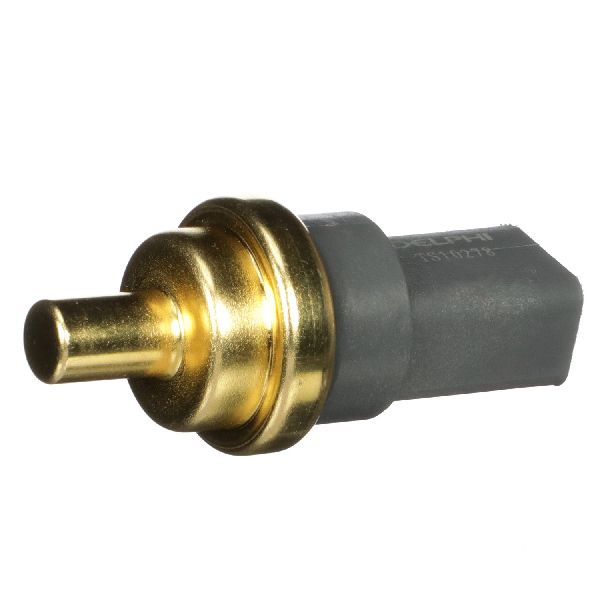
Est. part cost: $150-$400 for the complete assembly - Faulty Engine Coolant Temperature (ECT) Sensor (G62) 🟡 Medium Probability → Shop Engine Coolant Temperature Sensor These sensors can fail and send incorrect, low-temperature readings to the ECM, tricking the computer into thinking the engine is cold when it is not. It's a common failure item across many VW/Audi models.
How to confirm: With a cold engine, use a scan tool to compare the ECT sensor reading (G62) with the intake air temp and radiator outlet temp (G83) sensors. They should be within a few degrees of each other. If the G62 reading is illogical (e.g., -40°F or stuck at a specific value), the sensor is bad. Resistance should be 2000-3000 ohms at ~68°F (20°C).
Typical fix: Replace the faulty Engine Coolant Temperature sensor (G62). On the 2.0T TSI, this sensor is often located in the thermostat/water pump housing itself. Given the labor, many replace it preventatively during a water pump/thermostat job.
Est. part cost: $20-$50 - Low Engine Coolant Level ⚪ Low Probability → Shop Engine Coolant / Antifreeze While not a direct cause of P2181's 'engine too cool' logic, a significant coolant leak (often from the failing water pump housing itself) can introduce air into the system and cause erratic sensor readings, potentially triggering the code before an overheating condition occurs.
How to confirm: Visually inspect the coolant reservoir. If the level is below the 'MIN' line, there is a leak in the system. Look for pink/purple crusty residue (from dried G12/G13 coolant) around the water pump housing, radiator, and hoses.
Typical fix: Top off the coolant with the correct G12/G13 specification fluid and perform a cooling system pressure test to find and repair the source of the leak. The water pump assembly is a very common leak source.
Est. part cost: $20-$30 for coolant
Rare But Worth Checking
- Faulty Water Pump: → Shop Engine Water Pump While a failing thermostat is the usual cause of P2181, the water pump itself is integrated into the same housing. A water pump failure (e.g., broken impeller) typically leads to overheating, but because the entire assembly is replaced as one unit to fix the thermostat, the water pump is changed by default.
- Wiring or Connector Issue: An open or short in the wiring to the coolant temperature sensor (G62) can cause the same symptoms as a failed sensor. This should be checked before replacing components, especially if a new sensor does not resolve the issue.
Diagnosis Steps
- Scan for codes and check for any other faults that may be present.
- Visually inspect the coolant level in the expansion tank. Ensure it is between the MIN and MAX marks when the engine is cold.
- Use a scan tool to monitor live data for the Engine Coolant Temperature (G62) and Radiator Outlet Temperature (G83).
- From a cold start, graph both G62 and G83. G62 should rise steadily. G83 should remain at ambient temperature until G62 reaches ~95°C (203°F), at which point the thermostat opens and G83's temperature will begin to rise sharply.
- If G62 and G83 rise together from a cold start, the thermostat is stuck open.
- If the G62 reading is erratic, nonsensical from the start (e.g., -40°F), or doesn't match the ambient temperature sensor when cold, the G62 sensor or its wiring is the likely culprit.
- If a coolant leak is suspected, perform a cooling system pressure test to locate it. Pay close attention to the water pump housing.
- Inspect the wiring and connector for the G62 sensor for any signs of damage, corrosion, or coolant contamination.
Parts You'll Likely Need
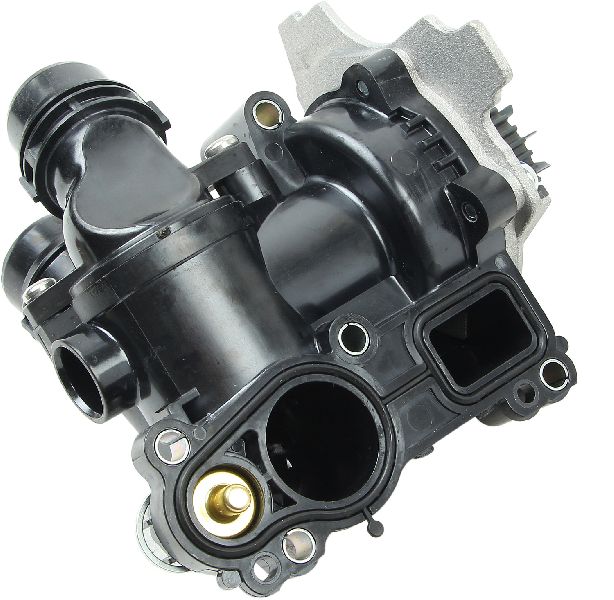
- Water Pump and Thermostat Assembly
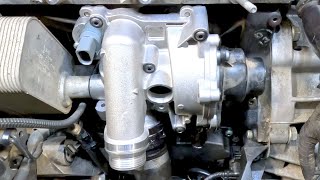
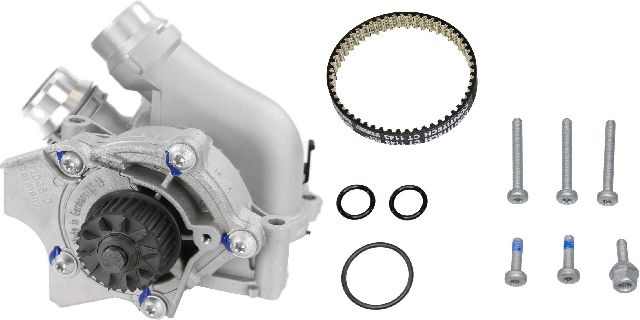
(OEM #06H121026DD (and subsequent revisions like DR, ED))— This is the most frequent cause of P2181 on the 2.0T engine. The integrated thermostat fails in the open position, and the plastic housing is prone to leaks. It is replaced as a single unit. 🎬 Watch: A professional walkthrough of the water pump and thermostat replacement.
Trusted brands: Genuine VW/Audi, Mahle, INA, Metelli (Aluminum housing option)
OEM price range: $250-$400
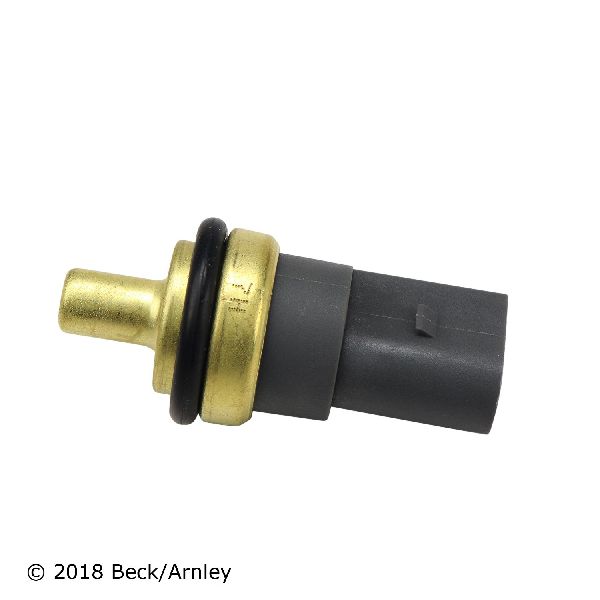
Aftermarket price range: $150-$250 - Engine Coolant Temperature Sensor (G62)
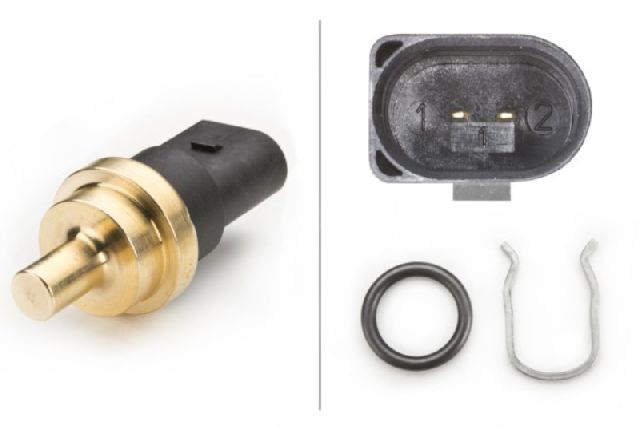
(OEM #06A919501A)— This sensor provides the primary temperature reading to the ECU. If it fails, it can send false signals that trigger the P2181 code. It is often replaced during the water pump job as a preventative measure.
Trusted brands: Genuine VW/Audi, Bosch, Febi Bilstein, Hella
OEM price range: $30-$60
Aftermarket price range: $15-$40
Technical Service Bulletins (TSBs) & Recalls
- VIN-4-A-PIN APRI (2015 ENGINE, dated 2016-04-21): Mentions P2181 as a possible fault, but provides no specific repair details.
- VIN-4-A-PIN APRI (2014 VISIBILITY, dated 2016-04-13): Mentions P2181 as a possible fault, but provides no specific repair details.
Platform-Specific Known Issues
- Owner Experience: Thermostat vs. Sensor Dilemma: → Shop Integrated Thermostat Housing Assembly A common story on forums involves an owner first replacing the inexpensive ECT sensor to fix P2181. The code often disappears for a short time but returns, especially in cooler weather. The ultimate fix is then replacing the entire thermostat/water pump assembly.
- Repair Story: Passing Emissions: A 2014 VW Tiguan owner on Reddit reported failing a California smog test due to a permanent P2181 code, even though the car ran perfectly fine. After replacing both the thermostat assembly and the coolant temperature sensor, the code was resolved and the vehicle passed the smog test.
- DIY Difficulty: Forum users on GOLFMKV.com note that replacing the thermostat assembly is a complex job, rated at 3-4 hours for a professional with a lift. It involves working in a tight space under the intake manifold, making it a challenging DIY task.
Mechanic-Grade Diagnostic Values
- Engine Coolant Temperature Sensor (G62) Resistance — expected: Approx. 2000-3000 Ω at 20°C (68°F); Approx. 275-375 Ω at 80°C (176°F).. Failure: Readings significantly outside these ranges, or an open/short circuit, indicate a faulty sensor.
- VCDS/VAG-COM Live Data - Coolant Temperatures — expected: In Measuring Value Block (MVB) 130, monitor G62 (Engine Outlet) and G83 (Radiator Outlet). From a cold start, G62 should rise steadily while G83 stays near ambient. When G62 reaches ~95°C, the thermostat should open, causing G83 to rise sharply.. Failure: If G62 and G83 rise together from a cold start, the thermostat is stuck open.
- Freeze Frame Data for P2181 — expected: The temperature recorded when the fault was set should be within a plausible warm-up range.. Failure: A stored temperature of -40°C or +140°C strongly suggests an electrical fault with the G62 sensor or its wiring (open or short circuit), not a mechanical thermostat issue.
Scan Tool Commands That Help
- VCDS (VAG-COM) or ODIS: Read Measuring Value Blocks (MVB) - Group 130/131 — This is the primary diagnostic function for P2181. It allows a technician to graph the engine outlet temperature (G62) against the radiator outlet temperature (G83) in real-time to definitively test the thermostat's operation without disassembly.
Wiring & Ground Locations
- Engine Harness Ground — Typically located on the left side frame rail, below or near the battery tray.. A poor engine ground can cause erratic voltage readings on various sensors, including the G62 coolant temperature sensor, leading to incorrect data being sent to the ECU and potentially triggering P2181 even if the sensor itself is good.
- G62 Sensor Connector — On the thermostat/water pump housing, under the intake manifold.. The 2-pin connector provides the signal and ground reference to the ECU. Pin 1 is typically the signal wire and Pin 2 is the ground. Checking for ~5V reference on Pin 1 (connector unplugged, key on) and continuity to ground on Pin 2 are key wiring checks.
Real Owner Repair Stories
- VWvortex forum user (VW GTI with 2.0T TSI engine (same as Eos)) — P2181 code, slow to warm up, temperature gauge would drop on the highway.
❌ Tried (didn't work) Replaced the G62 coolant temperature sensor.
✅ What actually fixed it The code returned after replacing only the sensor. The problem was ultimately solved by replacing the entire water pump and thermostat assembly with a new, revised OEM part. - GolfMK6 forum user (2013 VW GTI 2.0T) — Check Engine Light with code P2181. Monitored live data and saw coolant temperature drop from ~200°F to 175°F while cruising on the highway.
✅ What actually fixed it The temperature drop confirmed a thermostat stuck partially open. The user replaced the complete water pump/thermostat assembly and the G62 sensor at the same time, which resolved the issue permanently. - Forum user report (VW 2.0T TSI) — Persistent P2181 code after initial repair.
❌ Tried (didn't work) Replacing the original water pump/thermostat assembly with a cheap, unbranded aftermarket part.
✅ What actually fixed it The P2181 code returned shortly after the repair. The issue was only resolved after replacing the low-quality aftermarket assembly with a high-quality OES (Original Equipment Supplier) part from a brand like Mahle or INA.
OEM Part Supersession History
06H121026B, 06H121026AB, 06H121026AF, 06H121026CQ→06H121026DD, 06H121026DR, 06H121026ED— Continuous improvements to the plastic housing material and thermostat mechanism to increase durability and prevent premature failures (leaks and sticking).
Heads up: All revisions are generally physically compatible, but installing the latest available part number (e.g., 06H121026DD or newer) is strongly recommended to benefit from the design improvements.
Helpful Videos


We Have This Part in Stock

The information in this article is provided for general reference and educational purposes only. Vehicle specifications, procedures, and part compatibility can vary by production date, trim level, and region. Always consult your vehicle's factory service manual and verify part numbers before purchasing or performing repairs. Safety-critical components such as airbags, seat belts, and braking systems should be installed by a qualified professional.
- Volkswagen EOS:
- 🧭 Diagnostic Flowchart
- 🎬 Helpful Videos
- 🛍️ Shop This Part
- What's Unique About the 2013-2015 Volkswagen EOS
- Symptoms You May Notice
- Most Likely Causes
- Rare But Worth Checking
- Diagnosis Steps
- Parts You'll Likely Need
- Technical Service Bulletins (TSBs) & Recalls
- Platform-Specific Known Issues
- Mechanic-Grade Diagnostic Values
- Scan Tool Commands That Help
- Wiring & Ground Locations
- Real Owner Repair Stories
- OEM Part Supersession History
- 🎟️ Get 5% Off