

P2181 on 2016 Volkswagen Golf: Cooling System Performance Causes and Fixes
On a 2016 VW Golf with the EA888 engine, code P2181 almost always points to a failed thermostat, which is integrated into a plastic water pump housing assembly. This assembly is a known, widespread failure point. Expect to replace the entire unit, a moderately difficult job. An extended warranty may apply due to a class-action lawsuit.
- P2181 on a 2016 Golf means the engine isn't warming up correctly, most likely due to a thermostat stuck open.
- The thermostat is part of a larger plastic water pump assembly that is known to fail by cracking or leaking.
- The most probable fix is replacing the entire water pump and thermostat assembly, not just a single part.
- Before buying parts, use a scan tool to confirm if the engine is actually running cool or if a bad temperature sensor is just reporting it that way.
- When replacing the water pump/thermostat housing, consider an aftermarket version with a metal housing to prevent the issue from recurring.
What's Unique About the 2016-2016 Volkswagen GOLF
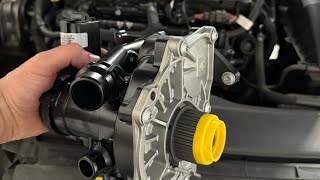
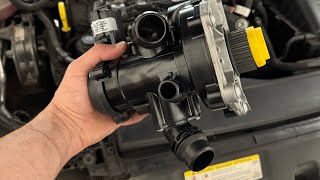
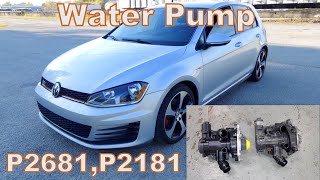
On the 2016 Mk7 Golf with the common 1.8T and 2.0T EA888 Gen 3 engines, the thermostat is not a simple, standalone part. It's integrated into a large, complex plastic assembly that also includes the water pump. This entire housing is a notorious failure item, prone to developing cracks and leaks over time due to the plastic becoming brittle from constant heat cycles. Therefore, a P2181 code on this car almost always requires replacing the entire water pump and thermostat assembly 🎬 Watch: A complete walkthrough of the water pump replacement and P2181 fix., not just a simple thermostat. This issue was so widespread it resulted in a class-action lawsuit and an extended warranty for many vehicles.
Diagnostic Flowchart
Tap your situation to follow the diagnostic path that matches what you're seeing on this vehicle.
Symptoms You May Notice
- Check Engine Light is on
- Engine temperature gauge takes a very long time to reach the middle (190°F/90°C) or never gets there
- Temperature gauge fluctuates, often dropping on the highway or when coasting
- Poor or no heat from the cabin heater, especially on colder days
- Reduced fuel economy due to the engine running rich
- Cooling fans running at high speed even when the engine is not hot
- In rare cases, engine overheating
- Replacing only the coolant temperature sensor when the thermostat is actually stuck open. It's crucial to diagnose whether the engine is truly not warming up (thermostat issue) or if the sensor is just reporting it incorrectly (sensor issue).
- Just refilling the coolant without finding the leak. The low coolant is a symptom, and the P2181 code will return until the leak (usually the water pump housing) is fixed.
Most Likely Causes
- Failed Thermostat / Leaking Water Pump Housing 🔴 High Probability → Shop Integrated Thermostat Housing Assembly The OEM water pump and thermostat housing is a single assembly made of a polymer plastic that becomes brittle and cracks from repeated heat cycles, causing leaks or internal thermostat failure. This is a very common failure on the EA888 Gen 3 engine, typically occurring between 40,000 and 80,000 miles.
How to confirm: Monitor the coolant temperature with a scan tool (like VCDS). Compare the Engine Outlet Temp (G62) and Radiator Outlet Temp (G83). On a cold start, they should be similar. As the engine warms, G62 should rise while G83 stays low. If G83 starts rising with G62 (e.g., before G62 reaches 80°C), the thermostat is stuck open. Visually inspect the housing (front of the engine, below the intake manifold) for signs of pink/white crust from dried G12/G13 coolant, indicating a leak.
Typical fix: Replace the entire water pump and thermostat housing assembly. It is highly recommended to use the latest revised OEM part or a quality aftermarket version with an aluminum housing 🎬 See this step-by-step guide on removing the old water pump assembly. for a more permanent solution.
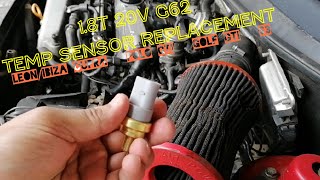
Est. part cost: $200-$450 - Faulty Engine Coolant Temperature (ECT) Sensor 🟡 Medium Probability → Shop Engine Coolant Temperature Sensor These sensors can fail over time, sending incorrect temperature readings to the ECM. The Mk7 Golf has two main sensors; the one on the engine block (G62) is the primary one that triggers this code. While possible, it's often misdiagnosed, and the root cause is the thermostat.
How to confirm: Use a scan tool to compare the readings from the engine coolant sensor (G62) and the radiator outlet sensor (G83) on a cold engine; they should be nearly identical to each other and the ambient air temperature. If the G62 sensor shows an erratic or illogical value (e.g., -40°F or 250°F on a cold start), it has failed.
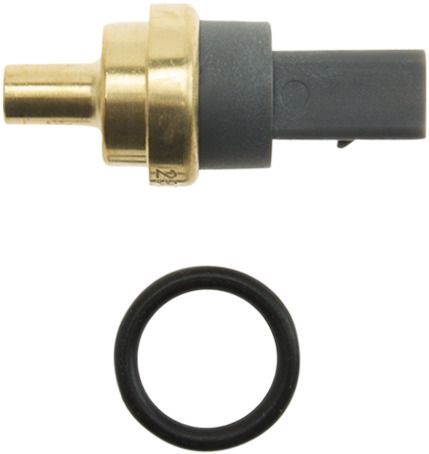
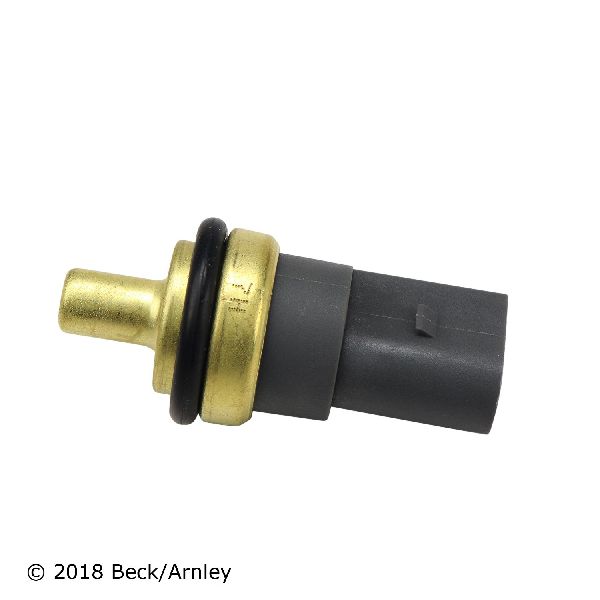
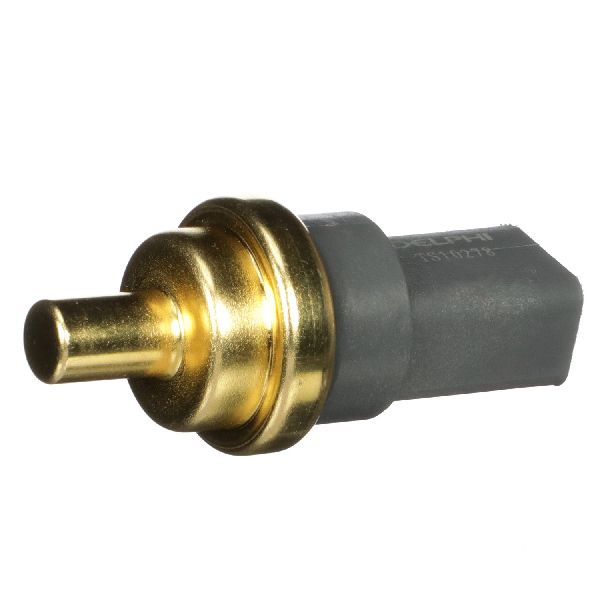
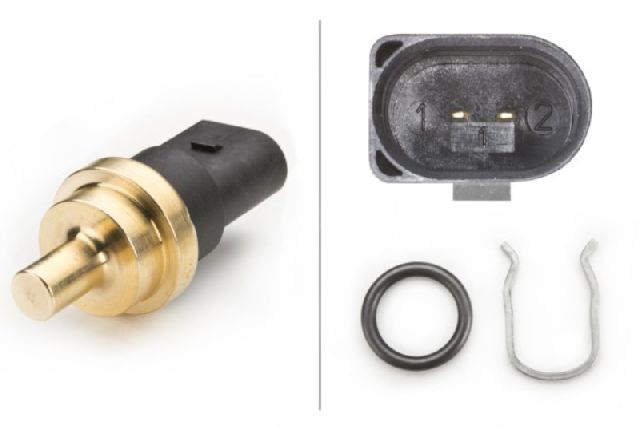
Typical fix: Replace the faulty Engine Coolant Temperature sensor. It is typically a green or gray sensor held in by a plastic clip, located on or near the thermostat housing. The correct part is often OEM #06A919501A.
Est. part cost: $20-$50 - Low Engine Coolant ⚪ Low Probability → Shop Engine Coolant / Antifreeze While low coolant can cause this code, it's almost always a symptom of another problem on this car, most often a leaking water pump housing. Simply topping it off will not solve the P2181 code long-term.
How to confirm: When the engine is cold, check the coolant level in the expansion tank (the spherical pink/purple tank). The level should be between the MIN and MAX lines. If it is low, a leak is present.
Typical fix: Top off the system with the correct VW-spec G13 or G12++ coolant and perform a cooling system pressure test to find the source of the leak. Do not just refill without finding the leak.
Est. part cost: $25-$40 for coolant
Rare But Worth Checking
- Faulty Cooling Fan Control Module: A cooling fan that runs constantly at high speed, even when the engine is cold, can over-cool the system and prevent it from reaching operating temperature, triggering P2181. This is usually caused by a failed fan control module or a short in the wiring.
- Air in the Cooling System: If the cooling system was recently serviced (e.g., water pump replaced) and not bled properly using a vacuum tool or the correct procedure, air pockets can cause erratic temperature readings and trigger this code.
Diagnosis Steps
- Check for other DTCs: Use an OBD-II scanner to see if any other codes are present that might point to a more specific issue (like a sensor circuit fault P0117 or bypass valve fault P2681).
- Inspect Coolant Level & Condition: With the engine cold, check the coolant level in the expansion tank. If low, suspect a leak. The coolant should be pink/violet (G13).
- Visual Inspection: Carefully inspect the water pump/thermostat housing area for any signs of pink/white residue, which indicates a coolant leak. A pressure test may be needed to find slow leaks.
- Monitor Live Data with VCDS or similar: Graph the Engine Coolant Temperature (G62) and the Radiator Outlet Temperature (G83).
- Analyze Live Data: Start the car from cold. G62 and G83 should read within a few degrees of ambient temperature. As the engine runs, G62 should rise steadily. G83 should remain low until G62 reaches ~85-105°C (depending on thermostat variant), at which point it should rise sharply as the thermostat opens.
- Interpret Live Data: If G83 rises along with G62 from the start, the thermostat is stuck open. If G62 never reaches ~90°C during a 15-minute drive, the thermostat is stuck open. If G62 reads an impossible value from the start (-40°C or 140°C), the sensor is bad.
- Pressure Test the System: If a leak is suspected but not visible, a cooling system pressure tester can be used to pressurize the system (when cold) and reveal the source of the leak, which is often a hairline crack in the thermostat housing.
Parts You'll Likely Need
- Water Pump and Thermostat Housing Assembly
(OEM #06L121111M (or latest revision like 06L121111N). Supersedes 06L121012A, 06L121111H, 06L121111K, etc.)— This is the most common failure point on the Mk7 Golf that leads to code P2181. The original plastic housing cracks, causing leaks, or the internal thermostat fails open.
Trusted brands: Volkswagen (OEM), INA (OEM supplier), Graf (metal housing option), HEPU (metal housing option)
OEM price range: $300-$450
Aftermarket price range: $180-$350 - Engine Coolant Temperature Sensor (G62)
(OEM #06A919501A)— This sensor provides the primary temperature reading to the ECM. If it fails, it will send incorrect data and trigger the code. It's a less common cause than the thermostat but is often replaced as a preventative measure during the water pump job.
Trusted brands: Volkswagen (OEM), Bosch, Hella, Febi
OEM price range: $30-$50
Aftermarket price range: $15-$30 - Coolant (G13/G12evo)
(OEM #G013A8J1G / G12E0501GRTU)— The system must be drained to replace the water pump. It is critical to refill with VW-specific coolant mixed with distilled water 🎬 Watch: How to properly install the new housing and finish the job. to prevent corrosion and system damage.
Trusted brands: Volkswagen (OEM), Pentosin Pentofrost E
OEM price range: $25-$40 per gallon
Aftermarket price range: $20-$35 per gallon
Related Codes That Often Appear With This One
- P0128 — Coolant Thermostat (Coolant Temperature Below Thermostat Regulating Temperature) - This code is very similar and points directly to a thermostat that is likely stuck open.
- P0117 — Engine Coolant Temperature Sensor Circuit Low Input - This code points more specifically to a faulty ECT sensor or its wiring, rather than a general performance issue.
- P2681 — Engine Coolant Bypass Valve Control Circuit/Open - This code points to an electrical fault with the thermal management module that is part of the integrated thermostat assembly.
Technical Service Bulletins (TSBs) & Recalls
- VIN-4-A-PIN APRI: A generic TSB that lists P2181 as a possible fault during general diagnosis.
- VW TSB 2044595 / 19-16-01 / 2043479: More specific bulletins addressing coolant leaks and failures of the thermostat/water pump module on EA888 Gen 3 engines, confirming the widespread nature of the problem.
Platform-Specific Known Issues
- The integrated plastic water pump/thermostat housing is a well-documented design flaw on the EA888 Gen 3 engine. Failure is a matter of when, not if. Upgrading to a unit with an aluminum housing is a popular and recommended long-term fix.
- Due to widespread failures, a class-action lawsuit (e.g., Zhao, et al. v. Volkswagen Group of America, Inc.) was settled, resulting in an extended warranty on the water pump for many affected vehicles (e.g., up to 8 years / 80,000 miles). Owners should check their VIN with a VW dealer to see if their vehicle is covered.
- VW has issued multiple Technical Service Bulletins (TSBs) for this issue, such as 2044595/4 (or 19-16-01 / 2043479), which detail diagnosing and replacing the leaking thermostat housing assembly.
Mechanic-Grade Diagnostic Values
- Engine Coolant Temperature (ECT) Sensor (G62) Resistance — expected: At 30°C (86°F), resistance should be 1,500-2,000 Ω. At 80°C (176°F), resistance should be 275-375 Ω.. Failure: Readings outside these ranges, or an open/short circuit reading, indicate a faulty sensor.
- Scan Tool Freeze Frame Data for P2181 — expected: Normal operating temperature is 80°C to 110°C.. Failure: Freeze frame data showing a temperature between 68°C and 80°C suggests the thermostat is stuck open, preventing the engine from reaching full operating temperature. A reading of -40°C or +140°C points to a sensor or wiring short/open circuit.
Scan Tool Commands That Help
- VCDS (VAG-COM): Graphing Measuring Value Block (MVB) 130 — This is the primary diagnostic method. It allows you to simultaneously graph the engine outlet temperature (G62) and the radiator outlet temperature (G83). If G83 begins to rise with G62 before G62 reaches ~80°C, it confirms the thermostat is stuck open.
- VCDS (VAG-COM) or similar: Cooling System Bleed Procedure / Output Test — After replacing the water pump/thermostat assembly, some tools offer a guided function to run the auxiliary coolant pump(s) to properly bleed air from the system. While not strictly required (the system can self-bleed), using this function ensures no air pockets remain, which could cause erratic temperature readings.
Wiring & Ground Locations
- Main Engine to Chassis Ground — A primary ground strap is typically located on the driver's side of the engine bay, connecting the engine block or transmission to the chassis frame rail near the battery.. While not a direct cause of P2181, a poor engine ground can cause a host of electrical issues, including erratic sensor readings. Ensuring this ground is clean and tight is a fundamental step in any electrical diagnosis.
- G62 Sensor Connector — On the thermostat housing assembly, below the intake manifold on the front of the engine.. The connector and its wiring are the most likely points of failure for an electrical issue related to the G62 sensor. It should be checked for corrosion, damage, or coolant contamination from a leaking housing. The wiring harness can be checked for continuity back to the ECM.
Real Owner Repair Stories
- Ross-Tech Forums user (2007 MKV GTI (similar EA888 engine family)) — Poor fuel efficiency, followed by a Check Engine Light with code P2181. Freeze frame data showed a coolant temperature of 73°C.
❌ Tried (didn't work) The user first performed diagnostics before replacing parts.
✅ What actually fixed it The user diagnosed a faulty thermostat by graphing the G62 and G83 sensors with VCDS. They observed the radiator outlet sensor (G83) temperature began to rise when the engine sensor (G62) was only at 66°C, well below the thermostat's target opening temperature of ~80-87°C. This confirmed coolant was flowing through the radiator prematurely, indicating a thermostat stuck partially or fully open. The accepted fix was to replace the thermostat.
OEM Part Supersession History
06L121111H, 06L121111J, 06L121111K→06L121111M, and subsequently 06L121111N/P— Revisions to improve the reliability of the plastic housing and internal thermostat components to address the high failure rate.
Heads up: All listed part numbers are for the complete water pump and thermostat/thermal management module assembly. While physically interchangeable, it is critical to install the latest available revision (e.g., M, N, or P) to get the most updated and reliable version.
Helpful Videos
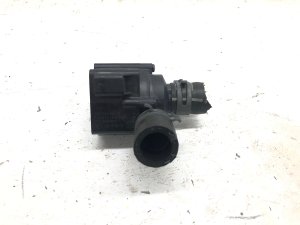
Used OEM Parts in Stock
New Aftermarket Parts Available


The information in this article is provided for general reference and educational purposes only. Vehicle specifications, procedures, and part compatibility can vary by production date, trim level, and region. Always consult your vehicle's factory service manual and verify part numbers before purchasing or performing repairs. Safety-critical components such as airbags, seat belts, and braking systems should be installed by a qualified professional.
- Volkswagen GOLF:
- 🧭 Diagnostic Flowchart
- 🎬 Helpful Videos
- 🛍️ Shop This Part
- What's Unique About the 2016-2016 Volkswagen GOLF
- Symptoms You May Notice
- Most Likely Causes
- Rare But Worth Checking
- Diagnosis Steps
- Parts You'll Likely Need
- Related Codes That Often Appear With This One
- Technical Service Bulletins (TSBs) & Recalls
- Platform-Specific Known Issues
- Mechanic-Grade Diagnostic Values
- Scan Tool Commands That Help
- Wiring & Ground Locations
- Real Owner Repair Stories
- OEM Part Supersession History
- 🎟️ Get 5% Off